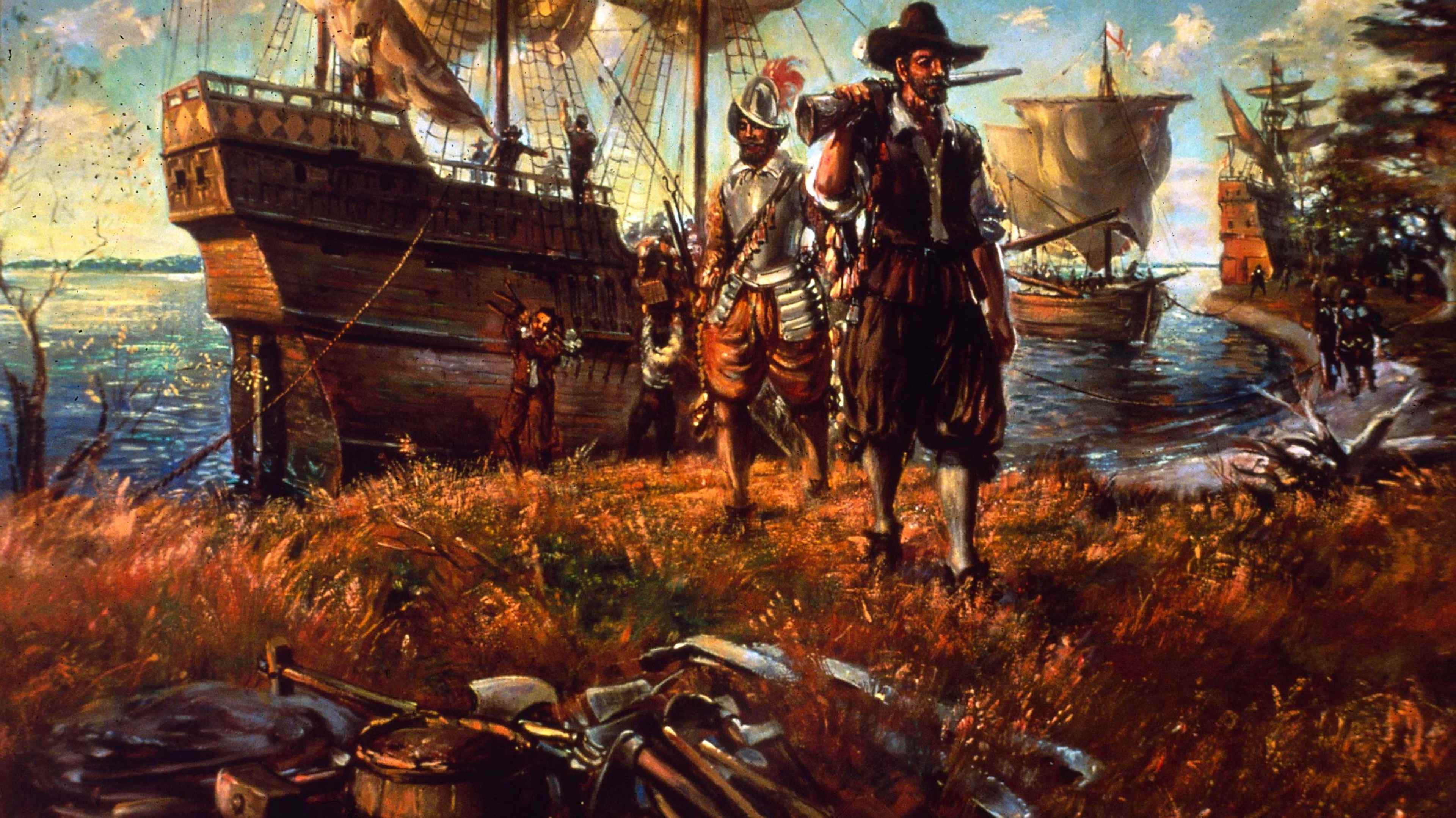
The establishment of the Jamestown Colony in May of 1607 represents one of the most defining, complex, and harrowing chapters in early American history. Under a royal charter granted by King James I, the Virginia Company of London dispatched a fleet of three ships—the Susan Constant, the Godspeed, and the Discovery—carrying 104 men and boys to the shores of Virginia. Their mission was commercial: find gold, establish trade, secure a passage to the Pacific, and challenge Spanish dominance in the New World. What they encountered instead on the swampy, mosquito-infested peninsula of the James River was a brutal gauntlet of disease, drought, political strife, and violent clashes with the powerful Powhatan Confederacy. This relentless struggle for survival transformed a fragile, failing outpost into the first permanent English settlement in the Americas, laying the contradictory foundations of modern United States history—the birth of representative self-government alongside the dark dawn of systemic chattel slavery.
Historical Background: The Context of a Global Gamble
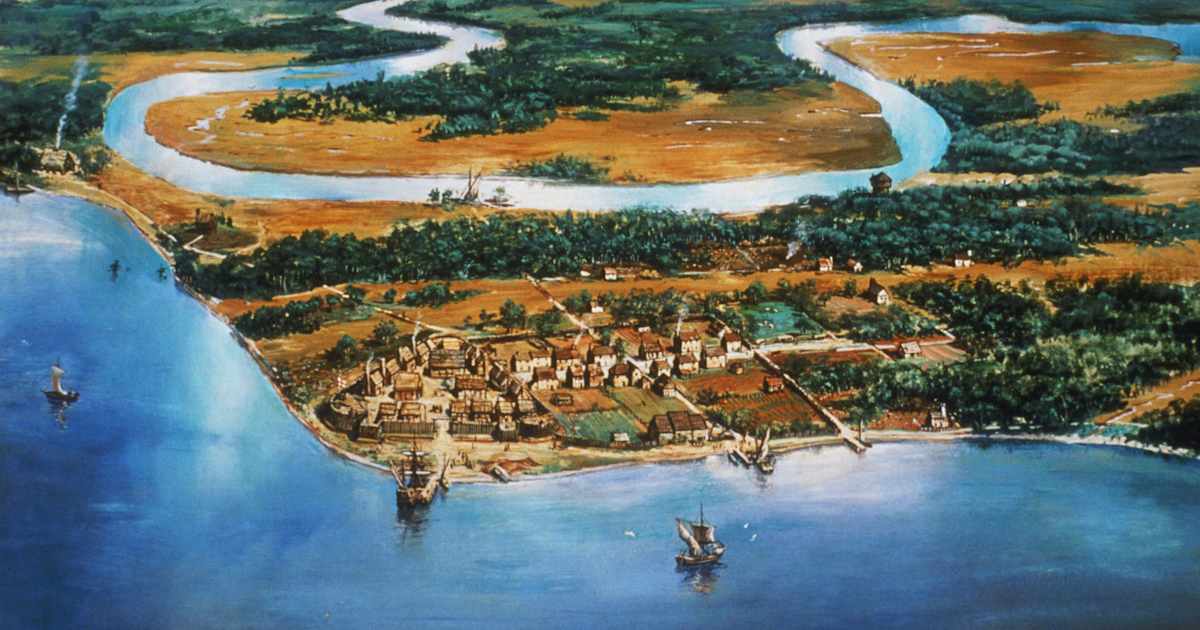
At the turn of the 17th century, Spain reigned as the uncontested superpower of the Western Hemisphere, extracting immense wealth in silver and gold from its colonies in South and Central America. Seeking to rival Spanish influence and secure new economic markets, King James I chartered the Virginia Company of London as a joint-stock enterprise. This structure meant that wealthy merchants and aristocrats invested capital in the colonial venture, expecting high financial returns. The initial cohort of 104 settlers arrived on May 14, 1607, selecting a low-lying peninsula that was easily defensible against Spanish warships but ecologically disastrous. Unbeknownst to these early settlers, they had landed in the midst of the worst seven-year drought the region had experienced in nearly eight centuries, compounding their challenges from the very beginning.
The Jamestown Colony Timeline: Key Eras and Milestones
To understand how a near-extinct outpost evolved into a prosperous colony, we must trace its chronological milestones:
- December 1606: The Virginia Company expedition departs London under the command of Captain Christopher Newport.
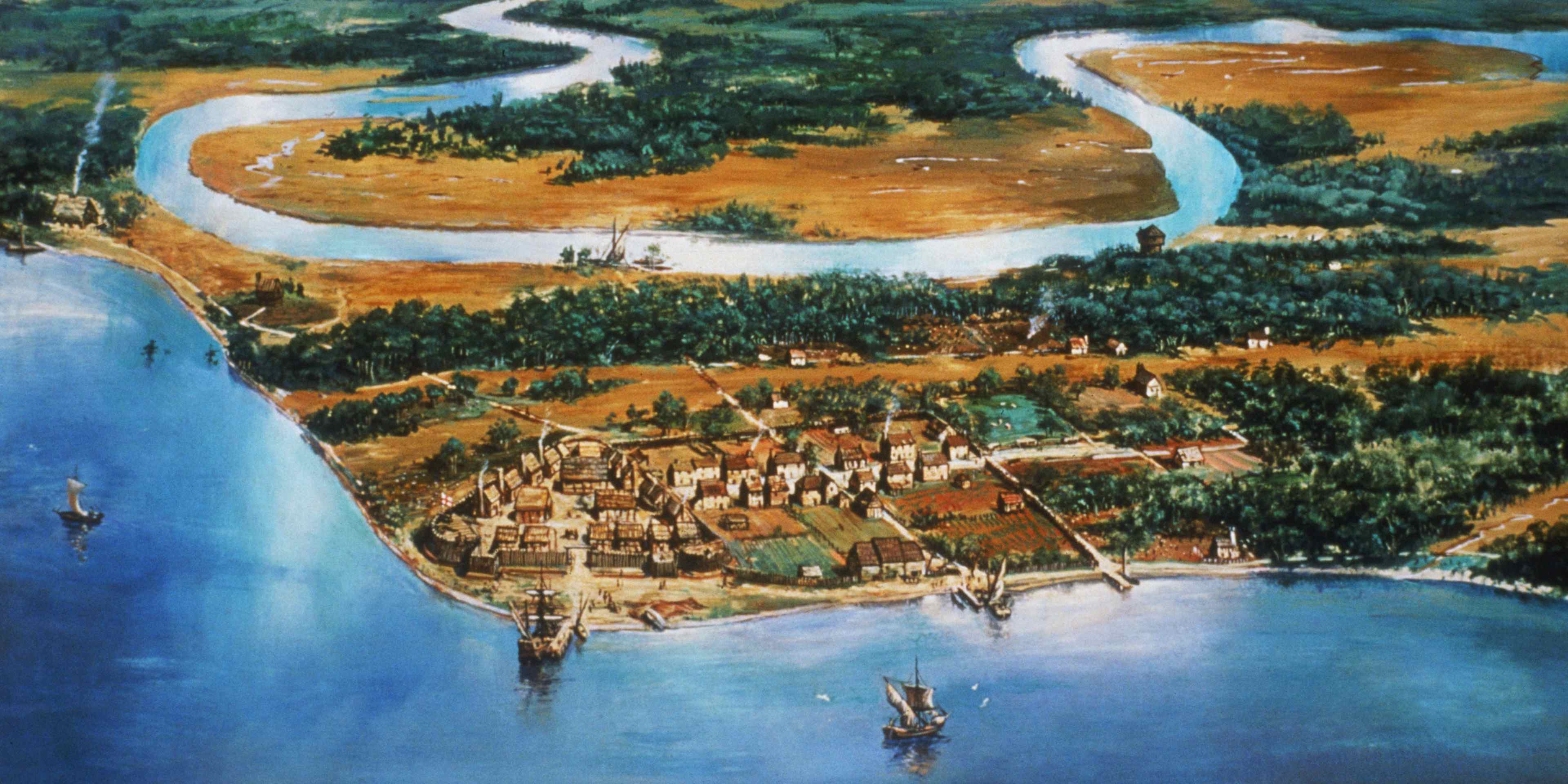
- May 1607: Settlers land on Jamestown Island, constructing a triangular wooden fort.
- September 1608: Captain John Smith is elected president of the colony’s council, establishing a strict rule of discipline: “He who will not work shall not eat.”
- Winter 1609–1610: Following John Smith’s injured departure back to England, the colony falls under siege by the Powhatan Confederacy, resulting in the catastrophic “Starving Time”.
- 1610: Just as the remaining 60 survivors attempt to abandon the colony, a relief fleet under Lord De La Warr arrives, forcing them to turn back and rebuild.
- 1612: John Rolfe successfully cross-breeds native Virginia tobacco with sweeter South American seeds, creating a highly profitable cash crop.
- July 1619: The General Assembly, including the newly formed House of Burgesses, meets in the Jamestown church, marking the birth of representative democracy in America.
- August 1619: The English privateer ship White Lion unloads “20 and odd” captured Angolans, initiating the institutionalization of slavery in the English colonies.
- 1622: A major Powhatan uprising led by Chief Opechancanough kills nearly a third of the colony’s English population, escalating decades of conflict.
- 1676: Bacon’s Rebellion breaks out; disgruntled frontier settlers led by Nathaniel Bacon burn Jamestown to the ground in a grievance over land and native policy.
- 1699: Following a series of devastating fires, the capital of Virginia is permanently moved inland to Middle Plantation, later renamed Williamsburg, bringing an end to Jamestown’s era as the colony’s epicenter.
Important Figures and Their Historical Legacies
The survival of the Jamestown Colony rested on the shoulders of several key historical figures, whose decisions shaped the destiny of the entire continent:
- Captain John Smith: An experienced soldier of fortune whose pragmatic leadership, military discipline, and complex negotiations with the Powhatan people kept the colony alive during its first two critical years.
- Chief Powhatan (Wahunsenacawh): The supreme leader of the Powhatan Confederacy, a powerful alliance of over thirty Algonquian-speaking tribes. He initially sought to incorporate the English into his empire through trade and diplomacy, but fiercely defended his sovereign territories when English demands escalated.
- Pocahontas (Matoaka): The daughter of Chief Powhatan who facilitated crucial trade and communication between the two cultures during her youth. Later captured by the English, she converted to Christianity, took the name Rebecca, and married John Rolfe, temporarily ushering in a period of peace.
- John Rolfe: An enterprising colonist whose botanical experiments with Orinoco tobacco seeds revolutionized the colonial economy, transforming Virginia from a financial drain into an economic powerhouse.
10 Surprising Revelations and Grim Realities of Jamestown
Though standard historical narratives often paint Jamestown with a romantic brush, contemporary archaeology and deep archival research have brought to light several shocking realities that the Virginia Company tried desperately to hide:
1. The Lethal Cocktail: Arsenic and Brackish Wells
Historians long wondered why so many colonists died so quickly after arrival—only 38 of the original 104 survived the first eight months. Modern-day water samples analyzed by geologists from the College of William & Mary have revealed that the shallow wells dug inside the fort were highly contaminated with natural arsenic, high levels of salt, and human fecal waste from nearby latrines. Dehydration, salt poisoning, and chronic arsenic exposure caused severe physical weakness, kidney damage, and psychological deterioration, literally driving some colonists to the brink of madness.
2. The Secret Graves and Double Burials
Concerned that the local Powhatan tribes or patrolling Spanish warships would realize how vulnerable the colony was, the Virginia Company strictly ordered the settlers to hide their sick and bury their dead in unmarked graves. To conserve space and hide the staggering death toll during the brutal summer of 1607, the colonists performed double burials, laying two deceased men to rest in the same shaft behind the fort walls.
3. Forensic Proof of the “Starving Time” and Cannibalism
During the winter of 1609–1610, the colony was reduced from roughly 500 inhabitants to just 60. Trapped inside the fort by Powhatan warriors, the settlers consumed horses, dogs, cats, rats, and shoe leather. In 2012, archaeologists from the Jamestown Rediscovery project unearthed the butchered skull and shinbone of a 14-year-old English girl, dubbed “Jane”. Forensic analysis by the Smithsonian Institution showed distinct chop marks made by a knife and a cleaver, proving that the desperate survivors resorted to survival cannibalism to stay alive.
4. America’s First Mail-Order Brides
With very few women in the colony during its first decade, many men threatened to return to England. In 1619, the Virginia Company’s treasurer, Edwin Sandys, initiated a recruitment drive to attract young, single women to immigrate to Jamestown. To incentivize them, the company offered free transportation, a plot of land, and a dowry of clothing. In exchange, the men who married them paid the company 120 pounds of top-grade tobacco to cover the cost of the women’s travel, making these women America’s first “mail-order” brides.
5. Surviving a “Little Ice Age” and Severe Drought
Early European explorers mistakenly believed that because Virginia shared a latitude with southern Europe, its climate would be mild. Instead, they arrived in the midst of the “Little Ice Age” (1550–1800), which brought freezing winters and volatile weather. Worse, tree-ring data from ancient bald cypress trees indicates that the settlers arrived during the most severe regional drought in 770 years, ruining crops and driving the native population to protect their own scarce food reserves.
6. The Paradox of King James I’s Tobacco Monopoly
King James I was an outspoken critic of tobacco, famously writing a treatise titled A Counterblaste to Tobacco, describing it as a “custom loathsome to the eye, hateful to the nose, harmful to the brain, and dangerous to the lungs.” Despite his personal disgust, the financial survival of Jamestown depended entirely on John Rolfe’s tobacco exports. Recognizing the economic benefits, King James put aside his moral objections and granted the colony a lucrative monopoly on tobacco imports to England.
7. The Misunderstood Narrative of the 1619 African Captives
For centuries, historians relied on the journals of John Rolfe, who recorded that “20 and odd” Africans arrived in late August 1619 on a Dutch warship. However, modern research reveals that these individuals were actually West Central Africans captured in Angola and forced onto the Portuguese slave ship San Juan Bautista. While crossing the Gulf of Mexico, the ship was intercepted by two English privateers, the White Lion and the Treasurer, who looted the cargo and brought the captives to Virginia, starting the long and devastating history of African enslavement in North America.
8. The Myth of the “Washed Away” Fort
For generations, historians and local residents believed that the original site of the 1607 James Fort had long since eroded and washed into the James River. However, in 1994, archaeologist Dr. William Kelso launched the Jamestown Rediscovery project and successfully located the remains of the original triangular fort. Since then, millions of artifacts have been recovered, rewriting what we know about the early settlers’ daily lives.
9. The Tragic Demise of Bacon’s Rebellion
In 1676, a wealthy planter named Nathaniel Bacon mobilized a diverse army of poor white indentured servants and enslaved Black laborers. Frustrated by high taxes, corruption, and the royal governor William Berkeley’s refusal to support their violent expansion into Indigenous lands, Bacon’s forces seized Jamestown and burned it to the ground. Although the rebellion collapsed after Bacon’s sudden death from dysentery, it prompted the colonial elite to transition away from unruly indentured servants toward the permanent, racialized enslavement of Africans to prevent future cross-racial alliances.
10. The Legacy of the House of Burgesses
Long before the Continental Congress or the signing of the Declaration of Independence, the seeds of American self-governance were sown in Jamestown. Established in 1619, the House of Burgesses was the first democratically elected legislative body in the Western Hemisphere. This historic assembly set a powerful political precedent, ensuring that English colonists would have a voice in their own taxation and local laws.
Turning Points and the Birth of a New World Economy
The transformation of Jamestown from a swampy grave into a booming capital was driven by two major turning points. First, John Rolfe’s introduction of Orinoco tobacco seeds completely altered the colony’s economic outlook. It forced the colony to expand outward in search of fertile land, which inevitably led to increased encroachment on Indigenous lands and systemic conflict. Second, the dual events of 1619—the introduction of representative democracy and the arrival of the first enslaved Africans—permanently bound the concepts of freedom and bondage together in the American consciousness, creating a paradox that would culminate in the American Civil War more than two centuries later.
Why Jamestown Still Matters Today
Jamestown is not just a collection of ruined brick foundations and archaeological dust; it is the crucible in which the modern American identity was forged. The political institutions, agricultural systems, racial hierarchies, and cultural interactions that took root in Jamestown shaped the trajectory of the United States. Today, ongoing archaeological excavations continue to unearth new artifacts, offering us a rare, unfiltered window into the grit, tragedy, and resilience of those who first attempted to build a new world on the banks of the James River.
People Also Ask
What was the “Starving Time” in the Jamestown Colony?
The “Starving Time” refers to the brutal winter of 1609–1610 when a combination of food shortages, disease, extreme weather, and a Powhatan siege trapped approximately 500 colonists inside James Fort. By spring, only 60 emaciated survivors remained alive.
Is there actual archaeological proof of cannibalism in Jamestown?
Yes. In 2012, archaeologists from the Jamestown Rediscovery project found the butchered remains of a 14-year-old girl named “Jane” in a trash pit inside the fort. Forensic examination of her skull showed clear, deliberate cut and chop marks made with knives and cleavers, proving that desperate colonists resorted to survival cannibalism.
Why was the location of Jamestown so problematic?
The peninsula chosen for Jamestown was swampy and lacked a reliable source of fresh drinking water. The proximity to the brackish James River meant the shallow wells were tainted with high salinity, fecal contamination, and natural arsenic, which poisoned the settlers over time.
Who were the first African captives to arrive in Jamestown?
The first Africans to arrive in Virginia in August 1619 were West Central Africans, likely from the kingdom of Ndongo in modern-day Angola. They were stolen from a Portuguese slave ship by English privateers on the White Lion and sold to Jamestown colonists in exchange for food and provisions.
Conclusion: The Multi-layered Legacy of Jamestown
Ultimately, the story of the Jamestown Colony is one of extreme dualities. It is a tale of horrific suffering, environmental devastation, and the brutal displacement of the Indigenous Powhatan peoples. Yet, it is also the origin site of the democratic principles, economic systems, and cultural perseverance that define America today. By understanding the unfiltered, raw history of Jamestown—its triumphs, tragedies, and dark realities—we gain a deeper, more honest appreciation for the complex roots of the American story.


