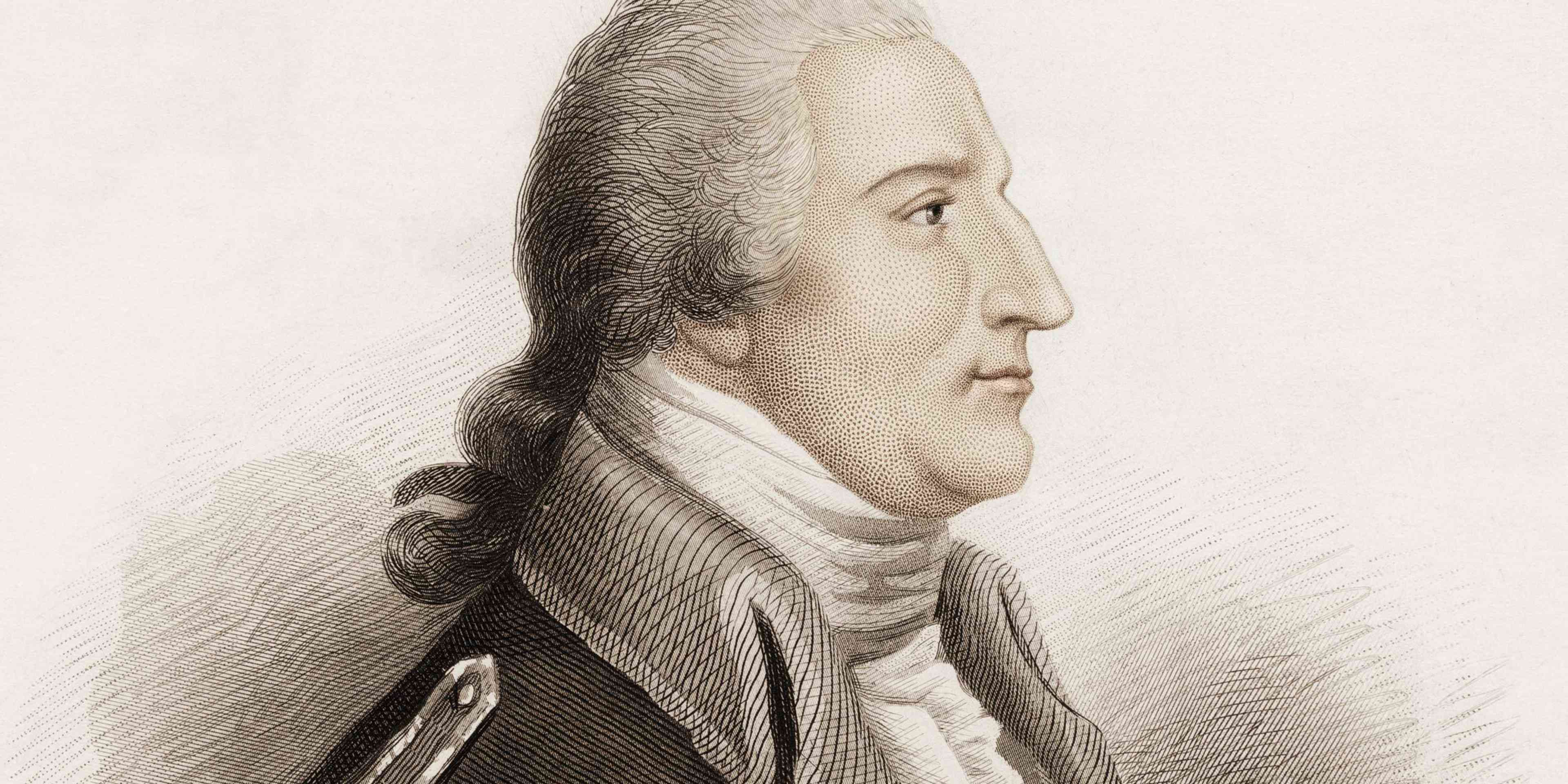
The name Benedict Arnold has become a permanent stain in the annals of American history, serving as the ultimate synonym for a traitor. Yet, before he became the young nation’s most infamous turncoat, Arnold was actually one of its most brilliant, daring, and celebrated military minds. During the early days of the American Revolutionary War, his tactical genius and sheer bravery at pivotal clashes like the Battle of Saratoga and the capture of Fort Ticonderoga saved the fragile rebellion from early collapse. His actions were so crucial that General George Washington himself considered Arnold one of his most trusted and invaluable officers. Why, then, did a man who shed blood for the cause of liberty suddenly turn his back on his comrades, attempting to hand over the strategic American stronghold of West Point to the British? To understand this historic betrayal, we must look beyond a simple caricature of good versus evil and examine a complex web of deep-seated resentment, staggering personal debt, wounded pride, and the subtle influence of a Loyalist spouse.
The Rise of a Forgotten Hero: Historical Background
To fully grasp the magnitude of Benedict Arnold’s treason, we must first understand his early status as an American patriot. Born in Connecticut in 1741, Arnold was a successful merchant before the outbreak of hostilities in 1775. When the American Revolutionary War began, he threw himself into the Patriot cause with unmatched vigor. He was a man of action, possessing a rare combination of tactical brilliance and physical courage that inspired the men under his command.
During the first few years of the conflict, Arnold’s contributions were legendary. He co-led the successful assault on Fort Ticonderoga alongside Ethan Allen and his Green Mountain Boys. Later, he commanded a brutal winter march through the wilderness of Maine in a daring attempt to capture Quebec. Though the Canadian campaign ultimately failed, Arnold’s leadership earned him widespread acclaim. While George Washington’s leadership was undisputed in the later years, the early command structure of the revolution was plagued by political maneuvering. Understanding who commanded the Continental Army before Washington and how the Continental Congress distributed military favors helps explain the deep-seated rivalries that fueled Arnold’s resentment. Over time, these political dynamics would slowly erode Arnold’s loyalty to the fledgling United States.
The Descent Into Treason: A Chronological Timeline
Arnold’s transition from a battlefield hero to a British collaborator did not happen overnight. It was a gradual descent driven by a series of personal and professional grievances. Below is a timeline of the critical moments that shaped his fateful decision:
- 1775: Arnold plays a vital role in capturing Fort Ticonderoga and leads the heroic, yet harrowing, Quebec expedition, where he is wounded in the leg.
- February 1777: The Continental Congress promotes five junior brigadier generals over Arnold to the rank of major general, deeply wounding his pride and igniting a bitter grudge.
- October 1777: Despite being stripped of his command by General Horatio Gates, Arnold rides onto the battlefield at Saratoga, securing a crucial victory that convinces France to enter the war. He is shot again in the same leg, leaving him permanently disabled.
- 1778: Washington appoints a recuperating Arnold as the military governor of Philadelphia, where Arnold meets and marries the young, beautiful Loyalist socialite Peggy Shippen.
- 1779: Joseph Reed, President of the Pennsylvania Executive Council, brings formal charges of corruption and financial misconduct against Arnold. In May of this year, a financially ruined Arnold initiates secret contact with British Major John André.
- August 1780: Arnold successfully lobbies George Washington for command of the strategic fort at West Point, New York.
- September 1780: Major André is captured by American militia with the plans of West Point hidden in his stocking. Arnold catches wind of the capture and flees to a British warship, escaping justice.
- 1781: Now a British brigadier general, Arnold leads devastating raids against American forces in Virginia and his home state of Connecticut before sailing to England.
Key Figures in the Treason of West Point
The conspiracy to hand over West Point was not a solo effort; it involved a small, highly influential circle of individuals whose actions and motivations collided to alter the course of the war.
Benedict Arnold: The central protagonist whose pride, financial troubles, and hunger for recognition led him to trade his homeland’s secrets for a British military commission and 10,000 pounds.
George Washington: The commander-in-chief who consistently defended Arnold against political detractors, only to be deeply devastated by his favorite general’s sudden betrayal.
Peggy Shippen: Arnold’s ambitious wife, whose family maintained strong ties to the British elite. She served as the facilitator of communication between Arnold and her former admirer, Major John André, encouraging Arnold’s shift in loyalty to sustain her lavish lifestyle.
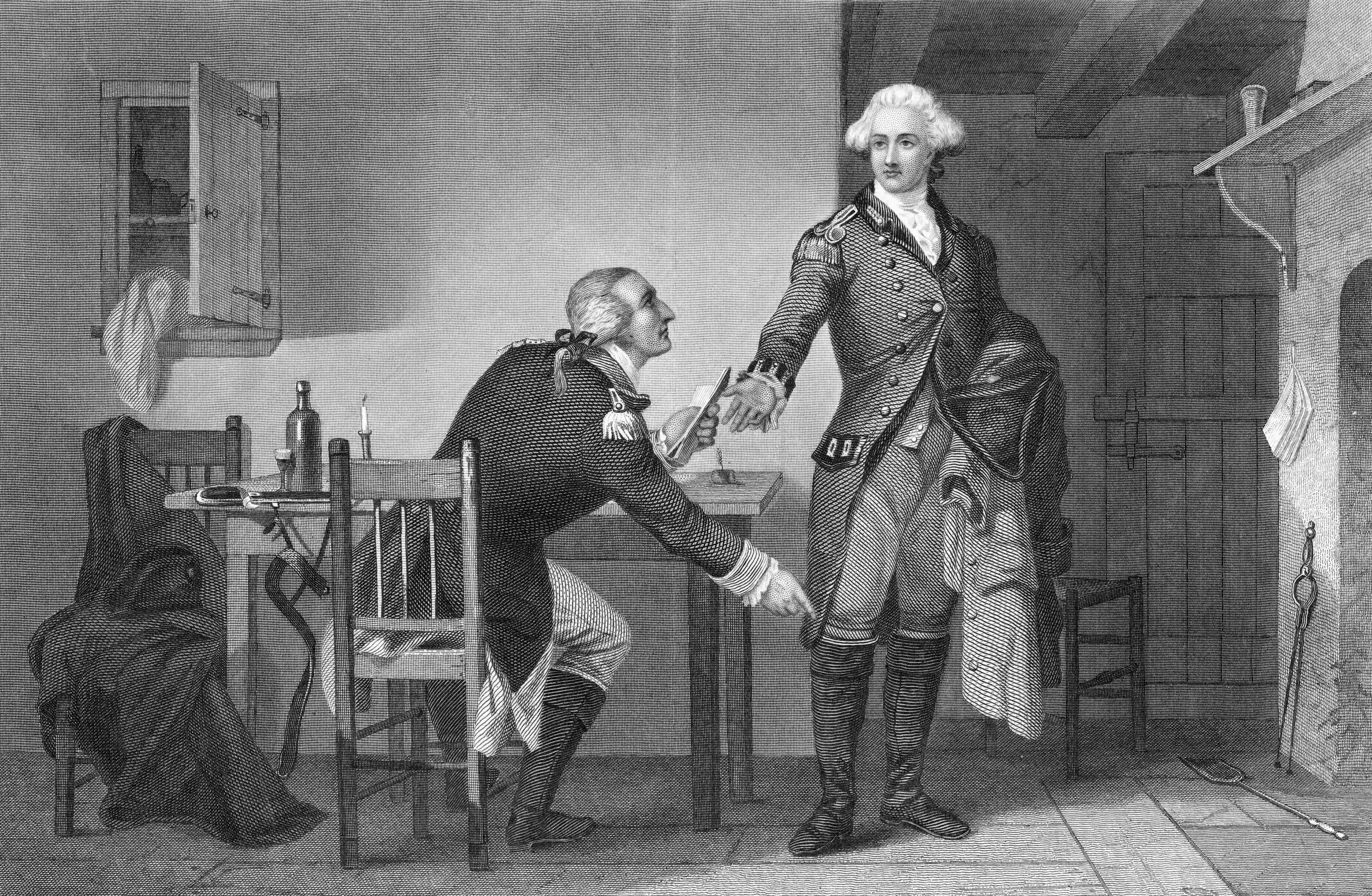
Major John André: The charismatic British intelligence chief who coordinated the conspiracy with Arnold. His eventual capture led to his execution as a spy, a death that devastated British high society.
Joseph Reed: The powerful Pennsylvania politician who spearheaded a relentless campaign to ruin Arnold’s reputation, pushing an already bitter Arnold toward the British side.
Causes and Context: The Psychology of Betrayal
Why did Benedict Arnold ultimately choose to betray the nation he had bled for? Historians point to a combination of systemic issues within the Continental Congress and Arnold’s own personal flaws. The Continental Congress was notorious for political favoritism, frequently promoting well-connected officers while ignoring battlefield merit. Arnold, who spent a fortune of his own money to fund his military campaigns, found himself bypassed for promotion and denied reimbursement for his expenses.
While the global theater of the war raged—including massive naval conflicts in the south and exploring what role did the Caribbean play in the Revolutionary War—the domestic front was plagued by extreme inflation and a lack of resources. Plagued by physical pain from his battle wounds and crippled by mounting debt in Philadelphia, Arnold’s psychological state deteriorated. He felt unappreciated by the public, persecuted by civil authorities like Joseph Reed, and abandoned by the Congress he served. These grievances, combined with a profound lack of self-esteem dating back to his childhood, made him highly susceptible to British overtures.
Major Turning Points: The Snapping of a Hero
The turning point in Arnold’s allegiance came with his 1779 court-martial. Though he was cleared of the most severe charges of corruption, General George Washington was forced by political pressure to issue a mild, formal reprimand. Arnold, who expected a complete vindication from his mentor, viewed this “slap on the wrist” as the ultimate betrayal. Believing that the American cause was lost and that the revolutionary government was corrupt, he made the conscious decision to sell his services to the enemy.
The second major turning point was the capture of Major John André on September 23, 1780. Had André successfully returned to British lines with the plans of West Point, the British would have seized control of the Hudson River, effectively cutting the American colonies in half and potentially ending the revolution. André’s arrest by three American militiamen completely ruined the plot, forcing Arnold to flee in panic and leave his co-conspirator to hang.
Long-Term Impact on America
Paradoxically, Benedict Arnold’s betrayal had an incredibly positive effect on the struggling American cause. In 1780, the Continental Army was suffering from low morale, mutinies, and financial collapse. The shocking news that one of their greatest heroes had turned traitor served as a powerful wake-up call. It galvanized the fractured public, uniting them in shared outrage and renewing their commitment to the war effort.
The betrayal also forced Washington to tighten security measures and root out potential spies within the military ranks. Today, the legacy of the betrayal remains deeply embedded in American culture. Arnold’s name is forever etched in the national consciousness as the quintessential archetype of the turncoat, a stark reminder of the fragile nature of loyalty and the destructive power of unchecked ambition.
Fascinating and Lesser-Known Facts
- The Monument to a Leg: At the Saratoga National Historical Park, there is a unique monument dedicated to a boot. It honors the “brilliant soldier” who was wounded there securing victory for the Americans, but intentionally omits Arnold’s name entirely. It is the only monument in the world dedicated to a traitor’s leg.
- Peggy’s Academy-Award Performance: When Washington arrived at West Point and discovered the treason, Peggy Shippen feigned a hysterical fit of madness, wearing only her undergarments and claiming that Arnold was trying to kill her baby. Her convincing performance completely fooled Washington and his staff, allowing her to escape safely to British-occupied New York.
- A Cold Reception in Britain: Although Arnold received a commission in the British Army, he was never fully trusted by his new allies. The British military establishment looked down on him as an untrustworthy turncoat, and he spent his final years in London struggling financially and socially isolated.
Why It Still Matters Today
The story of Benedict Arnold remains highly relevant today because it challenges the simplistic, black-and-white narratives we often construct about historical figures. It forces us to confront the reality that heroes are deeply flawed human beings capable of incredible self-sabotage. In modern political and military discussions, Arnold’s life serves as a cautionary tale about the dangers of institutional neglect, toxic pride, and how personal grievances can easily override civic duty.
People Also Ask (FAQ)
Was Benedict Arnold’s wife a spy?
Yes, historical evidence suggests that Peggy Shippen was actively involved in the conspiracy. She used her social connections to facilitate communication between Benedict Arnold and the British intelligence chief, Major John André, and may have actively pushed her husband toward treason to maintain her high-society lifestyle.
What did Benedict Arnold do after the war?
After the Revolutionary War, Benedict Arnold moved to London, England. He attempted to establish several business ventures, including a merchant trade in Canada, but faced constant financial difficulties and social ostracization. He died in London in 1801, largely forgotten and unmourned by both sides.
What is the meaning of the name Benedict Arnold in American culture?
In American culture, the name “Benedict Arnold” is used as an idiom to describe a traitor or turncoat. It is applied to anyone who betrays a cause, a country, or a group of close friends for personal gain.
Conclusion
In the end, Benedict Arnold’s story is one of profound tragedy. He was a man who possessed all the ingredients of greatness—courage, military genius, and the admiration of his peers—yet was ultimately destroyed by his own pride and unchecked ambitions. By choosing self-interest over country, he successfully erased his heroic sacrifices on the battlefield, ensuring that history would remember him not for how he helped build America, but for how he tried to destroy it.


