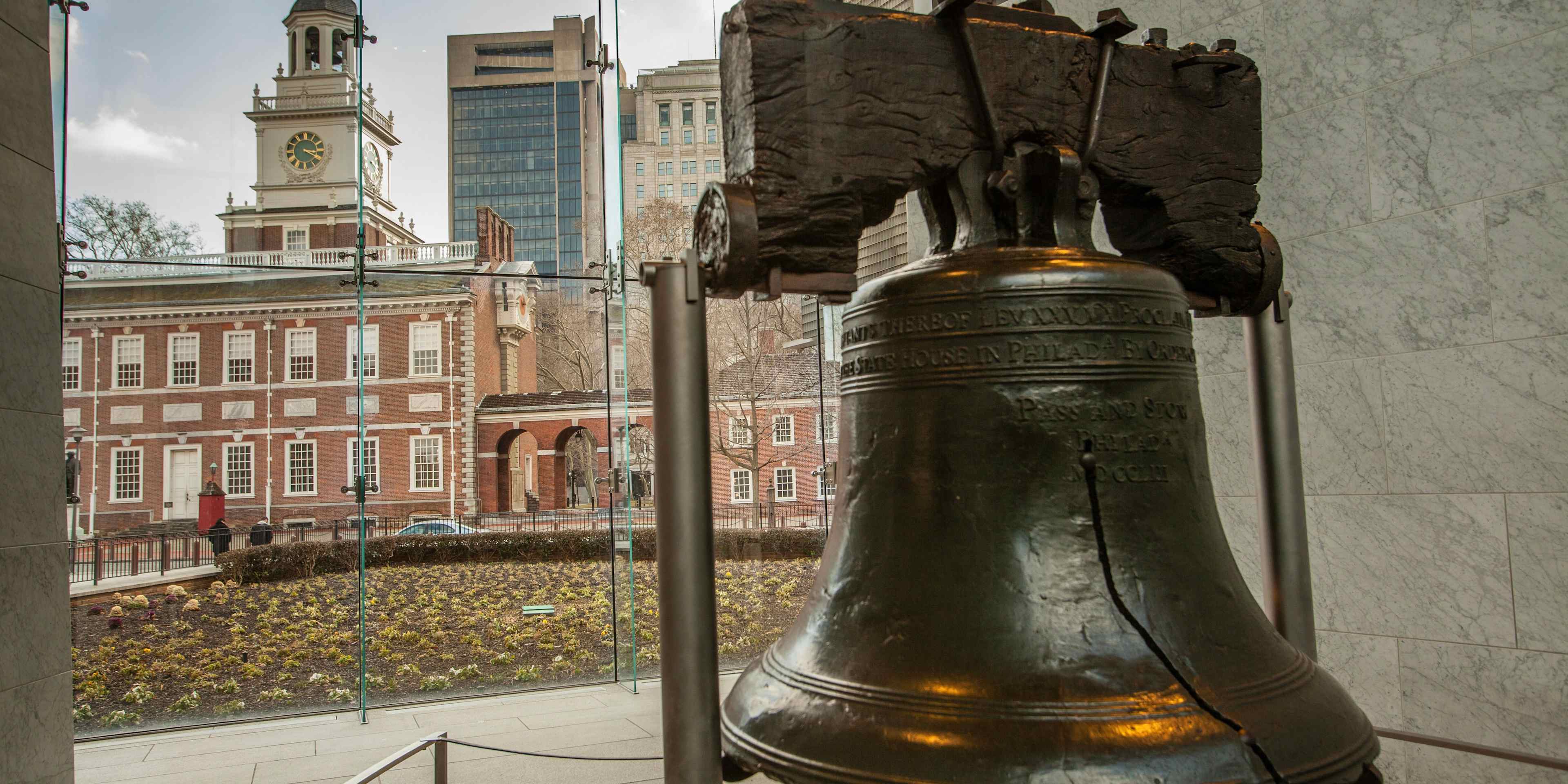
The Liberty Bell is perhaps the most recognizable symbol of American freedom, yet its most famous feature is a structural flaw. To understand why is the Liberty Bell cracked, we must delve deep into the early history of the United States, tracing the object from its origins as a simple provincial summons to its role as a sacred national relic. Cast in London in 1751, the bell was originally intended to hang in the Pennsylvania State House. However, from its very first strike, the bell seemed destined for a complicated physical life. Over the centuries, its physical damage has mirrored the turbulent growth of the nation itself. From the revolutionary fires of Philadelphia to its adoption by anti-slavery crusaders, the history of the Liberty Bell is a testament to the resilient, albeit imperfect, march of American democracy. This is the story of how an ordinary instrument of communication became an extraordinary emblem of liberty, complete with its famous, defining scar.
The Origins of the Bell: A Gift from London
In 1751, the Pennsylvania Provincial Assembly, the colonial governing body of the province, commissioned a large bell to hang in the newly constructed State House in Philadelphia. To understand the world of the early American colonists, one must explore the geography of the era. The Pennsylvania colony was a crucial hub on the map of the original 13 colonies, acting as a geographic and political bridge between the northern and southern settlements. Speaker of the Assembly Isaac Norris was tasked with ordering the bell. He placed an order with an agent in London, requesting a bell cast by the famous Whitechapel Bell Foundry. Norris also specified the inscription that would forever define the bell: a verse from the Bible (Leviticus 25:10), which reads, “Proclaim Liberty throughout all the land unto all the inhabitants thereof.” Little did anyone know how literally and figuratively this inscription would resonate in the centuries to follow.
Chronology of Cracks: A Key Events Timeline
The physical timeline of the Liberty Bell is filled with recastings, relocations, and structural failures that trace its journey through American history:
- 1751: The Pennsylvania Provincial Assembly commissions the bell from Whitechapel Bell Foundry in London, paying approximately 100 pounds.
- August 1752: The bell arrives in Philadelphia aboard the ship Myrtilla and is hung on a temporary truss in the State House yard.
- September 1752: During a test strike to gauge its tone, the bell’s rim cracks due to the brittle nature of the English bronze.
- 1753: Local founders John Pass and John Stow recast the bell twice, adding extra copper to reduce its brittleness. The final version is hung in the State House steeple in June 1753.
- July 8, 1776: The bell is rung (according to popular tradition) to summon citizens to the first public reading of the Declaration of Independence.
- September 1777: As British forces occupy Philadelphia, the bell is hastily evacuated to Allentown, Pennsylvania, and hidden beneath the floorboards of Zion Reformed Church to prevent it from being melted down into ammunition.
- 1835: According to legend, the bell cracks while tolling for the funeral of Chief Justice John Marshall, though historical evidence does not officially record this.
- February 1846: The bell is rung for George Washington’s birthday. Already suffering from a growing hairline fracture, it suffers a final, catastrophic crack that silences it forever.
- 1976: The bell is moved from Independence Hall to a new glass pavilion for the U.S. Bicentennial.
- 2003: The Liberty Bell is relocated to its current home at the Liberty Bell Center within Independence National Historical Park.
The Metallurgy and the First Crack
When the original bell arrived in Philadelphia in August 1752, local authorities were eager to test its sound. However, the first blow of the clapper resulted in a disappointing, dull thud and a noticeable fracture. The metal, composed of approximately 70 percent copper, 25 percent tin, and trace amounts of other elements like lead, zinc, gold, and silver, was simply too brittle. In the days before newspapers were common or affordable, municipal bells and the role of town criers and municipal bells served as the primary means of broadcasting public announcements, making a functioning bell absolutely vital. To fix the issue, two local Philadelphia metalworkers, John Pass and John Stow, stepped up. They melted down the original English bell and recast it. Finding the tone unsatisfactory after the first recast, they melted it down a second time, adding more copper to make the alloy less brittle. While their version was structurally sounder, some townspeople complained that the new bell sounded like a “clanging kettle.” Nevertheless, this recast bell is the very one that stands in Philadelphia today.
Important Figures in the Bell’s History
Several key individuals played critical roles in shaping the destiny of the Liberty Bell, turning a physical instrument into a national treasure:
Isaac Norris (1701–1766)
As Speaker of the Pennsylvania Provincial Assembly, Norris was the visionary who ordered the bell and chose its famous biblical inscription. His decision to include a message of liberty laid the groundwork for the bell’s eventual transition from a simple call-to-order instrument to a global symbol of civil rights.
John Pass and John Stow
These two Philadelphia brass founders had no formal training in bell-making, yet they successfully recast the brittle British bell. Their names are permanently inscribed on the face of the bell (“PASS AND STOW”), forever linking them to American revolutionary history.
Marquis de Lafayette (1757–1834)
The French hero of the American Revolution returned to the United States in 1824 for a grand tour. One of the persistent myths is that the bell sustained its first major hairline crack while tolling to celebrate his triumphant return to Philadelphia.
John Marshall (1755–1835)
The influential Chief Justice of the Supreme Court is tied to the bell’s legendary narrative. According to Philadelphia folklore, the bell cracked as it tolled solemnly during his funeral procession in July 1835.
The Mystery of the Fatal Crack in 1846
Despite the many legends attributing the crack to Lafayette’s visit or Marshall’s funeral, historical records point to a different culprit: the celebration of George Washington’s birthday in February 1846. By this time, a thin, hairline fracture had been spreading across the bell for years. In an attempt to preserve the bell’s sound for the holiday, metalworkers used a technique known as “stop-drilling.” They filed down the edges of the narrow crack to prevent them from vibrating against one another when struck. This explains the wide, slotted groove that visitors see today; it was actually a repair attempt, not the crack itself. Unfortunately, during the tolling on Washington’s birthday, a new fracture shot upward from the top of the filed slot, wrapping around the crown of the bell and rendering it completely unusable. The bell was silenced, never to be rung again.
From Civic Bell to Abolitionist Symbol
For the first several decades of its existence, the bell was simply known as the State House Bell. It was not called the “Liberty Bell” until the late 1830s. At that time, anti-slavery groups and abolitionists seized upon the inscription, “Proclaim Liberty throughout all the land unto all the inhabitants thereof,” pointing out the hypocrisy of a nation that claimed to stand for liberty while maintaining the institution of chattel slavery. Like many other everyday objects of colonial America, the bell was built for utility, yet it evolved into a powerful ideological artifact. The abolitionists printed images of the cracked bell in their pamphlets, transforming it into an iconic rallying cry for freedom. This transformation elevated the bell from a local municipal relic to a sacred national monument.
Lesser-Known Facts About the Liberty Bell
Beyond its famous crack, the Liberty Bell holds several secrets that surprise many visitors:
- A Famous Spelling Mistake: If you look closely at the inscription on the bell, you will notice that the word Pennsylvania is spelled “Pensylvania” with only one “n”. This was not a modern error, but an acceptable historical spelling variant at the time.
- The Wide Crack is Actually a Repair: The prominent vertical gap in the bell is not the structural crack that silenced it. It is the result of a repair attempt in 1846 where workers drilled out the original crack to keep the sides from rubbing together. The actual, fatal crack is a tiny, hairline fracture that branches off the top of this drilled slot.
- It Traveled the Nation: After the Civil War, the Liberty Bell went on a series of road trips across the United States to help heal a fractured nation. It visited cities like New Orleans, Chicago, Boston, and San Francisco, bringing Americans together under a shared symbol of heritage.
Why the Liberty Bell Still Matters Today
The Liberty Bell remains a deeply relevant symbol in modern global discourse. Its crack, rather than diminishing its value, enhances its symbolism. It reminds us that liberty is fragile, imperfect, and constantly in need of care and repair. In an era where democratic institutions are debated and tested daily, the bell serves as a physical reminder of the ongoing struggle to achieve “liberty and justice for all.” Millions of visitors from across the globe travel to Philadelphia each year to gaze at its flawed surface, finding inspiration in its survival and the enduring power of its message.
People Also Ask
Why did the Liberty Bell crack the first time?
The original bell cast in London cracked during its very first test strike in Philadelphia in September 1752 because the metal alloy was too brittle, containing too high a concentration of tin.
Can the Liberty Bell still be rung?
No, the Liberty Bell cannot be rung. The final crack of 1846 made it structurally impossible to strike without risking further, irreparable damage. However, it is occasionally tapped gently on special occasions, such as the 4th of July.
Who cracked the Liberty Bell?
No single person is responsible for cracking the bell. It cracked due to metallurgical issues in its composition, thermal expansion, and the repeated physical stress of tolling over nearly a century.
Conclusion
The history of the Liberty Bell is a captivating narrative of colonial industry, revolutionary fervor, and the powerful evolution of national symbols. From its humble beginnings as an English import to its transformation into an enduring emblem of civil rights, the bell’s journey mirrors that of the United States. Its famous crack is not a mark of shame, but a badge of honor—a physical representation of a nation that is constantly working to perfect its union. By understanding the true historical context behind why the Liberty Bell is cracked, we can better appreciate the enduring legacy of this magnificent American treasure.


