If you look closely at a Washington, D.C. license plate, you will notice a striking phrase emblazoned across the bottom: ‘End Taxation Without Representation.’ For a nation founded on the very principle of rejecting unfair colonial taxes, this slogan represents a biting, living paradox in the heart of the American republic. Since the establishment of the federal capital, the residents of Washington, D.C. have paid billions of dollars in federal income taxes without possessing a single voting representative in the United States Congress. This unique constitutional, geographical, and political isolation is not an accidental oversight of history, but the result of deliberate compromises made by the Founding Fathers, compounded by decades of post-Civil War racial politics. To understand why Washington, D.C. is not a state is to journey through the complex evolution of American democracy, from the indigenous Nacotchtank people to the modern battleground for civil rights and local self-governance.
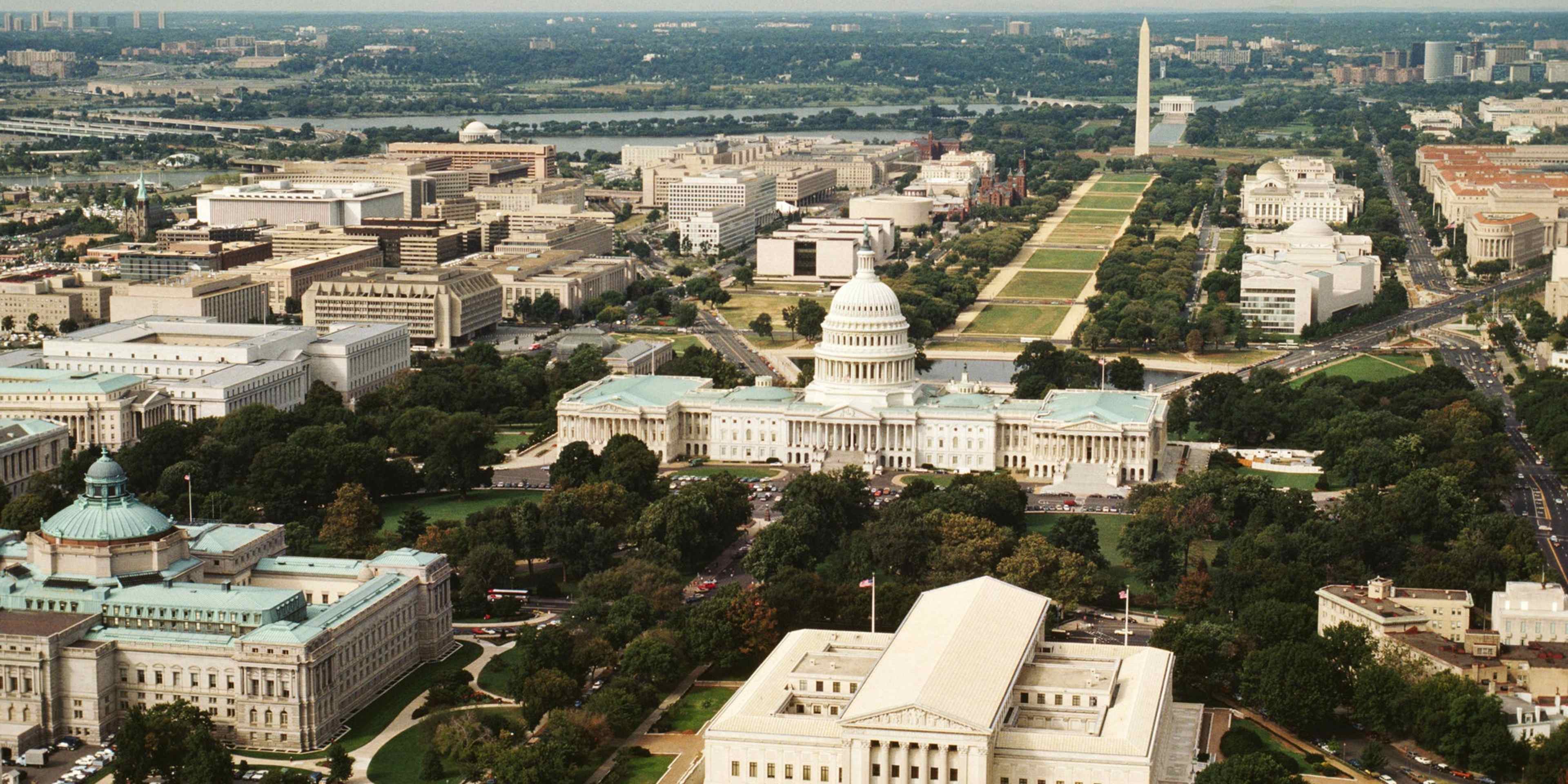
Before European colonizers arrived, the region along the Anacostia and Potomac Rivers was the ancestral home of the Nacotchtank people, also known as the Anacostans. They were a thriving agricultural and trading community. However, by the late 17th century, British colonists had systematically driven the Nacotchtank from their ancestral lands. The territory was eventually integrated into the colonies of Maryland and Virginia. In the years following the American Revolutionary War, the newly formed United States faced a critical question: Where should the permanent seat of the national government be located? The answer would be shaped by a delicate political compromise.
The Constitutional Foundation and James Madison’s Vision
The legal framework that governs Washington, D.C. originates directly from the U.S. Constitution. Under Article 1, Section 8, Clause 17, the Constitution granted Congress the power to establish a federal district ‘not exceeding ten miles square’ to serve as the permanent seat of the government, over which Congress would ‘exercise exclusive legislation.’ This setup was designed specifically to protect the federal government from local interference. In 1783, a mob of angry, unpaid Revolutionary War veterans mutinied outside Congress in Philadelphia, and the Pennsylvania state government refused to intervene to protect the national lawmakers. This humiliating event convinced the founders that the federal capital must not depend on any individual state for its security.
Writing in Federalist No. 43, James Madison argued that an independent federal district was essential to prevent any single state from holding too much power or leverage over the national government. This delicate division of authority was a cornerstone of how the early Republic operated; you can learn more about how the Founding Fathers divided power between states and federal governments to understand this structural philosophy. To satisfy southern states, who feared northern dominance, a deal was struck: the capital would be located in the South, along the Potomac River. Through the Residence Act of 1790, Maryland and Virginia ceded land to create the District of Columbia. President George Washington personally selected the location and laid out a perfect diamond-shaped boundary for the new federal enclave.
A Chronology of Disenfranchisement: Key Events Timeline
- 1790 (The Residence Act): Congress authorizes the creation of a federal district on land ceded by Maryland and Virginia.
- 1801 (The Organic Act): Congress officially takes control of the District of Columbia. Under this act, residents are stripped of their right to vote in Maryland or Virginia federal elections, leaving them with no voting representation in Congress.
- 1846 (The Retrocession of Alexandria): Fearing that Congress might abolish the slave trade within the federal district, the residents of Alexandria vote to return their portion of the land back to Virginia, changing the district’s diamond shape to its current layout.
- 1867 (Reconstruction-Era Voting Rights): Congress grants Black male residents of D.C. the right to vote in local municipal elections, leading to significant political representation for African Americans.
- 1871 & 1874 (Dismantling of Local Government): In response to the growing political influence of Black voters, Congress dismantles D.C.’s local representative government, replacing it with an appointed board of commissioners.
- 1961 (The 23rd Amendment): The amendment is ratified, finally granting D.C. residents the right to vote in presidential elections, though limiting their electoral votes to three.
- 1973 (The Home Rule Act): Congress grants D.C. the right to elect its own mayor and city council, though Congress retains absolute veto power over all local legislation.
- 1978 (D.C. Voting Rights Amendment): Congress passes a constitutional amendment to grant D.C. full representation in Congress. However, the amendment fails to secure ratification by the required 38 states by its 1985 deadline.
- 2016 (The Modern Fight): D.C. updates its standard license plates to read ‘End Taxation Without Representation’ to emphasize the ongoing struggle for statehood.
Key Figures Who Shaped the History of Washington, D.C.
Several prominent historical figures played crucial roles in the evolution, suppression, and defense of D.C.’s political rights:
- George Washington: The nation’s first president chose the exact geographical location of the capital, visualizing a grand, symmetric city. Unlike the original 13 colonies and states, which quickly established local self-determination and legislative power, the district Washington designed would face a unique path of federal control.
- John Tyler Morgan: A former Confederate general and long-serving U.S. Senator from Alabama, Morgan was a vocal advocate for stripping D.C. residents of their voting rights. He openly admitted that Congress abolished D.C.’s local government in the 1870s to ‘get rid of the rats,’ referring directly to the city’s growing and politically active Black population.
- Walter E. Washington: In 1974, he became the first elected mayor of Washington, D.C. under the Home Rule Act, making him the first African American mayor of a major U.S. city and a crucial figure in the modern push for self-governance.
The Interplay of Race and Reconstruction in D.C.’s Status
The racial makeup of Washington, D.C. has historically been a primary driver behind congressional reluctance to grant the city self-governance or statehood. Following the Civil War and the abolition of slavery, the federal capital became a haven for newly freed African Americans. During Reconstruction, Black men quickly organized, registered to vote, and won seats in local municipal offices. This rapid rise of Black political power deeply threatened white supremacists in Congress.
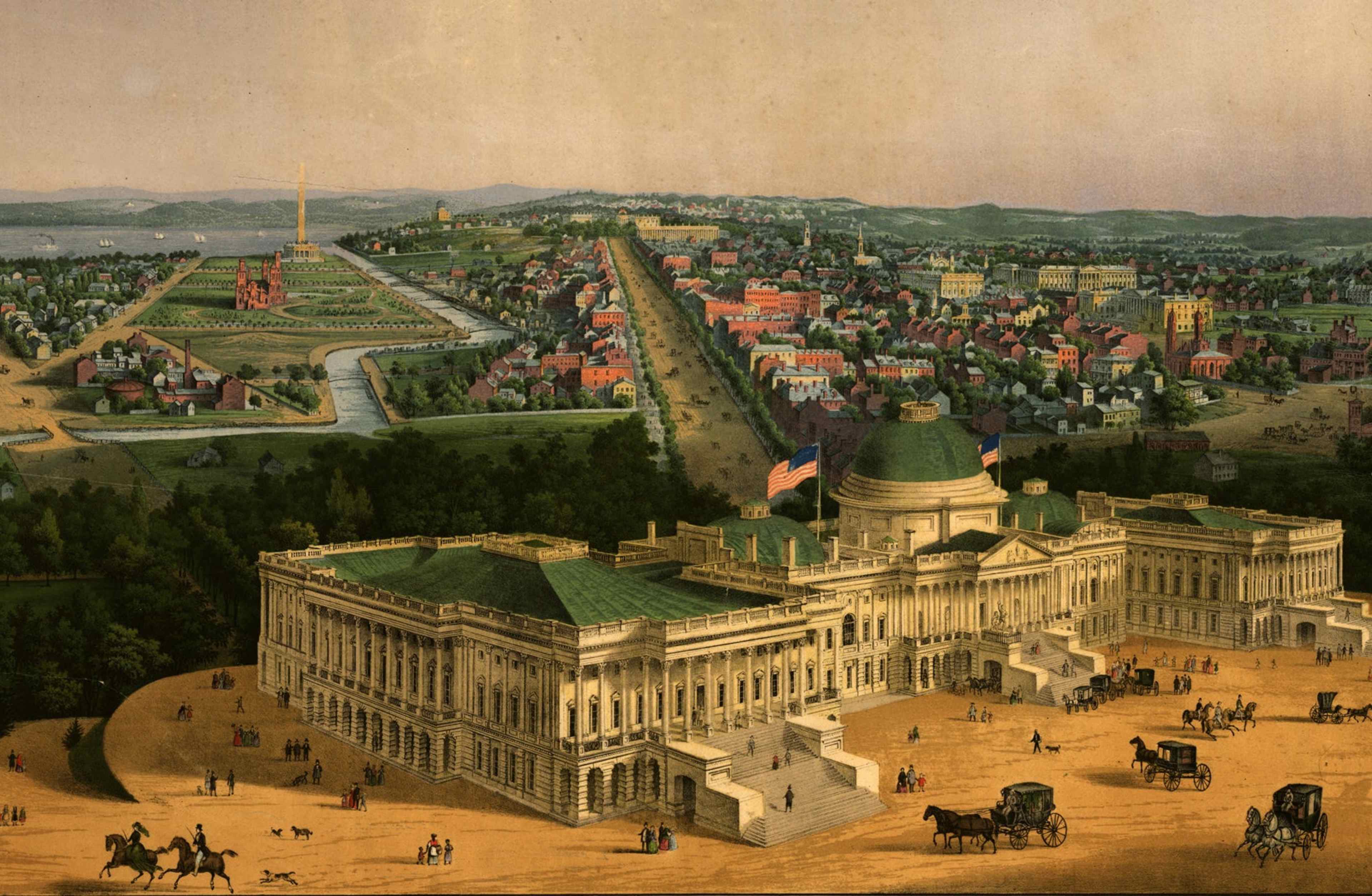
To suppress this burgeoning democratic movement, conservative congressional leaders dissolved the local government in the 1870s. This move systematically replaced an elected system with a federally appointed commission. This disenfranchisement stayed in place for nearly a century. In 1957, Washington, D.C. became the nation’s first major city with a majority-Black population, peaking at 71 percent in 1970. Conservative lawmakers openly worried that giving D.C. self-rule or congressional representation would result in the election of Black leaders. The push for D.C. statehood represents one of the modern battles for voting rights, echoing other great strides for freedom in US history.
Lesser-Known Historical Facts About Washington, D.C.
The Shrinking Diamond: D.C. was originally a perfect 10-by-10-mile square. However, in 1846, Virginia reclaimed its portion of the district (south of the Potomac River) because of fears that the burgeoning northern abolitionist movement in Congress would outlaw the slave trade in the capital. This process, known as retrocession, explains why D.C. has an irregular, non-symmetrical shape today.
Commuters Have More Rights Than Residents: While full-time residents of D.C. faced centuries of voting restrictions, the politicians, presidents, and federal workers who commuted to or lived temporarily in the capital suffered no such limits. Because they maintained voter registration in their home states, they could always vote for federal offices, creating a stark local-versus-national divide.
More Populous Than Multiple States: Today, Washington, D.C. has a population of roughly 700,000 residents. This makes the federal district more populous than both Wyoming and Vermont, and comparable to Alaska and North Dakota. Yet, those states have two voting Senators and a voting House representative each, while D.C. residents have none.
Why This History Still Matters Today
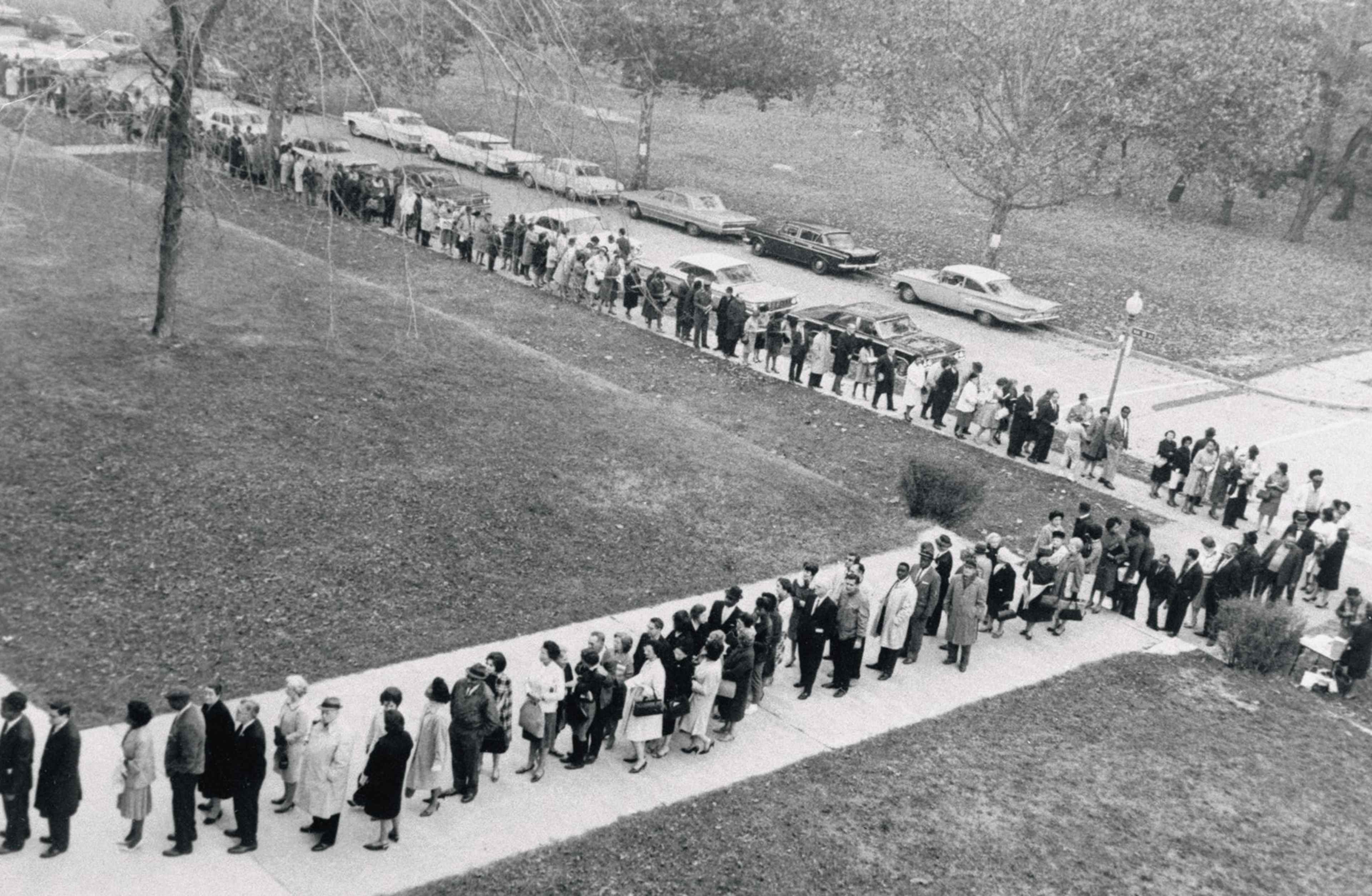
The status of Washington, D.C. is not just a legacy issue; it is a highly active modern constitutional and civil rights debate. Proponents of statehood argue that denying representation to hundreds of thousands of tax-paying U.S. citizens is a violation of basic democratic values. Opponents argue that the Constitution mandates complete federal authority over the district, meaning statehood would require a constitutional amendment. However, legal scholars suggest that Congress could simply shrink the federal district to include only the National Mall, Capitol, and White House, while admitting the remaining residential neighborhoods as the 51st state, tentatively named the state of Washington, Douglass Commonwealth.
People Also Ask
Do residents of Washington, D.C. pay federal taxes?
Yes, residents of Washington, D.C. pay full federal income taxes, as well as local taxes. In fact, D.C. residents often pay more in federal taxes per capita than residents of any of the 50 states.
Can D.C. residents vote in presidential elections?
Yes, thanks to the ratification of the 23rd Amendment in 1961, D.C. residents can vote for president. However, the district is constitutionally limited to three electoral votes, regardless of how large its population grows.
Does D.C. have anyone representing them in Congress?
D.C. has one non-voting delegate in the House of Representatives (currently Eleanor Holmes Norton). While she can draft legislation, speak on the House floor, and serve on committees, she cannot vote on the final passage of any bills.
Conclusion
The unique status of Washington, D.C. remains one of the most enduring constitutional paradoxes in the United States. Designed by the Founding Fathers to protect the federal government from state overreach, the district eventually evolved into a tool of racial disenfranchisement during the post-Civil War era. Today, as the city’s license plates remind the world, the fight to end ‘Taxation Without Representation’ is far from over, serving as an ongoing reminder of the unfinished business of American democracy.


