Long before the infamous Salem witch trials of 1692 captured the public imagination and left an indelible scar on colonial American history, a darker and largely forgotten hysteria raged in Connecticut. In 1662, the small, deeply religious settlement of Hartford became the epicenter of the first American witch hunt, a terrifying panic that pitted neighbors against each other three decades before Salem’s outbreak. This early colonial crisis did not emerge in a vacuum; it was fueled by intense Puritan anxiety, grief over childhood illness, and a literal interpretation of biblical law. Today, understanding the Hartford witch trials is critical because they reveal that America’s struggle with mass hysteria, religious extremism, and judicial scapegoating began much earlier than we typically remember. It was a pivotal moment in early American colonial history when superstition and legal authority merged to tragic ends, shaping the legal and religious landscape of New England for generations to come.

Historical Background: The Dawn of Witch Hunting in New England
To understand how such a panic could consume Hartford, we must look to the mid-17th century. The Connecticut Colony, founded by devout Puritans who sought to build a “city upon a hill,” was a place of strict religious conformity. In 1642, the colonial government decreed twelve capital crimes, placing witchcraft alongside murder, treason, and kidnapping. The legal basis for this was drawn directly from Old Testament scripture, such as Exodus 22:18: “Thou shalt not suffer a witch to live.”
The fears of the invisible world were very real to these settlers. In May 1647, Connecticut witnessed the first execution of a suspected witch in the American colonies when Alse Young (often recorded as Alice Young) of Windsor was hanged in Hartford’s Meeting House Square, now the site of the Old State House. While occasional accusations occurred over the subsequent fifteen years, the underlying anxieties of the community reached a boiling point in the spring of 1662, initiating the infamous Hartford Witch Panic.
Key Events Timeline
To trace this harrowing chapter in early American history, here is the chronological sequence of the Hartford witch trials:
- 1642: Connecticut’s colonial government officially establishes witchcraft as a capital crime, citing biblical scriptures as legal precedents.
- May 26, 1647: Alse Young is executed in Hartford, marking the first recorded witch-hanging in the American colonies.
- Late March 1662: Eight-year-old Elizabeth Kelly dies after returning home from a visit with her neighbor, Goodwife (Goody) Ayres, sparking the Hartford Witch Panic.
- Spring 1662: The pious Ann Cole suffers from violent, blasphemous fits, accusing her neighbor, Rebecca Greensmith, of bewitching her.
- Autumn 1662: Goody Ayres and her husband flee Hartford to escape prosecution. Meanwhile, Nathaniel and Rebecca Greensmith are subjected to the “swimming test” and subsequently indicted.
- January 1663: Rebecca Greensmith confesses to having a covenant with the Devil in open court. She and her husband Nathaniel, along with Mary Sanford and Mary Barnes, are executed on the gallows.
- 1665–1666: Elizabeth Seager is convicted of witchcraft, but Connecticut Governor John Winthrop Jr. intervenes and reverses the verdict, establishing a new legal skepticism.
- May 25, 2023: Nearly 376 years later, the Connecticut General Assembly officially adopts a resolution exonerating all colonial-era witch trial victims.
Important Figures and Their Lasting Impact
Several individuals played defining roles during the 1662 Hartford panic:
- Elizabeth Kelly: An eight-year-old child whose sudden illness and tragic death served as the primary catalyst for the 1662 panic. Her grieving parents, John and Bethia Kelly, claimed she was possessed by their neighbor.
- Goody Ayres: The first woman accused in the 1662 outbreak. Fearing for her life after Elizabeth’s death, she and her husband fled the colony, successfully escaping the gallows.
- Ann Cole: A deeply religious young woman whose fits, shaking, and “demonic discourses” convinced the community that Satan was actively recruiting witches in Hartford. She pointed her finger at the Greensmiths.
- Rebecca and Nathaniel Greensmith: A local couple targeted by Cole and others. Rebecca, described as “lewd and ignorant,” shocked the community by confessing to having “familiarity with the Devil.” She and her husband were both hanged.
- Governor John Winthrop Jr.: The brilliant, scientifically minded governor of Connecticut. His return from England in late 1662 introduced a level of skepticism and rigorous evidentiary standards that ultimately brought an end to the executions in Connecticut.
Causes and Context: The Roots of Colonial Hysteria
The Hartford witch trials were not merely the result of superstition; they were the product of a complex web of social, economic, and geopolitical pressures:
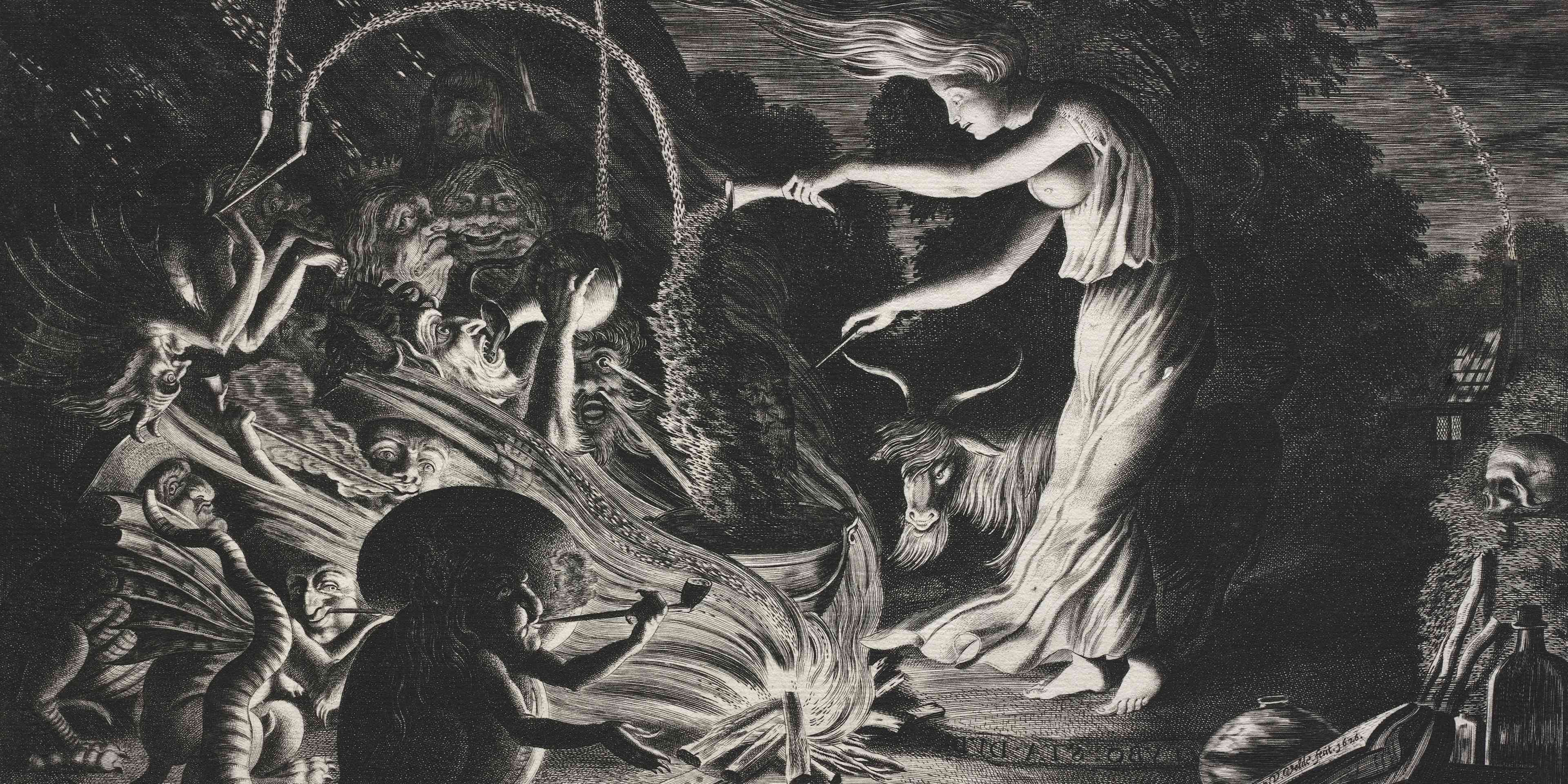
- The Puritan Worldview: For the Puritans, the Devil was not a metaphorical figure but an active, physical adversary. Any misfortune—crop failure, epidemic, or sudden death—was interpreted as either God’s punishment or the Devil’s work.
- Social and Gender Dynamics: The women accused of witchcraft were frequently those who lived on the margins of society. They were often poor, elderly, non-conformist, or widowed women without male protectors, making them easy targets for scapegoating.
- Absence of the Governor: During the initial outbreak of the 1662 panic, Governor John Winthrop Jr. was away in England securing the colony’s royal charter. In his absence, local magistrates and conservative ministers like Samuel Stone acted without restraint, allowing the hysteria to spread rapidly.
Major Turning Points: Science, Skepticism, and the Law
The primary turning point of the Hartford panic was the return of Governor John Winthrop Jr. in late 1662. Unlike the local ministers who viewed every unusual fit as a sign of demonic possession, Winthrop possessed a keen interest in alchemy, natural philosophy, and medicine.
Upon his return, Winthrop insisted that accusations required more than just “spectral evidence” or the accusations of an “afflicted” person. He demanded tangible proof and multiple eyewitnesses. This change in judicial attitude was clearly demonstrated when Elizabeth Seager was convicted of witchcraft in 1665; Winthrop used his executive authority to overturn the verdict, effectively signaling that the era of easy convictions and executions was over in Connecticut.
Long-Term Impact on America’s Legal System
Though smaller in scale than Salem, the Hartford trials left a profound legacy. The legal reforms initiated by Winthrop and other reform-minded magistrates in Connecticut set a crucial precedent. They established that “spectral evidence”—such as dreaming of a witch or seeing their spirit—was insufficient for a capital conviction.
By the time the Salem trials erupted in Massachusetts in 1692, Connecticut’s courts had developed a deep skepticism toward witchcraft cases. While Fairfield experienced a brief panic in 1692, the magistrates refused to carry out any executions, famously stating that “those who will make witchcraft of such things will make hanging work apace”. This early skepticism in Connecticut represented a critical evolutionary step in American jurisprudence toward the protection of the accused and the requirement of physical evidence.
Lesser-Known Facts and Fascinating Anecdotes
- The Bizarre “Dutch Accent”: During her fits, Ann Cole reportedly began speaking with a “Dutch accent,” which local Puritan ministers interpreted as the literal voice of a demon using her lips to mock the English settlers.
- The Bizarre Case of Lydia Gilbert: Years before the 1662 panic, in 1654, a man in Windsor was accidentally shot and killed by another settler’s musket. Rather than chalking it up to user error, the community accused a woman named Lydia Gilbert of using witchcraft to direct the bullet, resulting in her execution.
- The Swimming Test: The Greensmiths were subjected to the infamous “swimming test” in Hartford. Based on the belief that water, being a pure element, would reject a witch, the accused were bound hand and foot and thrown into a body of water. If they floated (rejected by the water), they were guilty; if they sank, they were deemed innocent (though they risked drowning in the process).
Why It Still Matters Today: Confronting Past Injustices
The history of the Hartford witch trials is not merely a relic of a distant, superstitious past; it remains deeply relevant in modern times. It serves as a stark warning about the dangers of unchecked mass panic, scapegoating, and the weaponization of the legal system against marginalized communities.

The struggle for justice for these victims has continued into the 21st century. On May 25, 2023, the Connecticut General Assembly made headlines by passing a resolution that officially exonerated all individuals convicted of witchcraft during the colonial era. Spearheaded by the Connecticut Witch Trial Exoneration Project—many of whom are direct descendants of the accused—this modern resolution serves as a powerful reminder that history must be actively confronted, and that it is never too late to correct historical injustices and clear the names of the innocent.
People Also Ask
Who was the first person executed for witchcraft in America?
The first recorded person executed for witchcraft in the American colonies was Alse Young (also known as Alice Young) of Windsor, Connecticut. She was hanged in Hartford’s Meeting House Square on May 26, 1647, forty-five years before the Salem witch trials.
How did the Hartford witch trials differ from the Salem witch trials?
The Hartford witch trials occurred thirty years before Salem, on a smaller scale. However, unlike Salem, where the judicial system succumbed entirely to the hysteria, the Hartford trials ended because secular leaders like Governor John Winthrop Jr. intervened to enforce stricter evidentiary standards, ultimately preventing further executions in Connecticut.
When were the victims of the Connecticut witch trials exonerated?
The victims of the Connecticut witch trials were officially exonerated on May 25, 2023, when the Connecticut State Senate passed a resolution expressing deep regret for the trials and officially absolving all accused colonists of their alleged crimes.
Conclusion: A Legacy of Redemption
The tragedy of the Hartford witch trials of 1662 serves as a sobering reminder of the fragile nature of justice when gripped by fear and religious hysteria. Long before Salem became a household name, the citizens of Hartford grappled with the devastating consequences of pointing fingers at their neighbors. Yet, out of this darkness emerged the first steps toward a more skeptical, rational legal system. Today, with the recent exoneration of these long-forgotten victims, Connecticut has finally closed a painful chapter of its colonial past, ensuring that the names of the innocent are preserved with the respect and dignity they were denied in life.


