Following the catastrophic end of the American Civil War, the United States embarked on Reconstruction (1865–1877)—a tumultuous effort to rebuild and reintegrate the devastated Southern states back into the Union. During this era of political instability and rapid social change, two derogatory slurs emerged as powerful weapons of political warfare: carpetbagger and scalawag. For white Southern Democrats opposing these changes, these labels represented a perceived threat to their traditional social order. To understand how these words shaped post-war politics, one must look beyond the bitter rhetoric. While popular myths portrayed these individuals as corrupt opportunists and treacherous turncoats, the reality of who they were and what they stood for is far more complex. These figures played pivotal roles in implementing the federal government’s policies, which was a critical extension of the debate over how the Founding Fathers divided power between states and federal governments. Ultimately, their stories are vital to understanding the fragile evolution of American democracy.
Defining the Terms: What Is the Difference?
To grasp the political dynamics of the Reconstruction era, it is essential to distinguish between these two deeply resented groups. While both supported the Republican Party and the federal Reconstruction policies, their origins and motivations differed significantly.
The Carpetbagger: Northerners in the South
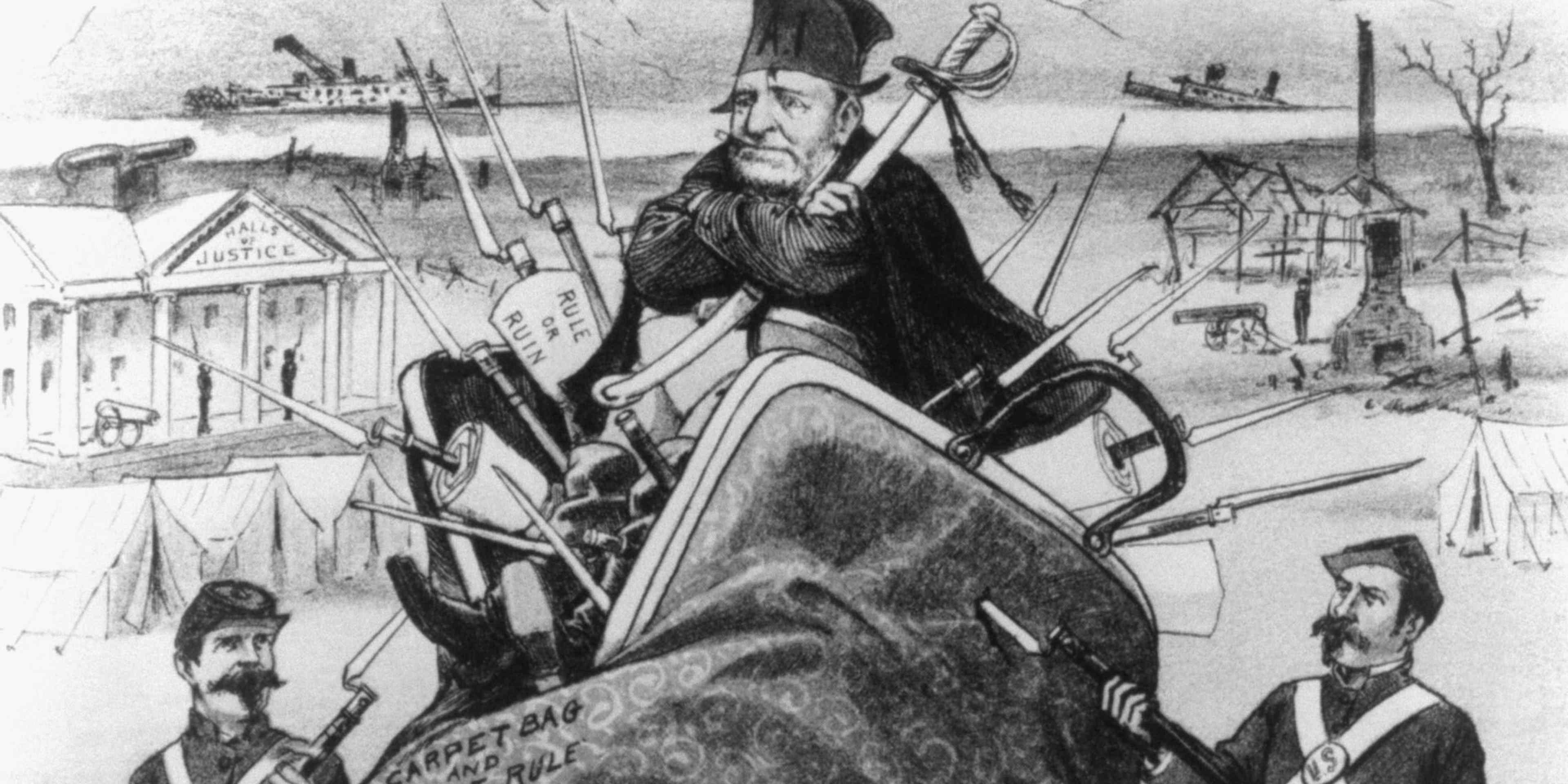
A carpetbagger was a derogatory term used by white Southerners to describe Northerners who moved to the South immediately after the Civil War. The term itself derived from “carpet bags,” a popular and relatively cheap form of luggage made from carpet fabric. Southern critics claimed these newcomers were so poor and shiftless that they could pack all their worldly possessions into a single, flimsy bag, moving South solely to profit from the region’s economic ruin and political chaos.
In reality, the stereotype of the uneducated, greedy schemer was largely a myth. The vast majority of Northerners who migrated South during Reconstruction were well-educated, middle-class professionals. They included Union Army veterans, lawyers, businessmen, teachers, and agents of the Freedmen’s Bureau. While some certainly sought new economic opportunities in the devastated region, many others were motivated by a genuine desire to assist newly emancipated African Americans, establish public schools, and participate in political reform.
The Scalawag: Southern Republican Allies
If carpetbaggers were viewed as predatory outsiders, scalawags were seen as local traitors. A scalawag was a white Southerner who supported Republican Reconstruction policies and collaborated with Northern newcomers and newly enfranchised Black voters. To conservative Southern Democrats, these individuals were turncoats who had betrayed their own race and region for political power or financial gain.
The origins of the word “scalawag” are somewhat obscure, but before the Civil War, the term was commonly used to describe worthless, diseased livestock or a good-for-nothing individual. Applying this term to fellow Southerners was a calculated move to dehumanize and socially isolate white Republicans. In truth, scalawags were a diverse group. Many were small-scale, non-slaveholding farmers who had remained loyal to the Union during the war and deeply resented the wealthy planter elite who had led the South into secession. Others were Southern merchants, industrial promoters, and professionals who believed that aligning with the Republican Party was the fastest way to modernize and rebuild the Southern economy.
Historical Background: Reconstruction (1865–1877)
The rise of carpetbaggers and scalawags can only be understood within the context of the Reconstruction era. Following the Union victory in 1865, the Confederate States of America collapsed, leaving behind a ruined economy, destroyed infrastructure, and four million newly freed African Americans. The central question facing the nation was how to rebuild the South and integrate these freedmen into American society as full citizens.
Under the leadership of Radical Republicans in Congress, the federal government took control of Reconstruction in 1867. They passed the Reconstruction Acts, which placed the former Confederacy under military rule and required Southern states to draft new constitutions. To be readmitted to the Union, these states had to ratify the 14th Amendment (guaranteeing equal protection under the law) and the 15th Amendment (guaranteeing voting rights regardless of race). This era marked some of the most great strides for freedom in US history.
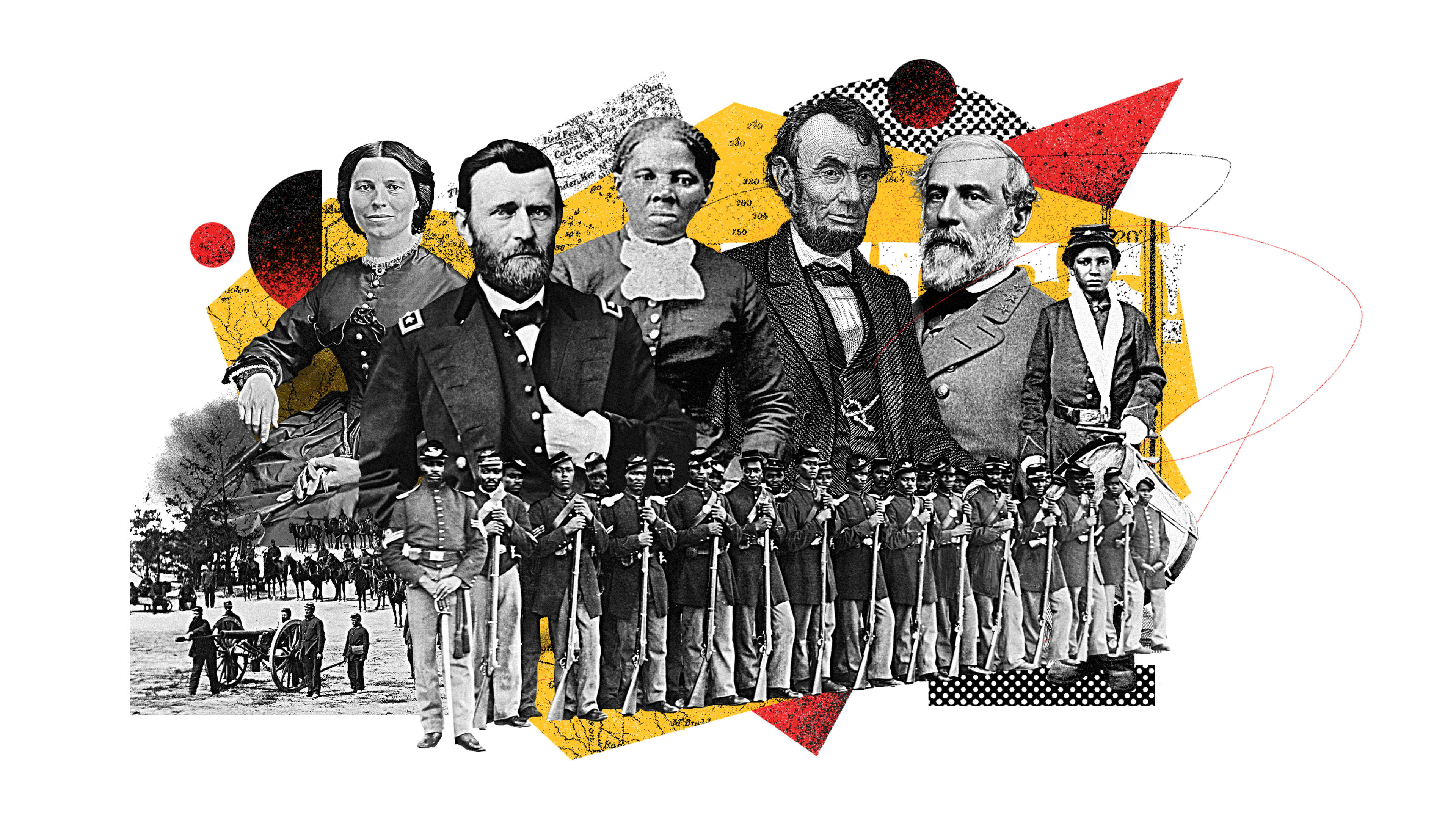
Because many former Confederate leaders were temporarily disenfranchised for their role in the rebellion, a new political coalition emerged to lead the South. This coalition consisted of three main groups: carpetbaggers, scalawags, and newly enfranchised Black voters. Together, they formed Republican state governments across the South, launching a brief but revolutionary period of biracial democracy.
Timeline of Reconstruction and Political Warfare
- 1865: The American Civil War ends. The Freedmen’s Bureau is established, bringing Northern teachers, missionaries, and professionals (soon labeled carpetbaggers) to the South to help build schools and hospitals.
- 1867: Congress passes the Reconstruction Acts. The South is divided into five military districts, and Southern states are ordered to hold constitutional conventions using universal male suffrage.
- 1868: New state constitutions are drafted across the South, heavily influenced by Northern newcomers and Southern Unionists. Republican state governments are elected throughout the region.
- 1870: Hiram Revels of Mississippi is sworn in as the first African American to serve in the United States Senate, demonstrating the political power of the Republican coalition.
- 1871: The rise of white supremacist vigilante groups, such as the Ku Klux Klan, targets carpetbaggers, scalawags, and Black voters with violence and intimidation to undermine Republican rule.
- 1877: The Compromise of 1877 resolves the disputed 1876 presidential election. Federal troops are withdrawn from the South, leading to the collapse of the remaining Republican state governments and the rise of the “Redeemers”.
Prominent Figures of the Reconstruction Era
To understand the actual human stories behind the caricatures of carpetbaggers and scalawags, it is helpful to look at several key historical figures who shaped this era:
- Adelbert Ames (The Carpetbagger): A decorated Union General and Medal of Honor recipient from Maine, Ames settled in Mississippi after the war. He was elected as a Republican U.S. Senator and later served as Governor of Mississippi. Ames was a passionate advocate for the civil rights of Black citizens and worked tirelessly to protect them from white supremacist violence. Ultimately, he was forced out of office when white Democrats regained control of the state through electoral fraud and terror.
- James Lusk Alcorn (The Scalawag): A wealthy, prominent Mississippi planter and pre-war Whig politician, Alcorn initially supported the Confederacy but quickly joined the Republican Party after the war. Believing that cooperation with the Union was the only way to save the South from ruin, Alcorn served as the Republican Governor of Mississippi and later as a U.S. Senator. He clashed frequently with Northern carpetbaggers like Ames, advocating for a more conservative, Southern-led Republican party.
- Hiram Revels (The Bridge): An educated, free-born Black minister from North Carolina, Revels moved to Mississippi during Reconstruction. In 1870, the state legislature—dominated by a coalition of carpetbaggers, scalawags, and Black representatives—elected him to the U.S. Senate, where he filled the seat formerly held by Confederate President Jefferson Davis. Revels worked to advocate for education and racial reconciliation, symbolizing the progressive potential of the Reconstruction governments.
The Achievements vs. The Myth: Major Turning Points
For nearly a century after Reconstruction ended, the dominant historical narrative—promoted heavily by the “Dunning School” of historians in the early 20th century—painted carpetbaggers and scalawags as corrupt villains who bankrupted the South. This biased view was widely popularized in books, movies like Gone with the Wind, and school textbooks, justifying the rise of Jim Crow laws and the disenfranchisement of Black voters.
However, modern historians have thoroughly debunked these myths, highlighting the remarkable achievements of these Reconstruction-era governments. Despite facing constant threats of violence, the Republican coalitions of carpetbaggers, scalawags, and Black politicians enacted major reforms that transformed Southern society:
- The South’s First Public Schools: Prior to the Civil War, the South had no comprehensive public school system. Reconstruction governments established the region’s first state-funded public schools for both white and Black children.
- Democratic Reforms: They eliminated property qualifications for voting and holding office, making Southern politics far more democratic for poor whites as well as Black citizens.
- Civil Rights Protections: They passed laws prohibiting racial discrimination in public accommodations and integrated state institutions.
- Infrastructure Rebuilt: They heavily funded the rebuilding of destroyed railroads, bridges, roads, and public buildings, helping to integrate the Southern economy into the national market.
The turning point that destroyed these governments was not internal corruption, but rather a coordinated campaign of terror led by white supremacist organizations like the Ku Klux Klan and political coalitions known as “Redeemers”. Through systematic violence, intimidation, and eventually the withdrawal of federal military support in 1877, conservative Southern Democrats overthrew the Republican state governments and established a century of segregation.
Lesser-Known Facts About Carpetbaggers and Scalawags
1. The Etymology of “Scalawag” Came from Scottish Livestock
The word “scalawag” did not originate in the American South. Historical linguists trace its roots back to the old Scottish village of Scalloway in the Shetland Islands, known for its small, scraggly, and inferior livestock. By the 1840s, the word had migrated to American cattle markets, where it was used as a slang term for diseased, cheap, or worthless farm animals before being adapted as a political slur.
2. Many “Carpetbaggers” Were Union Soldiers Who Fell in Love with the South
While Southern propaganda portrayed carpetbaggers as greedy vultures arriving to plunder the defeated states, a massive portion of these Northern transplants were actually Union soldiers who had marched through the South during the war. Mesmerized by the region’s warm climate, natural beauty, and agricultural potential, they returned after the war with their personal savings to invest in local businesses, buy farms, and build new lives.
3. Prominent Confederate Leaders Became Scalawags
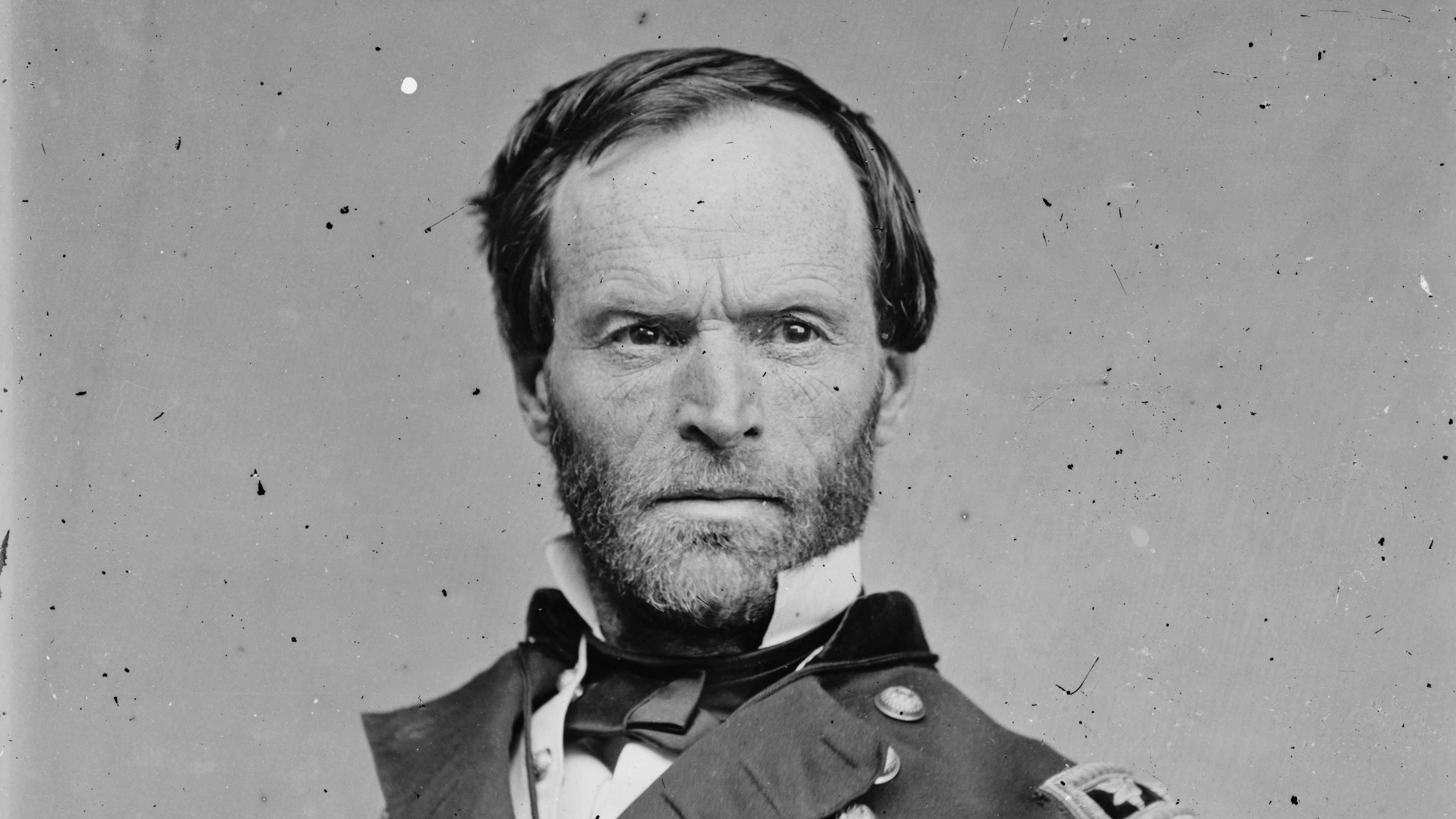
Perhaps the most shocking revelation to white Southern Democrats was when highly respected Confederate military leaders joined the Republican Party. James Longstreet, one of General Robert E. Lee’s most trusted commanders, became a Republican after the war. Longstreet argued that the South must accept the reality of its defeat and cooperate with the federal government. For his pragmatism, he was branded a scalawag, ostracized by his peers, and largely erased from Southern military monuments for decades.
Long-Term Impact on America & Why It Still Matters Today
The political battles of the Reconstruction era left a permanent imprint on the American landscape. The structural and constitutional changes enacted during this brief period, including the 14th and 15th Amendments, ultimately laid the legal foundation for the modern Civil Rights Movement of the 1950s and 1960s. Without the radical experiments in biracial democracy led by carpetbaggers, scalawags, and newly freed slaves, the legal definitions of American citizenship and equal protection would not exist in their current form.
Furthermore, the terms themselves have evolved but remain highly relevant in contemporary political discourse. Today, “carpetbagger” is still used as a political slur to describe a candidate who runs for office in a state or district where they have no deep geographical roots or historical ties. It continues to evoke a sense of local resentment against opportunistic outsiders, demonstrating how the deep-seated divisions of the Reconstruction era still echo in modern American life.
People Also Ask
What was the difference between a carpetbagger and a scalawag?
A carpetbagger was a Northerner who moved to the South during the Reconstruction era, whereas a scalawag was a native white Southerner who supported the Republican Party and federal Reconstruction policies.
Why were carpetbaggers and scalawags hated?
They were hated by conservative white Southern Democrats because they aligned politically with newly emancipated Black voters and the federal government, challenging the traditional white-dominated social and economic hierarchy of the South.
Were carpetbaggers actually corrupt?
While some individual carpetbaggers were opportunistic and corrupt, historical evidence shows that the vast majority were middle-class professionals, teachers, and Union veterans who successfully established the South’s first public school systems and rebuilt the region’s infrastructure.
Conclusion
The history of the carpetbaggers and scalawags is a powerful reminder of how political rhetoric and slurs can distort historical truth for generations. Long portrayed as the villains of the post-Civil War era, these individuals were actually complex figures who, alongside newly freed African Americans, attempted to build a more democratic, equitable, and modern South. By peeling back the layers of myths and prejudice surrounding these terms, we gain a far deeper and more accurate understanding of the struggles, achievements, and enduring legacy of American Reconstruction.


