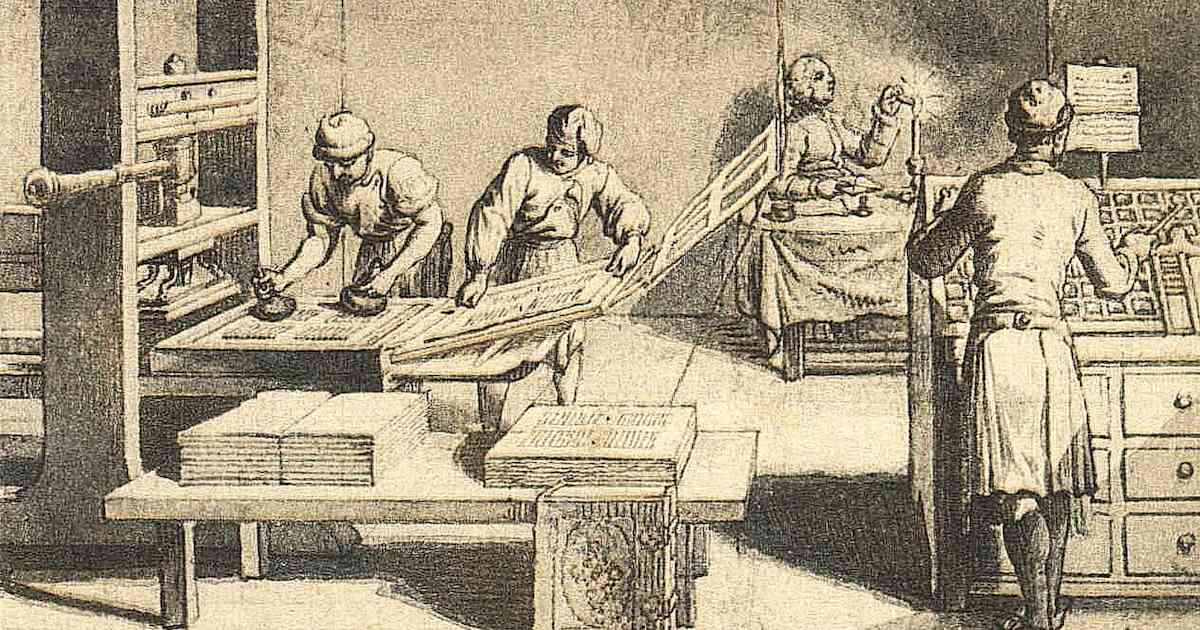
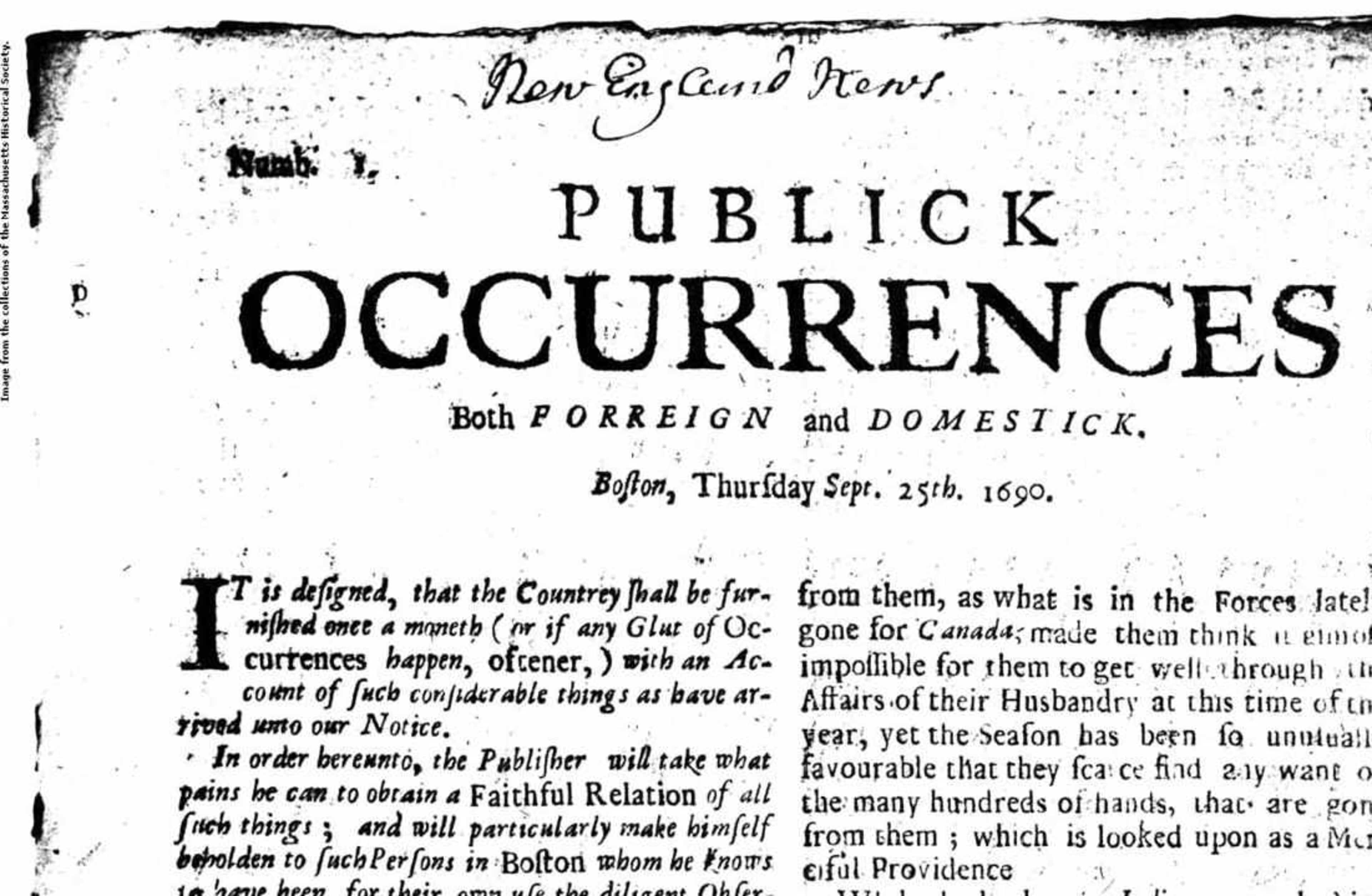
On September 25, 1690, a quiet revolution took place on the cobblestone streets of Boston, Massachusetts, when a pioneering publisher distributed a three-page printed sheet that would forever alter the course of early colonial history. This publication was the first American newspaper, boldly titled Publick Occurrences Both Forreign and Domestick. Masterminded by Benjamin Harris, a radical English bookseller who had fled to New England to escape political and religious persecution, this fledgling paper was designed to provide a “Faithful Relation” of local and international events. At a time when colonists relied on slow-moving town meetings, pulpit announcements, and random letters for information, Harris’s venture promised a structured, monthly window into the wider world. However, his bold experiment in independent journalism lasted exactly one issue; outraged colonial authorities suppressed the paper and confiscated all available copies just four days later. Despite its near-instantaneous ban, this first American newspaper remains a monumental milestone in American history, representing the earliest battle for the freedom of the press and setting the stage for the democratic principles that would define the United States nearly a century later.
The Historical Background: A Colony in Turmoil
To understand why the creation of a simple newspaper caused such an uproar, one must look at the highly charged atmosphere of late 17th-century New England. In 1690, the Massachusetts Bay Colony was recovering from years of deep political instability. The colonies were embroiled in King William’s War (1689–1697), the North American theater of a massive European conflict between England and France. This war pitted British settlers and their Native American allies against French forces and their respective indigenous partners. At the same time, domestic British politics had been turned upside down by the Glorious Revolution of 1688, which deposed the Catholic King James II in favor of the Protestant monarchs William and Mary. When news of this regime change reached Boston, local colonists promptly staged a revolt, ousting the highly unpopular royal governor, Sir Edmund Andros. In the resulting power vacuum, the aging Puritan leader Simon Bradstreet was reinstated as governor. It was within this climate of extreme geopolitical tension and delicate political transition that Benjamin Harris decided the time was ripe to introduce the first American newspaper, believing that the public’s thirst for news was at an all-time high.
Meet the Key Figures Behind the Story
The saga of the first American newspaper features a cast of fascinating characters whose actions defined the boundaries of free speech in early America. Here are the primary figures who shaped this historic event:
- Benjamin Harris: A pugnacious and politically active London printer, Harris was a staunch Whig who had previously been arrested, fined, and imprisoned in England for publishing anti-Catholic tracts. Fleeing English censorship in 1686, he arrived in Boston, where he opened the London Coffee-House—a vital intellectual hub—and published the highly successful New-England Primer, which became the standard reading textbook for millions of colonial children.
- Governor Simon Bradstreet: The last governor of the Massachusetts Bay Colony under its original charter, Bradstreet was a traditionalist Puritan who prioritized colonial stability above all else. Fearing that unlicensed printing would disrupt delicate war efforts and anger the English Crown, he issued the executive order that permanently banned Harris’s newspaper.
- Major General Fitz-John Winthrop: An influential colonial military leader who commanded the unsuccessful Western Expedition against Canada in 1690. Winthrop became the subject of intense controversy when Harris’s newspaper openly criticized his military conduct and the behavior of his Native allies.
- John Campbell: A Boston postmaster who took a much more cautious approach than Harris. Fourteen years after the suppression of Publick Occurrences, Campbell successfully launched the Boston News-Letter in 1704. By printing his paper “by authority”—meaning he submitted all drafts to the royal governor for approval before printing—Campbell established the first long-running newspaper in America.
Chronological Timeline of Colonial Journalism (1673–1704)
The following chronological timeline traces the turbulent journey of early news publication from the streets of London to the eventual birth of stable journalism in the American colonies:
- 1673–1681: Benjamin Harris operates a printing shop in London, publishing radical anti-Catholic pamphlets and a short-lived local news sheet called Domestic Intelligence.
- 1679: Harris is arrested and heavily fined by English authorities for printing Appeal from the Country to the City, an unauthorized tract opposing the succession of the Catholic Duke of York (the future King James II).
- 1686: Seeking a fresh start free from government harassment, Harris emigrates to Boston and establishes the London Coffee-House.
- 1689: The Glorious Revolution sweeps England, leading to the overthrow of Governor Edmund Andros in Boston. Simon Bradstreet returns to power.
- Early 1690: Harris compiles and prints the New-England Primer, securing his financial footing and establishing his reputation as a premier colonial publisher.
- September 25, 1690: Harris prints the historic first edition of Publick Occurrences Both Forreign and Domestick.
- September 29, 1690: Governor Bradstreet and the Massachusetts Council issue a strict cease-and-desist order, banning Harris’s newspaper and ordering all copies to be confiscated and destroyed.
- 1695: Unable to secure a license to publish another newspaper, Harris sells his colonial businesses and returns to London to continue his printing career.
- April 24, 1704: Postmaster John Campbell publishes the first issue of the Boston News-Letter, successfully introducing licensed, government-approved journalism to the colonies.
The Dual Controversies: Why the Paper Was Banned
While Governor Bradstreet’s official proclamation stated that Publick Occurrences was suppressed because it was published without a government license, historians agree that the true motive lay in the paper’s highly controversial content. Harris had committed two major editorial offenses that threatened the delicate sociopolitical order of the colony.
1. Criticizing Military Alliances and Indigenous Relations
The most politically damaging story in the newspaper was Harris’s reporting on King William’s War. Specifically, he criticized the English military commander, Fitz-John Winthrop, for his failed expedition against the French in Canada. More dangerously, Harris reported that English forces and their Mohawk allies had treated French prisoners “in a manner too barbarous for any English to approve.” During this volatile period, the Massachusetts government was heavily dependent on the military alliance with the Mohawk Nation to defend the frontiers against French incursions. By publicly accusing these vital allies of barbarism, Harris’s reporting threatened to destroy a crucial diplomatic relationship, which could have led to devastating consequences for the survival of the English colonies.
2. Spreading Salacious Royal Gossip
In addition to his local military critiques, Harris included a scandalous piece of international gossip regarding King Louis XIV of France. The paper claimed that the French monarch had engaged in an illicit affair with his son’s wife (the Dauphiness). While French-bashing was popular in Protestant Boston, the colonial council viewed the inclusion of such crude, unverified rumors about foreign royalty as highly improper and a threat to the dignity of the colony. The Puritan leadership believed that print should be reserved for moral, educational, and official government purposes, not salacious gossip.
The Long-Term Impact on America and the Rise of a Free Press
Although Publick Occurrences was silenced after just four days, its brief existence served as a vital opening salvo in the centuries-long battle for freedom of the press in North America. For several decades following the ban, colonial governors maintained a tight grip on printing. Publishers like John Campbell of the Boston News-Letter chose to play it safe, printing dry, government-approved summaries of European events rather than daring local reporting. However, the spirit of independent journalism could not be contained forever.
By 1721, James Franklin (the older brother of Benjamin Franklin) established the New-England Courant, which openly criticized the colonial administration and religious establishment without obtaining a license. This tradition of dissent was further solidified in the landmark John Peter Zenger trial of 1735, which established the legal precedent that publishing the truth cannot be prosecuted as libel. Eventually, this progressive evolution of media freedom culminated in the drafting of the First Amendment to the U.S. Constitution in 1789, cementing the protection of a free press as a cornerstone of American democracy. In many ways, the modern investigative journalist can trace their lineage directly back to the brave, albeit reckless, pioneering work of Benjamin Harris.
Lesser-Known Facts About America’s First Newspaper
Behind the well-known history of its suppression, Publick Occurrences holds several fascinating, lesser-known secrets that highlight the ingenuity and resourcefulness of early American printers:
- The Blank Fourth Page: The newspaper was printed on three pages of a folded sheet of paper, but the fourth page was left entirely blank. Harris designed it this way so that readers could write down their own local news, gossip, or business transactions in the margins before physically passing the paper along to friends and neighbors. This makes it an early precursor to modern interactive media!
- The Sole Surviving Copy: Because the Massachusetts government ordered all copies of the paper to be confiscated and destroyed, the publication was nearly lost to history forever. Fortunately, one copy escaped destruction and was sent to the Public Record Office in London as proof of the colony’s “insubordination.” This single surviving copy lay forgotten in the archives for more than 150 years until it was finally rediscovered by a historian in 1845.
- The Coffee House Connection: Harris didn’t just print news; he lived it. His London Coffee-House in Boston was one of the very few public spaces of the era where both men and women were welcome to gather, drink coffee, and discuss global affairs, making him a true pioneer of the democratic public sphere.
Why It Still Matters Today
The dramatic story of America’s first newspaper is far more than a dusty historical footnote; it is a highly relevant cautionary tale for the 21st century. Today, as society grapples with complex debates over online censorship, the spread of digital misinformation, algorithmic control of information, and the role of independent journalism in a polarized world, the fundamental conflict at the heart of Publick Occurrences remains unchanged. The struggle between Benjamin Harris’s desire to inform the public and Governor Bradstreet’s determination to maintain political order highlights the perpetual tension between state authority and individual liberty. It reminds us that access to independent, uncensored news is a fragile right that must be continuously defended by every generation.
People Also Ask
What was the very first newspaper in America?
The very first multi-page newspaper published in America was Publick Occurrences Both Forreign and Domestick, printed in Boston, Massachusetts, by Benjamin Harris on September 25, 1690.
Why was the first American newspaper shut down?
The newspaper was shut down by colonial Governor Simon Bradstreet and the Massachusetts Council because it was published without a government-issued license. Additionally, authorities were outraged by its controversial articles, which criticized British military relations with Mohawk allies and printed rumors about the French royal family.
Who published the first successful, long-running newspaper in the colonies?
John Campbell, the postmaster of Boston, published the first successful and long-running American newspaper, the Boston News-Letter, beginning in 1704. Unlike Benjamin Harris, Campbell printed his paper “by authority,” securing official approval from the royal government before each release.
What is the historical significance of Publick Occurrences?
Despite lasting only one issue, Publick Occurrences is highly significant because it represents the birth of American journalism and the earliest colonial challenge to government censorship, paving the long historical road toward the First Amendment and a free press.
Conclusion
The brief and volatile life of Publick Occurrences Both Forreign and Domestick stands as a powerful testament to the enduring human desire for truth, information, and expression. Benjamin Harris’s revolutionary attempt to provide the colonists of Massachusetts with an independent record of local and global affairs was met with immediate, heavy-handed government suppression. Yet, the spark he ignited could not be extinguished. The banning of the first American newspaper did not stop the flow of information; instead, it marked the beginning of a long and storied struggle for a free and independent press. As we navigate the complex media landscapes of the modern era, the legacy of that single-issue paper from 1690 serves as a vital reminder of the indispensable role that independent journalism plays in maintaining a free and democratic society.


