The American Civil War (1861–1865) was not merely a clash of weapons and political ideologies; it was also a profound cultural crucible that fundamentally reshaped the nation’s sonic landscape. To understand how the US Civil War influenced music is to recognize that songs in the nineteenth century were active agents of mobilization, solace, and propaganda. During this dark chapter in American history, more than three million soldiers took to the battlefields, and they marched, camped, and fought to the rhythm of a newly unified national soundtrack. Music transcended regional boundaries, providing a crucial psychological lifeline for weary combatants and a direct emotional bridge to anxious families waiting on the home front. From the haunting bugle notes of “Taps” to the fiercely debated lyrics of “Dixie” and “The Battle Hymn of the Republic,” the melodies born or popularized during this era did more than document the conflict—they helped define the very identity of a fractured and transitioning America.
Historical Background: Music as a Weapon and a Solace (1861–1865)
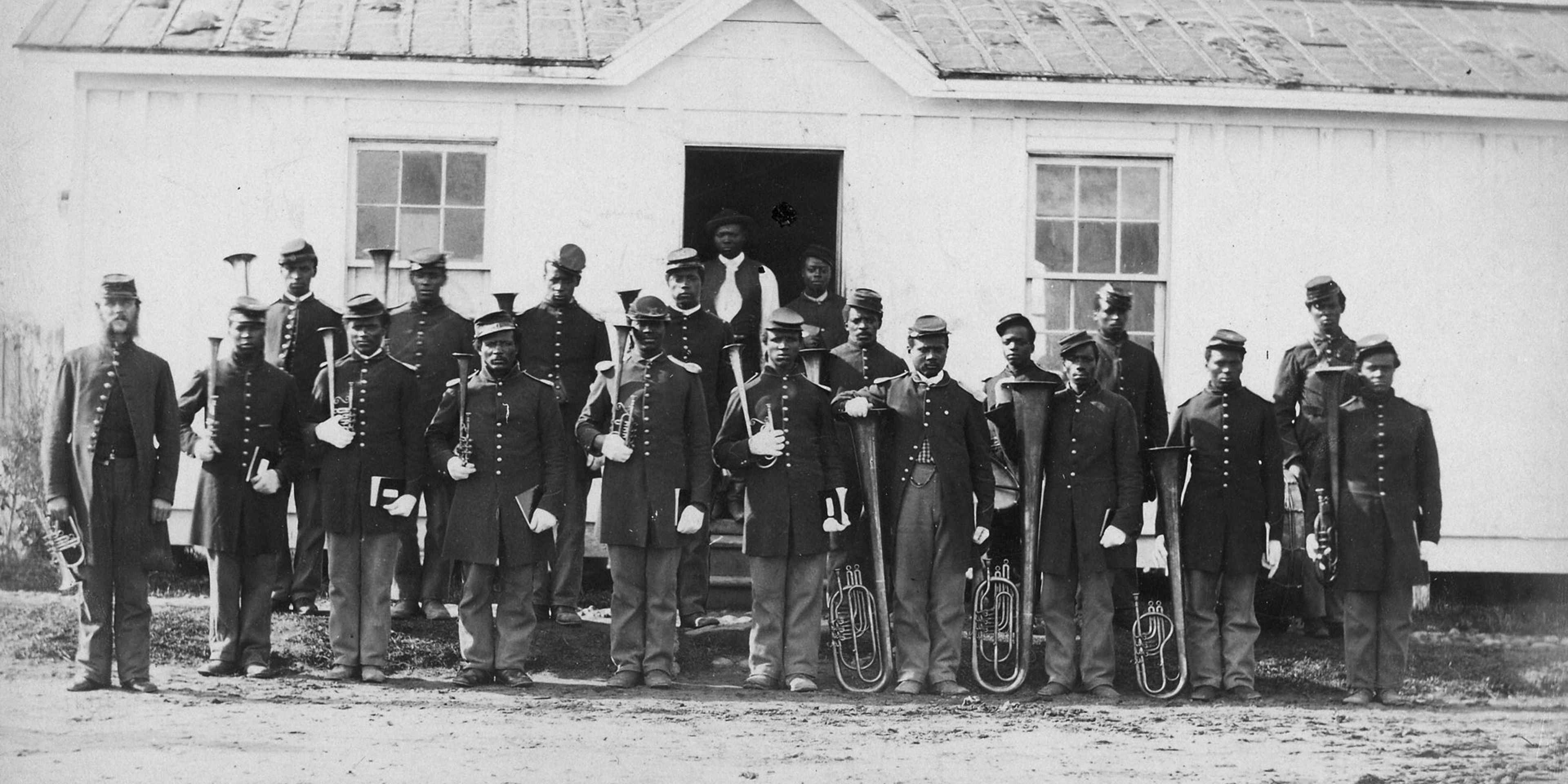
The outbreak of the American Civil War in April 1861 instantly divided a rapidly growing nation, forcing citizens and soldiers to confront questions of identity, liberty, and union. Prior to the conflict, American music was largely a localized, domestic affair. Parlor songs were sung around family pianos, and regional folk tunes rarely crossed state lines. However, the mobilization of millions of men shattered these geographic barriers. For the first time, Americans from diverse regions were thrown together in crowded military camps, bringing their unique musical traditions with them.
Historians point out that during earlier conflicts, such as the American Revolution, musical communication was limited by slow printing presses and localized distribution. By 1861, however, the advent of steam-powered printing presses and a robust national rail network allowed newly composed sheet music to spread across the country in a matter of days. Music quickly evolved from a simple domestic pastime into a highly organized cultural weapon used by both the Union and the Confederacy to recruit soldiers, boost morale, and wage ideological warfare.
The Timeline of Civil War Music: Key Milestones and Compositions
The musical evolution of the Civil War unfolded in tandem with the military campaigns. To trace how the US Civil War influenced music, one must look at the specific chronological milestones that shaped the conflict’s soundtrack:
- 1859: Daniel Decatur Emmett, a Northern songwriter, composes “Dixie” for a minstrel show in Ohio. Despite its Northern origins, the song quickly diffuses throughout the South.
- April 1861: The Confederate bombardment of Fort Sumter marks the official start of the war. Almost overnight, Southern publishers release patriotic anthems like “The Bonnie Blue Flag” to rally support for secession.
- Late 1861: Poet and abolitionist activist Julia Ward Howe visits Union army camps in Northern Virginia. Inspired by the soldiers’ chants, she writes the lyrics to “The Battle Hymn of the Republic,” which is published in the Atlantic Monthly in February 1862.
- July 1862: During the grueling Peninsular Campaign in Virginia, Union General Daniel Butterfield and bugler Oliver Willcox Norton revise an existing bugle call to create “Taps,” providing a more peaceful, solemn end-of-day signal.
- January 1863: President Abraham Lincoln issues the Emancipation Proclamation. As African American soldiers begin enlisting in large numbers, traditional Black spirituals enter the mainstream consciousness of Northern regiments.
- April 1865: Following General Robert E. Lee’s surrender at Appomattox Court House, President Lincoln publicly reclaims “Dixie” as a song belonging to the entire reunited nation.
Key Figures Who Shaped the Wartime Soundscape
Several pivotal figures emerged during this period, leaving a lasting imprint on American musical history. Their contributions helped determine how the US Civil War influenced music on both a strategic and emotional level:
- Julia Ward Howe: A prominent Boston-based poet and social reformer. When she heard Union soldiers singing “John Brown’s Body”—a tune dedicated to the radical abolitionist who raided Harpers Ferry—she felt the song deserved more poetic and deeply religious lyrics. Her resulting work, “The Battle Hymn of the Republic,” infused the Union cause with a sense of divine, moral purpose, urging soldiers to “die to make men free.”
- Daniel Butterfield: A Union Army general who felt the standard military bugle call for “extinguish lights” was too harsh and formal. Working alongside his brigade’s bugler, Oliver Willcox Norton, Butterfield modified the notes to create the haunting, 24-note melody of “Taps.” The tune was quickly adopted across the Union Army and remains the standard honor played at military funerals today.
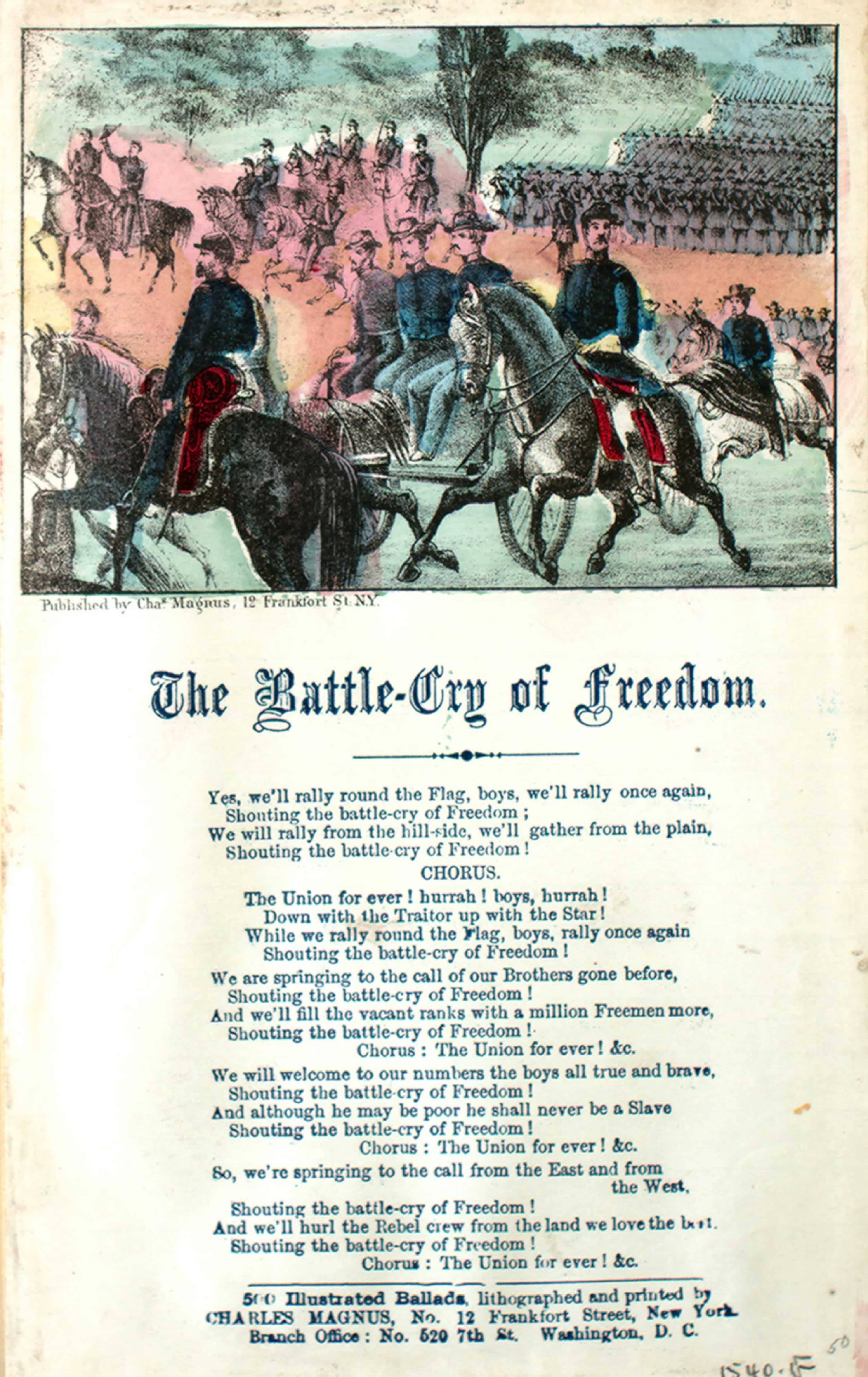
- George Frederick Root: Often regarded as the most successful songwriter of the Civil War era. Root composed stirring Union anthems such as “The Battle Cry of Freedom” and “Tramp! Tramp! Tramp! (The Prisoner’s Hope).” His songs were so influential that Union civilian recruiters credited them with helping to fill the ranks of enlistees.
- Daniel Emmett: Although a staunch Unionist from Ohio, Emmett unwittingly penned the definitive anthem of the Confederacy, “Dixie.” The song was originally written for a blackface minstrel show—a highly popular, though deeply offensive, form of 19th-century entertainment. The irony of a Northern composer writing the South’s most sacred rallying cry highlights the complex cultural exchanges of the era.
Causes and Context: Why Music Exploded in the 1860s
The explosion of music during the Civil War was fueled by profound social, technological, and economic shifts. First, the isolation and sheer terror of industrial warfare created an unprecedented psychological need for comfort. Soldiers facing the prospect of death on fields like Gettysburg or Shiloh turned to music to suppress their fear and maintain their sanity. Second, the rising literacy rates and the democratization of piano ownership in the mid-19th century meant that families back home were eager to buy sheet music. Music historian Christian McWhirter estimates that between 9,000 and 10,000 songs were published as sheet music during the war, representing an extraordinary commercial boom. Music served as a surrogate communication network; when soldiers could not write letters, the songs they sang—and the sheet music sent home—communicated their shared grief, hope, and longing for peace.
The Power of Military Bands and Field Musicians
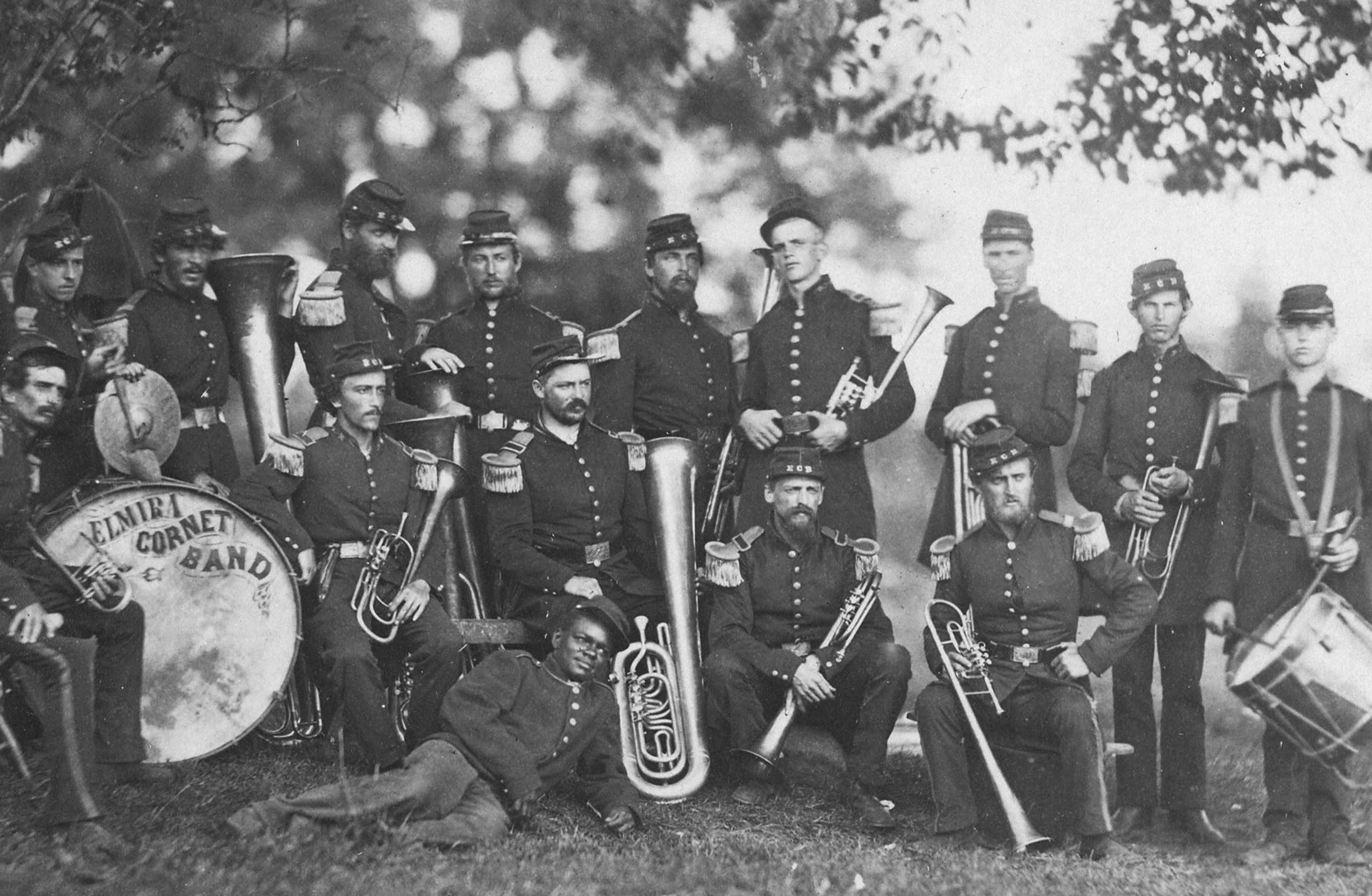
Music on the battlefield was highly organized. It is estimated that nearly 54,000 military musicians served over the course of the war. Regimental brass bands, such as the famous Elmira Cornet Band of the 33rd New York State Volunteers, marched alongside troops to boost morale. Meanwhile, smaller units of field musicians—consisting of young fife players, drummers, and buglers—were essential for communication. In an era before radio or digital communication, the distinct tones of the fife and drum signaled daily routines, including wakeup calls, meal times, drills, and retreats. During the chaos of battle, when gunpowder smoke blinded officers and artillery fire drowned out verbal commands, the sharp, piercing sounds of the bugle or the steady beat of the drum directed tactical maneuvers, saving countless lives.
The Emergence of African American Spirituals
One of the most profound cultural shifts of the Civil War was the introduction of African American spirituals to a broader Northern audience. As the Union Army advanced into the South, they liberated enslaved populations and began recruiting Black regiments. By 1865, African American soldiers made up nearly 10 percent of the Union Army. Among these soldiers were individuals whose courage and cultural contributions are celebrated alongside the most notable Black heroes throughout US military history. Through these brave soldiers, traditional spirituals like “Go Down, Moses” (popularly known as “Let My People Go”) and “Michael, Row the Boat Ashore” were shared with Northern white troops and abolitionists. Because these traditions were largely oral, many unique compositions were tragically lost to history. However, the spirituals that did survive laid the cultural foundations for future American genres, including blues, gospel, ragtime, and jazz, permanently altering the trajectory of global music.
Lesser-Known Historical Anecdotes
The Serenade Across the Rappahannock River
In December 1862, in the freezing weeks following the catastrophic Battle of Fredericksburg, Union and Confederate armies were camped on opposite banks of the Rappahannock River in Virginia. As evening fell, military bands on both sides began a musical duel. The Union band played patriotic Northern songs, and the Confederate band responded with “Dixie” and “The Bonnie Blue Flag.” Finally, one of the bands began playing the tender, nostalgic ballad “Home, Sweet Home.” In a remarkable moment of shared humanity, bands and soldiers from both sides joined in, their voices echoing across the cold water. For a brief night, the bitter enemies were united by a shared longing for their families and homes, demonstrating the extraordinary power of music to bridge even the deepest political divides.
Lincoln Reclaims “Dixie”
On April 10, 1865, just one day after Confederate General Robert E. Lee surrendered at Appomattox, an ecstatic crowd gathered outside the White House to celebrate the end of the war. When President Abraham Lincoln stepped out to address the crowd, he surprised many by asking the band to play “Dixie.” Lincoln explained to the crowd that he had always loved the tune and argued that since the Union had won the war, the song was now a “lawful prize” of war. He insisted that the South no longer held a monopoly on the melody, signaling his desire for national reconciliation and cultural unity.
Why the Music of the Civil War Still Matters Today
The ways in which the US Civil War influenced music continue to resonate in contemporary American life. The 24 notes of “Taps” remain the universal, emotionally charged tribute played at military funerals and national memorial services, providing a timeless symbol of sacrifice. Furthermore, “The Battle Hymn of the Republic” transitioned from a wartime marching song into a powerful anthem for social justice. Decades later, during the Civil Rights Movement, Dr. Martin Luther King Jr. famously closed his final sermon in Memphis with Julia Ward Howe’s words: “Mine eyes have seen the glory of the coming of the Lord.” Conversely, songs like “Dixie” became lightning rods for cultural debate, used by segregationists in the mid-20th century and continuing to spark intense discussions about historical memory, race, and the legacy of the Old South. Ultimately, the music of the Civil War proved that songs are not just passive reflections of history—they are active forces that shape national identity, memory, and political struggle.
People Also Ask
What was the most popular song during the US Civil War?
The most popular songs depended on the side of the conflict. In the North, “The Battle Cry of Freedom” by George Frederick Root and “John Brown’s Body” (which later became “The Battle Hymn of the Republic”) were widely sung. In the South, “Dixie” and “The Bonnie Blue Flag” were the premier patriotic anthems. However, sentimental songs like “Home, Sweet Home” and “When Johnny Comes Marching Home” were universally beloved by soldiers on both sides.
Who wrote “Taps” and why was it created?
“Taps” was created in July 1862 by Union General Daniel Butterfield and his brigade bugler, Oliver Willcox Norton. Butterfield wanted a more melodious and peaceful bugle call to signal the end of the day and extinguish lights, replacing a formal French call. It was first used for a military funeral later that year during the Peninsular Campaign in Virginia.
How did African American music change because of the Civil War?
The Civil War exposed white Northerners to African American spirituals for the first time on a large scale. As Black soldiers joined the Union Army, songs like “Go Down, Moses” were documented and shared. This exposure helped preserve these oral traditions and laid the groundwork for the development of modern American musical genres like jazz, blues, and gospel.
Conclusion
In summary, examining how the US Civil War influenced music reveals a profound transformation in how Americans communicated, processed grief, and expressed their deepest political convictions. Through the mass distribution of sheet music, the structured discipline of military brass bands, and the cross-cultural exchange of African American spirituals, the Civil War birthed a uniquely American musical identity. The melodies of this era did not fade away with the surrender at Appomattox; instead, they became woven into the permanent fabric of the nation’s history, continuing to inspire, comfort, and challenge Americans to this very day.


