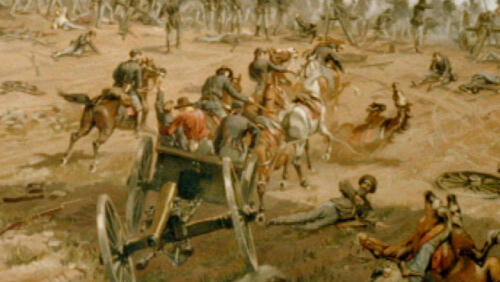
In the blazing summer of 1863, the fate of a fractured United States hung precariously on a rocky, tree-strewn hill in southern Pennsylvania. The Battle of Gettysburg stands as the bloodiest and most decisive clash of the American Civil War, a three-day maelstrom that halted Confederate General Robert E. Lee’s bold invasion of the North. Yet, among the thousands of acts of valor, few resonate as profoundly as the desperate stand of Colonel Joshua Lawrence Chamberlain and the 20th Maine Infantry on the slopes of Little Round Top. A former college professor with no formal military education, Chamberlain executed an audacious, high-stakes tactical maneuver that prevented the Union army from being flanked and potentially destroyed. His intellectual brilliance, combined with raw battlefield courage, transformed a seemingly hopeless defensive position into one of the most legendary victories in military history, forever altering the course of the American saga.
Historical Background: The Crisis of the Union in 1863
By the summer of 1863, the American Civil War had raged for over two devastating years. The Confederate Army of Northern Virginia, led by the formidable General Robert E. Lee, was riding high on a wave of momentum after a stunning victory at the Battle of Chancellorsville. Seeking to capitalize on Northern demoralization and gather vital resources, Lee launched his second invasion of Northern territory. His objectives were strategic and political: threaten major Northern hubs like Harrisburg, Philadelphia, and Washington, D.C., and force the Union administration to sue for peace.
Opposing him was the Union Army of the Potomac, newly placed under the command of Major General George G. Meade. As Lee’s forces marched north into Pennsylvania, Meade’s army raced to parallel them, keeping between the Confederates and the national capital. The two massive armies, numbering over 150,000 soldiers combined, were on a collision course. Neither commander had planned to fight at the small crossroads town of Gettysburg, but geography and circumstance dictated otherwise, turning this quiet Pennsylvania community into an epicenter of American destiny.
Key Events Timeline: The Three Crucial Days of July
The Battle of Gettysburg unfolded over three agonizing days, with each day bringing a new set of strategic challenges and staggering losses. Understanding the chronology is vital to realizing how Chamberlain’s actions fit into the larger victory:
- July 1, 1863 – The Meeting Engagement: Confederate infantry clashes with Union cavalry under Brigadier General John Buford west of Gettysburg. Despite stubborn resistance, Union forces are pushed back through the town, but they successfully secure the highly defensible high ground to the south, including Cemetery Hill and Culp’s Hill.
- July 2, 1863 – The Battle for the Flanks: General Lee orders a massive assault on the Union flanks. The Union left, anchor-point of the army’s defensive line, becomes the target of a furious attack. Savage fighting erupts in areas known as the Peach Orchard, the Wheatfield, Devil’s Den, and the critical high ground of Little Round Top. It is during this afternoon that Chamberlain and his men make their immortal stand.
- July 3, 1863 – Pickett’s Charge and the High-Water Mark: Following the failure to break the Union flanks, Lee launches a massive, frontal infantry assault of nearly 12,500 Confederates against the Union center on Cemetery Ridge. The assault is repulsed with catastrophic casualties. While history celebrates bold Union defenses, analyzing strategic, brilliant military retreats reveals how Lee managed to salvage his remaining army and escape across the Potomac River to fight another day.
The Miracle at Little Round Top: Chamberlain’s Moment of Truth
On the afternoon of July 2, 1863, Little Round Top was initially left completely unoccupied by Union forces due to a tactical oversight. Recognizing that whoever controlled this hill controlled the entire Union line, the Union Chief of Engineers, Brigadier General Gouverneur K. Warren, scrambled to find troops to defend it. He dispatched Colonel Strong Vincent’s brigade to secure the hill just minutes before Confederate forces arrived.
Colonel Vincent placed the 20th Maine Infantry, led by Colonel Joshua Lawrence Chamberlain, on the extreme left flank of the entire Union line. Vincent’s orders to Chamberlain were chillingly clear: “Hold this ground at all hazards.” If the 20th Maine broke, the Confederates would sweep behind the Union army, roll up their line, and secure a devastating victory on Union soil.
Chamberlain aligned his 386 men along the rocky, wooded slope of the hill. Soon, the veteran soldiers of the 15th Alabama, commanded by Colonel William C. Oates, charged up the hill. The fighting was intense and hand-to-hand, characterized by heavy smoke, deafening noise, and savage bayonet thrusts. The Confederates assaulted the 20th Maine line repeatedly, each time being repelled by the desperate Maine soldiers.
“Bayonets!” – The Audacious Counterattack
After five waves of brutal combat, Chamberlain’s men were completely exhausted and out of ammunition. Their dead and wounded littered the blood-slicked rocks. Chamberlain knew that his men could not withstand another Confederate charge, yet retreat meant abandoning the flank and exposing the entire Union army to destruction.
Demonstrating unparalleled critical thinking, Chamberlain decided that a passive defense was no longer an option; they had to attack. He ordered his men to fix bayonets and prepare for a charge. Because his line was bent back to protect against flanking, he ordered a “swinging gate” maneuver. The left wing of the regiment would wheel forward like a heavy door, catching the exhausted Alabama troops by surprise in a sweeping, flanking motion.
With a thunderous cry of “Bayonets!”, Chamberlain raised his sword and led his men charging down the rocky slope. Shocked by the ferocity of the sudden counterattack, the Confederates broke and fled. Hundreds surrendered on the spot. The Union flank had held, and the battle, and perhaps the nation, was saved.
Important Figures and Their Lasting Impact
The titanic struggle at Gettysburg featured several key historical actors whose decisions left an indelible mark on the conflict:
- Colonel Joshua Lawrence Chamberlain: A former professor of rhetoric and modern languages at Bowdoin College in Maine. Before the war, he had no formal military training. His intellectual curiosity, tactical flexibility, and quiet bravery earned him the Congressional Medal of Honor for his defense of Little Round Top. He was later promoted to Brigadier General and was chosen to receive the formal Confederate infantry surrender at Appomattox.
- Colonel Strong Vincent: The brigade commander who recognized the critical importance of Little Round Top and ordered the 20th Maine to hold the flank. Vincent was mortally wounded during the battle, but his prompt actions saved the Union line.
- General Robert E. Lee: The revered commander of the Confederate Army of Northern Virginia. His tactical aggressiveness reached its limit at Gettysburg, resulting in a crushing defeat that permanently crippled his offensive capabilities.
- General George G. Meade: The newly appointed commander of the Union Army of the Potomac. Meade successfully orchestrated a defensive victory, utilizing interior lines to shift reinforcements where they were needed most, ultimately defeating Lee.
Causes, Context, and Global Sociopolitical Stakes
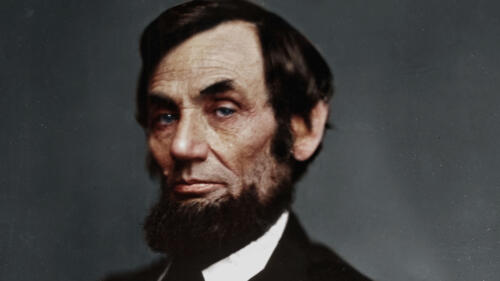
The Civil War was far more than a localized domestic conflict; it was a struggle for the very survival of democratic governance. When President Abraham Lincoln delivered his legendary Gettysburg Address months later, he directly invoked the egalitarian principles of the Founding Fathers, emphasizing that the war was a supreme test of whether a nation conceived in liberty and dedicated to equality could endure.
Furthermore, the battle held immense global significance. The Confederate leadership had long hoped that a major victory on Northern soil would convince European superpowers, namely Great Britain and France, to formally recognize the Confederacy and offer diplomatic or military intervention. The dual Union victories at Gettysburg and Vicksburg permanently crushed those hopes, ensuring the Confederacy remained diplomatically isolated and economically starved under the Union blockade.
Long-Term Impact on America
The Union victory at Gettysburg, cemented by Chamberlain’s legendary defense, marked the definitive turning point of the American Civil War. It shattered the myth of Lee’s invincibility, boosted Northern morale, and forced the Confederacy into a defensive war of attrition they could not hope to win.
This preservation of the Union paved the way for the total eradication of chattel slavery through the 13th Amendment. The immense sacrifices made at Gettysburg ultimately redefined American citizenship and laid the groundwork for future civil rights struggles. This legacy of fighting for genuine freedom is echoed in the achievements of Black heroes throughout US military history, who continuously fought for a nation that did not yet fully guarantee their own basic rights and liberties.
Lesser-Known Facts About Chamberlain and Gettysburg
Behind the grand strategies and famous charges lie fascinating, human-centric anecdotes that offer deep insight into the battle:
- The Mutineers of the 2nd Maine: Shortly before the battle, Chamberlain was handed 120 mutinous soldiers from the disbanded 2nd Maine who refused to fight. Instead of locking them up or threatening execution, Chamberlain treated them with respect, fed them, and spoke to them as fellow patriots. All but three voluntarily picked up rifles and fought alongside the 20th Maine, playing a crucial role in defending Little Round Top.
- The Salute to the Vanquished: At the war’s end in April 1865, Chamberlain was selected to oversee the formal surrender of the Confederate infantry at Appomattox Court House. In a deeply moving and controversial gesture of reconciliation, he ordered his Union soldiers to carry arms—a soldierly salute of respect—to the surrendering Confederate troops. This gesture helped set a tone of mutual respect for national reconstruction.
- A Miraculous Survival: Chamberlain was wounded six times during the Civil War, most severely at the Battle of Petersburg, where a minié ball passed through his hips. Believed to be mortally wounded, he read his own premature obituaries and was even given a deathbed promotion to Brigadier General by Ulysses S. Grant. Against all medical odds, he survived and lived to the age of 85.
Why It Still Matters Today
Joshua Lawrence Chamberlain’s actions at Gettysburg continue to be studied in military academies and leadership seminars worldwide. His story demonstrates that effective leadership is not solely the domain of career military elites; rather, it relies on adaptability, intellectual preparation, and empathy. Chamberlain’s transition from a quiet academic to a brilliant tactical leader reminds us that civic duty, courage, and clear-headedness under immense pressure can alter the course of human history.
People Also Ask
Who was Joshua Lawrence Chamberlain?
Joshua Lawrence Chamberlain was a college professor from Maine who volunteered to fight in the Union Army during the Civil War. He became the Colonel of the 20th Maine Infantry and achieved legendary status for his heroic defense of Little Round Top during the Battle of Gettysburg.
Why was Little Round Top so important at Gettysburg?
Little Round Top was a crucial hill that anchored the extreme left flank of the Union army. Had the Confederates captured this hill, they could have placed artillery on its summit to devastate the Union lines, potentially winning the battle and threatening Washington, D.C.
What was the “swinging gate” maneuver at Gettysburg?
The “swinging gate” was a tactical bayonet charge executed by Chamberlain’s 20th Maine. Because their line was bent back, the left half of the regiment swung forward like a door on a hinge, flanking the advancing Confederate troops and forcing them to flee or surrender.
Conclusion
The Battle of Gettysburg remains a monumental testament to the sacrifices that forged modern America. At the center of this titanic struggle stands the quiet, academic figure of Joshua Lawrence Chamberlain. His brilliant military execution and unwavering courage on the slopes of Little Round Top saved the Union line from collapse, demonstrating that the intellect of a scholar, when matched with the heart of a patriot, can change the destiny of an entire nation.


