In the tense, storm-swept summer of 1861, as the United States fractured under the weight of the Civil War, a tiny community in Western New York did the unthinkable. Far north of the Mason-Dixon Line, the men of Town Line—a quiet hamlet straddling Erie County—gathered in a modest schoolhouse to cast a ballot that would alter their local legacy forever. By a vote of 85 to 40, they decided to sever their ties with the Union. For the next 85 years, this small Northern settlement lived in a bizarre, self-imposed geopolitical limbo, remaining technically un-rejoined to the United States until well after the conclusion of World War II. While history books focus primarily on the massive political and military clashes of the era, the strange saga of the Town Line secession offers a fascinating, microscopic look at the complexities of wartime loyalty, local sovereignty, and the limits of federal authority in the nineteenth century.
Historical Background: The Hamlet of Town Line
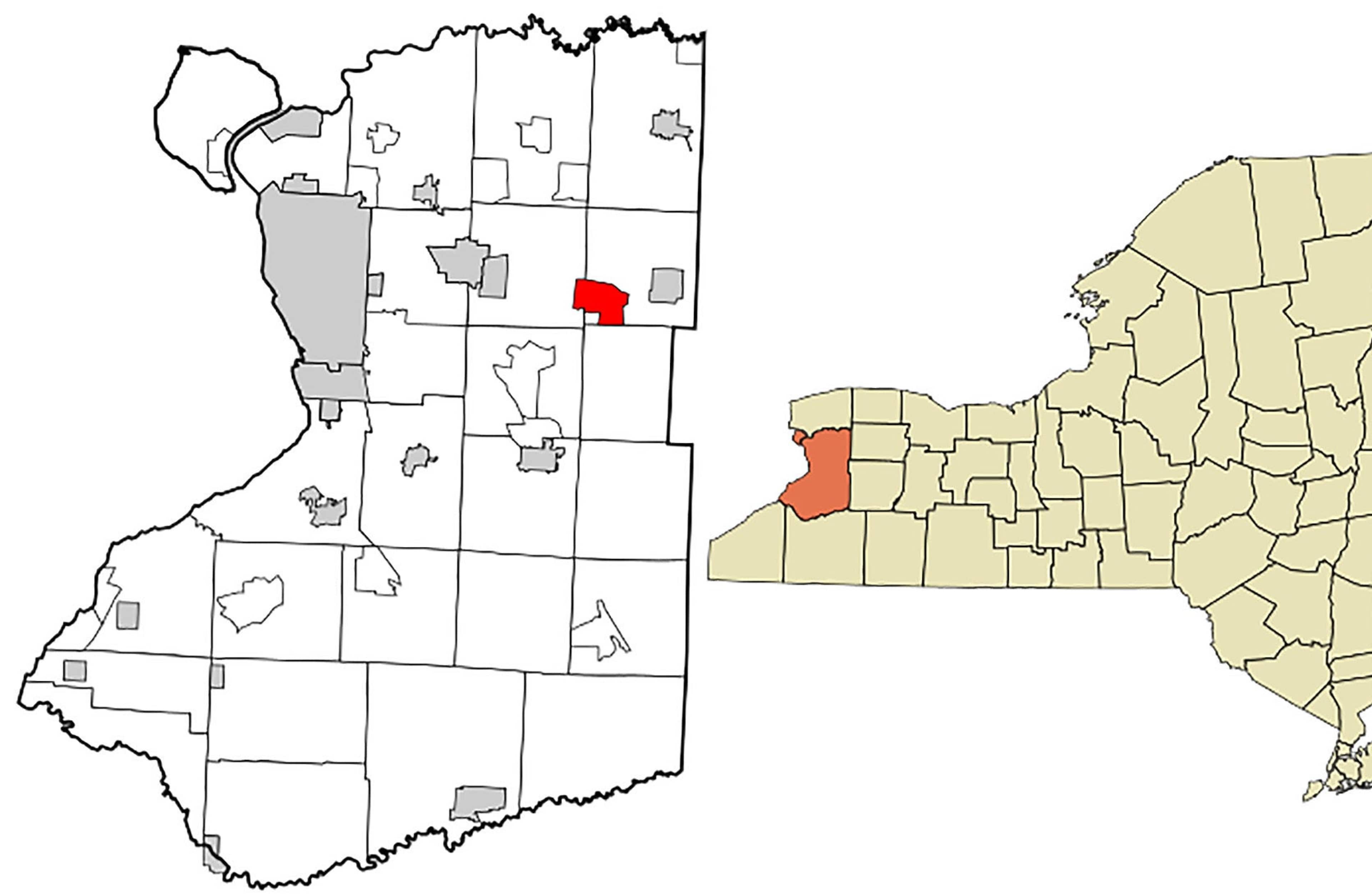
To understand how a New York community could vote to leave the United States, one must look at the geography and demographics of Erie County in 1861. Town Line was not an incorporated city; rather, it was a small hamlet that straddled the border of two distinct towns, Alden and Lancaster, roughly twenty miles east of Buffalo. Because it lacked formal municipal incorporation, it had no defined borders, no official mayor, and no independent local government. Instead, its identity was tied to the hard-working families who tilled its soil.
According to Karen Muchow, the dedicated archivist of the Alden Historical Society, the community in the mid-nineteenth century was primarily composed of first- and second-generation German immigrants. Many of these families had fled the violent, chaotic revolutions that swept through the German states in 1848. Having escaped the physical and economic devastation of European warfare, these war-weary refugees desired nothing more than a quiet, undisturbed life of farming. They had little interest in the burgeoning political storms of their adopted homeland, and when those storms erupted into the American Civil War, their survival instincts took precedence over national patriotism.
Causes and Context: Why Did a Northern Hamlet Secede?
For generations, the true motivation behind Town Line’s secession remained shrouded in mystery. Because no formal written minutes of the 1861 schoolhouse meeting survived, historians have had to rely heavily on oral history and contextual demographics. The prevailing and most plausible theory centers on the fear of conscription. As the Civil War intensified, President Abraham Lincoln called for hundreds of thousands of volunteers, and the threat of a federal draft loomed heavily over small communities. To the German immigrant farmers of Town Line, a draft meant losing their able-bodied sons—who were desperately needed to run the family farms—to fight in a war they did not fully understand or support. By voting to leave the Union, these farmers believed they could insulate themselves from federal reach and be left alone to cultivate their land.
It is crucial to note that this secession was not driven by an alliance with Southern ideology or support for the institution of slavery. In fact, Town Line was home to a stop on the New York and Erie Railroad, and historical research indicates that several homes in the area, including the childhood home of local author Daren Wang, actively served as depots on the Underground Railroad. This presents a striking paradox: a community that actively assisted enslaved people fleeing to freedom also voted to align itself, however symbolically, against the Union. The debate over secession and local authority had been a foundational friction point in American politics since the framing of the Constitution, particularly regarding how the Founding Fathers divided power between states and federal governments. For the farmers of Town Line, their vote was less about championing the Confederacy and more about expressing a desire for absolute local autonomy.
The Secession Timeline (1861–1946)
The timeline of Town Line’s unique journey stretches from the darkest days of the Civil War to the triumphant aftermath of World War II:
- Late Summer 1861: In an informal assembly at the local schoolhouse, 125 eligible male voters gather. They pass a resolution to secede from the United States by a vote of 85 to 40.
- 1861–1865: Despite the vote, Town Line continues to exist in a strange paradox. Since the hamlet is unincorporated, the vote carries no legal weight. Residents continue to pay federal taxes, and both Alden and Lancaster successfully meet their Union military draft quotas. Up to twenty local men serve in the Union Army, though oral legend suggests five men may have quietly traveled south to fight for the Confederacy.
- Late 1865: The Civil War ends. While the Southern states are readmitted to the Union through Reconstruction, the tiny, unincorporated hamlet of Town Line is entirely ignored and forgotten by federal authorities, leaving its 1861 resolution technically active.
- Autumn 1945: A reporter from a Buffalo newspaper uncovers the long-forgotten historical anomaly of the 1861 vote, sparking national media interest and a wave of local debate.
- October 1945: A preliminary ballot of the town’s residents reveals that a rebellious spirit still lingers; 29 out of 30 surveyed residents oppose officially rejoining the United States.
- January 24, 1946: Following a written recommendation from President Harry S. Truman, Town Line holds an official, highly publicized ceremonial vote, officially rejoining the United States.
The Great Turning Point: President Truman, Barbecue, and Hollywood
By late 1945, the revelation that a piece of Western New York was technically still outside the Union created a delightful media sensation. Realizing they were living in an unresolved historical footnote, Town Line residents found themselves divided on how to proceed. To resolve the factional differences, a group of concerned citizens decided to write directly to President Harry S. Truman, asking him to adjudicate the matter. Truman, known for his pragmatic and folksy sense of humor, responded with a playful letter suggesting a traditional American solution.
‘I would suggest the possibilities of roast veal as a vehicle of peace,’ President Truman wrote. ‘Why don’t you run down the fattest calf in Erie County, barbecue it and serve it with fixin’s in the old blacksmith shop where the ruckus started?’
The community enthusiastically embraced the presidential advice. They slaughtered a 190-pound fatted calf and declared January 24, 1946, as an official public holiday. The voting took place inside a weathered, wooden blacksmith shop (the very same building that had served as the schoolhouse in 1861), which was patriotically draped in red, white, and blue bunting. Much like how elections in colonial America were huge, booze-fueled parties designed to foster community spirit, the Town Line vote was turned into an unforgettable festival featuring barbecue veal sandwiches, hot coffee, and a marching band.
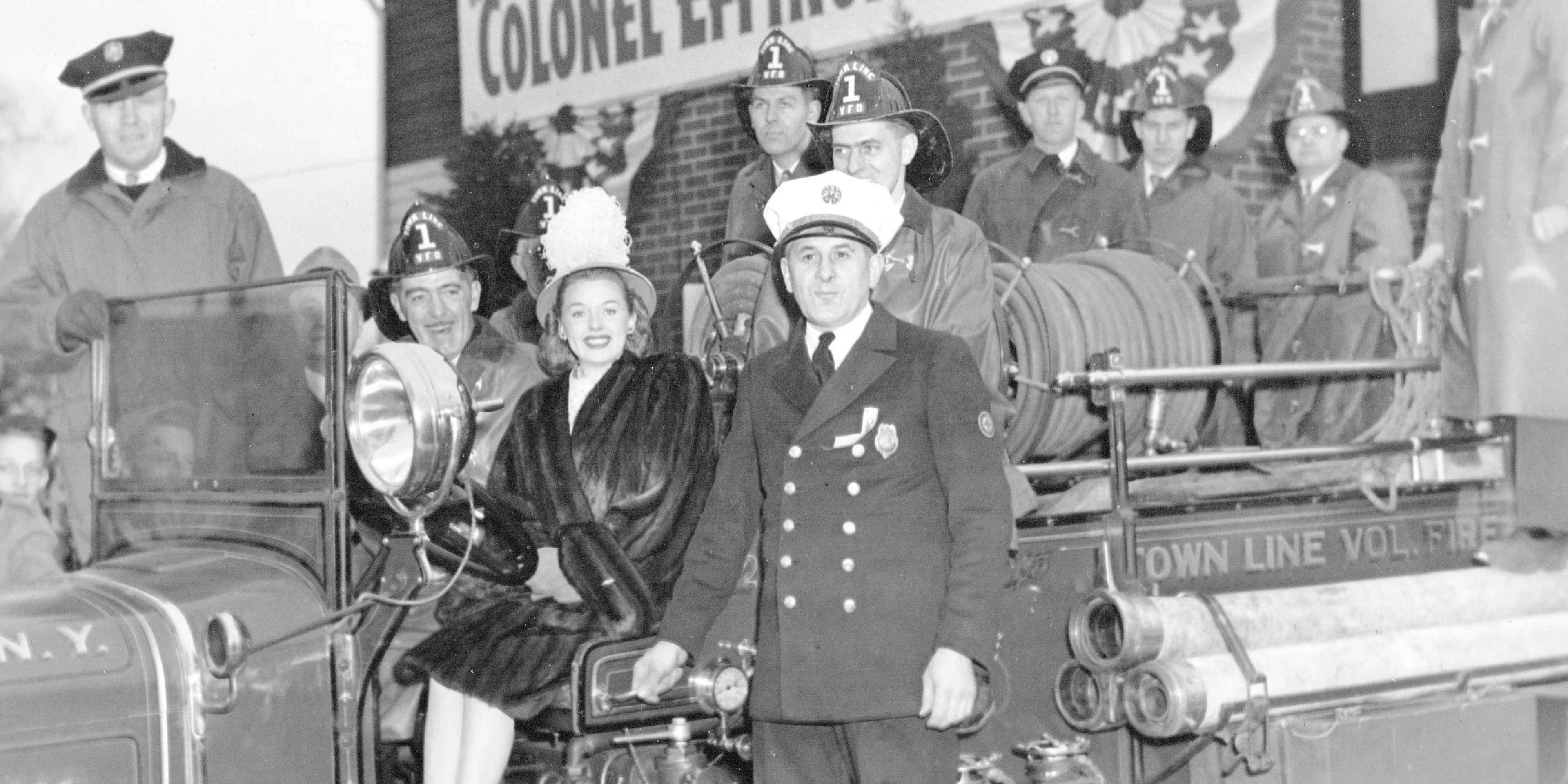
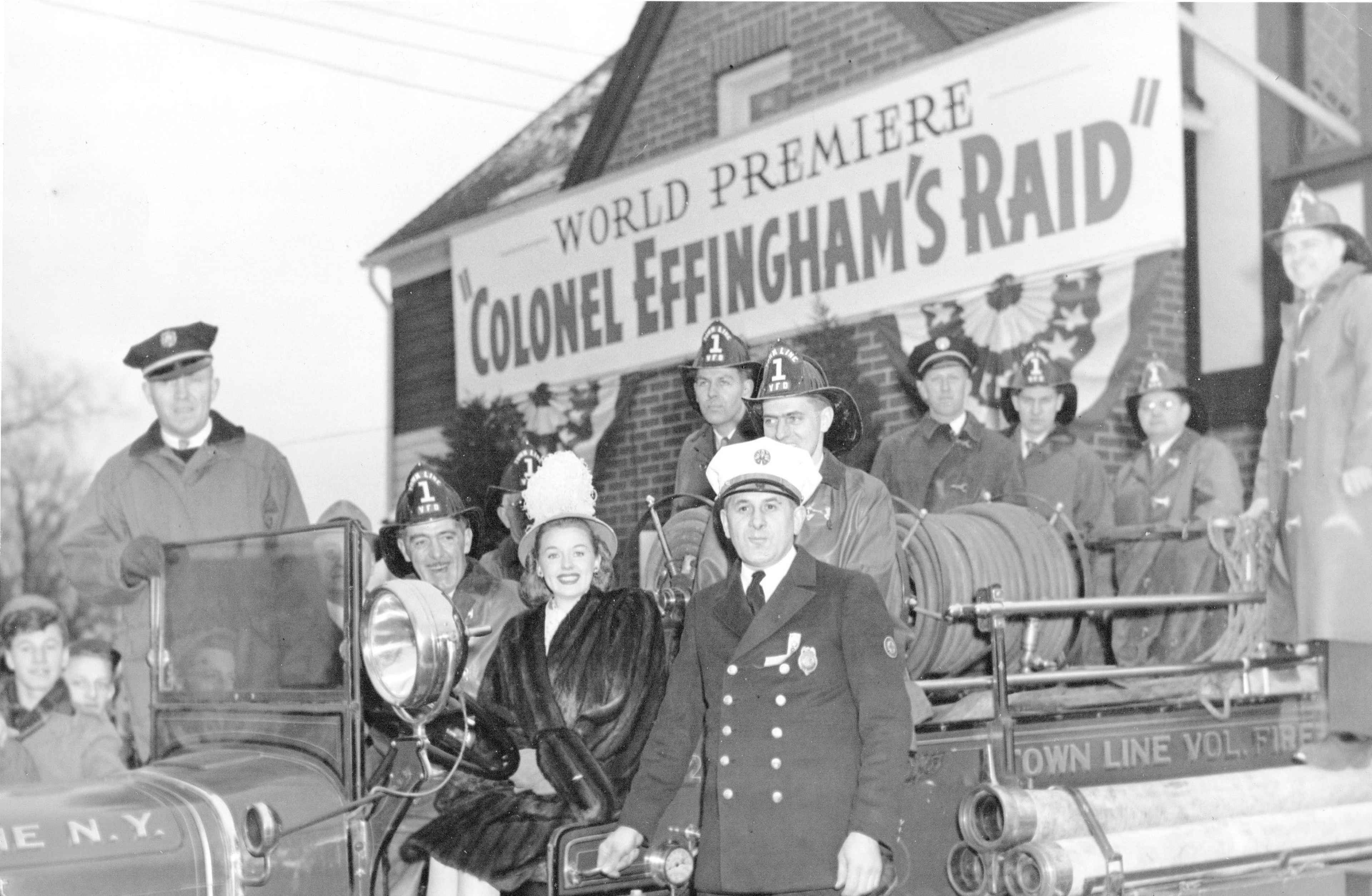
Adding to the theatrical spectacle, Hollywood movie studio 20th Century Fox used the event to promote its new film, Colonel Effingham’s Raid. The studio dispatched two of its biggest stars, Cesar Romero and Martha Stewart, to attend the festivities. Romero, who would later gain worldwide fame playing the Joker in the 1960s Batman television series, was given the honor of counting the ballots. Under the watchful eyes of reporters, cameras, and excited locals, Romero opened the ballot box and announced the historic results: 90 votes to rejoin the Union, and 23 stubbornly rebellious votes to remain independent.
Rejoining the Union: Raising the Stars and Stripes
With the 90-23 vote, the 85-year-old secession of Town Line, New York, was finally put to rest. The atmosphere inside the crowded blacksmith shop shifted from lighthearted tension to profound patriotism. As the results were finalized, the Lancaster High School band ceased playing the Southern anthem ‘Dixie’ and immediately struck up a stirring rendition of ‘The Star-Spangled Banner.’ Outside, under a freezing winter wind, residents lowered the Confederate battle flag that had flown over the shop and proudly hoisted the Stars and Stripes.
While the ceremony was largely a public relations masterstroke and a lighthearted celebration, it highlighted the enduring power of American national identity. In a country that had just emerged victorious from the horrors of World War II, the formal repatriation of Town Line served as a symbolic, feel-good reminder of national unity. It was a moment where the community could laugh at its quirky past while recommitting itself to the values of the American flag—a symbol whose origins have long been surrounded by popular folklore, including debates like whether did Betsy Ross really make the first American flag. For Town Line, raising the flag in 1946 was a definitive statement of belonging.
Lesser-Known Facts About the Town Line Secession
- The Joker Counted the Votes: The secret ballot box used in the 1946 reunion vote was placed on the very same schoolhouse desk where the 1861 secession articles were signed. The votes were hand-counted by Cesar Romero, the actor who would later portray the iconic villain, the Joker, opposite Adam West’s Batman.
- The ‘Nest of Copperheads’: During the Civil War, the loyal Unionist minority in the surrounding towns of Lancaster and Alden bitterly resented the hamlet’s vote. They referred to Town Line as a ‘nest of Copperheads’ (a term used for Northern Democrats who opposed the war and sympathized with the South) and repeatedly threatened the secessionists with arrest and even lynching.
- Rebel Patches Until 2011: The rebellious identity of Town Line did not vanish in 1946. For decades, the members of the Town Line Volunteer Fire Department proudly wore uniform shoulder patches featuring crossed American and Confederate flags, accompanied by the motto ‘Last of the Rebels.’ This controversial emblem was only officially retired in 2011.
Why It Still Matters Today
The story of Town Line is more than just a historical trivia question or a bizarre footnote; it is a testament to the complex, localized nature of American history. It reminds us that historical events are rarely monolithic. While the nation was divided along clear geographic lines during the Civil War, individual communities often had highly specific, localized concerns—such as economic survival, fear of foreign-style conscription, or a simple desire to protect their families—that drove their political decisions.
Furthermore, Town Line’s persistent embrace of its ‘rebel’ identity well into the twenty-first century highlights the power of historical memory. It shows how communities construct unique identities out of unusual historical events, transforming what was once a tense, fearful act of wartime survival into a source of local pride and community bonding. Today, a commemorative bronze plaque stands near the original site of the blacksmith shop, ensuring that visitors to Erie County will always remember the tiny New York village that stood apart from the Union for 85 years.
People Also Ask
Did Town Line actually send soldiers to fight for the Confederacy?
While local oral legends suggest that five young men from Town Line traveled south to fight for the Confederate Army of Northern Virginia, there is no verified documentary evidence to support this claim. Conversely, historical records prove that at least twenty residents of the hamlet fought honorably for the Union Army, and the community successfully met all its federal draft quotas during the Civil War.
Was the Town Line secession legally binding?
No, the secession had absolutely no legal validity. Because Town Line was an unincorporated hamlet straddling the borders of Alden and Lancaster, it had no legal standing as an independent municipality. Consequently, neither the United States government nor the Confederate States of America ever formally recognized the secession. Throughout the 85-year period, residents continued to pay federal taxes and participate in national life.
Why did President Harry Truman get involved in a local New York vote?
Following World War II, a Buffalo newspaper reporter popularized the story of Town Line’s unresolved secession. Finding themselves divided on how to officially resolve this historical anomaly, a group of residents wrote to President Truman in 1945 for guidance. Truman responded with a playful, highly publicized letter recommending they host a calf barbecue to foster peace and hold a vote, which successfully turned the event into a major national media celebration.
Conclusion: The Ultimate Historical Takeaway
Ultimately, the eighty-five-year secession of Town Line, New York, stands as one of the most eccentric and captivating episodes in American history. What began in 1861 as a desperate, protective maneuver by war-weary German immigrants fearing conscription transformed over the decades into a cherished piece of local folklore. Resolved through the folksy wisdom of a U.S. President, a fatted calf barbecue, and a touch of Hollywood glamour, the repatriation of Town Line in 1946 closed the book on a unique chapter of dissent. It remains a powerful and amusing reminder that history is made not just on grand battlefields, but in the quiet, independent-minded schoolhouses of everyday American towns.


