On the fateful night of April 14, 1865, just days after the Confederate surrender at Appomattox Court House, the United States was rocked by an unprecedented tragedy. Inside the presidential box at Ford’s Theatre in Washington, D.C., a famous and charismatic stage actor named John Wilkes Booth fired a single, fatal bullet into the back of President Abraham Lincoln’s head. The horrific act shattered the nation’s post-Civil War relief and initiated the largest, most intense manhunt in American history. For twelve frantic days, a network of federal detectives, investigators, and nearly one thousand Union soldiers combed the countryside, desperate to capture the elusive assassin and unravel the vast conspiracy behind his heinous crime. The hunt for John Wilkes Booth was not merely a pursuit of a fugitive; it was a desperate battle to secure a fragile Union teetering on the edge of chaos.
The Historical Background: A Nation Divided
To understand the desperation behind the assassination of Abraham Lincoln, one must look at the closing days of the American Civil War. In April 1865, the Confederate capital of Richmond had fallen, and General Robert E. Lee had surrendered his army. While the Union celebrated, deep-seated resentment and radicalism festered among Southern sympathizers who refused to accept defeat.
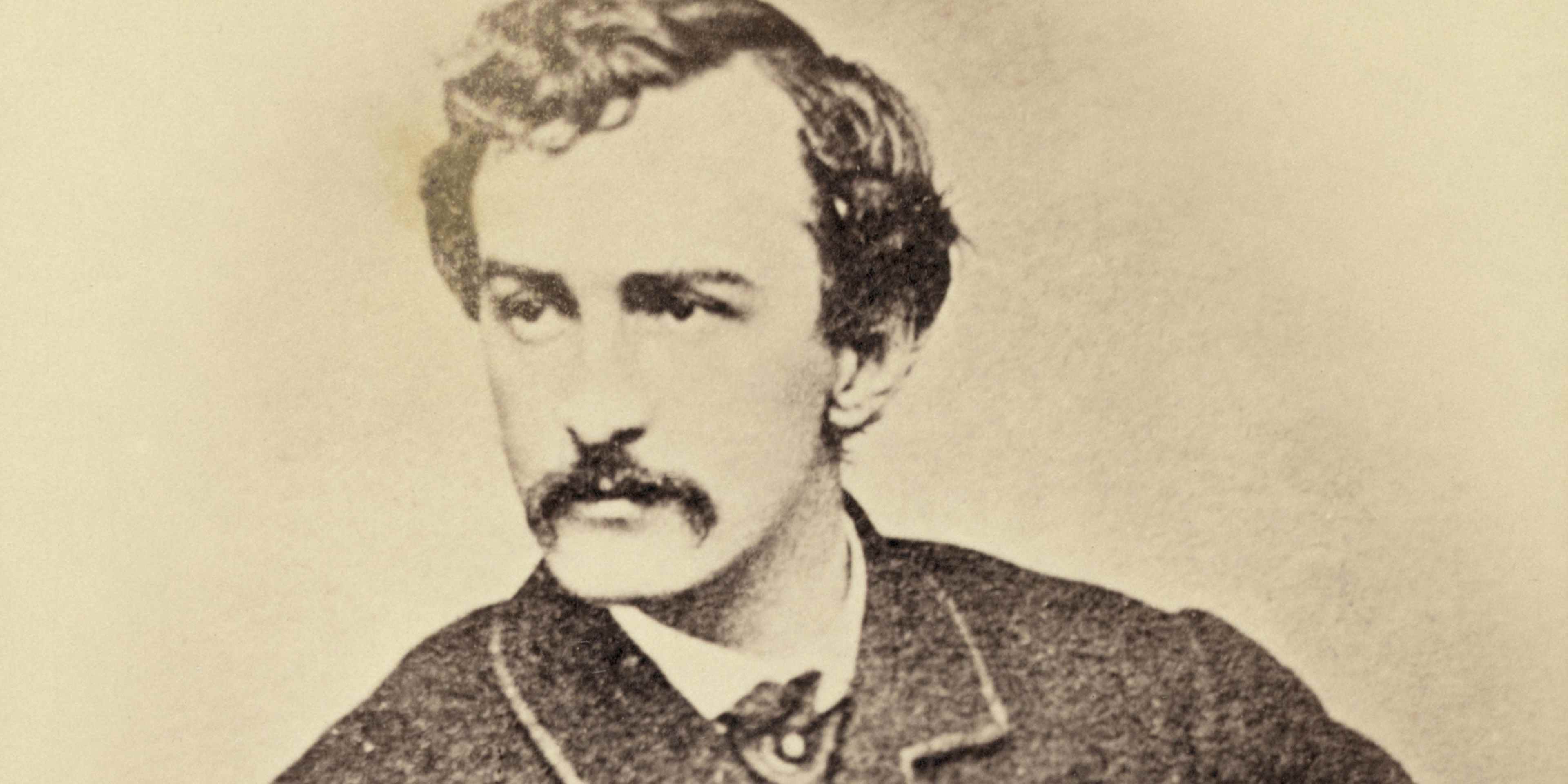
John Wilkes Booth, a native of Maryland—a slave state that had remained in the Union—was a passionate supporter of the Confederacy and a fierce advocate for slavery. Booth despised the abolitionist movement, believing it threatened to destroy the American republic. Despite his passionate beliefs, Booth did not fight in the Confederate army, a choice that deeply wounded his pride and fueled a growing obsession to perform a monumental, self-sacrificing act for the Southern cause. What began in 1864 as a conspiracy to kidnap Lincoln and exchange him for Confederate prisoners of war quickly mutated into a lethal plot to decapitate the entire Union government.
The Timeline of the Escape: 12 Days of Terror
The conspiracy reached its climax on Good Friday, April 14, 1865. Booth planned to assassinate Lincoln, while his co-conspirators targeted Vice President Andrew Johnson and Secretary of State William Seward. Only Booth succeeded in his deadly task. Below is the chronological breakdown of the historic manhunt:
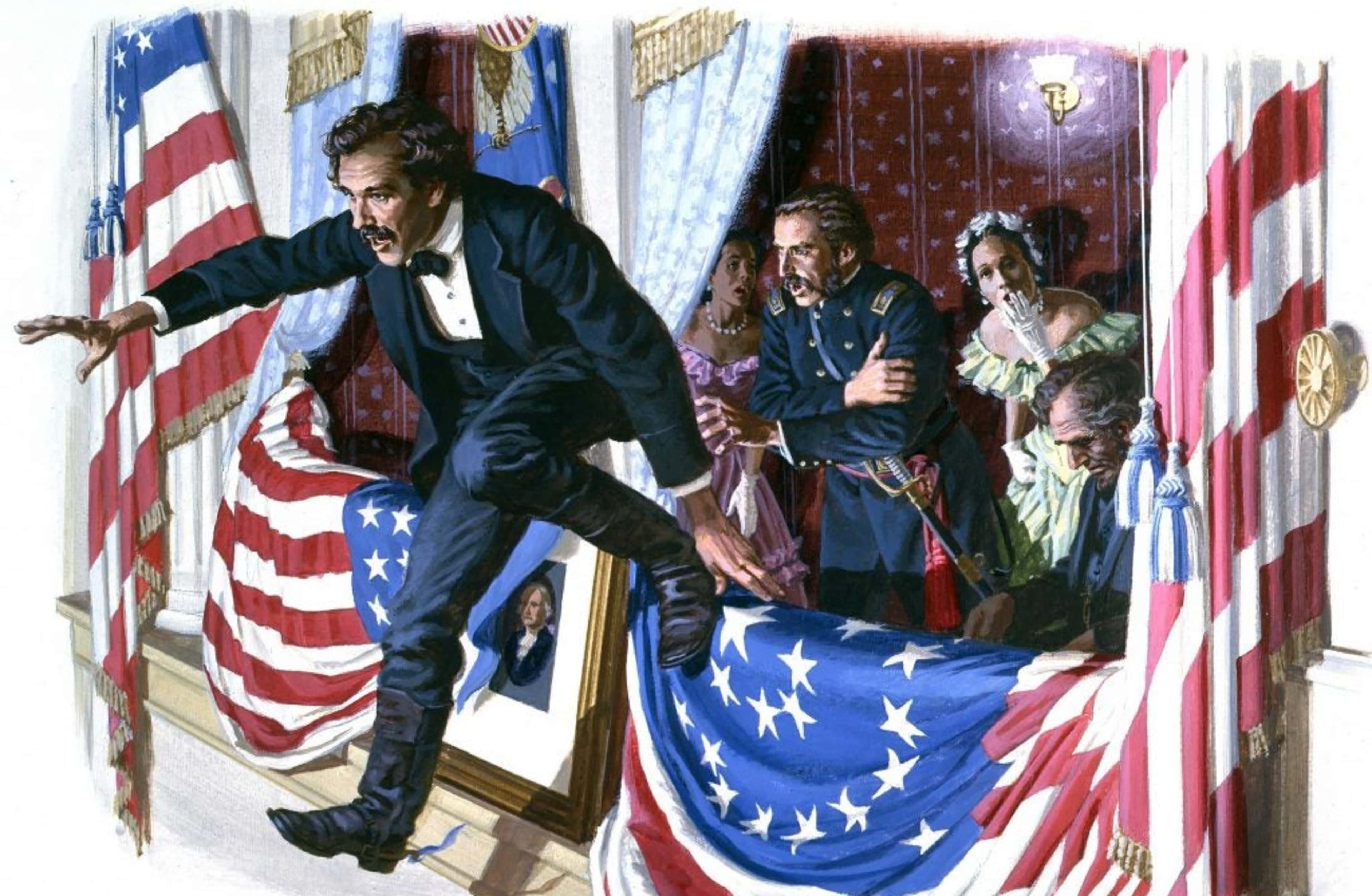
- April 14, 1865 (The Escape): After shooting Lincoln at approximately 10:15 PM, Booth leapt from the presidential box onto the stage, broke his leg in the process, and famously shouted, “Sic semper tyrannis!” (Thus always to tyrants!). He escaped out the back of the theater, mounted his horse, and met up with co-conspirator David Herold on the outskirts of Washington.
- April 15, 1865 (The Doctor’s Aid): At around 4:00 AM, the fugitives arrived at the home of Dr. Samuel Mudd in southern Maryland. Mudd set Booth’s fractured fibula and gave them a place to rest. Mudd later claimed he did not know Lincoln had been shot, though he was eventually convicted as a co-conspirator.
- April 16–20, 1865 (The Swamp Hideout): Guided by local Confederate sympathizers, Booth and Herold hid in the dense pine thickets of Zekiah Swamp. Armed Union soldiers swept the area, sometimes passing close enough for the fugitives to hear their conversations. An accomplice supplied them with food and newspapers, leaving Booth shocked to discover that both Northern and Southern papers condemned him as a coward rather than praising him as a liberator.
- April 21–25, 1865 (Crossing the Potomac): After a failed attempt that landed them back in Maryland, Booth and Herold successfully crossed the Potomac River into Virginia. Using false identities, they posed as wounded Confederate soldiers to secure shelter on the farm of Richard Garrett.
- April 26, 1865 (The Final Standoff): Acting on a tip, cavalrymen from the 16th New York Cavalry surrounded Garrett’s tobacco barn where the fugitives were sleeping. Herold surrendered, but Booth refused. The soldiers set the barn on fire to force him out. As Booth moved inside the burning barn, Union Sergeant Boston Corbett fired through a gap in the slats, striking Booth in the neck.
Key Figures in the Conspiracy and Manhunt
The hunt for Lincoln’s killer involved a cast of characters whose lives would be forever altered by the events of April 1865:
- John Wilkes Booth: The prominent 26-year-old actor whose white-supremacist beliefs drove him to commit the first presidential assassination in U.S. history. He died on the porch of the Garrett farmhouse on April 26.
- David Herold: A young pharmacist’s clerk and outdoorsman who acted as Booth’s guide. He surrendered at the Garrett barn, was put on trial, and was hanged on July 7, 1865.
- Edwin Stanton: Lincoln’s Secretary of War who took immediate charge of the government after the shooting, directing the massive manhunt with relentless efficiency.
- Dr. Samuel Mudd: The doctor who treated Booth’s broken leg. Though he claimed innocence, he was sentenced to life in prison, though later pardoned by President Andrew Johnson.
- Boston Corbett: The deeply religious, eccentric Union soldier who defied orders to take Booth alive, shooting him through the neck. Corbett claimed he was guided by God to pull the trigger.
Causes and Political Context: A Plot to Topple a Government
Booth’s plot was not an isolated act of madness; it was a desperate, coordinated political coup. By targeting Lincoln, Seward, and Johnson simultaneously, Booth and his circle hoped to throw the federal government into absolute chaos. They believed that with the presidency, vice presidency, and state department left leaderless, the Union would collapse, allowing the Confederacy to rise from the ashes.
This desperate attempt to alter the course of American politics highlights the intense, violent polarization of the era. The manhunt itself became a military operation because the government feared that Booth’s escape might spark a renewed civil conflict or inspire further insurgent violence across the war-torn nation.
The Long-Term Impact on America
The assassination of Abraham Lincoln fundamentally altered the course of American history. With Lincoln’s moderate, unifying leadership gone, the nation struggled to find its footing during the reconstruction of the South. Lincoln’s vision for a gentle, reunified country was replaced by the volatile era of Reconstruction, altering the trajectory of great strides for freedom in US history that the nation had fought so hard to secure. Under President Andrew Johnson, political warfare erupted between the executive branch and Radical Republicans in Congress, resulting in the nation’s first presidential impeachment and decades of systemic inequality in the post-war South.
The dramatic flight and capture of Booth also transformed the American legal and security landscape. The military tribunal that tried the conspirators set enduring legal precedents regarding the trial of civilians by military courts. Additionally, the assassination spurred the federal government to eventually designate formal protection services for the president, a move that led to the modern-day protective duties of the Secret Service.
Lesser-Known Facts and Historical Coincidences
The history surrounding John Wilkes Booth and the Lincoln assassination is filled with bizarre twists of fate:
The Brother Who Saved Lincoln’s Son
In a twist of absolute irony, John Wilkes Booth’s older brother, Edwin Booth—who was actually the more famous and respected actor of the family—saved the life of Lincoln’s eldest son, Robert Todd Lincoln, less than a year before the assassination. Robert had fallen off a train platform in New Jersey, and Edwin pulled him to safety. This bizarre connection is often cited among the most famous coincidences in early American lore, highlighting how closely intertwined the nation’s prominent families were.
The Eccentricity of Boston Corbett
Boston Corbett, the soldier who shot Booth, was famously eccentric. A hat maker by trade, it is highly likely that he suffered from mercury poisoning (the origin of the term “mad as a hatter”). In a fit of religious fanaticism years prior, Corbett had castrated himself with a pair of scissors to avoid temptation. Years after shooting Booth, Corbett went mad, threatened the Kansas House of Representatives with a revolver, was committed to an asylum, and eventually escaped, vanishing from history entirely.
A Fugitive Outcast
Booth expected to be treated as a revolutionary hero in the South, akin to Brutus killing Julius Caesar. However, when he read the newspapers while hiding in the Maryland swamp, he was horrified to find that even Confederate-leaning publications condemned his actions as a cowardly, dishonorable deed that would bring ruin upon the defeated Southern states. The legal and social fallout of his escape drew some comparisons to earlier American history, specifically how political figures were treated when fleeing justice, such as what happened to Aaron Burr after he killed Alexander Hamilton in a duel.
Why It Still Matters Today
The hunt for John Wilkes Booth remains a vital case study in national security, political radicalization, and the fragile nature of democracy. The events of April 1865 remind us how quickly political polarization can cross the line into domestic terrorism. Today, as modern society wrestles with ideological extremism and debates surrounding the security of public officials, the legacy of the Lincoln assassination serves as a powerful reminder of the lasting scars that political violence leaves on the soul of a nation.
People Also Ask (PAA)
How long was John Wilkes Booth on the run?
John Wilkes Booth was on the run for exactly 12 days. He assassinated President Lincoln on the night of April 14, 1865, and was cornered and killed by Union soldiers on April 26, 1865.
Who killed John Wilkes Booth?
Booth was shot and mortally wounded by Union Sergeant Boston Corbett. Corbett fired his weapon through a crack in the wall of the burning tobacco barn at the Garrett farm, claiming he did so because Booth was aiming his carbine at the soldiers.
Did any other conspirators face justice?
Yes. Eight co-conspirators were tried by a military commission. Four of them—David Herold, Lewis Powell, George Atzerodt, and Mary Surratt—were convicted and hanged on July 7, 1865. Dr. Samuel Mudd, Samuel Arnold, and Michael O’Laughlen were sentenced to life in prison, while Edman Spangler received a six-year sentence.
Where is John Wilkes Booth buried?
John Wilkes Booth is buried in an unmarked grave in the Booth family plot at Green Mount Cemetery in Baltimore, Maryland. His body was initially buried secretly at the Old Penitentiary in Washington, D.C., but was returned to his family by President Andrew Johnson in 1869.
Conclusion
The hunt for Abraham Lincoln’s killer, John Wilkes Booth, was a dramatic, tragic end to the bloodiest chapter in American history. Booth’s desperate attempt to revive the dying Confederacy through murder only brought further grief to a war-weary nation, permanently altering the course of post-war Reconstruction. Though Booth sought everlasting glory, he instead secured his legacy as one of the most infamous villains in American history, leaving behind a nation that had to learn to heal itself under the weight of an unimaginable loss.


