Robert E. Lee remains one of the most polarizing, scrutinized, and deeply complex figures in American history. As the legendary commander of the Confederate Army of Northern Virginia during the American Civil War, his tactical genius on the battlefield earned him a mythic status that endured for generations. Yet, beneath the polished marble of the post-war “Lost Cause” mythology lies a deeply conflicted man whose legacy is bound to the defense of a rebellion fought to preserve the institution of slavery. To understand modern America’s struggle with its own past, one must dissect the complex trajectory of Robert E. Lee—from a highly decorated United States officer to a rebel general, and finally to a somber college president who harbored profound internal regrets. Exploring his life is not merely an exercise in military tactics; it is a vital window into the constitutional crises, racial struggles, and cultural divisions that continue to shape the American landscape today.

Historical Background: The Man and the Divided Nation
To trace the origins of General Robert E. Lee, one must look at the early 19th century—a period marked by rapid American expansion, industrialization, and deepening sectional division over slavery. Born in 1807 at Stratford Hall, Virginia, to Revolutionary War hero “Light-Horse Harry” Lee, young Robert was practically destined for military greatness. He entered the United States Military Academy at West Point in 1825 and graduated second in his class in 1829, embarking on a brilliant 32-year career as a military engineer and cavalry officer in the U.S. Army. Lee gained national acclaim for his exceptional reconnaissance under General Winfield Scott during the Mexican-American War and later served as the superintendent of West Point.
However, the catalysts of the Civil War were brewing. When Abraham Lincoln was elected President in 1860, Southern states began seceding to protect their slaveholding economy. Lee, a Virginian who married into George Washington’s family line through Mary Custis (the great-granddaughter of Martha Washington), found himself at a devastating crossroads. Though he initially opposed secession and favored preserving the Union, his primary allegiance lay with his home state. In April 1861, Lincoln offered Lee supreme command of the Union forces. Confronted with a choice between his lifelong oath to the United States and his loyalty to Virginia, Lee declined the offer, resigned from the U.S. Army, and chose to fight for the Confederacy. This pivotal decision symbolized the agonizing split felt by many families and leaders across the dividing nation.
Crucial Timeline: The Milestones of Lee’s Life and War
To map the trajectory of Robert E. Lee’s life and military career, we can examine a chronological breakdown of his most critical milestones:
- January 19, 1807: Robert E. Lee is born at Stratford Hall, Virginia.
- 1825–1829: Attends and graduates from West Point with a flawless record, receiving zero demerits.
- 1846–1848: Serves in the Mexican-American War, earning major plaudits for his strategic brilliance.
- 1852–1855: Serves as Superintendent of West Point, shaping the next generation of American soldiers.
- October 1859: Commands the U.S. Marines that capture abolitionist John Brown at Harpers Ferry.
- April 18, 1861: Declines the offer to command the Union Army; resigns his U.S. commission two days later.
- June 1, 1862: Assumes command of the Army of Northern Virginia, renaming it and embarking on a series of aggressive campaigns.
- July 1–3, 1863: Suffers a catastrophic defeat at the Battle of Gettysburg, representing a major turning point in the war.
- April 9, 1865: Surrenders his army to Union General Ulysses S. Grant at Appomattox Court House, effectively ending the Civil War.
- 1865–1870: Serves as President of Washington College in Lexington, Virginia, focusing on civilian education.
- October 12, 1870: Lee dies in Lexington, Virginia, at the age of 63.
Important Figures of the Era and Their Roles
Understanding Lee’s narrative requires looking at the critical historical figures who crossed his path and defined his destiny:
- Winfield Scott: A legendary U.S. General who served as Lee’s mentor during the Mexican-American War. Scott famously declared Lee “the very best soldier I ever saw in the field” and warned him that rejecting Lincoln’s offer of command would be “the greatest mistake of your life.”
- Abraham Lincoln: The 16th President of the United States, who desperately sought to keep Lee in the Union ranks to suppress the Southern rebellion. Lincoln’s election triggered the secession that forced Lee’s hand.
- Ulysses S. Grant: The bulldog-like Union General who eventually ground down Lee’s forces in the grueling Overland Campaign. Grant’s magnanimous terms of surrender at Appomattox helped set a tone of reconciliation rather than retribution.
- Thomas “Stonewall” Jackson: Lee’s most trusted and brilliant lieutenant. Jackson’s aggressive execution of Lee’s tactical plans led to stunning Confederate victories, and his tragic death in 1863 severely crippled Lee’s military capabilities.
- Jefferson Davis: The President of the Confederate States of America, with whom Lee maintained a complex but deeply loyal relationship, eventually being appointed General-in-Chief of all Confederate armies late in the war.
Causes, Context, and the Fateful Decision of 1861
The American Civil War did not erupt overnight. It was the culmination of decades of sociopolitical and economic friction. While the industrialized North was rapidly diversifying its economy and moving toward abolition, the agrarian South remained heavily dependent on slavery to support its massive cotton kingdom. This stark divide created constitutional debates about “states’ rights”—specifically the right of Southern states to maintain and expand chattel slavery.
When Lee made his decision to resign, he was not acting in a vacuum. He was deeply embedded in Virginia’s wealthy elite. Despite his later, post-war efforts to distance himself from the direct defense of slavery, historical records reveal that Lee actively managed his family’s plantation and oversaw the enslavement of dozens of individuals. Unlike the revolutionary figures of the previous century, who struggled to reconcile their ideals of freedom with the existence of slavery, Lee’s generation faced a point of no return. While early military leaders wrestled with forming a cohesive nation—as seen in the discussions of who commanded the Continental Army before Washington—Lee’s choice helped tear that hard-won nation apart.
Major Turning Points: From Chancellorsville to Appomattox
Lee’s military legacy is defined by a series of high-stakes battles that swung the fortunes of the Confederacy. His early campaigns, such as the Seven Days Battles and the Second Battle of Bull Run, showcased his audacity and ability to defeat much larger Union forces. His masterpiece was the Battle of Chancellorsville in May 1863, where he defeated General Joseph Hooker through a daring flank attack.
However, the tide soon turned. The Battle of Gettysburg in July 1863 proved to be Lee’s most devastating setback. His decision to launch Pickett’s Charge—a frontal assault across open fields against entrenched Union lines—resulted in a slaughter that decimated his veteran forces. Facing a crushing defeat, Lee was forced to orchestrate a retreat back to Virginia. While American history remembers several brilliant military retreats, Lee’s withdrawal from Gettysburg marked the beginning of the end for the Confederate bid for independence. From that point forward, Lee was forced onto the defensive, culminating in the grueling, ten-month Siege of Petersburg and his eventual surrender at Appomattox.
Long-Term Impact: The Myth of the “Lost Cause” and Reconstruction
The surrender of Robert E. Lee did not instantly heal the wounds of a fractured country. In the decades following the Civil War, a powerful cultural phenomenon known as the “Lost Cause” mythology took hold across the American South. This revisionist history painted the Confederacy’s struggle as a heroic, constitutional defense of state sovereignty, downplaying or outright denying the central role of slavery. Lee was elevated to the status of a stainless, Christian soldier, a symbol of tragic chivalry.
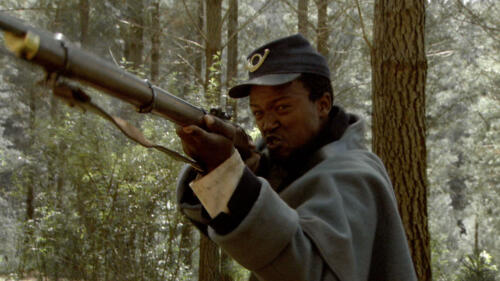
This myth had deep, structural consequences. By romanticizing Confederate leaders, post-Reconstruction Southern societies justified the implementation of Jim Crow laws, disenfranchising Black citizens for nearly a century. The valorization of the Confederate cause stood in stark, tragic contrast to the sacrifices of the Union’s diverse forces, including the courageous Black heroes throughout military history who fought for true liberation. The debate over Confederate monuments, street names, and military bases that continues today is a direct inheritance of this “Lost Cause” narrative.

Lesser-Known Facts About Robert E. Lee
- The “Greatest Regret” of His Life: In his final years, while serving as the President of Washington College, Lee stunned a colleague by confessing: “The great mistake of my life was taking a military education.” He realized that his specialized training had locked him into a devastating, zero-sum choice in 1861. Had he been a civilian, he believed he could have avoided the terrible burden of leading an army against his own country.
- A Reject of Militarism: In his post-war years, Lee deliberately stripped his college of military drills, banned students from wearing Confederate uniforms, and refused to write his memoirs. He wanted his students and the nation to look forward to a peaceful, civilian future rather than dwelling on the bloodshed of the past.
- No Demerits at West Point: Robert E. Lee remains one of the extremely rare cadets in the history of West Point to complete his entire four years of study without receiving a single demerit or mark against his behavior.
Why Robert E. Lee’s Legacy Still Matters Today
Robert E. Lee’s life remains a crucial touchstone in modern American discourse. The ongoing national debates over Confederate monuments and the renaming of military bases are not just arguments about bronze and stone; they are deep, collective reckonings with how a society remembers its history. Lee represents the thin line between duty, treason, and tragedy. His life forces us to ask tough questions about the nature of patriotism, the weight of historical memory, and the responsibility of leaders during times of moral crisis.
People Also Ask
Did Robert E. Lee regret his role in the Civil War?
While Lee rarely spoke publicly about his war decisions, his private letters and his famous confession that taking a military education was his “greatest mistake” show a man deeply burdened by the devastation the war caused. He spent his final years advocating for reconciliation and urging Southerners to accept the outcome of the conflict.
Why did Robert E. Lee decline Lincoln’s offer?
Lee declined the command of the Union forces because he could not bring himself to draw his sword against his home state of Virginia, which had recently voted to secede. He famously stated, “I cannot raise my hand against my birthplace, my home, my children.”
What was Lee’s view on slavery?
Though some older historical works portrayed Lee as an opponent of slavery, modern biographers like Elizabeth Brown Pryor have demonstrated that Lee’s views were typical of the Southern planter class. He viewed Black people as racially inferior and actively engaged in the harsh realities of slave management, including breaking up slave families and ordering severe punishments for runaways.
Conclusion: A Haunting Legacy of Conflict and Reconciliation
Ultimately, Robert E. Lee’s story is one of profound historical paradox. He was a master tactician who won legendary victories, yet his military genius ultimately prolonged a bloody war fought for an unjust cause. He was a man of deep personal discipline who nevertheless participated in the near-destruction of the nation he had sworn to protect. By looking past the myth and examining the complex, historically accurate reality of Lee’s life, we gain a deeper understanding of the enduring scars of the Civil War and the ongoing quest to form a more perfect Union.


