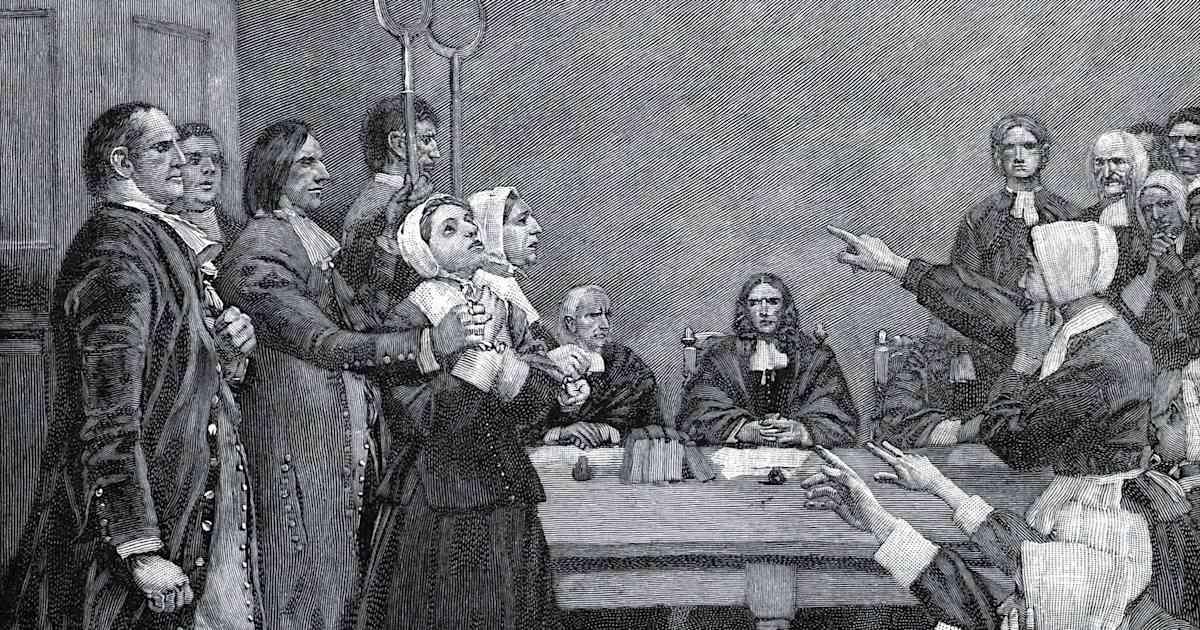
The year 1692 remains etched in the American consciousness as a dark chapter of mass hysteria, legal failure, and religious extremism. In the tight-knit, highly devout Puritan settlement of Salem Village, Massachusetts, a series of bizarre events erupted into what would become the most notorious witch hunt in the New World. At the center of this terrifying ordeal were not the judges or the clergy, but a core group of young girls and young women known as the “afflicted girls.” Understanding the role of the Salem Witch Trials main accusers is critical to unraveling how a community turned against itself, leading to the execution of nineteen innocent people, the pressing to death of Giles Corey, and the ruin of dozens of families. These young accusers—ranging in age from nine to twenty—screamed, convulsed, and pointed fingers at their neighbors, wielding an absolute and terrifying legal authority. Their actions forever altered the development of American jurisprudence, serving as a cautionary tale about the dangers of unchecked zealotry, the weaponization of fear, and the catastrophic collapse of due process in early colonial society.
Historical Background: The Seeds of Hysteria in Puritan Massachusetts
To understand why the Salem Witch Trials occurred, one must look at the unique sociopolitical climate of late 17th-century New England. In 1692, the Massachusetts Bay Colony was recovering from a period of intense political instability. The colony’s original charter had been revoked, and a new governor, Sir William Phips, arrived amidst a backdrop of fear, uncertainty, and constant threats. Salem Village (modern-day Danvers) was a small, factionalized agricultural community plagued by internal disputes. There was a bitter rivalry between the agrarian Salem Village and the wealthier, commerce-driven Salem Town. Furthermore, the community was deeply religious; Puritans believed that the Devil was a physical, active force in the world, constantly seeking to destroy their “City upon a Hill.” Under the leadership of Reverend Samuel Parris, the local minister, these anxieties reached a boiling point. The fears of the community were further compounded by the ongoing King William’s War, a brutal conflict with French forces and Wabanaki Native American tribes. This warfare displaced many settlers, sending traumatized refugees into Salem Village and seeding the ground with collective anxiety and post-traumatic stress.
The Salem Witch Trials Timeline: A Year of Terror (1692–1693)
The tragedy of Salem did not happen overnight; it escalated through a series of legal, religious, and personal clashes. Here is a chronological breakdown of the key events that defined this dark era:
- January 1692: Betty Parris, age nine, and Abigail Williams, age eleven, begin exhibiting strange physical fits, screaming, and throwing objects. Local doctor William Griggs diagnoses them as being “bewitched.”
- February 1692: Neighbors encourage the baking of a “witch cake” to identify the perpetrators. The girls accuse Tituba, an enslaved woman in the Parris household, along with Sarah Good and Sarah Osborne.
- March 1692: Magistrates John Hathorne and Jonathan Corwin begin public interrogations. Tituba confesses to interacting with the Devil, confirming the community’s worst fears and sparking widespread panic.
- June 1692: The newly established Court of Oyer and Terminer convenes. Bridget Bishop is the first person convicted and hanged. Abigail Williams and other accusers dominate the courtroom with spectacular displays of affliction.
- August 1692: Former Salem minister George Burroughs is executed. Before his death, he recites the Lord’s Prayer perfectly—something believed impossible for a witch—shaking the public’s confidence in the trials.
- September 1692: Giles Corey is pressed to death for refusing to stand trial. The final eight executions take place on Gallows Hill.
- October 1692: Public opposition grows. Governor William Phips bans the use of “spectral evidence” in court and dissolves the Court of Oyer and Terminer.
- May 1693: Governor Phips issues a general pardon for all remaining accused individuals, bringing the tragic trials to a formal close.
Meet the Key Figures: The Accusers and Their Devastating Roles
While adult magistrates and ministers sanctioned the executions, the primary drivers of the courtroom accusations were the “afflicted girls.” Understanding these individual lives reveals a complex web of trauma, social manipulation, and religious indoctrination.
Abigail Williams and Betty Parris
The crisis began in the home of the local minister. Betty Parris, the nine-year-old daughter of Reverend Samuel Parris, and her eleven-year-old cousin, Abigail Williams, were the first to experience the terrifying symptoms of convulsion and barking. While Betty was soon sent away by her parents to escape the hysteria—eventually marrying and living a quiet life—Abigail Williams stayed and became one of the most prolific accusers. Abigail testified against fifty-seven people. After the trials concluded, she vanished entirely from the historical record, leaving no trace of her later life.
Ann Putnam Jr.
At just twelve years old, Ann Putnam Jr. was perhaps the most influential and destructive of the afflicted girls Salem. She named and testified against over sixty individuals. Her parents, Thomas Putnam and Ann Putnam Sr., were major instigators of the trials, and many historians believe Ann Jr. was used as a mouthpiece for her family’s political and territorial grievances. However, Ann’s story is unique: in 1706, she became the only accuser to offer a formal, public apology to the congregation of Salem Village, claiming she had been blinded and deluded by Satan during her childhood testimony.
Elizabeth Hubbard
An seventeen-year-old orphan, Elizabeth Hubbard worked as a domestic maid in the home of her aunt and uncle, Dr. William Griggs—the very physician who first diagnosed the witchcraft. Enjoying little social status or security, Elizabeth found sudden prominence in the courtroom, testifying against twenty-nine people, thirteen of whom were executed. She was famous for falling into deep, catatonic trances during trials, claiming she was being choked by the spirits of the accused.
Mary Walcott
The sixteen-year-old daughter of Salem’s militia captain, Mary Walcott, was closely tied to the Putnam family. She joined the accusers in March 1692. Throughout the trials, Mary’s behavior was uniquely erratic; at times she suffered terrible fits, while at other times she sat peacefully in the courtroom knitting, demonstrating how the performance of affliction could be toggled at will. She survived the trials, married, raised six children, and died in 1752.
Mercy Lewis
Mercy Lewis, nineteen, had experienced horrors far worse than Salem. Having survived a brutal Native American raid in Maine that killed both of her parents, she worked as a domestic servant in the Putnam household. Many modern historians believe Mercy was suffering from severe post-traumatic stress disorder (PTSD). Her afflictions were intense, and she accused nine people of witchcraft, including George Burroughs, her former employer who had survived the same frontier wars.
Mary Warren
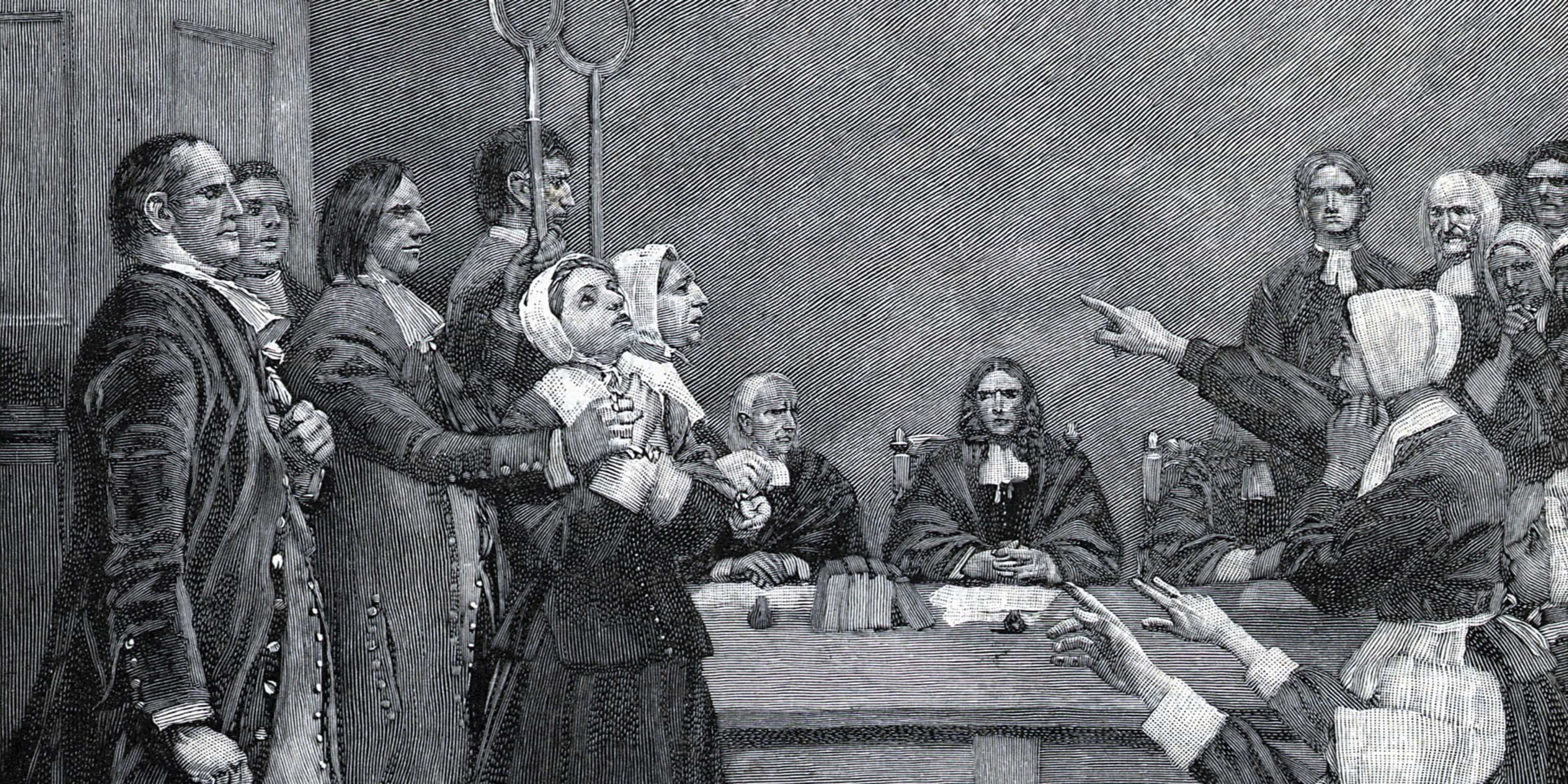
At twenty, Mary Warren was a servant to John and Elizabeth Proctor. Mary’s trajectory is the most tragic and telling. Initially, her employer, John Proctor, threatened to beat her if she continued her dramatic fits, which temporarily “cured” her. She then confessed to her peers that the other girls were faking their symptoms. However, when the other accusers turned on her and accused her of witchcraft, Mary succumbed to the pressure. She joined the ranks of the accusers once more, testifying against her own employers, John and Elizabeth Proctor, ultimately sending John Proctor to the gallows.
Causes and Context: Why Did the Salem Accusers Do It?
The question of what truly motivated the Salem Witch Trials main accusers has fascinated historians, scientists, and psychologists for over three centuries. Several theories have emerged to explain the bizarre physical symptoms and aggressive finger-pointing:
1. Convulsive Ergotism (The Rye Fungus Theory)
In 1976, researcher Linnda Caporael proposed a scientific explanation: convulsive ergotism. Ergot is a fungus (Claviceps purpurea) that grows on rye and other grains, particularly during damp, warm springs following severe winters—conditions that matched the weather of 1691. Consuming ergot-contaminated rye bread can cause severe hallucinations, muscle spasms, convulsions, and crawling sensations on the skin. While this theory explains the initial physical symptoms of the Parris household, many historians discount it, noting that the fits were highly selective and occurred predictably in the courtroom to align with judicial proceedings.
2. Trauma and PTSD from King William’s War
Many of the accusers, including Mercy Lewis and Abigail Williams, were directly impacted by the ongoing King Williams War PTSD. Having witnessed the brutal slaughter of their families on the Maine frontier, these young women carried deep, untreated psychological trauma. In a society that lacked any concept of mental health care, their terrors and anxieties were externalized through the culturally accepted lens of demonic possession and witchcraft.
3. Mass Hysteria and Social Empowerment
In the rigid, patriarchal society of Puritan New England, young, unmarried women and domestic servants occupied the absolute lowest rung of social hierarchy. They were expected to be silent, obedient, and invisible. The outbreak of the trials suddenly granted these disenfranchised girls immense social and legal power. A single word from them could imprison wealthy landowning men. Psychologists suggest that a combination of mass hysteria, peer pressure, and the intoxicating allure of this newly acquired power kept the girls locked in their performative roles.
Major Turning Points: The Collapse of “Spectral Evidence”
The turning point of the Salem Witch Trials came when the court’s reliance on spectral evidence Salem was finally challenged. Spectral evidence allowed witnesses to testify that an accused person’s spirit, or specter, had attacked or pinched them, even if the accused was physically miles away at the time. Because this evidence was invisible to everyone except the accuser, it was impossible to disprove.
As the accusations grew more audacious, targeting prominent individuals such as Lady Mary Phips (the wife of the Governor) and respected Boston merchants, influential religious leaders began to object. Reverend Increase Mather, a prominent Boston minister and president of Harvard College, published a treatise arguing that “It were better that ten suspected witches should escape, than that one innocent person should be condemned.” Recognizing the collapse of public support and the danger of the court’s unchecked power, Governor Phips forbade the use of spectral evidence in October 1692, effectively stripping the accusers of their judicial weapon and bringing the trials to a rapid halt.
The Long-Term Impact on America’s Legal and Cultural Legacy
The fallout from the Salem Witch Trials profoundly altered the course of American history, leaving a deep structural impact on the nation’s legal system and cultural identity:
- The Evolution of Due Process: The tragic misuse of spectral evidence accelerated changes in American jurisprudence. It helped establish the foundational legal doctrine of “innocent until proven guilty” and highlighted the necessity of objective, physical evidence over subjective testimony in criminal trials.
- Freedom of Religion and Secular Law: The trials exposed the dangers of a theocracy, where religious sins were prosecuted as secular crimes. This disaster contributed to the long-term separation of church and state in America, ensuring that courts of law remained secular institutions.
- A Cultural Touchstone: Salem became a permanent symbol of the dangers of groupthink, scapegoating, and government overreach. It inspired Arthur Miller’s classic 1953 play, The Crucible, which used the Salem events as an allegory for the anti-communist Red Scare of the McCarthy era.
Fascinating and Lesser-Known Facts About the Salem Witch Trials
The “Witch Cake” Backfire
Before the official trials began, a neighbor named Mary Sibley suggested a folk remedy to diagnose the girls’ illness. She instructed Tituba and her husband, John Indian, to bake a “witch cake” using rye flour mixed with the urine of the afflicted girls. The cake was then fed to a dog, under the belief that the dog would reveal the identity of the witch. When Reverend Parris discovered this, he was outraged by the use of “devilish” white magic, and his public condemnation pressured Tituba into her initial confession.
Giles Corey’s Defiant Death
Unlike the other victims who were hanged, eighty-one-year-old Giles Corey was Giles Corey pressed to death. Knowing that the court would confiscate his property if he was convicted of witchcraft, Corey refused to enter a plea of guilty or not guilty. Under English law, the punishment for refusing to plead was “peine forte et dure”—being pressed under heavy stones until he spoke or died. Throughout the two-day ordeal, Corey remained silent, famously uttering only “More weight” to hasten his death. Because he never stood trial, his estate was successfully passed down to his heirs.
The Apology of Ann Putnam Jr.
Fourteen years after the trials, in 1706, twenty-six-year-old Ann Putnam Jr. stood before the Salem Village congregation while the new minister read her formal apology. She expressed deep remorse for her role in sending innocent people to their deaths, specifically mentioning Rebecca Nurse. Ann claimed she had been deceived by the “Great Adversary” (the Devil). She was accepted back into the church and died unmarried nine years later at the age of thirty-five.
Why the Salem Witch Trials Still Matter Today
In the modern world, the phrase “witch hunt” is frequently invoked in political and social discourse. The Salem Witch Trials serve as an enduring warning about how easily fear, tribalism, and systemic bias can compromise the justice system. In the digital age, where social media algorithms can amplify outrage and lead to swift, unchecked public condemnation, the lessons of Salem are more relevant than ever. It teaches us that a society must always protect individual rights, demand empirical evidence, and resist the seductive pull of moral panics.
People Also Ask (PAA)
Did any of the Salem accusers admit they were lying?
Yes, Mary Warren briefly admitted that she and the other girls were faking their symptoms (“dissembling”). However, when she was threatened with witchcraft accusations herself, she recanted her confession and returned to accusing others. Ann Putnam Jr. was the only accuser to offer a full written apology years later, attributing her actions to being deluded by the Devil rather than outright malice.
Were the Salem witches burned at the stake?
No, none of the individuals executed during the Salem Witch Trials were burned at the stake. In colonial Massachusetts, English law prevailed, which designated witchcraft as a felony punishable by hanging. Nineteen people were hanged on Gallows Hill, one man (Giles Corey) was pressed to death, and several others died in the deplorable conditions of the local prisons.
What happened to the accusers after the trials ended?
The fates of the accusers varied widely. Abigail Williams and Elizabeth Hubbard disappeared entirely from historical records. Betty Parris, Mary Walcott, and Mercy Lewis eventually married, moved away, and led relatively quiet lives. Ann Putnam Jr. remained in Salem, raising her younger siblings after her parents’ sudden deaths, and died young at age thirty-five after publicly apologizing.
Conclusion: The Legacy of Salem’s Afflicted Accusers
The tragedy of Salem in 1692 is a sobering reminder of how fragile justice can be when a society is consumed by fear. The Salem Witch Trials main accusers—young, traumatized, and socially powerless—found themselves at the center of a perfect storm where religious zealotry, geopolitical anxiety, and personal grievances collided. Though their fits and dramatic courtroom accusations resulted in unspeakable suffering, the legal and moral reckoning that followed shaped the very foundations of American democracy. By studying the voices of those who cried out in Salem, we are reminded of our ongoing duty to uphold reason, fairness, and compassion in the face of collective panic.


