Since the dawn of organized conflict, generals, strategists, and sovereigns have chased a singular tactical obsession: securing the ultimate high ground. In the theater of war, knowing what lies beyond the hill can mean the difference between decisive victory and catastrophic defeat. While early commanders relied on daring cavalry scouts and elevated lookout posts, the advent of flight fundamentally transformed military intelligence. The history of aerial surveillance history is a remarkable journey of human ingenuity, spanning over two centuries of scientific breakthroughs, whimsical experiments, and high-stakes espionage. From the tethered hydrogen balloons of the French Revolutionary Wars to the sophisticated robotic drones and orbit-crossing satellites of the modern era, the quest to spy from the heavens has continually pushed the boundaries of technology.
The Dawn of Sky-High Reconnaissance: From Balloons to Battlefield Kites
The story of aerial reconnaissance begins long before the invention of the airplane. In the early 1790s, the French military began experimenting with hydrogen-filled balloons to gain a tactical edge over their adversaries. This pioneering effort culminated in 1794 with the formation of the Compagnie d’Aéronautiers, recognized by historians as the world’s first independent air force. These early reconnaissance balloons were not free-floating; instead, they were tethered to the ground by heavy cables. Two brave soldiers rode in the dangling basket: one peering through a telescope to map enemy formations, and the other frantically signaling observations to the ground using colored flags. This early innovation mirrored other historic military alliances, reminiscent of the crucial ways the French helped win the American Revolution, proving that French engineering often reshaped global battlefields.
According to Dr. Andrew Hammond, a historian and curator at the International Spy Museum in Washington, D.C., this aerial perspective was revolutionary. Before this era, commanders had to rely solely on cavalry reconnaissance, which was dangerous and limited by geography. From a balloon on a clear day, observers could see up to 50 miles, granting an unprecedented tactical advantage.
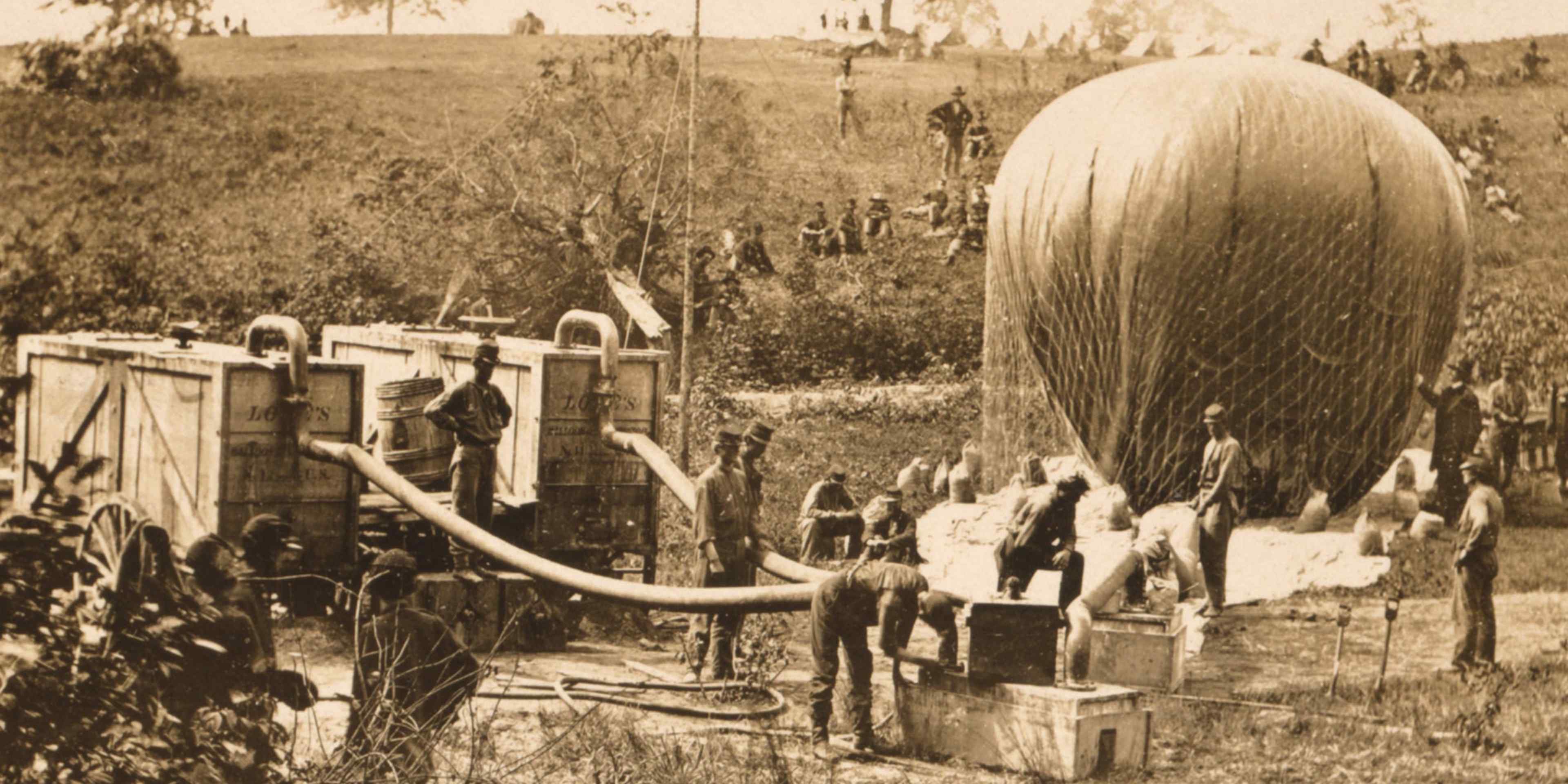
Across the Atlantic, this technology found a dramatic home during the American Civil War. In 1861, American inventor and showman Thaddeus Lowe staged a spectacular balloon demonstration on the National Mall. Operating under the watchful eye of President Abraham Lincoln, Lowe transmitted a telegraph message directly from his balloon to the White House. Convinced of its utility, Lincoln authorized the creation of the Union Army Balloon Corps. The largest of these balloons, the Intrepid, could carry up to five people, including dedicated telegraph operators who relayed real-time Confederate movements directly to commanders on the ground.
By the late 19th century, inventors sought ways to capture these aerial views permanently. In the 1880s, British meteorologist Douglas Archibald began rigging cameras to large canvas kites, using a long cable to trigger the camera shutter from the ground. During the Spanish-American War of 1898, an American army corporal named William Eddy built his own version of Archibald’s kite-mounted camera. Eddy used this innovative contraption to capture the first military aerial surveillance photographs in history, proving that cameras in the sky were no longer a fantasy but a vital asset for modern combat.
Chronology of Aerial Espionage: Key Milestones
- 1794: France establishes the Compagnie d’Aéronautiers, the first air force, utilizing tethered balloons at the Battle of Fleurus.
- 1861: Thaddeus Lowe demonstrates balloon telegraphy, leading to the creation of the Union Army Balloon Corps during the American Civil War.
- 1898: Corporal William Eddy takes the first military aerial surveillance photographs using a custom kite-camera during the Spanish-American War.
- 1907: German pharmacist Julius Neubronner patents the pigeon-mounted camera, which is later tested during World War I.
- 1914–1918: World War I accelerates the use of reconnaissance aircraft and introduces the earliest unmanned aerial targets.
- 1935: The British Royal Air Force develops the “Queen Bee,” a radio-controlled target drone that popularized the term “drone.”
- 1955: The United States develops the high-altitude U2 spy plane to bypass Soviet airspace restrictions.
- 1960: Project Corona, a highly classified American spy satellite program, successfully retrieves its first orbit-captured photos.
- 1970s: The CIA develops the “Insectothopter,” a micro-UAV designed to resemble a dragonfly.
- Late 20th Century to Present: Unmanned Aerial Vehicles (UAVs) like the Predator and global satellite networks revolutionize military intelligence and civilian communication.
Pioneers of the High Altitude: Key Figures in Aerial Intelligence
The progression of aerial surveillance was driven by visionary inventors, bold military officers, and daring pilots who risked everything to capture a glimpse of the enemy. Among the most notable are:
Thaddeus Lowe (1832–1913)
Lowe was an American aeronaut, scientist, and inventor. His tireless advocacy for aerial reconnaissance convinced Abraham Lincoln to establish the Union Army Balloon Corps. Lowe’s structural improvements to balloon design and his creation of portable hydrogen gas generators allowed Union forces to deploy aerial observation stations directly onto active battlefields.
Julius Neubronner (1852–1932)
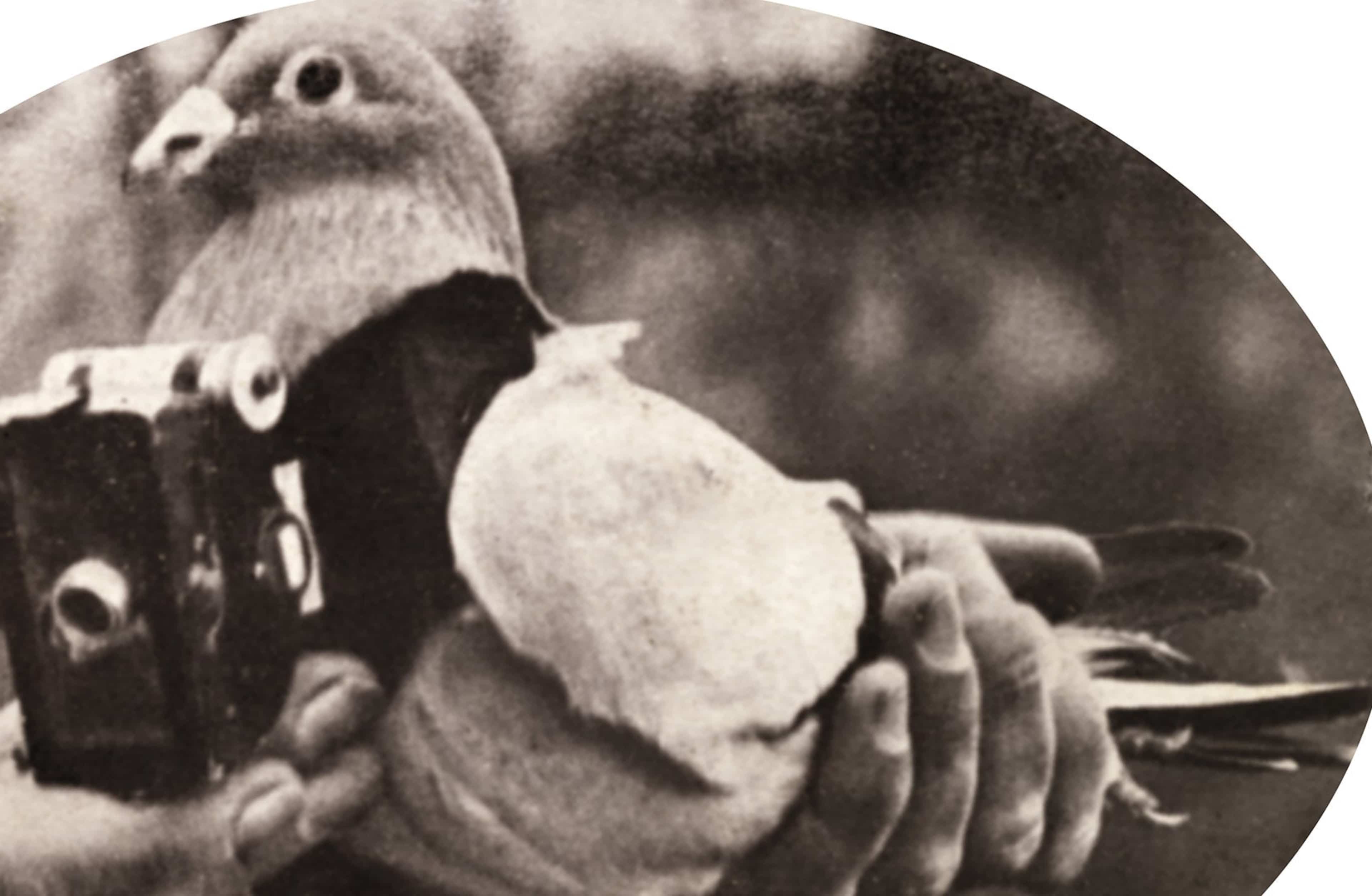
A German pharmacist with a passion for photography, Neubronner famously patented a miniature, aluminum-curved camera that could be strapped to the breasts of homing pigeons. While originally designed to track his patients’ prescription deliveries, his “avian photographers” caught the attention of the German military, who experimented with the birds as discreet surveillance assets over the Western Front during World War I.
Dr. Andrew Hammond
As the historian and curator of the International Spy Museum, Dr. Hammond has spent years analyzing and preserving the physical artifacts of global espionage. His insights highlight the persistent tension between technological limits and the desperate need for intelligence, demonstrating how failure often paved the way for modern triumphs.
Turning Points: From Avian Cameras to High-Altitude Jets
As military technology matured, the methods of gathering intelligence evolved rapidly. During World War I, the sky became a fiercely contested battlefield. While carrier pigeons played an indispensable role in carrying coded SOS messages and emergency bulletins, the German military attempted to utilize Neubronner’s pigeon cameras to peer over Allied trenches. However, the birds proved difficult to control, and the resulting photographs were often too blurry to provide actionable intelligence. The history of espionage is littered with such fascinating failures, showing how nations constantly experimented to find reliable solutions.
The true turning point of World War I came with the rapid development of the airplane. Initially, these fragile wood-and-canvas aircraft were not outfitted for dogfights; instead, they served as eyes for the artillery. Pilots and observers flew over enemy lines, sketching troop movements by hand. Soon, industrial giants like the Eastman Kodak Company designed heavy, specialized cameras that could be mounted directly to the fuselage of de Havilland DH-4 aircraft. Kodak even established the U.S. Aerial Photography School in Rochester, New York, training thousands of soldiers to develop high-quality reconnaissance film under grueling battlefield conditions.
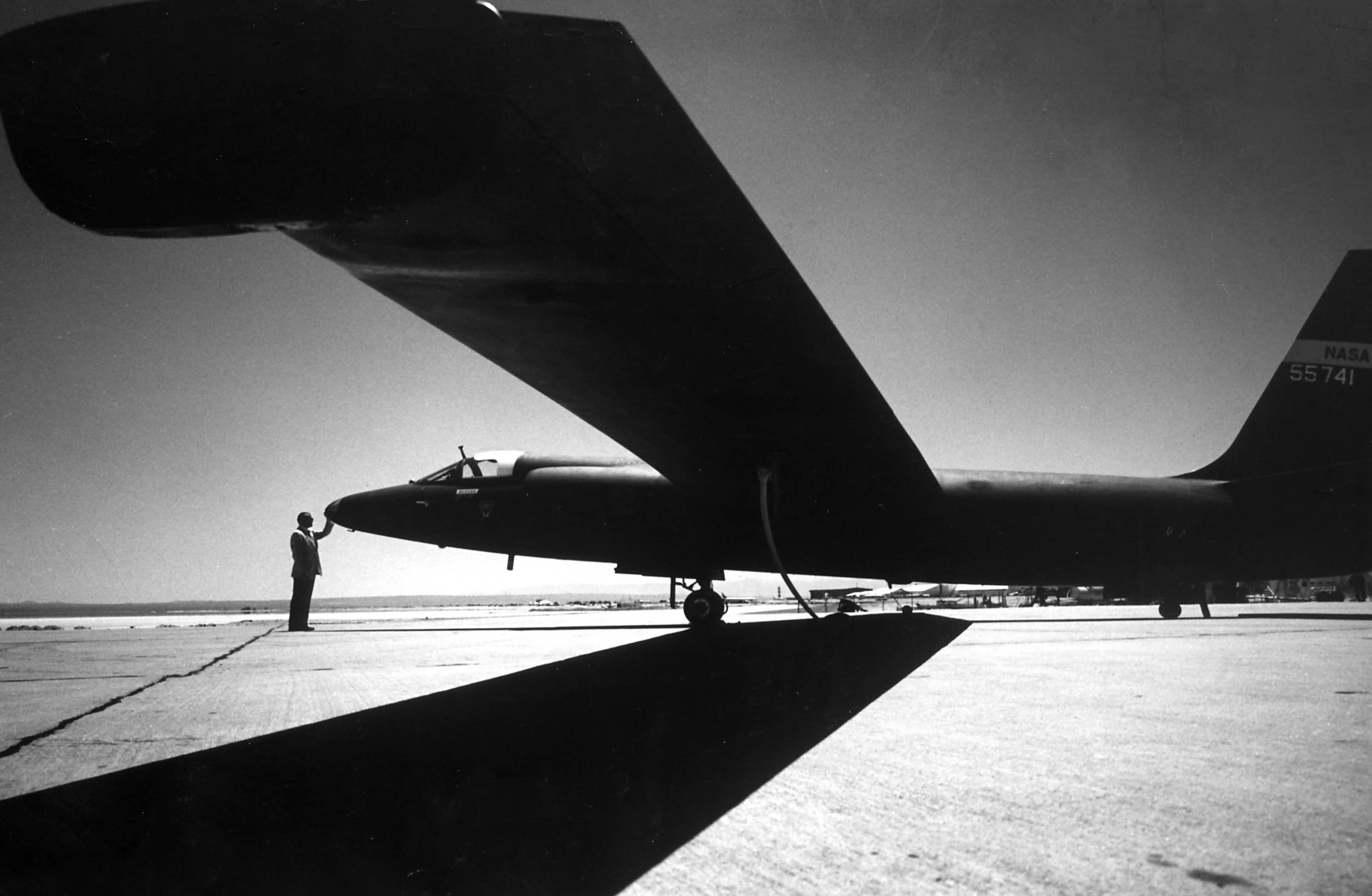
By World War II, surveillance planes were equipped with onboard darkrooms, allowing military analysts to process and examine photos mid-flight. But as the Cold War settled over the globe, the Soviet Union’s tightly closed borders made traditional ground-based espionage virtually impossible. To pierce the Iron Curtain, American intelligence agencies turned to extreme altitudes, leading to the creation of the U2 spy plane. Engineered by Lockheed’s secret Skunk Works division, the U2 could cruise at an astonishing 70,000 feet—far beyond the reach of Soviet fighter jets and early anti-aircraft missiles. Equipped with the revolutionary Hycon 73B camera, the U2 could capture stunningly detailed images from the edge of space. It was a U2 flight in October 1962 that photographed Soviet nuclear missile sites in Cuba, sparking the Cuban Missile Crisis and changing the course of modern history.
The Space Race and the Satellite Era
As the Cold War intensified, both the United States and the Soviet Union looked beyond the atmosphere. While the public space race focused on landing a man on the moon, a secret shadow war was fought to secure orbit-based surveillance. In 1959, the U.S. Air Force launched “Discoverer,” a program ostensibly dedicated to gathering scientific data. In reality, this was the cover story for Project Corona, the world’s first successful spy satellite program. Operating in total secrecy, Corona satellites captured wide-sweeping photographs of Soviet military bases and missile silos.
Because digital transmission technology did not yet exist, these early satellites had to return physical film to Earth. The satellite would eject specialized, heat-shielded “film buckets” that parachuted down through the atmosphere. In a feat of incredible precision, U.S. Air Force C-130 transport jets would snatch the parachuting canisters out of mid-air over the Pacific Ocean near Hawaii. By the late Cold War, the massive HEXAGON KH-9 satellite—affectionately dubbed “the big bird”—could photograph objects smaller than two feet across from 100 miles above the Earth, providing unparalleled global clarity.
Lesser-Known Espionage Anecdotes
1. The CIA’s Robotic Dragonfly: The Insectothopter
In the 1970s, the CIA’s Office of Research and Development created a tiny, lifelike mechanical dragonfly called the Insectothopter. Powered by a miniature, custom-built gasoline engine, this micro-UAV was designed to fly quietly into secure areas to plant listening devices. Controlled via a laser beam that also transmitted audio signals, the device was incredibly advanced. Unfortunately, it was never deployed operationally because even a gentle breeze of 5 miles per hour would blow the robotic insect completely off course.
2. Mid-Air Film Snatching
The process of retrieving film from Cold War-era spy satellites sounds like a Hollywood action movie. Pilots from the 6593rd Test Squadron trained constantly to hook the parachuting film canisters of Project Corona and HEXAGON missions. If the mid-air catch failed, the canisters were designed to float for a brief period before a water-soluble plug dissolved, sinking the top-secret intelligence to the bottom of the ocean to prevent enemy retrieval.
3. Winston Churchill and the “Queen Bee”
Long before modern MQ-9 Reapers patrol the skies, the British Royal Air Force developed a pilotless target drone called the de Havilland Queen Bee in 1935. This wooden biplane, controlled by radio signals, was used to train anti-aircraft gunners. Prime Minister Winston Churchill personally witnessed these trials. Historians believe that the radio-controlled “Queen Bee” is the direct linguistic ancestor of the modern term “drone.”
The Long-Term Impact on American Society and Global Defense
The relentless pursuit of aerial intelligence has profoundly shaped modern American history, defense doctrine, and civilian technology. The establishment of dedicated intelligence agencies like the CIA and the National Reconnaissance Office (NRO) was fueled by the critical need to manage high-altitude and orbital surveillance programs. This massive investment in defense technology eventually trickled down into everyday civilian life. Today, the global positioning systems (GPS), satellite weather forecasting, and digital mapping services like Google Earth that we rely on daily are direct descendants of Cold War-era military surveillance projects.
This historical trajectory highlights a fundamental truth about American defense: from the nation’s founding, information has been the ultimate weapon. Just as how George Washington used spies to win the American Revolution through terrestrial espionage networks, modern American leaders utilized technological marvels in the sky to secure geopolitical dominance and protect democratic institutions during the twentieth century.
Why Aerial Espionage History Matters Today
In the twenty-first century, the sky is busier than ever. The line between military reconnaissance and civilian technology has blurred. Low-cost quadcopter drones are used globally for everything from wedding photography and agricultural monitoring to search-and-rescue operations. At the same time, geopolitical tensions continue to play out in the skies, with high-altitude surveillance balloons and stealth UAVs frequently making international headlines. Understanding the history of aerial espionage allows us to appreciate the complex balance between national security and personal privacy, reminding us that the eye in the sky has been watching for over two hundred years.
People Also Ask
Did the Union Army really use spy balloons during the Civil War?
Yes. Under the leadership of Thaddeus Lowe, the Union Army Balloon Corps operated several tethered hydrogen balloons, including the Intrepid and the Constitution. These balloons allowed observers to map Confederate fortifications and relay battlefield data via telegraph lines running down the tether cables.
What was Project Corona?
Project Corona was a highly classified, joint United States Air Force and CIA satellite program that operated from 1959 to 1972. It was the first program to successfully photograph the Earth from space for military intelligence purposes, mapping Soviet and Chinese military installations.
Why are pilotless aircraft called drones?
The term is widely believed to have originated in the 1930s with the British de Havilland “Queen Bee,” a radio-controlled target aircraft. In homage to the Queen Bee, the United States military began developing its own radio-controlled target planes and referred to them as “drones.”
Conclusion
From the tethered hydrogen-filled baskets of the 18th century to the silent, orbit-crossing spy satellites of the Cold War, the evolution of aerial surveillance reflects humanity’s unyielding desire to master the skies. What began as a primitive attempt to peek over the next hill has evolved into a global network of continuous, real-time observation. As technology continues to advance, the legacy of these early aerial pioneers remains deeply woven into the fabric of modern defense, global geopolitics, and our everyday digital lives.


