The American Civil War was an era of unprecedented bloodshed, but the peace that followed proved to be just as turbulent. The period known as Reconstruction (1865-1877) was a monumental, highly contested effort to rebuild a shattered nation, integrate eleven former Confederate states back into the Union, and define the civil and political rights of four million newly freed African Americans. Far from being a quiet era of healing, Reconstruction was a revolutionary crucible of interracial democracy that fundamentally transformed the United States Constitution. From the lenient policies of Presidential Reconstruction to the sweeping congressional reforms of the Reconstruction Act of 1867, this era challenged America to live up to its founding creeds of liberty and equality for all.
Historical Background: A Nation Fractured
When the Civil War ended in April 1865, the United States faced an unprecedented crisis. The physical landscape of the American South lay in ruins, its economy devastated by the collapse of slavery—the very foundation of its agricultural wealth. More importantly, the social order was entirely upended. The nation had to grapple with two existential questions: How should the rebellious southern states be reintegrated into the federal government, and what would be the status of the four million formerly enslaved people? Initially, President Abraham Lincoln sought a lenient path toward reconciliation, but his tragic assassination on April 14, 1865, thrust Vice President Andrew Johnson into the executive office. Johnson, a southern Unionist with deep states-rights convictions, favored a swift and lenient restoration of white-led southern governments. This clash between executive leniency and a growing congressional demand for justice set the stage for a dramatic political battle.
A Chronological Timeline of Reconstruction
- 1865: The end of the Civil War, the assassination of Abraham Lincoln, and the establishment of the Freedmen’s Bureau. President Andrew Johnson begins Presidential Reconstruction, while the 13th Amendment is ratified, officially abolishing slavery.
- 1866: Southern states enact restrictive Black Codes. In response, Congress passes the Civil Rights Act of 1866 over President Johnson’s veto, marking the first time in U.S. history a major bill becomes law despite a presidential veto.
- 1867: Congress passes the Reconstruction Act of 1867, initiating Radical Reconstruction. The South is divided into five military districts governed by Union generals to enforce civil rights and universal male suffrage.
- 1868: The House of Representatives impeaches President Andrew Johnson (who is acquitted by one vote in the Senate). The 14th Amendment is ratified, securing national citizenship and equal protection under the law.
- 1870: The 15th Amendment is ratified, prohibiting voter discrimination based on race, color, or previous condition of servitude.
- 1877: The contested election of 1876 is resolved by the Compromise of 1877. Federal troops are withdrawn from the South, signaling the end of Reconstruction.
Key Figures and Their Lasting Impact
The Reconstruction era was defined by passionate, ideological leaders who clashed over the future of American democracy. President Andrew Johnson believed strongly in white supremacy and states’ rights, arguing that the federal government had no authority to dictate voting requirements. His obstructionism alienated moderate Republicans and empowered the Radicals. In contrast, Radical Republicans like Senator Charles Sumner and Representative Thaddeus Stevens envisioned a complete social revolution. They believed the South must be punished and restructured, arguing that true freedom for African Americans required political power, land ownership, and equal rights.
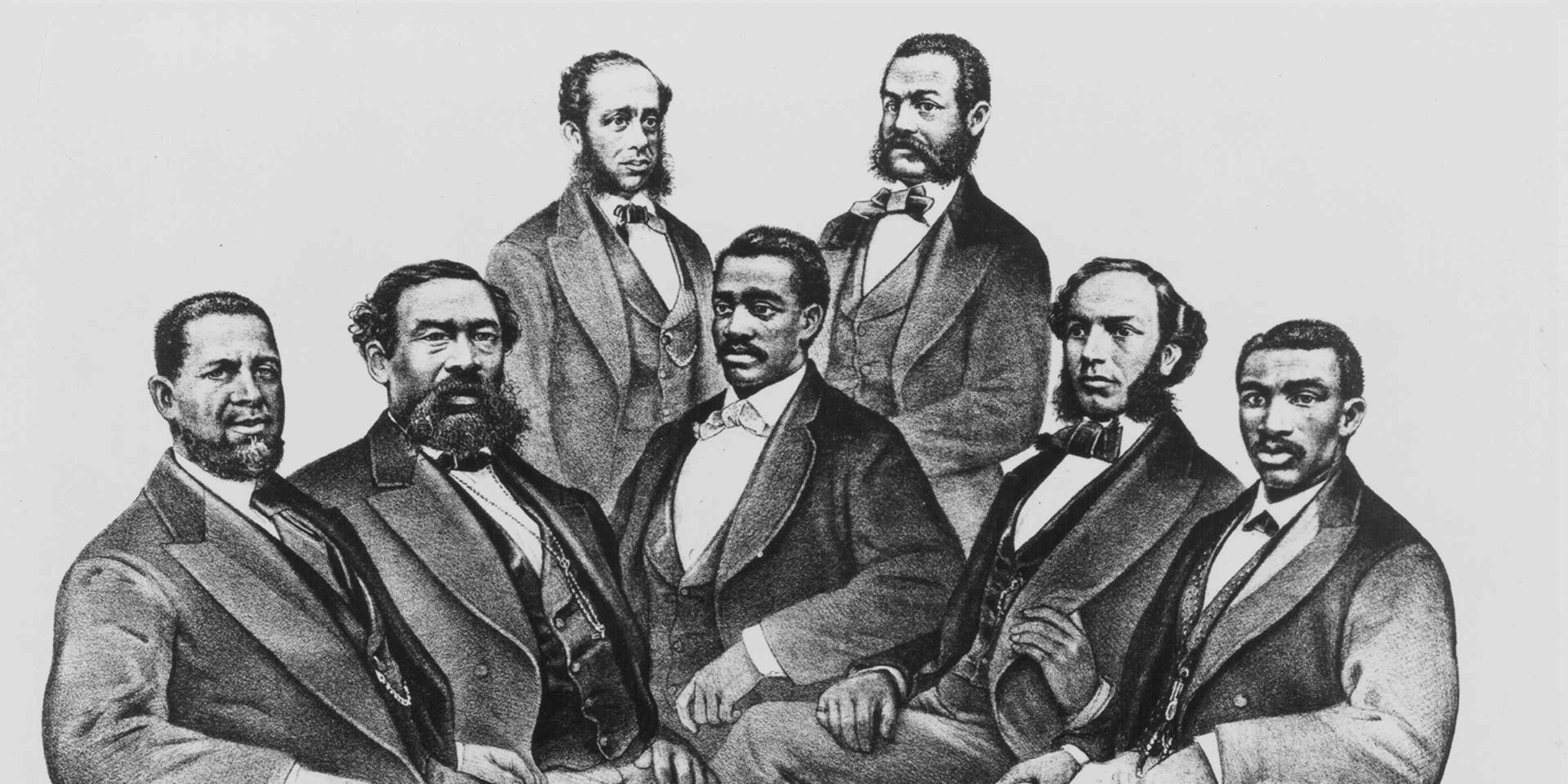
Crucially, this period saw the rise of extraordinary Black political leaders. Hiram Revels of Mississippi became the first African American to serve in the U.S. Senate, taking the seat once held by Confederate President Jefferson Davis. Alongside him, men like Joseph Rainey, the first Black member of the House of Representatives, fought tirelessly for civil rights and public education. These trailblazers proved that formerly enslaved people were fully capable of governing, shattering long-held racist myths of intellectual inferiority.
Causes and Context: The Battle Over Free Labor
The root of the political conflict during Reconstruction was economic and social. The southern planter class was determined to preserve its traditional labor system and racial hierarchy without the formal institution of slavery. To do this, they enacted Black Codes in 1865 and 1866. These laws criminalized unemployment for Black Americans, forced them into unfair annual labor contracts, and restricted them from owning land or testifying in court. This system aimed to reduce freedpeople to a state of near-slavery. Meanwhile, in the North, citizens and politicians were outraged. Having sacrificed hundreds of thousands of lives to win the Civil War, Northerners refused to let southern Democrats recreate slavery in all but name. This conflict catalyzed a broader discussion on the federal government’s duty to protect the civil liberties of its citizens.
Major Turning Points: From Presidential Leniency to Radical Reconstruction
The definitive turning point of this era was the congressional elections of late 1866. Voters overwhelmingly rejected President Johnson’s lenient approach, giving Radical Republicans a veto-proof supermajority in Congress. Armed with this mandate, Congress launched Radical Reconstruction. The passage of the landmark Reconstruction Act of 1867 was a revolutionary step. By placing the South under military rule, Congress ensured that new state constitutions would be written by delegates elected by both Black and white voters.

This political reorganization led to an unprecedented experiment in interracial democracy. During this brief period, Black voters formed the backbone of the southern Republican Party, joining forces with “carpetbaggers” (northern white migrants) and “scalawags” (southern white unionists). Together, they established the South’s first state-funded public school systems, built infrastructure, reformed penal codes, and enacted laws outlawing racial discrimination in public transportation. However, this progress was met with violent resistance. White supremacist organizations, most notably the Ku Klux Klan (KKK), waged a campaign of domestic terror, murdering political leaders and terrorizing Black voters to restore white Democratic control.
Long-Term Impact on America: The Second Founding
Historians often refer to the Reconstruction era as America’s “Second Founding.” The three Reconstruction Amendments—the 13th, 14th, and 15th—fundamentally rewrote the constitutional relationship between federal power and individual liberty. The 14th Amendment, in particular, created the modern framework for civil rights, introducing the concepts of birthright citizenship and equal protection under the law. These constitutional pillars eventually served as the legal bedrock for the 20th-century Civil Rights Movement. Although the withdrawal of federal troops after the Compromise of 1877 allowed the South to implement Jim Crow segregation, the legislative achievements of Reconstruction remained on the books, waiting to be fully realized a century later.
Lesser-Known Facts about the Reconstruction Era
While the broader strokes of the Civil War and Reconstruction are well-known, several fascinating details highlight the complexity of the era:
- The Juneteenth Delay: Although President Abraham Lincoln issued the Emancipation Proclamation in 1863, word of freedom did not officially reach the enslaved people of Galveston, Texas, until June 19, 1865—more than two years later, a historic milestone now celebrated nationally as Juneteenth.
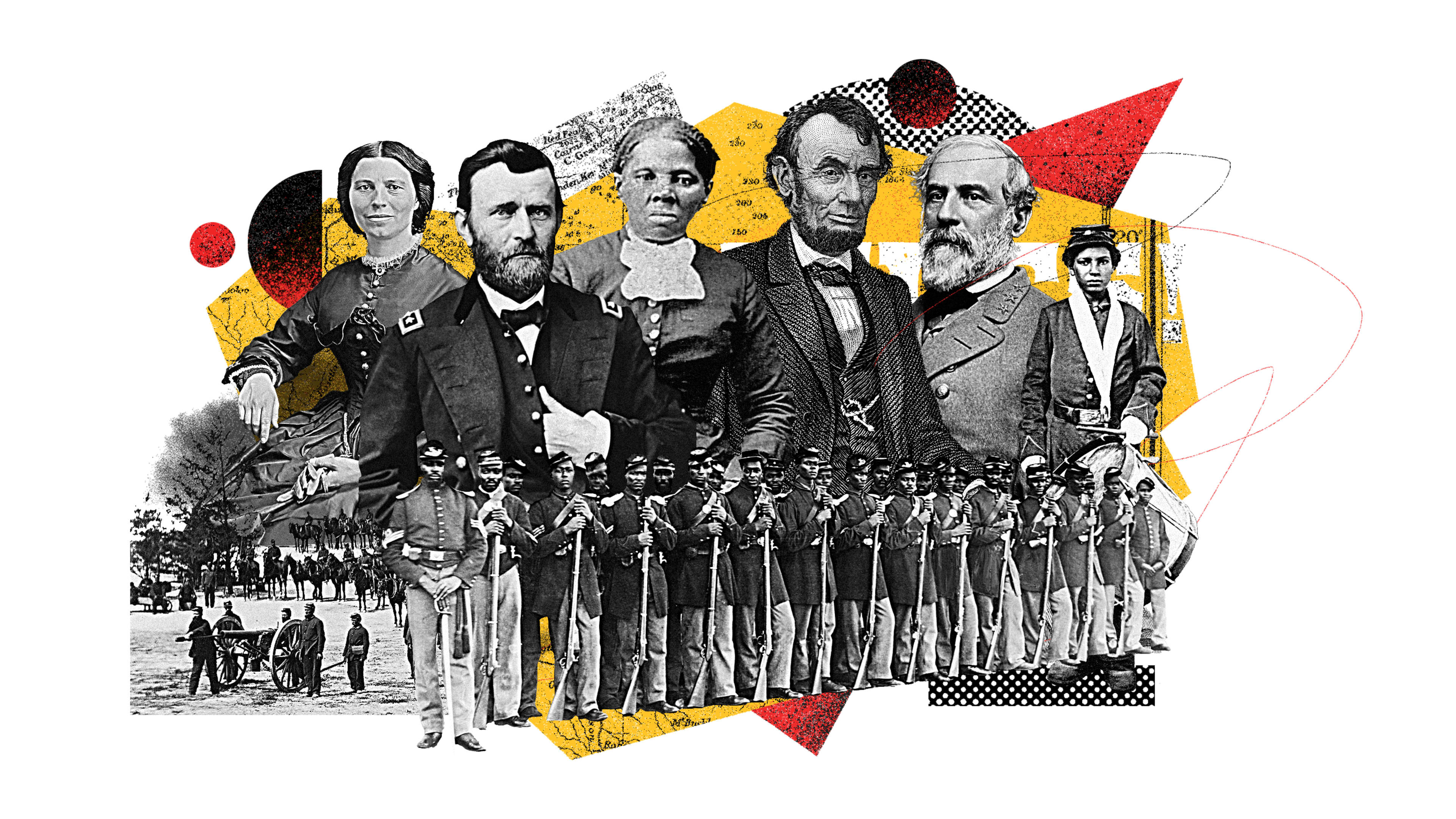
- Black Military Mobilization: Over 180,000 Black soldiers served in the Union Army during the Civil War. This massive mobilization of black heroes throughout US military history was a decisive military force that shattered the myth of Black complacency and forced Lincoln to make abolition an absolute war aim.
- The Persistent Threat of Re-Enslavement: The transition from bondage to freedom was fraught with peril. Many African Americans who fought for their country faced the horrifying prospect of kidnapping and re-enslavement by retreating Confederate forces, mirroring the precarious nature of African American liberty that had plagued Black patriots since the American Revolution.
Why It Still Matters Today
Reconstruction is not a dead chapter of American history; its debates continue to shape contemporary public life. Modern arguments over voting rights, the scope of federal power versus states’ rights, and racial justice are direct continuations of the battles fought in the 1860s and 1870s. When we discuss gerrymandering, voter identification laws, or equal protection under the law, we are actively engaging with the legacy of Reconstruction. Understanding this era allows us to see that progress is not linear, and that the protection of civil liberties requires constant vigilance.
People Also Ask
What was the main purpose of the Reconstruction Act of 1867?
The main purpose of the Reconstruction Act of 1867 was to reorganize the southern states under military authority and lay out a clear, structured path for their readmission to the Union. It required these states to draft new, inclusive constitutions, grant universal male suffrage, and ratify the 14th Amendment to guarantee equal protection to formerly enslaved people.
How did the Black Codes affect freed African Americans?
The Black Codes were highly restrictive laws passed by southern states in 1865 and 1866 designed to maintain a cheap agricultural labor force and limit the freedom of African Americans. They criminalized unemployment, restricted land ownership, and barred Black citizens from voting or serving on juries, effectively replicating the social conditions of slavery.
Why did Reconstruction end in 1877?
Reconstruction officially ended due to the Compromise of 1877, which resolved the highly contested 1876 presidential election. In exchange for awarding the presidency to Republican Rutherford B. Hayes, northern Republicans agreed to withdraw federal troops from the South, allowing white southern Democrats to regain political control and systematically dismantle the progress made by Black Americans.
Conclusion
The Reconstruction era remains one of the most complex, inspiring, and tragic chapters in the American narrative. It was a brief, shining moment where the nation attempted to construct a true interracial democracy out of the ashes of a brutal civil war. Although reactionary violence and political exhaustion eventually cut this experiment short, the legal and constitutional structures established during this time laid the indispensable groundwork for the modern civil rights struggles of the 20th and 21st centuries. By examining the successes and failures of Reconstruction, we gain a deeper understanding of the ongoing, unfinished work of perfecting American democracy.


