The history of the American Civil War is often told through a lens of monumental battles, clashing ideologies, and larger-than-life generals immortalized in stone. At the very epicenter of this national tragedy stands General Robert E. Lee, the brilliant commander of the Confederate Army of Northern Virginia. For generations, he has been cast as either a flawless military genius or a treasonous defender of a brutal slaveholding empire. Yet, beneath the marble facade of this military icon lies a deeply conflicted, vulnerable, and surprisingly regretful human being. Decades after his surrender, a startling revelation emerged from his private correspondence, analyzed by acclaimed biographer Elizabeth Brown Pryor. It was not his battlefield blunders, nor even his fateful decision to side with the Confederacy, that haunted him the most in his final days. Instead, Robert E. Lee’s greatest regret struck at the absolute foundation of his legacy: he believed that his entire pursuit of a military career was a tragic mistake. Understanding this profound regret reshapes our perspective on the Civil War, the psychological weight of command, and the complex struggle for personal and national reconciliation in a fractured America.
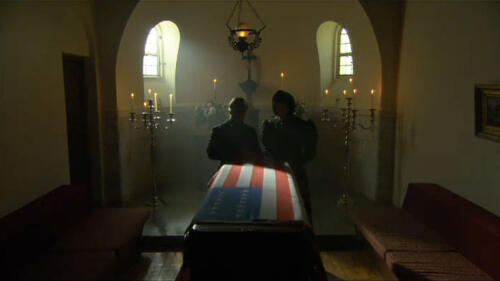
The Soldier’s Burden: Defining Robert E. Lee’s Historical Context
To understand the depth of Robert E. Lee’s regret, one must first look at the era that shaped him. Born in 1807 to Revolutionary War hero Henry “Light-Horse Harry” Lee, Robert grew up in the shadow of family financial ruin and the towering legacy of the founding generation. The military was not just a career choice; it was a path to reclaiming his family’s lost honor. Lee entered the United States Military Academy at West Point in 1825, embarking on a thirty-two-year career as an officer in the U.S. Army. During this time, he distinguished himself as a brilliant engineer and a combat hero in the Mexican-American War, serving under General Winfield Scott.
However, the sociopolitical landscapes of the 1850s were rapidly fracturing. As regional tensions over slavery and state sovereignty reached a boiling point, Lee found himself caught in the middle of a constitutional crisis. When the Civil War erupted in 1861, Lee was faced with an agonizing choice. His professional identity was entirely defined by his military rank. Unlike civilian lawyers, merchants, or politicians, a professional soldier could not easily sit on the sidelines when his home state of Virginia seceded from the Union. This professional entrapment would ultimately lead to his deepest life regret.
Key Timeline of Robert E. Lee’s Life and Agony
- 1825: Lee enters West Point, beginning his formal military education.
- 1829: He graduates second in his class without receiving a single demerit.
- 1846–1848: Lee serves with distinction in the Mexican-American War, mastering battlefield tactics that would later be studied alongside other brilliant military retreats and maneuvers.
- April 18, 1861: Presidential advisor Francis Preston Blair offers Lee command of the Union Army on behalf of Abraham Lincoln. Lee declines, stating he cannot fight against his native state.
- April 20, 1861: Lee resigns his commission in the United States Army, casting his lot with Virginia.
- 1862–1865: Lee commands the Army of Northern Virginia, leading the Confederacy through its most famous victories and its ultimate defeat.
- April 9, 1865: Lee surrenders his army to General Ulysses S. Grant at Appomattox Court House, ending the war in Virginia.
- October 1865: Lee accepts the presidency of Washington College, dedicating his remaining years to civilian education.
- 1869: In a private conversation with a faculty colleague, Lee confesses his greatest regret.
- October 12, 1870: Robert E. Lee dies in Lexington, Virginia, at the age of 63.
Key Historical Figures in the Narrative
The human drama of Lee’s life was shaped by several critical figures who influenced his choices, his legacy, and how history remembers him:
- Robert E. Lee: The central figure whose military brilliance prolonged a bloody war, but whose post-war years were marked by a quiet rejection of militarism and a profound sense of personal failure.
- Elizabeth Brown Pryor: The esteemed historian and biographer whose ground-breaking 2007 book, Reading the Man: A Portrait of Robert E. Lee Through His Private Letters, utilized thousands of newly discovered documents to uncover the raw, unvarnished truth of Lee’s inner thoughts and regrets.
- Francis Preston Blair: The Lincoln administration emissary who presented Lee with the ultimate professional temptation—command of the Union forces—forcing the fateful choice that Lee would spend the rest of his life mourning.
- Ulysses S. Grant: Lee’s formidable Union counterpart who ultimately accepted his surrender at Appomattox and shared a mutual, heavy burden regarding the sheer human cost of the conflict.
Demystifying the Confession: Why a Military Education Was His “Greatest Mistake”
During his final years as the president of Washington College (now Washington and Lee University), Lee startled a young chemistry professor, Thomas Humphreys, with a shocking admission. He warned the young instructor against enforcing rigid, unyielding rules on the students, suddenly declaring: “The great mistake of my life was taking a military education.”
To many, this statement seems incomprehensible. How could a man whose entire historical legacy is built upon his military exploits regret the very education that made him famous? The answer lies in the tragic, zero-sum nature of the choice he was forced to make in 1861. Had Lee been a civilian—a farmer, an educator, or a businessman—he could have quietly sat out the war or supported his state without directly violating a solemn oath. However, as a career officer trained at West Point, he was locked into a position where he had to actively lead armies to kill his former comrades. He could not escape the tragedy of the conflict.
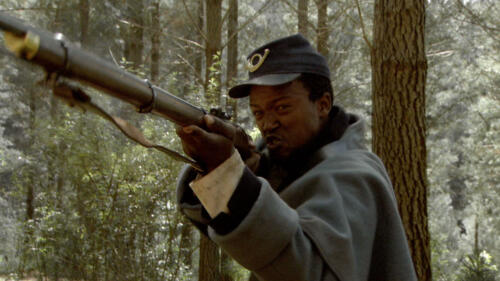
Furthermore, Lee’s military education made him highly effective at war, which tragically prolonged the conflict. His tactical brilliance at battles like Chancellorsville and Fredericksburg meant that the Civil War dragged on for four bloody years, resulting in the deaths of over 620,000 Americans and the absolute devastation of his beloved South. In his quiet post-war years, Lee was haunted by the realization that his life’s work had ultimately yielded nothing but unprecedented slaughter and ruin. He came to believe that military discipline, while necessary for war, was a toxic and unsuitable training for civil life and the nurturing of human character.
Turning Points: From Confederate General to Demilitarized Educator
The realization of his tragic choices led to a dramatic turning point in Lee’s post-war life. After surrendering at Appomattox, he deliberately turned his back on his military past. When he assumed the presidency of Washington College in the autumn of 1865, he actively worked to strip the institution of its martial traditions. He abolished student military drills, banned the wearing of Confederate uniforms on campus, and refused to participate in military parades.
Lee focused entirely on preparing young men for civilian professions. He introduced practical programs in engineering, journalism, and business, believing that the future of the South depended on rebuilding society rather than dwelling on wartime grievances. He repeatedly turned down lucrative offers to write his war memoirs, refusing to cash in on the bloodshed of his soldiers. He wanted his students—and the nation—to look forward to a cooperative future rather than backward at a devastating conflict.
The Socio-Political Context: Secession and the Constitution
Lee’s decision to follow Virginia into secession was not born out of a passionate belief in the constitutional right to secede. In fact, in early 1861, Lee wrote letters arguing that the American founding fathers’ quotes and documents made it clear they never intended for the Union to be broken. He viewed secession as nothing short of revolution. Yet, when the state of Virginia officially left the Union, his deep-seated cultural allegiance to his home state took precedence over his constitutional beliefs.
This struggle reflects the broader, tragic complexity of the era. The primary driver of secession was the preservation of Southern slavery. While Lee privately described slavery as a moral and political evil in some letters, his actions on his family’s plantations and his leadership of the Confederate Army directly served to defend and perpetuate that brutal institution. This moral contradiction is a central part of why his legacy remains so deeply contested today. In contrast, the struggle for true freedom was carried forward by marginalized groups, including the courageous black heroes throughout US military history who fought during the Civil War and subsequent global conflicts to secure the promises of liberty for all Americans.
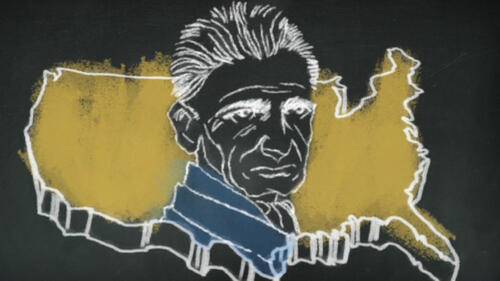
Lesser-Known Facts About Robert E. Lee’s Post-War Life
- The Hidden Trunks: Lee’s most candid, vulnerable, and revealing letters were kept locked away in bank trunks by his daughter, Mary Custis Lee, and were not officially opened and analyzed by historians until 2002, leading to the groundbreaking discoveries by Elizabeth Brown Pryor.
- Advice to Young Men: Despite his fame, Lee actively discouraged youth from pursuing a soldier’s life. In a private letter to his wife, he confessed, “I would advise no young man to enter the army.”
- A Quiet Death: In his final years, Lee suffered from severe heart disease, likely brought on by the immense, prolonged stress of his wartime command. He died in 1870, less than five years after the war’s end, having never regained his U.S. citizenship.
Why Robert E. Lee’s Regret Still Matters Today
The revelation of Robert E. Lee’s deep regret is a powerful antidote to the romanticized “Lost Cause” myth, which seeks to paint the Confederate cause and its leaders in a glorious, heroic light. The fact that the Confederacy’s most celebrated general viewed his own military legacy as a tragic mistake proves that there was no glory to be found in the fratricidal slaughter of the Civil War. It forces us to move away from simplistic, black-and-white historical caricatures and engage with the painful, complex realities of human fallibility, duty, and historical memory. By examining Lee’s regret, we gain a deeper appreciation for the devastating personal cost of war and the enduring challenges of national healing.
People Also Ask (FAQ)
What was Robert E. Lee’s greatest regret?
According to his private letters and post-war conversations, Robert E. Lee’s greatest regret was pursuing a military education at West Point. He believed that this professional path trapped him into making an agonizing choice during the secession crisis and ultimately led to a life of destruction rather than constructive civilian service.
Did Robert E. Lee regret fighting for the Confederacy?
While Lee never publicly apologized for his decision to side with Virginia, his private writings show a deep sorrow over the massive loss of life and the devastation of the South. His regret focused on the tragic circumstances his military career forced him into, rather than an explicit renunciation of his loyalty to his home state.
How did Elizabeth Brown Pryor discover Lee’s regret?
Pryor uncovered these intimate details by studying over 6,200 private family documents and letters that had been locked away in Arlington trunks and bank vaults for over a century. These letters provided an unprecedented, unvarnished look at Lee’s true feelings, stripping away the public myths surrounding his character.
Conclusion: The True Cost of War
In the end, the story of Robert E. Lee’s great regret serves as a sobering reminder of the true cost of conflict. His life was defined by a brilliant military career that brought him worldwide fame, yet it was that very career that he looked back on with the deepest sorrow. By shifting his focus to civilian education in his final years, Lee attempted to repair some of the damage his military successes had wrought. For modern Americans, his tragic confession underscores a timeless truth: the ultimate measure of a society is not found in its ability to wage war, but in its capacity to foster peace, education, and mutual understanding.


