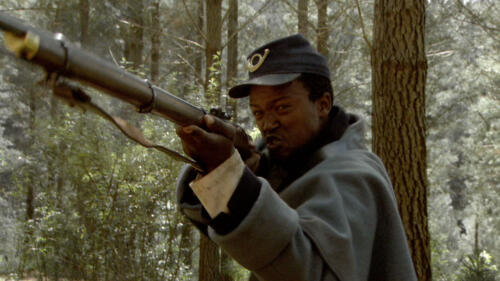
The American Civil War was a crucible of transformation, not only for the preservation of the Union but for the fundamental definition of human liberty. While the battlefield was long considered a “white man’s war,” the heroic rise of the 54th Massachusetts Volunteer Infantry Regiment shattered this prejudice forever. Formed in early 1863, the 54th Massachusetts stood as one of the very first official, federally recognized African American units in the United States armed forces. Their struggle was twofold: they fought a brutal Confederacy committed to keeping their brothers in chains, and they fought a deeply rooted racial bias within their own Union ranks. This brave regiment proved that African American soldiers possessed unparalleled valor, discipline, and patriotism, altering the course of the war and setting a powerful precedent for future generations. Their story is not just a military chronicle but a foundational cornerstone of the long march toward civil rights in America, building on a rich tradition of Black heroes throughout U.S. military history.
Historical Background: Breaking the Color Barrier
To understand the emergence of the 54th Massachusetts, one must look at the grim socio-political landscape of the early 1860s. For the first two years of the Civil War, the Union military actively barred Black men from enlisting as soldiers. President Abraham Lincoln initially feared that arming Black men would alienate the critical border states that allowed slavery but remained loyal to the Union. However, as the war dragged on, casualties mounted, and abolitionist pressures grew, a paradigm shift occurred.
The turning point came on January 1, 1863, with the signing of the Emancipation Proclamation. This executive order not only declared the freedom of all enslaved people in Confederate-held territory but also officially authorized the recruitment of African American men into the Union army. Massachusetts Governor John A. Andrew, a passionate abolitionist, seized this historic opportunity. He received authorization from Secretary of War Edwin Stanton to raise a regiment of Black volunteers. This endeavor was a monumental experiment; if the regiment failed, it would validate the racist theories of the era that claimed Black men lacked the courage or capability to fight. If it succeeded, it would prove their rightful claim to full citizenship.
A Legacy of Forgotten Patriots
The creation of the 54th Massachusetts did not occur in a vacuum. It was the continuation of a long, albeit often ignored, martial heritage. Generations earlier, free and enslaved Black Americans took up arms to secure the nation’s independence, cementing their status as some of the earliest Black heroes of the American Revolution. The 54th Massachusetts carried this proud, unbroken thread of patriotism forward into the battlefields of the American South.
Key Events and Timeline of the 54th Massachusetts
The journey of the 54th Massachusetts from recruitment to the bloody ramparts of South Carolina was brief but incredibly intense. The major milestones of this legendary unit include:
- January 1, 1863: President Lincoln issues the Emancipation Proclamation, opening the door for Black enlistment.
- February 1863: Governor John A. Andrew begins recruiting volunteers for the 54th Massachusetts. Because Massachusetts had a relatively small Black population, recruitment went national, drawing volunteers from across the Union and even Canada.
- May 28, 1863: Under the command of the young white abolitionist Colonel Robert Gould Shaw, the fully trained 54th Massachusetts marches through the streets of Boston. More than 20,000 spectators, including Frederick Douglass, gather to cheer them on as they depart for South Carolina.
- July 16, 1863: The regiment experiences its first combat engagement at the Battle of Grimball’s Landing on James Island, South Carolina, successfully holding off a Confederate attack and protecting retreating Union forces.
- July 18, 1863: The defining moment. The 54th Massachusetts leads a daring, frontal assault on Fort Wagner, a heavily fortified Confederate stronghold guarding Charleston Harbor. Colonel Shaw is killed, and the regiment suffers devastating casualties, but their sheer bravery becomes legendary.
- February 20, 1864: The regiment fights valiantly at the Battle of Olustee in Florida, helping prevent a total Union rout.
- August 1865: Following the end of the Civil War, the regiment is officially mustered out of service in Boston.
Key Figures of the Regiment
Several extraordinary individuals shaped the legacy of the 54th Massachusetts, leaving an indelible mark on American history.
Colonel Robert Gould Shaw
Chosen by Governor Andrew to command the regiment, Shaw was the son of prominent Boston abolitionists. Only 25 years old when he took command, Shaw was initially hesitant but quickly grew deeply devoted to his men. He demanded they receive the same treatment and respect as white troops. During the assault on Fort Wagner, Shaw led the charge on foot, shouting, “Forward, Fifty-fourth!” before being shot through the heart. In a gesture of disrespect, Confederate forces stripped his body and buried him in a mass grave with his fallen Black soldiers. When Union forces later offered to recover his body, Shaw’s father refused, stating there was no holier place for his son to be buried than “surrounded by his brave and devoted soldiers.”
Sergeant William Harvey Carney
Born into slavery in Virginia, Carney escaped via the Underground Railroad and settled in New Bedford, Massachusetts. During the chaotic assault on Fort Wagner, when the unit’s color sergeant was shot down, Carney lunged forward and grabbed the American flag. Despite being shot multiple times in the chest, arms, and legs, he carried the flag to the fort’s parapet and rallied the troops. When the Union force was finally forced to retreat, Carney crawled back to safety, refusing to let the flag fall into enemy hands. Upon reaching Union lines, he famously declared, “Boys, I but did my duty; the dear old flag never touched the ground!” For his extraordinary gallantry, Carney eventually received the Congressional Medal of Honor, making him the first African American to perform an action recognized with the nation’s highest military award.
Frederick Douglass
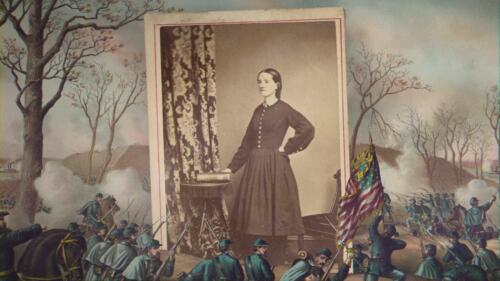
While not a soldier in the regiment, the famous abolitionist and orator served as its most influential recruiter. Douglass recognized that military service was the ultimate path for Black men to demand full civil rights and citizenship. He famously argued that once a Black man was allowed to carry a musket and wear the brass letters “U.S.”, no power on earth could deny that he had earned the right to citizenship. To prove his commitment, two of his own sons, Charles and Lewis Douglass, were among the first to enlist in the 54th Massachusetts.
Major Turning Point: The Assault on Fort Wagner
The evening of July 18, 1863, marked a critical turning point not only for the 54th Massachusetts but for the entire Union war effort. Fort Wagner was a formidable sand-and-earth fortification on Morris Island, virtually impregnable from a frontal assault. Colonel Shaw volunteered his regiment to lead the vanguard of the attack, knowing the casualties would be catastrophic.
As dusk fell, the 54th charged across the narrow strip of beach under a merciless hail of Confederate artillery and rifle fire. Despite the devastating losses, the men breached the outer walls and fought hand-to-hand atop the parapets. Though they were ultimately repelled due to a lack of reinforcements, their courage was undeniable. Out of the 600 men of the 54th who participated in the charge, over 270 were killed, wounded, or captured.
The battle was a tactical defeat, but a monumental strategic victory for the Union. It decisively answered the skeptical Northern public: Black men could and would fight with legendary courage. The battle proved to be the ultimate recruiting tool, inspiring the enlistment of over 180,000 African American soldiers throughout the remainder of the war, making up roughly 10% of the entire Union forces by 1865.
The Fight for Equal Pay: A War Within a War
The battlefield was not the only place the 54th Massachusetts fought for justice. Upon enlistment, the soldiers had been promised the same pay as white troops ($13 per month). However, the federal government reneged, offering Black soldiers only $10 per month, with an additional $3 deducted for clothing.
Deeply insulted by this systemic inequality, the men of the 54th made a radical choice: they refused to accept any pay at all. For eighteen long months, the soldiers fought, bled, and died without receiving a single penny from the government, refusing to allow their service to be devalued. The state of Massachusetts offered to pay the difference, but the regiment proudly declined, insisting that the federal government must recognize their equal status. Finally, in June 1864, after immense lobbying by abolitionists and the soldiers themselves, Congress passed a bill granting full, equal back-pay to all Black soldiers.
Long-Term Impact on America
The legacy of the 54th Massachusetts fundamentally altered the trajectory of American history. Structurally, the success of the 54th paved the way for the creation of dozens of United States Colored Troops (USCT) regiments, which provided the vital manpower needed to secure Union victory.

Culturally and constitutionally, their sacrifice made it impossible to deny Black Americans a claim to full citizenship. This laid the direct groundwork for the passage of the 13th, 14th, and 15th Amendments during the Reconstruction Era, outlawing slavery, guaranteeing equal protection under the law, and securing voting rights.
Their legacy echoed loudly through subsequent global conflicts, inspiring the brave African Americans who fought in segregated units during World War I and World War II, ultimately leading to President Harry Truman’s executive order to desegregate the U.S. military in 1948.
Lesser-Known Facts About the 54th Massachusetts
- A Global Volunteer Force: While raised in Massachusetts, the regiment drew volunteers from all over the world. Men traveled from as far as Alabama, Missouri, and even the Caribbean and Canada to enlist in the historic unit.
- The Delayed Medal of Honor: Although Sergeant William Harvey Carney performed his heroic deeds at Fort Wagner in July 1863, he did not actually receive his Medal of Honor until May 9, 1900—nearly 37 years after the battle.
- The Saint-Gaudens Memorial: In 1897, a massive bronze memorial sculpted by Augustus Saint-Gaudens was dedicated on the Boston Common. It depicts Colonel Shaw and his men marching in high relief. It is widely considered one of the finest public monuments in the United States.
Why It Still Matters Today
Today, the story of the 54th Massachusetts remains a vital reminder of the struggle for true equality and the active role marginalized communities played in securing their own freedom. They were not passive recipients of liberty; they fought and died to claim it. In an era where discussions about civil rights, systemic racism, and the preservation of historical memory are more prominent than ever, the 54th Massachusetts stands as an enduring symbol of courage, sacrifice, and the relentless pursuit of justice.
People Also Ask
Who was the first Black regiment in the Civil War?
While the 1st Kansas Colored Infantry and the 1st South Carolina Volunteers (later renamed the 33rd USCT) were among the earliest active regiments of Black soldiers, the 54th Massachusetts was the first highly publicized, federally recognized volunteer regiment raised in the North, serving as the primary catalyst for widespread Black enlistment.
Did the 54th Massachusetts win the Battle of Fort Wagner?
No, the Union forces did not capture Fort Wagner during the assault on July 18, 1863, and suffered massive casualties. However, the battle was a profound moral victory, proving the unmatched bravery of Black soldiers and dramatically changing Northern public opinion in favor of Black recruitment.
How is the 54th Massachusetts remembered today?
The regiment is famously immortalized in the 1989 Academy Award-winning film Glory, as well as the historic Robert Gould Shaw and 54th Regiment Memorial on the Boston Common, crafted by sculptor Augustus Saint-Gaudens.
Conclusion
The 54th Massachusetts Volunteer Infantry Regiment did far more than fight battles; they conquered prejudice. Facing an enemy that threatened them with enslavement or execution if captured, and a government that initially refused to pay them equally, these men chose to march forward into history. Their sacrifice at Fort Wagner proved once and for all that courage knows no color, forever reshaping the narrative of the American story and ensuring that their legacy of liberty would inspire generations of heroes to come.


