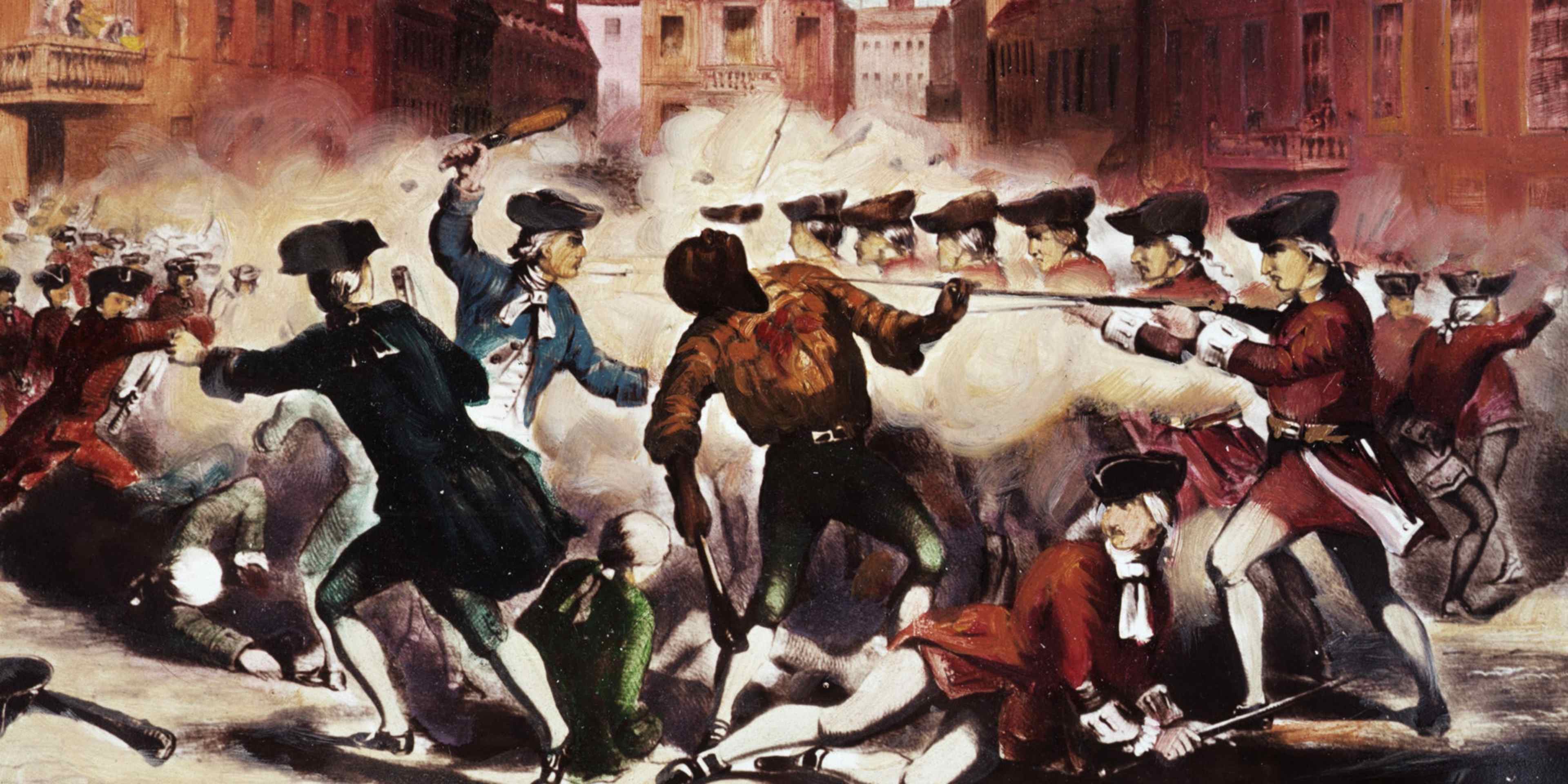
Crispus Attucks remains one of the most enigmatic yet pivotal figures in the dawn of American independence. On the chilly evening of March 5, 1770, a deadly confrontation erupted on the streets of Boston, an event that would forever be etched in history as the Boston Massacre. Among the five colonists who lost their lives to British musket fire was a multiracial man of extraordinary stature and courage: Crispus Attucks. Escaping the bonds of slavery decades prior, Attucks had built a life on the high seas and in the bustling docks of New England, only to find himself at the forefront of a historical flashpoint. His death transformed him into the first martyr of the American Revolution, a powerful symbol of the dual struggle for national liberty and racial equality. By exploring his origins, his dramatic life, and the fiery night that claimed him, we uncover a foundational story of resistance that continues to inspire debates about freedom and justice in America today.
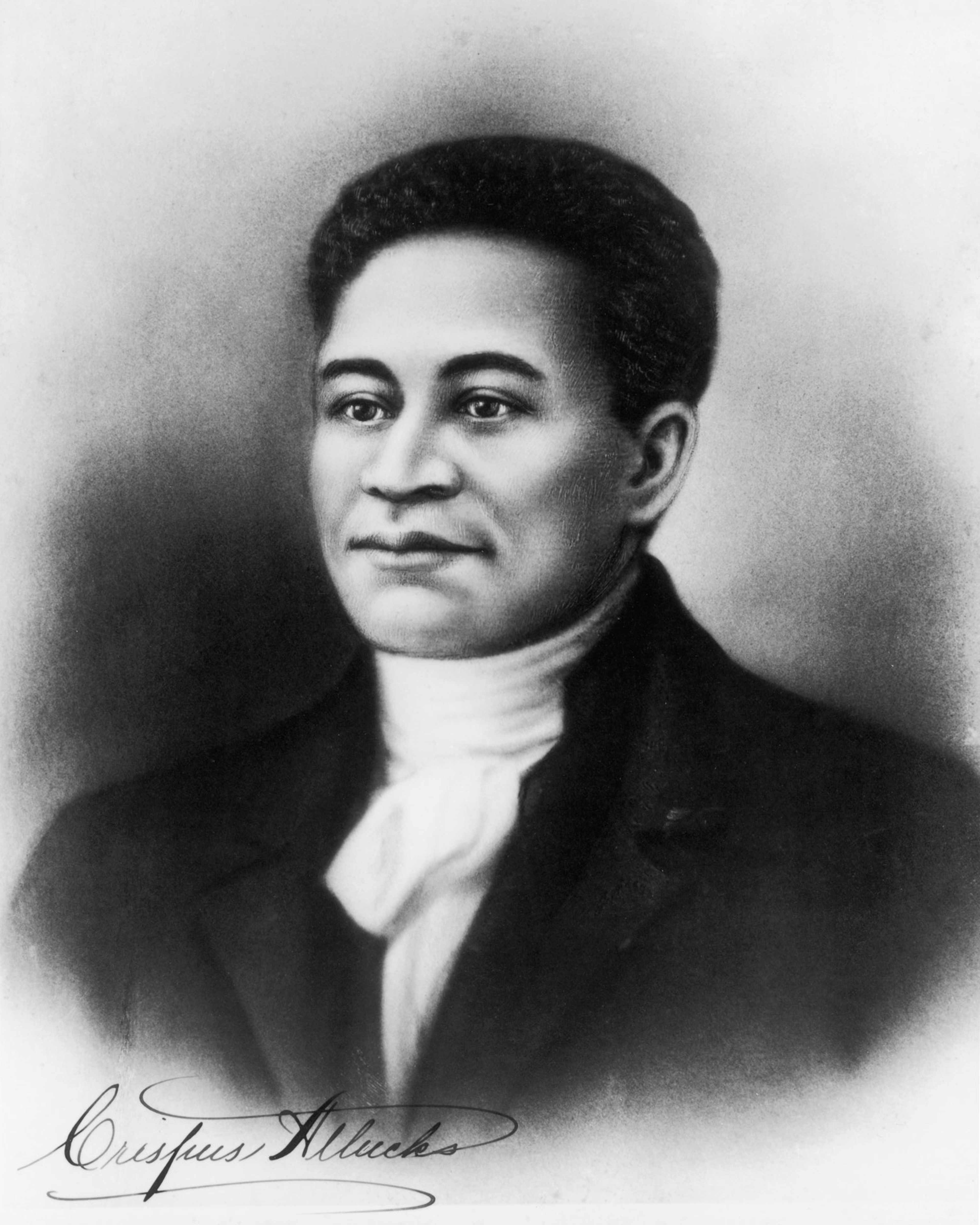
To fully understand Crispus Attucks, one must look at the complex cultural landscape of 18th-century New England. Born around 1723 near Framingham or Natick, Massachusetts, Attucks inherited a lineage deeply shaped by colonial displacement and forced labor. His father was an enslaved African man, while his mother was a Native American woman from the Wampanoag tribe. Natick itself was a praying Indian town, established by English colonists as a Christianized sanctuary for local indigenous people who had converted to the faith. This heritage connected him directly to the deep-seated history of the Wampanoag tribe and their early alliances and subsequent conflicts with European settlers. Some historians suggest his maternal lineage may trace back to John Attucks, a Native American man hanged for treason during the devastating King Philip’s War (1675-1676). Growing up in a modest, earth-walled cellar, the young Attucks navigated a society that actively sought to subjugate both his African and Native ancestries, yet he developed an unyielding spirit of independence.
The Long Road to Freedom: Escape and the Maritime Frontier
For the first twenty-seven years of his life, Attucks was held in bondage by a Framingham landowner named William Browne. However, in November 1750, Attucks made a daring bid for freedom that would change the course of his life. Browne placed an advertisement in the Boston Gazette, offering a reward of ten British pounds for the capture and return of a “Molatto fellow” named Crispus. The advertisement provided a remarkably vivid description: sixty-two inches tall (which made him 6 feet 2 inches, exceptionally tall for the era), knock-kneed, with short, curly hair, wearing a bearskin coat and buckskin breeches. Despite the bounty, Attucks successfully evaded capture, utilizing his intelligence and the vast wilderness of the Massachusetts colony. To protect his identity and maintain his freedom, he occasionally adopted the alias Michael Johnson.
Attucks eventually sought refuge in Boston’s maritime industry, finding employment as a sailor and a rope-maker. These roles represented some of the few common jobs in colonial America where men of color could earn a living with relative independence and escape the constant threat of recapture. Attucks became an experienced whaler, spending long months at sea where the threat of land-bound slave catchers was virtually nonexistent. When he was not at sea, his work as a rope-maker kept him tied to the working-class community of Boston, where anti-British sentiment was rapidly reaching a boiling point.
The Powder Keg: Economic Tension and British Oppression
The economic and social environment of Boston in 1770 was a powder keg waiting for a spark. Under the Townshend Acts, British troops occupied Boston to enforce unpopular taxation policies and maintain imperial control. This military occupation directly threatened the livelihoods of working-class Bostonians. Because British soldiers were poorly paid by the Crown, they frequently sought part-time jobs during their off-duty hours, undercutting the wages of local laborers and mariners. As a rope-maker and mariner, Attucks faced direct economic competition from these occupying forces, which fueled his personal animosity toward the British military.
Furthermore, colonial sailors faced the constant, terrifying threat of impressment—being kidnapped by Royal Navy press gangs and forced into military service under brutal conditions. For men like Attucks, British rule was not just an abstract political issue discussed by wealthy elites in comfortable parlors; it was a direct threat to their day-to-day economic survival within the 13 colonies. This systemic oppression created a shared sense of rage among Boston’s working-class citizens, uniting diverse groups against a common imperial enemy.
Chronology of a Massacre: March 5, 1770
The events of March 5, 1770, unfolded rapidly, culminating in a tragedy that would alter the course of American history. Below is a chronological breakdown of that fateful night:
- 6:00 PM: Attucks and several fellow mariners gather at a local tavern. A British soldier enters looking for part-time work, prompting angry jeers and physical harassment from the patrons, including Attucks, who curses the soldier until he flees.
- 8:00 PM: Angry crowds of colonists begin to gather near the Custom House on King Street, throwing snowballs, ice, and oyster shells at the lone British sentry, Private Hugh White.
- 9:00 PM: Captain Thomas Preston arrives with a small detachment of seven British soldiers to reinforce White. The crowd swells, armed with clubs, sticks, and ice.
- 9:10 PM: Crispus Attucks, wielding two thick wooden clubs, leads a group of sailors to the front of the confrontation, standing directly before the bayonets of the soldiers.
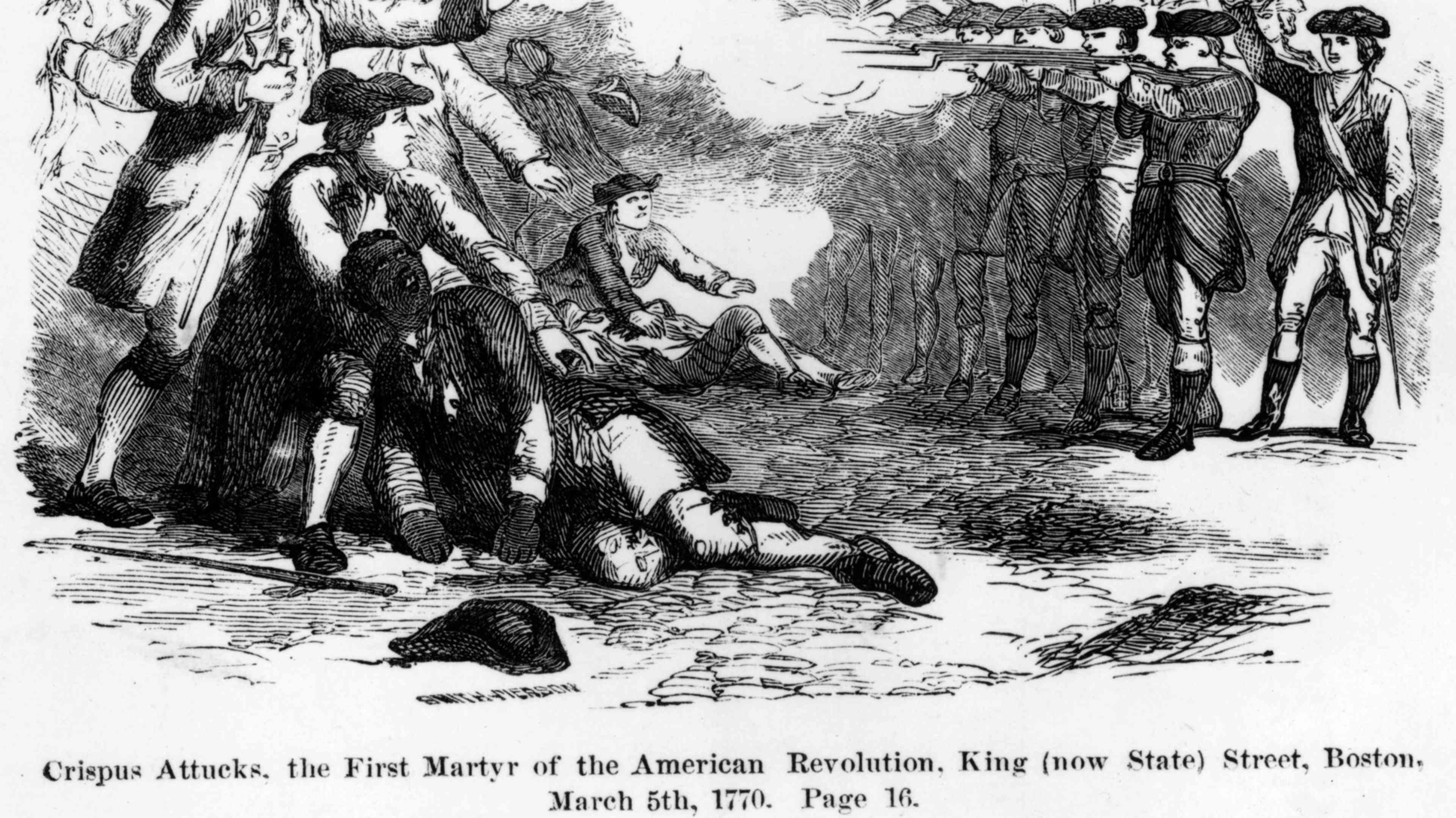
- 9:15 PM: Amidst the chaos, shouting, and physical skirmishes, a soldier is struck by a thrown club. In the confusion, the British soldiers open fire into the crowd without orders. Attucks is struck twice in the chest, dying almost instantly on the cold cobblestones.
The Fatal Trial: John Adams and the Defense of the Crown
The subsequent trial of Captain Preston and his soldiers in late 1770 became a legal landmark in American jurisprudence. Future U.S. President John Adams took the controversial role of defense counsel for the British soldiers. To secure an acquittal, Adams played heavily on the racial prejudices of the jury. He described the colonial crowd not as peaceful protestors, but as a “motley rabble of saucy boys, negroes and mulattoes, Irish teagues and outlaws.” Adams singled out Attucks, describing him as a “stout mulatto fellow” whose intimidating physique, muscular frame, and fierce looks were supposedly enough to terrify any person into firing in self-defense.
Adams’ calculated legal strategy succeeded in saving the majority of the soldiers from the gallows. The jury acquitted Captain Preston and six of his men. Two soldiers, Matthew Kilroy and Hugh Montgomery, were found guilty of the lesser charge of manslaughter. As punishment, they were branded on their thumbs with the letter ‘M’ and released. Despite the defense’s attempt to paint Attucks as a terrifying instigator, his bravery in standing up to armed soldiers was quickly recognized by the broader public as an act of supreme patriotism.
A Legacy of Martyrdom and the Fight for Civil Rights
Attucks’ death had a monumental and lasting impact on the revolutionary movement and subsequent generations of Americans. Samuel Adams and other prominent patriots recognized the power of the tragedy, organizing an unprecedented public funeral that united the city. Attucks lay in state at Faneuil Hall for three days. An estimated 10,000 to 12,000 people—nearly two-thirds of Boston’s entire population—joined the solemn procession to the Granary Burying Ground, where Attucks was laid to rest alongside the other victims. This collective mourning helped solidify colonial unity against British rule.
In the decades that followed, Attucks became an essential icon for civil rights. By the 1840s, Black abolitionists resurrected his memory to demonstrate that African Americans had spilled the very first blood for American liberty, arguing passionately for their right to full citizenship and freedom from slavery. During the American Civil War, Black soldiers marched under his name, and in 1964, Dr. Martin Luther King Jr. highlighted Attucks in his writings as a symbol of early courage and patriotism, proving that the struggle for American freedom has always been multiracial.
Lesser-Known Facts About Crispus Attucks
- The Alias “Michael Johnson”: Attucks lived a double life. For years, he hid his true identity to avoid the Fugitive Slave acts of his era, only being identified as Crispus Attucks posthumously in court and coroner documents.
- The Devastating Musket Ball: Coroner records reveal that the bullet that killed Attucks tore a wide, devastating path through his chest, hitting his right lung and liver, indicating he was shot at extremely close range while facing his oppressors directly.
- A Commemorative Rarity: Despite his humble beginnings, in 1998, the United States Mint issued a black revolutionary war patriots silver dollar featuring Attucks’ likeness, cementing his status in American currency history.
People Also Ask
Who was Crispus Attucks?
Crispus Attucks was a multiracial man of African and Native American (Wampanoag) descent who had escaped slavery and worked as a sailor and rope-maker. He is historically recognized as the first American colonist killed in the Boston Massacre, making him the first martyr of the American Revolution.
What is the significance of the Boston Massacre?
The Boston Massacre, occurring on March 5, 1770, was a critical turning point that fueled intense public outrage against British colonial rule, helping to unite the colonies and spark the American Revolutionary War.
Was Crispus Attucks a Native American?
Yes, Attucks was of mixed heritage. His mother was a member of the Wampanoag tribe, and his father was an enslaved African man. He is celebrated today by both African American and Native American communities.
Conclusion: The Eternal Flame of Resistance
Today, Crispus Attucks stands at the intersection of early American heroism and the ongoing struggle for civil rights. His multiracial identity serves as a vital reminder of the complex, multicultural foundations of the United States. He represents the unsung working-class heroes who drove the revolutionary spirit, proving that the fight for American liberty was never exclusively the domain of wealthy, white founding fathers. His legacy continues to challenge us to build a nation that fully realizes the ideals of freedom and equality for which he paid the ultimate price.


