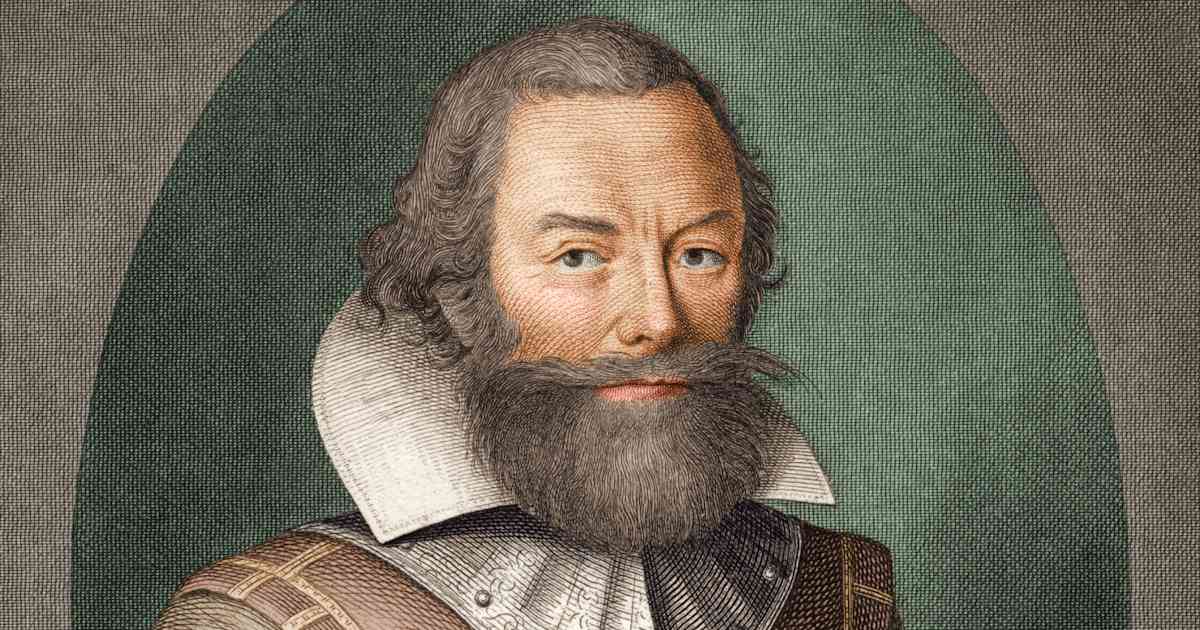
The story of early America is often shrouded in the soft focus of legend, none more pervasive than the romanticized tale of Captain John Smith and the young Powhatan woman, Pocahontas. Yet, the raw historical reality of the first permanent English settlement in North America is far more gripping, violent, and complex than any folklore suggests. Captain John Smith was not merely a character in a legendary rescue; he was a hard-bitten mercenary, an escaped slave, a cartographic genius, and an authoritarian leader whose sheer force of will kept a doomed colony from collapsing. Understanding his turbulent life, his complicated relationship with the indigenous peoples of the Chesapeake, and his pivotal leadership at Jamestown provides a crucial window into the brutal birth of the American colonial project, revealing how a group of ill-prepared Englishmen managed to carve out a foothold in a formidable new world.
The Global and Sociopolitical Context: Why England Eyed Virginia
At the turn of the 17th century, Western Europe was gripped by intense geopolitical and religious rivalries. Spain had already amassed unimaginable wealth from its empires in Central and South America, establishing itself as the dominant global superpower. Seeking to counter Spanish influence, spread Protestantism, and discover new trade routes to the Pacific, the English Crown under King James I looked eagerly toward North America. Rather than funding these risky expeditions through the royal treasury, England pioneered a corporate approach using joint-stock companies. The Virginia Company of London was granted a charter in 1606 to establish a profitable settlement, recruit investors, and seek out precious metals. The primary catalysts for the expedition were entirely economic and imperial; the settlers were sent not as pilgrims seeking religious freedom, but as employees of a corporation tasked with securing a return on investment.
Historical Background: The Adventurous and Unbelievable Youth of John Smith
Born around 1580 in the small town of Willoughby, Lincolnshire, England, John Smith was a man of humble beginnings who possessed an insatiable thirst for adventure. Following the death of his father, the sixteen-year-old Smith set out to seek his fortune. His early life read like an epic adventure novel: he fought as a mercenary for French forces seeking Dutch independence from Spain, sailed on a pirate ship in the Mediterranean, and eventually journeyed to Eastern Europe in 1600. There, he joined the forces of the Holy Roman Empire to fight the Ottoman Empire in Transylvania. Smith proved to be a lethal combatant, allegedly decapitating three Turkish officers in single combat, an achievement that earned him a promotion to captain and a custom coat of arms bearing the motto “Vincere est Vivere” (To Conquer is to Live).
His fortunes took a dark turn in 1602 when he was wounded in battle, captured by Ottoman forces, and sold into slavery. Taken to what is modern-day Turkey, Smith was gifted to a woman who sent him to her brother to be trained in agricultural labor. Subjected to brutal treatment, Smith eventually seized an opportunity, killed his master with a flail, stole his horse, and escaped. He embarked on a perilous journey across Russia, Poland, and Europe, finally returning to England in 1604. This hardened, battle-tested survivor was exactly the kind of man the Virginia Company needed, even if his brash attitude would quickly clash with the aristocratic leaders of the expedition.
The Voyage and the Founding of Jamestown (1606–1607)
In December 1606, three ships—the Susan Constant, the Godspeed, and the Discovery—slipped down the River Thames, carrying 104 men and boys bound for the New World. The four-month voyage across the Atlantic was plagued by stormy weather and intense interpersonal conflicts. Smith’s abrasive, outspoken nature and his low social standing compared to the wealthy “gentlemen” on board led to his arrest. Accused of plotting a mutiny, Smith spent a significant portion of the journey imprisoned below decks in shackles, narrowly escaping execution at the gallows during a stopover in the Caribbean.
When the expedition finally made landfall at Cape Henry in April 1607, the leaders opened a sealed box containing the names of those appointed by the Virginia Company to serve on the governing council. To the shock and dismay of the aristocratic colonists, Captain John Smith’s name was on the list. Compelled by necessity, the leaders released him, and in May 1607, they established Jamestown on a marshy peninsula along the James River. This decision to explore and defend this swampy land is a core part of the established history of the Jamestown colony, a settlement that would face nearly insurmountable challenges from its very inception.
Key Events Timeline: The Rise and Fall of Jamestown’s President
- December 1606: The Virginia Company expedition departs England with three ships and 104 colonists.
- April–May 1607: The expedition arrives in Virginia; Smith is released from chains to take his seat on the governing council, and Jamestown is officially established.
- December 1607: Smith is captured by a Powhatan hunting party and brought before Chief Wahunsenacawh, where his life is allegedly saved by Pocahontas.
- January 1608: Smith returns to Jamestown to find only 38 settlers alive; a devastating fire soon destroys much of the fort.
- Spring–Summer 1608: Smith conducts extensive cartographical expeditions, mapping over 2,500 miles of the Chesapeake Bay and its tributaries.
- September 1608: Smith is formally elected President of the Jamestown Council, implementing strict discipline and survival measures.
- October 1609: Severely injured in a mysterious gunpowder explosion, Smith is forced to return to England, never to set foot in Virginia again.
- Winter 1609–1610: Jamestown suffers the catastrophic “Starving Time,” during which the colony’s population plummets from several hundred to about sixty.
- 1614: Smith explores and maps the northern coast of North America, naming the region “New England.”
- June 1631: Captain John Smith dies in London at the age of 51, leaving behind a wealth of published writings.
The Clash of Worlds: Captain John Smith, Chief Powhatan, and Pocahontas
The English had settled in the heart of Tsenacommacah, an empire of approximately 30 Algonquian-speaking tribes ruled by the powerful chief Wahunsenacawh, known to the colonists as Chief Powhatan. Desperate to secure food for the starving settlers, Smith began leading trading expeditions to local Native American villages. In December 1607, while exploring the Chickahominy River, Smith was ambushed, captured by a Powhatan hunting party led by the chief’s brother, Opechancanough, and brought to the capital of Werowocomoco.
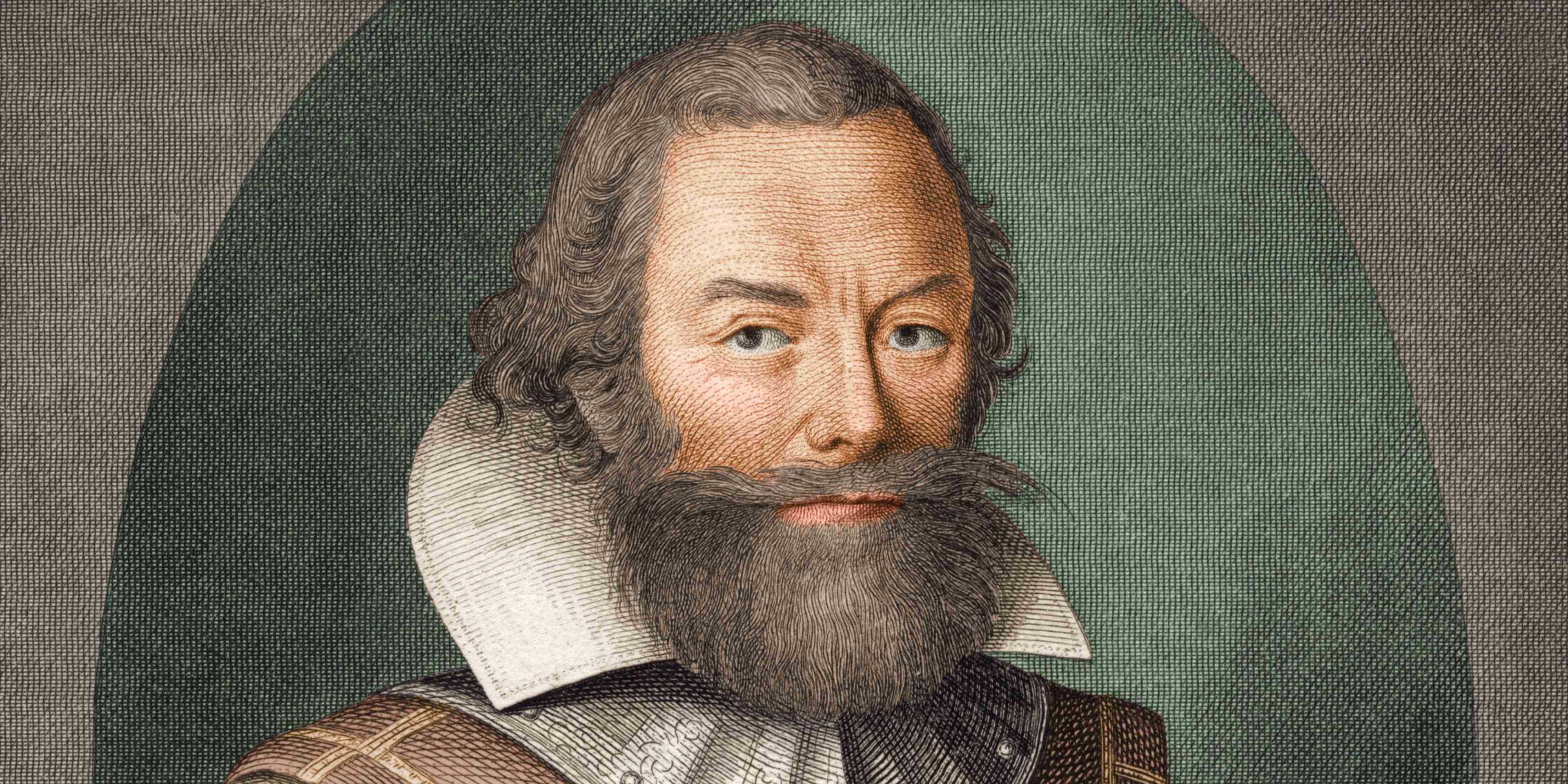
According to Smith’s later writings, he was placed before two large stones, and warriors raised their clubs to beat his brains out. At that pivotal moment, Pocahontas, the chief’s young daughter (aged about ten or eleven at the time), rushed forward, cradled his head in her arms, and laid her own head upon his to prevent his execution. While this dramatic tale became an enduring myth of romantic love, modern historians widely reject the romance narrative and debate the event itself. Many scholars believe the event was a pre-planned, symbolic adoption ritual designed to “kill” Smith as an outsider and “reborn” him as a subordinate chief under Powhatan’s protection. Others suggest Smith, known for his self-aggrandizing exaggerations, simply fabricated or embellished the story to enhance his own legendary status in England.
Governing Jamestown: “He Who Will Not Work Shall Not Eat”
By the autumn of 1608, Jamestown was on the brink of complete annihilation. Internal bickering, disease, laziness, and constant attacks by Powhatan warriors threatened to wipe out the remaining settlers. Many of the colonists were “gentlemen” who believed manual labor was beneath their social dignity, while others were goldsmiths and jewelers ill-equipped to farm or build fortifications. Understanding what life was like in early Jamestown helps illuminate the sheer desperation that led to Smith’s rise to power.
Elected president of the council in September 1608, Smith abandoned democratic diplomacy in favor of military discipline. He famously invoked the biblical mandate: “He who will not work shall not eat.” Under his autocratic rule, gentlemen were forced to chop wood, clear land, and plant crops alongside common laborers. Smith ordered the digging of the colony’s first freshwater well, reinforced the wooden fort, and systematically organized agricultural efforts. His pragmatism and harsh methods kept the colony functional and dramatically reduced the mortality rate during his tenure.
Turning Points: The Gunpowder Accident and the Starving Time
Smith’s strict rule created numerous enemies among the ambitious elites within the colony. In October 1609, while sleeping in a boat, a bag of gunpowder tied to his waist mysteriously ignited, inflicting horrific burns on his thigh and abdomen. Believing he had been the victim of an assassination attempt, and requiring advanced medical treatment that was unavailable in the wilderness, Smith sailed back to England. His departure left a massive power vacuum, and the fragile peace he had negotiated with the Powhatan quickly shattered.
With Smith gone, Chief Powhatan recognized the colonists’ vulnerability and cut off all trade, laying siege to the Jamestown fort. The winter of 1609–1610 became known as the infamous “Starving Time.” Colonists were forced to consume horses, dogs, cats, rats, leather boots, and eventually, the corpses of their deceased companions. This period is one of the most tragic and surprising elements of the Jamestown settlement, highlighting how quickly the colony devolved into chaos without a strong, authoritative leader. When supply ships arrived in the spring of 1609, only about 60 of the 500 colonists left behind by Smith were still alive.
Lesser-Known Facts About Captain John Smith
- The Pilgrim Connection: In 1620, the Pilgrims planning their voyage aboard the Mayflower approached John Smith to serve as their military leader. However, they found his personality too domineering and his fees too high, choosing instead the more compliant Miles Standish. Nevertheless, the Pilgrims heavily relied on Smith’s highly accurate maps of the region he had named “New England” to navigate and settle Plymouth.
- The Head-Hunting Crest: Smith’s official coat of arms, granted by the Prince of Transylvania and later registered in England, featured three severed Turkish heads on a shield. It was a literal representation of his deadly duels in Eastern Europe.
- A Master Mapmaker: Despite his reputation as a boastful soldier, Smith was an extraordinarily talented cartographer. His detailed maps of the Chesapeake Bay and the New England coast were so precise that they were utilized by subsequent explorers and colonists for more than a century.
Long-Term Impact on America and Why It Matters Today
Captain John Smith’s influence on the trajectory of American history cannot be overstated. By ensuring the survival of Jamestown during its first critical years, he prevented England’s colonial ambitions in the New World from dying in their infancy. Had Jamestown failed, North America might have been dominated by Spanish or French interests, completely altering the linguistic, legal, and cultural landscape of the modern United States. Furthermore, his writings, though highly biased, provided Europe with its first comprehensive descriptions of the geography, flora, fauna, and indigenous societies of the Mid-Atlantic region.
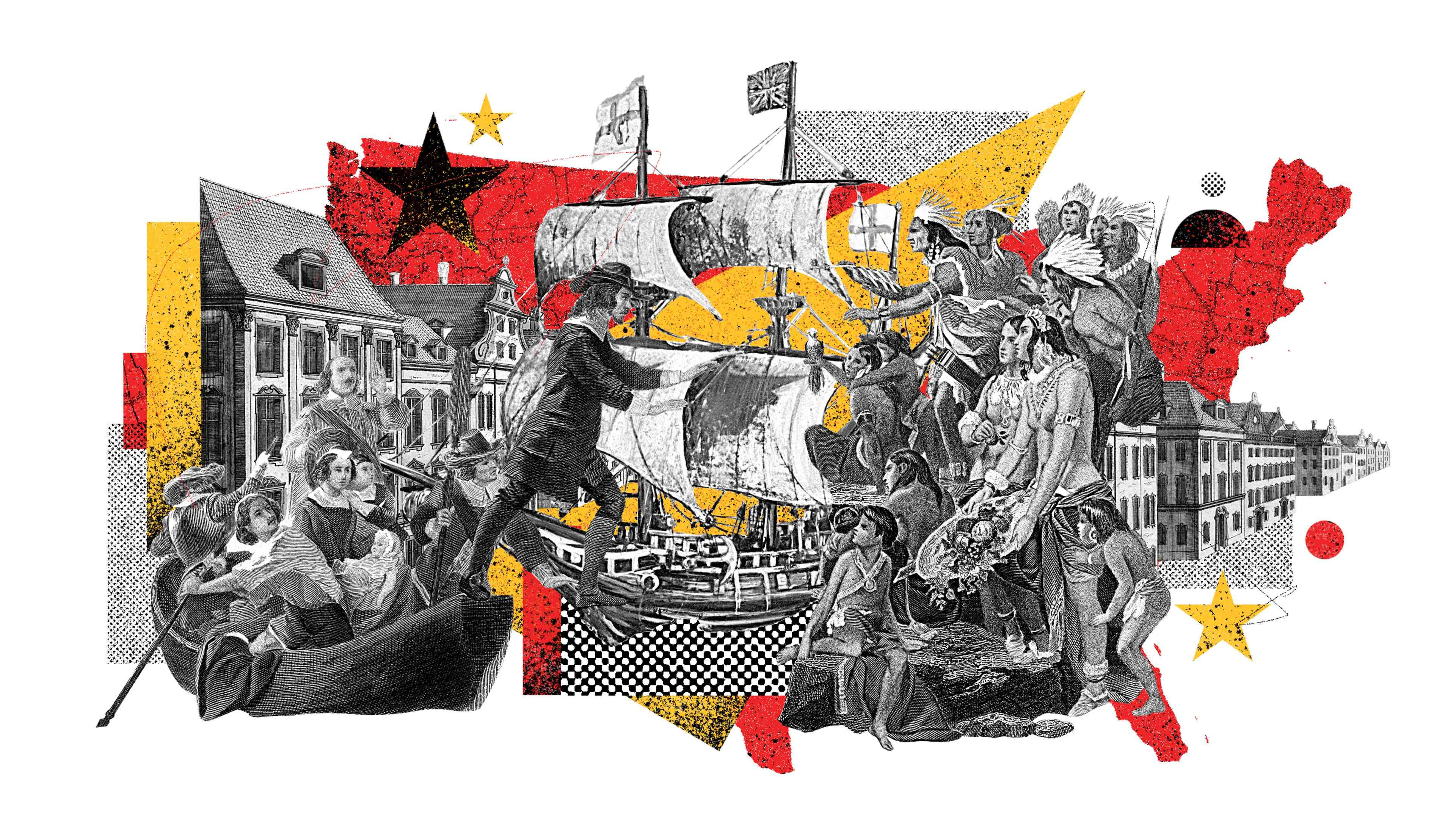
Today, the legacy of John Smith and Pocahontas remains a central focal point in discussions about historical memory, the romanticization of colonial expansion, and the displacement of Native American communities. By analyzing Smith’s life critically—balancing his heroic survival skills against his brutal pragmatism and colonial ambitions—we gain a deeper, more honest understanding of the triumphs and tragedies that shaped the foundation of America.
People Also Ask
Did John Smith and Pocahontas have a romantic relationship?
No, there is no historical evidence to support a romantic relationship between John Smith and Pocahontas. At the time of their first meeting in 1607, Pocahontas was only about ten or eleven years old, while Smith was a 27-year-old battle-hardened soldier. The romantic narrative was popularized by 19th-century literature and modern animated films, but their real relationship was one of political alliance and mutual curiosity.
Why was John Smith sent back to England in 1609?
John Smith was forced to return to England in October 1609 after sustaining severe, life-threatening burns when a gunpowder bag attached to his belt exploded while he was asleep in a boat. The injury required medical treatment that was unavailable in Virginia, and his political rivals in the colony used his incapacitation to send him back to London.
What is John Smith’s most famous quote?
His most famous declaration was “He who will not work shall not eat,” which he issued as president of the Jamestown council in 1608 to force the lazy aristocrats and unskilled gentlemen of the colony to contribute to farming and building fort defenses.
The Complex Legacy of a Colonial Icon
In the final analysis, Captain John Smith was a deeply flawed, incredibly resilient, and larger-than-life figure. He was a product of a violent and competitive era, carrying the imperialist attitudes of 17th-century England to the shores of Virginia. While his historical accounts must be read with a healthy dose of skepticism due to his penchant for self-promotion, his maps and practical leadership were undeniably instrumental in keeping the Jamestown experiment alive. His life stands as a testament to the chaotic, often ruthless convergence of different worlds that defined the dawn of American history.


