During the American Civil War (1861–1865), the average soldier’s daily survival depended entirely on what he could carry on his back. Marching over rough, dusty roads under the scorching Southern sun or in freezing rains, soldiers carried a grueling load of 30 to 40 pounds. Every item—from the weapons of deadly industrial-scale warfare to the fragile photographs of loved ones—tells a profound story of physical endurance, psychological coping, and raw survival. Understanding the objects carried by American Civil War soldiers provides an intimate, humanizing window into a conflict that claimed over 600,000 lives and reshaped the constitutional and moral fabric of the United States. These items were not merely military gear; they were a soldier’s mobile home, his life-support system, and his ultimate connection to the world he left behind.
Historical Background: A Nation Divided (1861–1865)
The American Civil War erupted in April 1861 when Confederate forces fired on Fort Sumter in South Carolina. This cataclysmic conflict was the culmination of decades of rising tensions between the industrial North and the agrarian, slave-holding South. While the economic divide was vast, the central ideological struggle was rooted in the competing visions of Hamilton and Jefferson regarding federal authority and states’ rights, specifically surrounding the deeply immoral institution of chattel slavery. Under the leadership of President Abraham Lincoln, the Union fought to preserve the United States, while Jefferson Davis led the newly declared Confederate States of America in secession. The four years of bloodshed that followed transformed the nation’s military technology, social structures, and federal power forever.
Key Events and Civil War Timeline
- April 12, 1861: Confederate forces fire on Fort Sumter, marking the official beginning of the American Civil War.
- September 17, 1862: The Battle of Antietam becomes the bloodiest single-day battle in American history, leading to Lincoln’s preliminary Emancipation Proclamation.
- January 1, 1863: The Emancipation Proclamation goes into effect, legally freeing enslaved individuals in Confederate-held territory and paving the way for African American enlistment.
- July 1–3, 1863: The Battle of Gettysburg halts General Robert E. Lee’s invasion of the North, serving as the military turning point of the war.
- April 9, 1865: General Lee surrenders the Army of Northern Virginia to Ulysses S. Grant at Appomattox Court House, effectively ending major combat.
- June 19, 1865: Federal troops arrive in Galveston, Texas, enforcing the Emancipation Proclamation on what is now celebrated as Juneteenth.
Prominent Figures of the Era
The human cost and strategic maneuvers of the war were guided by larger-than-life historical figures whose decisions impacted millions of lives:
- Abraham Lincoln: The 16th President of the United States, who skillfully navigated constitutional crises, preserved the Union, and issued the Emancipation Proclamation.
- Ulysses S. Grant: The relentless Union General-in-Chief whose strategy of total war and coordinated campaigns wore down Confederate resistance and brought the war to a decisive close.
- Robert E. Lee: The brilliant commander of the Confederate Army of Northern Virginia, whose tactical prowess prolonged the Southern war effort despite severe supply shortages.
11 Essential Objects Carried by American Civil War Soldiers
To survive the grueling daily reality of camp life and active combat, infantrymen on both sides carried a highly standardized yet deeply personalized kit. Here is an in-depth look at the eleven objects that defined the soldier’s existence:
1. The Muzzle-Loading Rifle Musket
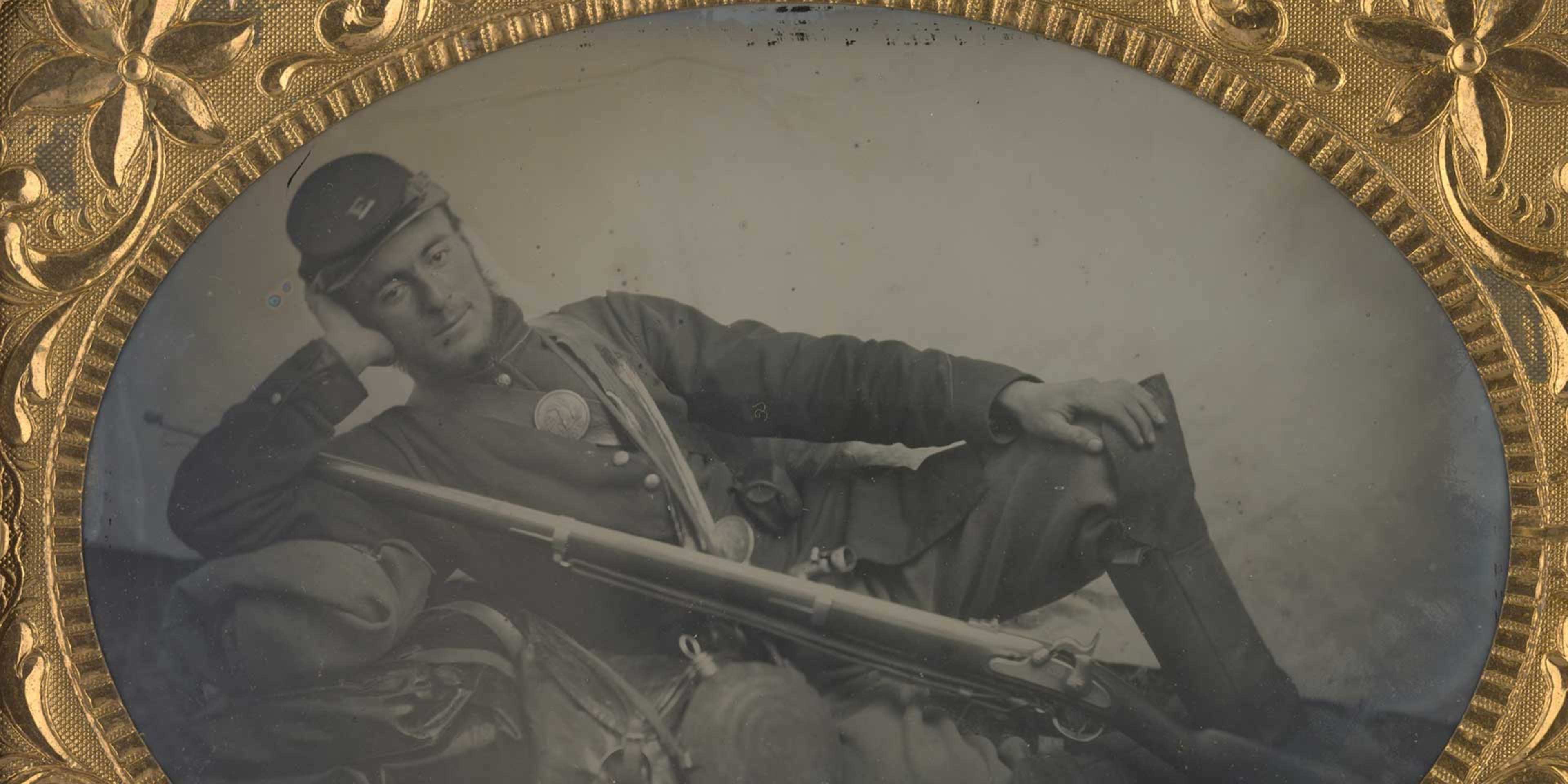
The standard-issue weapon for most infantrymen was the single-shot, muzzle-loading rifle musket, most famously the Model 1861 Springfield. This .58 caliber weapon utilized the revolutionary Minié ball—a cone-shaped lead bullet that expanded into the barrel’s rifling, vastly increasing accuracy and range up to 400 yards. Loading required a multi-step process: biting open a paper cartridge, pouring gunpowder down the barrel, ramming the bullet down with a ramrod, placing a percussion cap on the cone, and cocking the hammer. A well-trained veteran could fire three to four aimed shots per minute under extreme pressure.
2. The Bayonet and Scabbard
Affixed to the muzzle of the rifle, the triangular steel bayonet was intended for hand-to-hand combat. Despite its fearsome appearance in military manuals, statistical records indicate that bayonets accounted for less than one percent of combat casualties. Instead, soldiers primarily used the bayonet as an indispensable camp tool. It served as a trench-digging spade, a candle holder stuck into the ground, a spit for roasting meat over campfires, and a hook to carry heavy supply bundles.
3. The Cartridge Box
Carried on a wide leather shoulder strap or belt, the cartridge box was a soldier’s primary ammunition storage. Made of heavy leather, it contained tin liners designed to hold 40 paper cartridges securely and protect them from moisture. Union boxes typically sported a brass “US” plate, while Confederate versions often had a “CS” plate or plain leather due to metal shortages. A fully loaded cartridge box added roughly four to five pounds of heavy lead weight to the soldier’s waist.
4. The Cap Box
To ignite the black powder in their rifles, soldiers relied on tiny, hat-shaped brass percussion caps containing fulminate of mercury. These caps were kept in a small, fleece-lined leather box worn on the front of the waist belt. The sheepskin lining was critical; it prevented the small caps from spilling out when the soldier ran, crawled, or climbed obstacles during combat, while keeping them dry in rainy conditions.
5. The Wool Uniform and Kepi
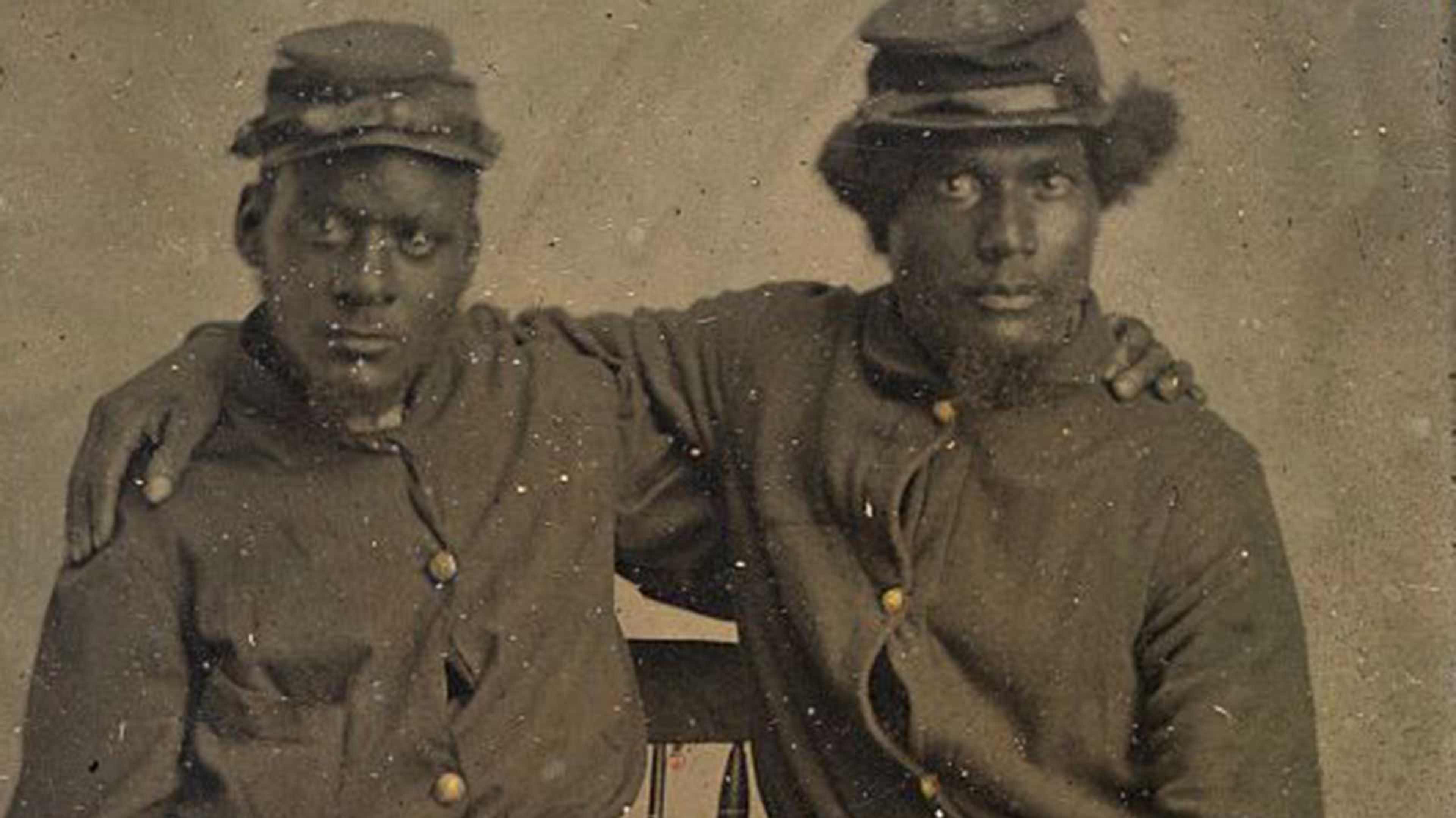
Despite the brutal Southern heat, standard uniforms were constructed from heavy wool. Wool was chosen for its durability, water resistance, and ability to retain warmth when wet. Union infantry wore dark blue sack coats and light blue trousers, while Confederates wore shades of gray or brown “butternut” dye. Many regiments, particularly African American units who made up a crucial part of the Union’s fighting strength, wore these uniforms with immense pride. These brave men carved out a lasting legacy among the black heroes throughout US military history, fighting not just for the Union, but for the literal freedom of their people. On their heads, soldiers wore the iconic kepi—a flat-topped, visored wool cap—or wide-brimmed civilian slouch hats to block the sun.
6. Brogans (Footwear)
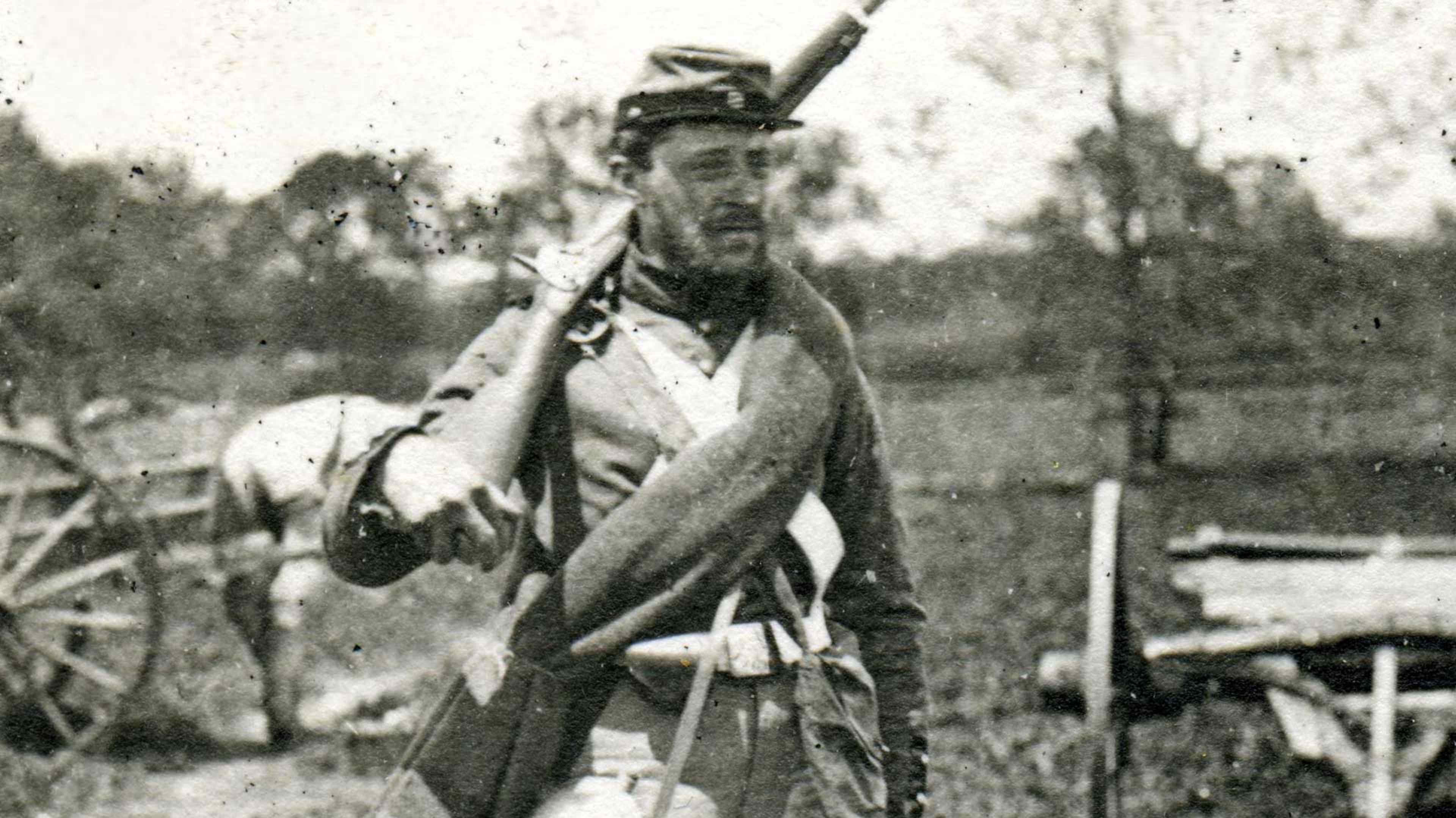
Infantrymen walked hundreds of miles in ankle-high leather shoes known as “brogans.” Early in the war, these shoes were constructed on “straight” lasts, meaning there was no distinction between the left and right shoe. Soldiers had to break them in until the stiff leather finally conformed to their feet. Socks were highly prized and wore out rapidly, leading to frequent, desperate pleas in letters to families back home for hand-knitted wool socks.
7. The Metal Canteen
Water was the ultimate currency of survival on long marches. The standard metal canteen held about three pints of water. It was typically wrapped in wool or jean cloth; when the cloth cover was soaked with water, evaporation helped keep the contents inside cool. Desperate soldiers often filled their canteens from muddy puddles, streams contaminated by livestock, or battle-adjacent water sources, contributing to the rampant spread of dysentery and typhoid.
8. The Knapsack or Blanket Roll
The knapsack, made of painted canvas or heavy leather, held the soldier’s temporary shelter. This included a wool blanket, a rubberized ground cloth to shield against damp earth, and a canvas “shelter half.” When buttoned together with another soldier’s shelter half, it formed a simple two-person “pup tent.” To reduce weight, many veterans abandoned the cumbersome knapsack altogether, opting to roll their bedding into a tight “blanket roll” slung over one shoulder.
9. The Haversack
This single-strap, tarred canvas bag was the soldier’s mobile pantry. It carried eating utensils, a tin cup, and a three-day supply of military rations. The typical daily fare consisted of hardtack (a rock-hard flour-and-water biscuit), salt pork, and coffee beans. Soldiers frequently had to break hardtack with their rifle butts or soak it in coffee to avoid breaking their teeth, and the greasy salt pork often rancidified inside the canvas bags during hot summer campaigns.
10. Cherished Photographs (Ambrotypes and Tintypes)
Faced with the constant specter of death, soldiers carried small photographic portraits of their wives, children, and parents. These images were captured on glass (ambrotypes) or iron plates (tintypes) and encased in decorative wooden or gutta-percha cases. When soldiers discarded non-essential gear to lighten their loads before a battle, these photographs were always kept close to their hearts, safely tucked into interior pockets as physical anchors of hope and humanity.
11. Personal Effects
To ward off boredom during long stretches of camp life, soldiers carried an assortment of personal trinkets. Pocket Bibles, diaries, pencils, playing cards, sewing kits (affectionately called “housewives” for mending torn uniforms), matches, combs, and tobacco pipes were common. However, the emotional strain of the war was immense. Many soldiers found themselves struggling with the harsh realities of combat, and the rising history of American anti-war movements back home reflected the deep societal exhaustion and psychological toll experienced by the men on the front lines.
Major Turning Points and the Path to Peace
The logistical weight carried by these soldiers ultimately ground down the Confederate war machine. With the Union’s industrial capacity outproducing the blockaded South, Confederate soldiers faced severe supply shortages, often marching barefoot and starving. The double Union victories at Gettysburg and Vicksburg in July 1863 fractured the Confederacy, while General Grant’s relentless campaign in 1864 systematically dismantled Southern defense lines, leading inexorably to the surrender at Appomattox.
Long-Term Impact on America
The Civil War fundamentally redefined the United States. It abolished the institution of slavery through the 13th Amendment and established the supremacy of federal law over state governments, resolving the constitutional debate that had lingered since the founding era. The massive industrial expansion required to supply millions of marching soldiers catalyzed the Gilded Age, transforming America into a global economic powerhouse and establishing modern military logistics that would influence both World Wars.
Lesser-Known Facts About Civil War Gear
- The Left-Right Shoe Myth: Civil War “brogans” were shipped completely straight. Soldiers had to mark one shoe with a string or rely on sweat and wear to mold them to a specific foot, leading to painful blisters on long marches.
- The Bayonet Candlestick: The triangular socket of a bayonet perfectly fit a standard tallow candle. At night, soldiers would drive the point of the bayonet into the ground or a log to hold their candle while writing letters home.
- The “Housewife” Kit: Because armies did not supply tailors, every soldier carried a small rolled sewing kit called a “housewife.” It contained needles, thread, and spare buttons, allowing young men—many of whom had never sewn before—to patch their own wool uniforms.
Why It Still Matters Today
The daily struggle of the Civil War soldier reminds us of the profound human cost of ideological and social division. Modern military logistics, psychiatric care for veterans (originally called “irritable heart” or “nostalgia,” now recognized as PTSD), and even the preservation of battlefield landscapes are rooted in the experiences of these 19th-century infantrymen. The physical artifacts they carried serve as a stark, tangible reminder of the fragility of national unity and the enduring quest for civil rights and human equality.
People Also Ask
How much did a Civil War soldier’s gear weigh?
A typical infantryman carried between 30 and 40 pounds of gear. This included his rifle, ammunition, canteen, knapsack, haversack with rations, and personal bedding.
Did Civil War soldiers carry their own food?
Yes, soldiers carried their rations in a canvas bag called a haversack. They typically carried a three-day supply of hardtack, salt pork, sugar, and coffee beans.
What weapons did Civil War infantrymen carry?
Most infantrymen carried muzzle-loading rifle muskets, primarily the .58 caliber Springfield Model 1861 or the British-imported .577 caliber Enfield rifle. They were also equipped with a triangular socket bayonet.
Conclusion: The Weight of History
The objects carried by American Civil War soldiers represent more than just military surplus; they embody the physical and emotional weight of a nation fighting for its soul. From the heavy Springfield rifle to the delicate tintype of a distant child, each artifact reflects a human story of survival amidst unprecedented tragedy. By studying these everyday items, we connect directly with the ordinary individuals who marched into the fire, ultimately forging the modern United States of America.


