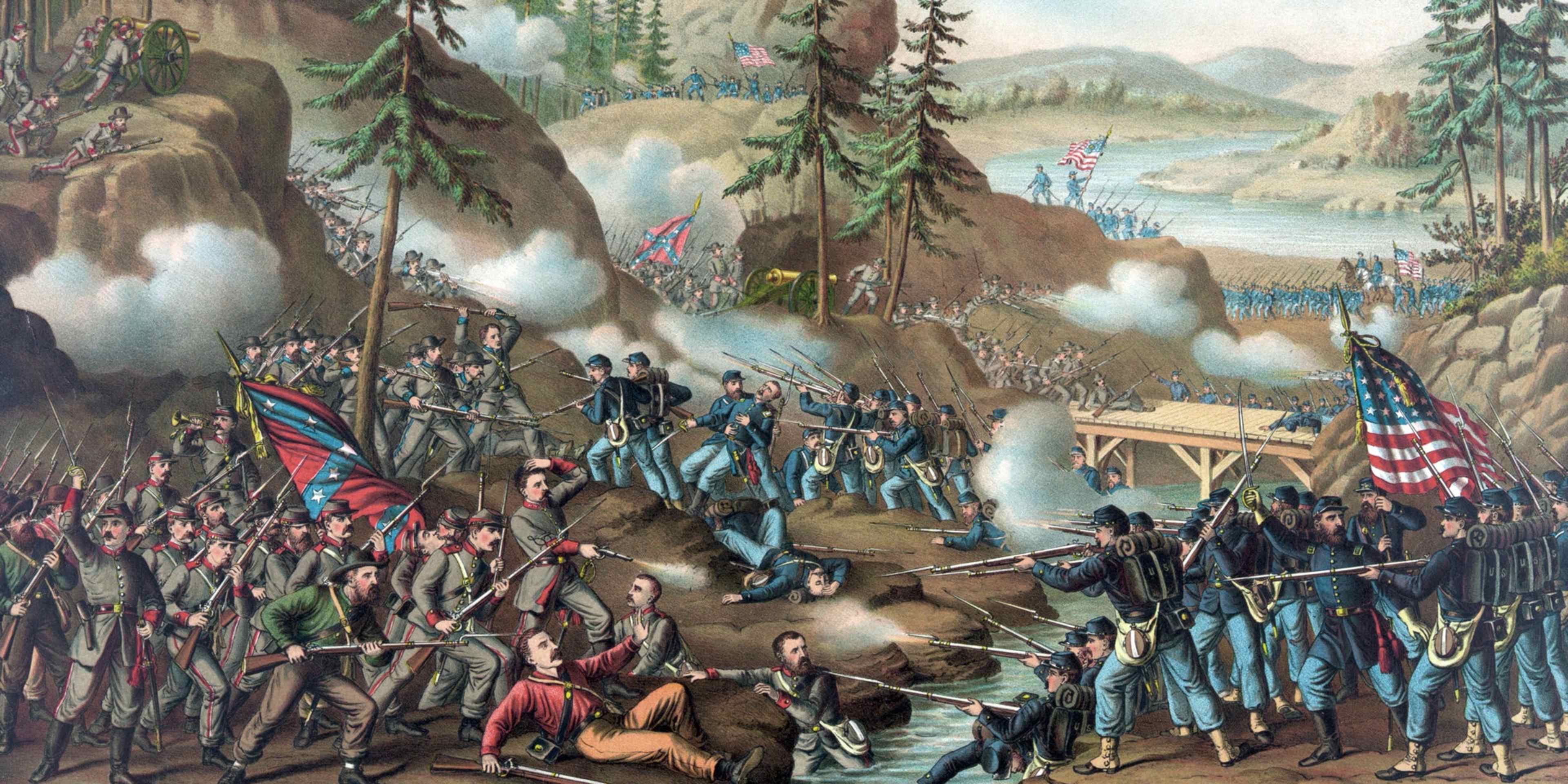
The American Civil War was a tapestry of grueling sieges, strategic brilliance, and desperate stands, but few campaigns altered the trajectory of the conflict as decisively as the Battle of Chattanooga. Fought between November 23 and November 25, 1863, in the rugged terrain of East Tennessee, this pivotal engagement transformed a besieged, starving Union army into an unstoppable offensive force. Chattanooga served as a vital gateway—a crucial railroad hub that connected the eastern and western theaters of the Confederacy. Following a devastating Union defeat at nearby Chickamauga, Confederate forces had pinned the Federal troops against the Tennessee River, threatening to starve them into submission. The arrival of Major General Ulysses S. Grant signaled a dramatic shift in momentum. What followed was a masterclass in military restructuring, culminating in a series of breathtaking assaults on Lookout Mountain and Missionary Ridge. This article explores the rich history, tactical maneuvers, key figures, and the lasting legacy of the Union victory at Chattanooga, demonstrating why this campaign remains a foundational chapter in the story of American resilience.
The Road to Chattanooga: Historical Background and Context
To fully comprehend the stakes at Chattanooga, one must understand the deep socio-political schisms of 19th-century America. Years of ideological division over state sovereignty, slavery, and federal power—epitomized by the ongoing debate over whose vision of America won—had erupted into open warfare by 1861. By late 1863, the Western Theater of the Civil War had reached a critical juncture.
In September 1863, Union Major General William Rosecrans suffered a catastrophic defeat at the Battle of Chickamauga in northwestern Georgia. Retreating in disarray into the natural basin of Chattanooga, Tennessee, the Union Army of the Cumberland found itself effectively trapped. Confederate General Braxton Bragg swiftly established a siege line, occupying the strategic high ground of Lookout Mountain and Missionary Ridge. By severing the Union’s railroad and river supply lines, Bragg sought to starve the Federal forces into a humiliating surrender. The situation inside Chattanooga grew dire; horses starved by the thousands, and soldiers were placed on meager quarter-rations. Recognizing the existential threat, President Abraham Lincoln took decisive action, placing Major General Ulysses S. Grant in command of the newly consolidated Military Division of the Mississippi and ordering him to relieve the besieged city.
Chronological Timeline of the Battles for Chattanooga
The liberation of Chattanooga and the subsequent rout of Confederate forces unfolded through a rapid sequence of brilliantly executed military maneuvers:
- Late October 1863: Major General Ulysses S. Grant arrives in Chattanooga. He immediately approves the plan to establish the “Cracker Line,” a combination of riverboat and wagon routes that successfully reopens supply lines to the starving Union troops.
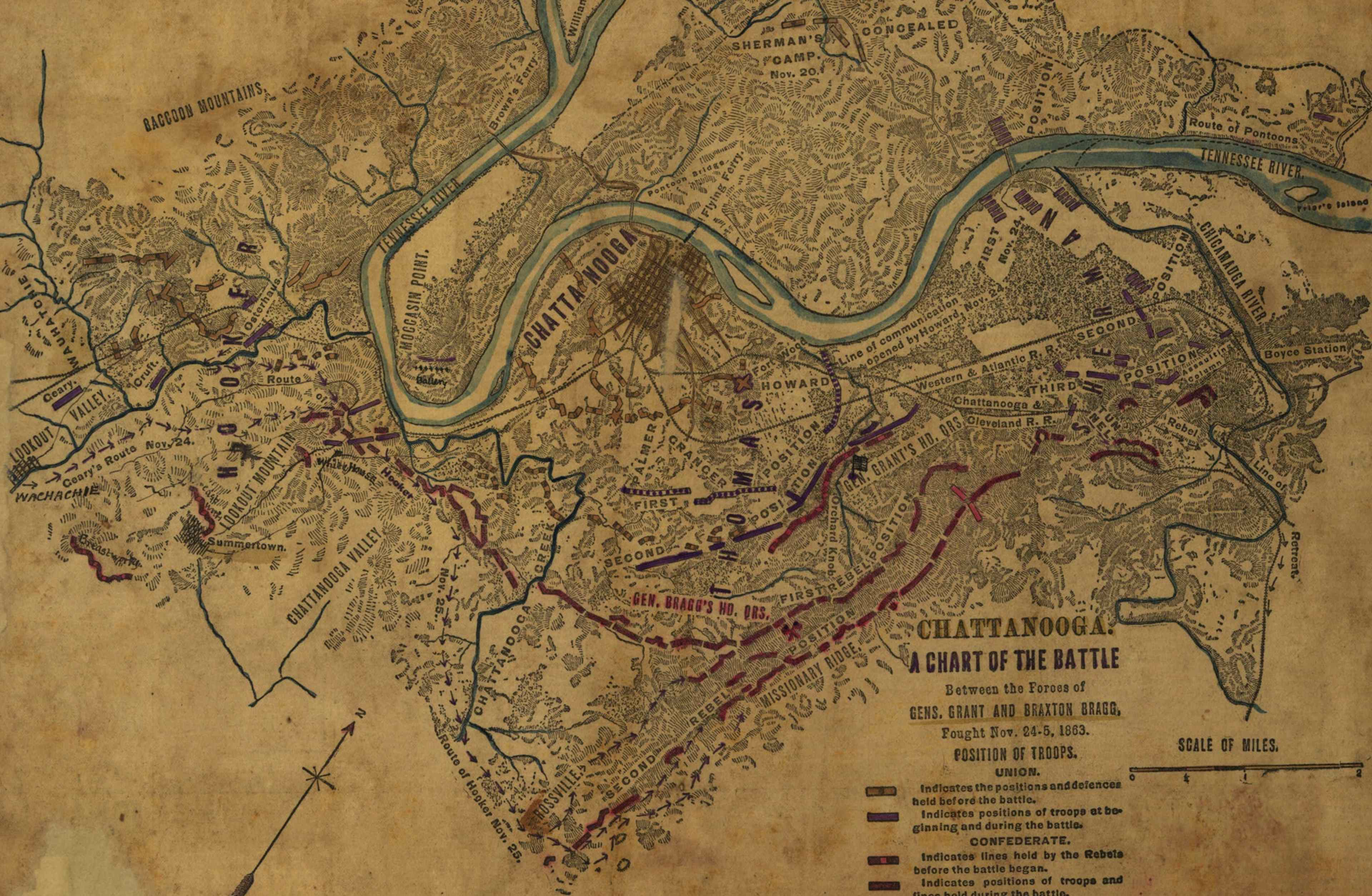
- November 23, 1863: Grant orders Major General George H. Thomas to launch a reconnaissance-in-force against the center of the Confederate line. The Union forces capture Orchard Knob, a strategic hill between the city and Missionary Ridge, which they quickly refortify as a command post.
- November 24, 1863: Union forces under Major General Joseph Hooker assault Lookout Mountain on the Confederate left flank. Amidst heavy fog, the Union secures a dramatic victory in what becomes famously known as the “Battle Above the Clouds.”
- November 25, 1863: The main offensive against Missionary Ridge begins. While William Tecumseh Sherman’s assault on the Confederate right at Tunnel Hill is fiercely repelled by Patrick Cleburne, George H. Thomas’s soldiers launch a desperate, unauthorized frontal charge up the center of the ridge, shattering the Confederate line and routing Bragg’s army.
- November 26, 1863: Confederate forces retreat southward into Georgia, effectively ending the siege of Chattanooga and securing East Tennessee for the Union.
Prominent Commanders and Their Lasting Legacy
The Battle of Chattanooga was a crucible that tested the mettle of several of the Civil War’s most famous and infamous commanders:
- Ulysses S. Grant (Union): His arrival breathed new life into a demoralized army. Grant’s logistical pragmatism in securing the “Cracker Line” laid the groundwork for tactical success. His performance at Chattanooga solidified his reputation as Lincoln’s most reliable commander, leading directly to his promotion to General-in-Chief of all Union armies in March 1864.
- George H. Thomas (Union): Known as the “Rock of Chickamauga” for his heroic defensive stand in September, Thomas proved his offensive capabilities at Chattanooga. His troops, eager to redeem their honor after Chickamauga, carried out the legendary charge up Missionary Ridge.
- Braxton Bragg (Confederate): Bragg’s generalship at Chattanooga was marred by poor tactical disposition, internal bickering with his subordinates, and a failure to capitalize on his initial siege advantage. Following the catastrophic collapse at Missionary Ridge, Bragg lost the confidence of his troops and resigned his command shortly thereafter.
- Patrick Cleburne (Confederate): One of the Confederacy’s most talented division commanders, Cleburne executed a masterful defense of Tunnel Hill on November 25, temporarily halting Sherman’s advance and demonstrating outstanding tactical brilliance despite the eventual overall defeat of the Confederate army.
Turning Points: From the Clouds to the Ridge
The Union victory at Chattanooga was defined by two distinct, highly dramatic tactical turning points. The first occurred on November 24 at Lookout Mountain. Operating on the extreme right of the Union line, Major General Joseph Hooker led his men up the steep, boulder-strewn slopes. Thick fog and low-hanging clouds enveloped the mountain, obscuring the combatants from the valley below. This surreal atmosphere gave rise to the term “Battle Above the Clouds.” By capturing Lookout Mountain, the Union secured its right flank and dealt a severe psychological blow to the Confederate defenders.
The ultimate climax of the campaign took place the following day on Missionary Ridge. Intended as a diversionary tactic to assist Sherman’s stalled assault, Grant ordered Thomas’s men to seize the Confederate rifle pits at the base of the ridge. However, upon capturing the pits, the Union soldiers found themselves targets for intense Confederate artillery fire from the summit. Realizing that staying in the pits meant certain death, and without receiving explicit orders from Grant or Thomas, the Federal infantrymen spontaneously began charging up the steep, 400-foot slope. Shouting “Chickamauga! Chickamauga!” as a rallying cry, they swarmed over the crest, utterly routing the startled Confederate defenders and forcing Bragg into a chaotic retreat.
The Broader Impact: Reshaping the Course of American History
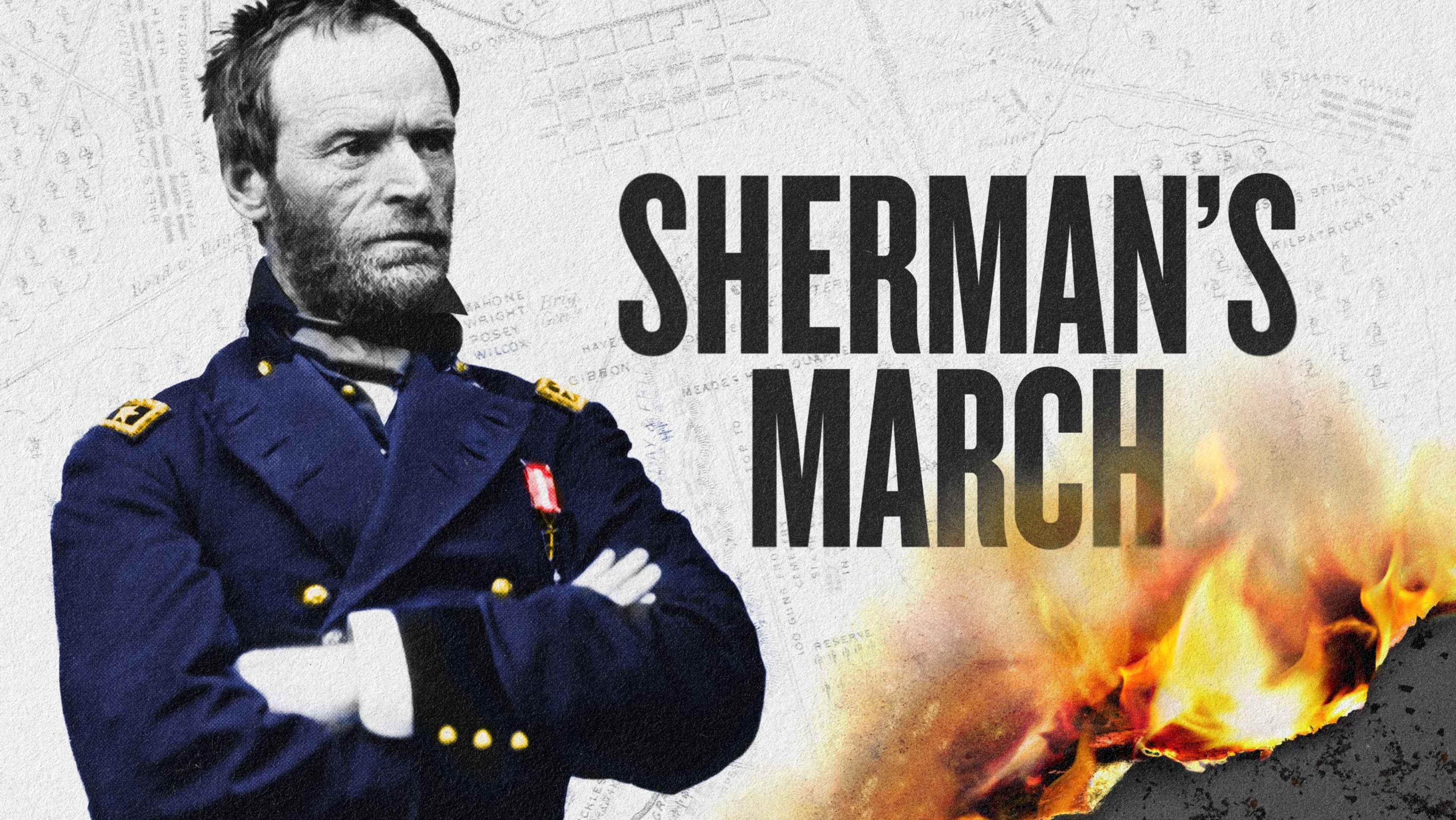
The strategic fallout of the Battle of Chattanooga cannot be overstated. By securing this vital railroad junction, the Union permanently closed the gateway to East Tennessee and opened the door to the Deep South. The victory paved the way for General William Tecumseh Sherman’s Atlanta campaign in the spring of 1864, which culminated in the fall of Atlanta and his subsequent March to the Sea. These subsequent military triumphs re-energized a war-weary Northern public, securing the re-election of Abraham Lincoln in November 1864 and extinguishing any hopes the Confederacy had of achieving a negotiated peace.
The war would drag on until April 1865, testing the resolve of the nation. For those seeking to understand the deep societal toll of these prolonged military engagements, examining a timeline of US anti-war movements provides valuable perspective on how deeply conflicts of this scale impacted the home front. Furthermore, the immense scale of the Union war effort drew upon a incredibly diverse coalition of soldiers, including early minority volunteers whose courage helped pave the way for the celebrated black heroes throughout US military history.
Lesser-Known Facts About the Campaign
1. The Origin of “Chattanooga”
The name “Chattanooga” is rooted in the region’s indigenous heritage, derived from a Creek Indian word meaning “rock coming to a point,” which directly references the prominent geographic feature of Lookout Mountain.
2. The “Military Crest” Engineering Blunder
A primary reason for the collapse of the Confederate center on Missionary Ridge was a critical engineering error. Confederate engineers had placed their defensive trenches on the absolute geographic crest of the ridge rather than the “military crest” (the highest point from which a defender can see and shoot down the entire slope). This mistake created blind spots where climbing Union soldiers were completely shielded from Confederate fire, allowing them to scale the ridge with fewer casualties than expected.
3. Demoted and Depressed: Braxton Bragg’s Fall
Braxton Bragg was so thoroughly demoralized by the sudden collapse of his seemingly impregnable position on Missionary Ridge that he wrote to Confederate President Jefferson Davis admitting his absolute failure, stating that the disaster was “beyond explanation.” He resigned his command of the Army of Tennessee days later.
Why the Battle of Chattanooga Still Matters Today
Today, the Battle of Chattanooga is studied in military academies worldwide as a premier example of logistics, terrain management, and the unpredictable nature of battlefield initiative. It serves as a stark reminder of how rapidly military fortunes can change when leadership, morale, and supply lines are properly managed. Visually, the battlefield is preserved within the Chickamauga and Chattanooga National Military Park, the nation’s oldest and largest military park, ensuring that the sacrifices of those who fought on both sides are never forgotten.
People Also Ask
Who won the Battle of Chattanooga?
The Union Army won a decisive victory at the Battle of Chattanooga. Under the overall command of Major General Ulysses S. Grant, Union forces routed General Braxton Bragg’s Confederate Army of Tennessee, lifting the siege of the city and forcing the Confederates to retreat into Georgia.
What is the significance of the “Battle Above the Clouds”?
The “Battle Above the Clouds” refers to the fight for Lookout Mountain on November 24, 1863. The engagement earned this name because a dense fog and low-lying clouds obscured the mountain slopes from the valley below. The Union victory secured the Federal right flank and boosted Northern morale.
How did the Battle of Chattanooga affect General Ulysses S. Grant’s career?
The brilliant success at Chattanooga solidified Grant’s reputation as a highly capable and aggressive strategist. In March 1864, President Abraham Lincoln promoted Grant to the rank of Lieutenant General and gave him command of all Union armies, setting the stage for his Overland Campaign against Robert E. Lee in Virginia.
Conclusion
The Battles for Chattanooga stand as a masterclass in turning defeat into victory. From the brink of starvation and surrender in October 1863 to the triumphant charge up Missionary Ridge in late November, the Union forces demonstrated remarkable adaptability and courage. By securing Chattanooga, the Federal army broke the spine of the Confederacy in the West, opened the gateway to Georgia, and established the military conditions necessary to bring the American Civil War to a victorious close. The legacy of Chattanooga endures as a testament to strategic ingenuity and the indomitable spirit of the soldiers who fought on its blood-stained heights.


