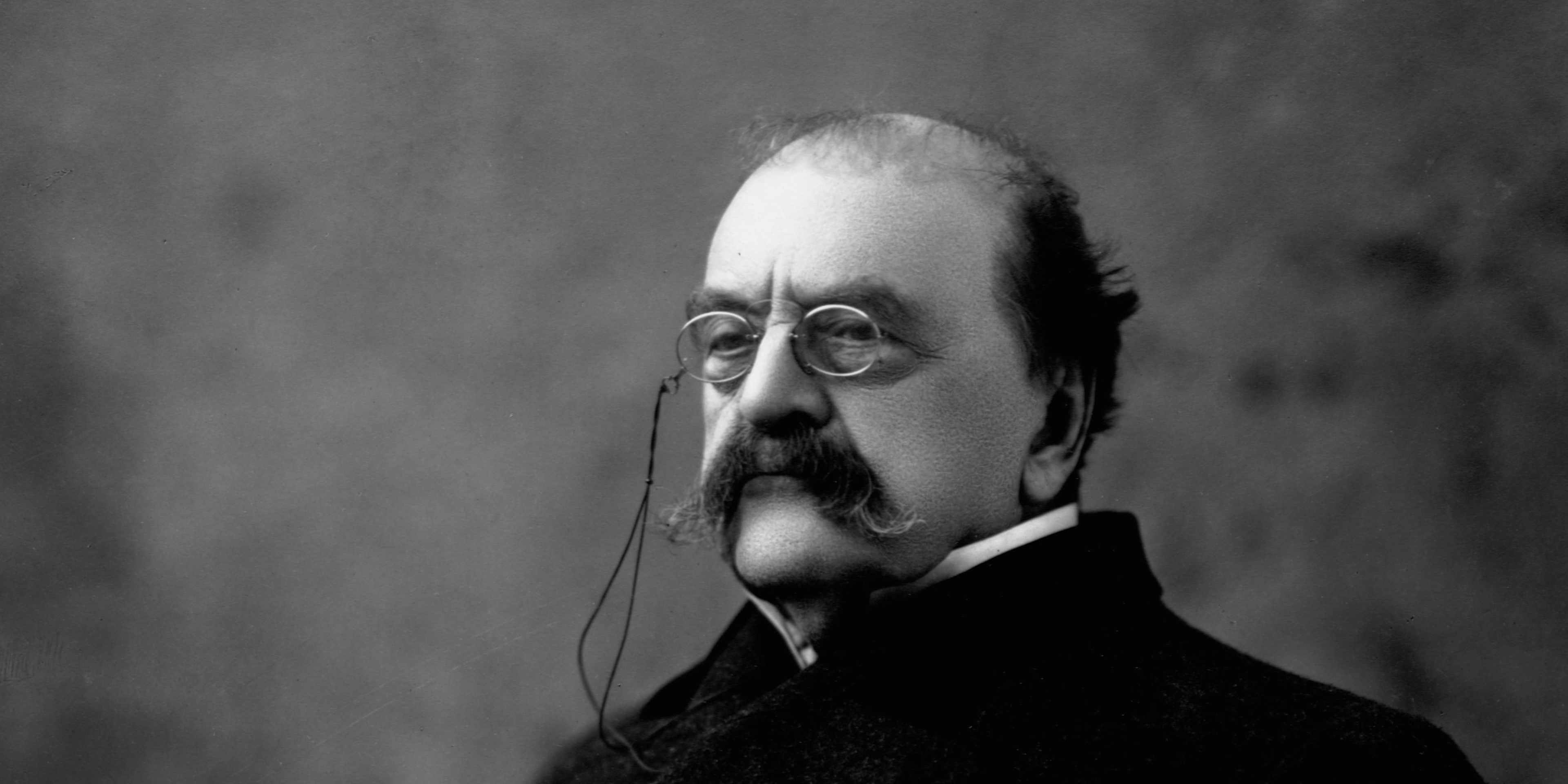
Few figures in American history boast a biography as wildly scandalous, erratic, and deeply consequential as Daniel Sickles. A Tammany Hall politician, a Union General during the American Civil War, and a diplomat, Sickles lived a life that defied both the law and military convention. Before his infamous turn on the battlefield of Gettysburg, he made legal history as the first person in the United States successfully acquitted of murder by pleading temporary insanity. Later, as a self-styled military leader with zero formal training, his spectacular acts of defiance in combat resulted in the near-annihilation of his own army corps and the loss of his right leg. Yet, through sheer political cunning and self-promotion, he managed to spin disaster into a narrative of personal heroism, eventually securing a Medal of Honor and spending his final decades visiting his own amputated bones. Daniel Sickles remains an astonishing testament to the power of political connections and sheer bravado in 19th-century America, casting a long, bizarre shadow over both the legal and military landscapes of the nation.
Historical Background and Early Political Rise
Daniel Edgar Sickles was born on October 20, 1819, in New York City (though he frequently claimed 1825 to appear younger). His father, George Garrett Sickles, was a patent lawyer and politician. Growing up in a rapidly expanding New York, young Sickles learned the printer’s trade and attended the University of the City of New York (now New York University) before studying law in the office of Benjamin Benjamin. He was admitted to the bar in 1846 and quickly aligned himself with the powerful Tammany Hall Democratic political machine, which served as his springboard into the state legislature in 1847.
By 1853, Sickles had become the corporation counsel for New York City, a position from which he successfully acquired the land that would become Central Park. He resigned later that year to serve as secretary to the U.S. legation in London under future President James Buchanan. Upon his return, he won seats in the New York State Senate and eventually transitioned to national politics, serving as a Democratic representative in the U.S. House of Representatives from 1857 to 1861.
His personal life was equally fast-paced and controversial. In 1852, at age 33, he married fifteen-year-old Teresa Bagioli, the daughter of his music teacher. Despite the marriage, Sickles maintained a highly public reputation as a ladies’ man, openly conducting affairs, most notably with Fanny White, a prominent New York brothel madam, whom he even introduced to high-society events and foreign dignitaries.
The Crime of the Century: The Murder of Philip Barton Key II
In 1856, after Sickles’ election to Congress, the couple moved to Washington, D.C. They quickly established themselves at the center of the capital’s high society, renting a lavish home near Lafayette Square, just steps from the White House. However, Sickles’ demanding political schedule and continuous extra-marital affairs left his young wife increasingly isolated. She soon found solace in the companionship of Philip Barton Key II, a handsome, charming widower who served as the U.S. Attorney for the District of Columbia and was the son of Francis Scott Key, the author of “The Star-Spangled Banner”.
The romance between Teresa and Key became an open secret in Washington. Key rented a house on nearby 15th Street to serve as their secret rendezvous point. To signal Teresa, Key would stand in Lafayette Square and wave a handkerchief toward the Sickles residence. On February 24, 1859, the illusion shattered when Daniel Sickles received an anonymous letter detailing his wife’s infidelity. When confronted, a distraught Teresa signed a highly detailed, written confession.
On February 27, 1859, Sickles looked out of his window and spotted Key in Lafayette Square, once again waving his handkerchief. Consumed by a murderous rage, the congressman armed himself with multiple pistols, stormed out to the square, and confronted his rival. Shouting, “Key, you scoundrel, you have dishonored my home. You must die!” Sickles opened fire on the unarmed U.S. Attorney. Key fled, begging for his life, but Sickles pursued him, shooting him multiple times in broad daylight, delivering a final, fatal shot to the chest as Key lay helpless on the ground.
The Trial and the “Temporary Insanity” Precedent
The homicide sent shockwaves through the nation. Sickles surrendered to the U.S. Attorney General and was taken to the Washington jail. Thanks to his immense political influence, he was housed in the warden’s comfortable quarters rather than a cell, and was even permitted to keep his dog with him. His trial in April 1859 became one of the first major media sensations in American history.
To defend him, Sickles assembled an extraordinary legal team that included Edwin M. Stanton, who would later become Lincoln’s Secretary of War. The defense pioneered a bold, unprecedented legal strategy: they argued that the shock of discovering his wife’s infidelity had thrown Sickles into an “uncontrollable frenzy,” causing a state of temporary insanity. They asserted that at the moment of the shooting, Sickles was incapable of distinguishing right from wrong.
This marked the very first time in United States history that a temporary insanity plea was successfully used as a defense for murder. The jury, swayed by the Victorian-era concept of the “unwritten law”—which suggested a husband had a moral duty to protect his home and punish his wife’s seducer—acquitted Sickles after only 70 minutes of deliberation. While the public celebrated the verdict, public opinion soured when Sickles later chose to publicly forgive and reconcile with Teresa, a move that high society deemed far more scandalous than the murder itself.
The Civil War: A “Political General” at Gettysburg
The outbreak of the American Civil War in 1861 offered Sickles a golden opportunity to rescue his damaged reputation. Utilizing his immense political connections, he raised the “Excelsior Brigade,” a force of five volunteer regiments from New York. In recognition of his fundraising and political influence, President Abraham Lincoln appointed him a brigadier general of volunteers in September 1861, despite Sickles having absolutely no prior military experience.
Sickles became one of the most prominent “political generals” of the Union Army. While some political appointees were cautious, Sickles was aggressive and unpredictable. His headstrong nature stood in stark contrast to the methodical executions of brilliant military retreats or standard tactical positioning observed by West Point graduates.
Insubordination at the Peach Orchard
Sickles’ military career reached its dramatic and near-fatal peak on July 2, 1863, during the second day of the Battle of Gettysburg. Commanding the Union Army’s III Corps, Sickles was ordered by his commanding officer, Major General George Meade, to hold the left flank of the Union line along Cemetery Ridge. Sickles, however, disliked his assigned position, believing the ground was too low and highly vulnerable to Confederate artillery positioned on Seminary Ridge.
Without authorization, and in direct violation of Meade’s explicit orders, Sickles marched his entire corps of 10,000 men nearly a mile forward to occupy higher ground at the Peach Orchard, Devil’s Den, and the Wheatfield. This unauthorized advance created a massive, exposed salient in the Union line, completely severing his connection to the rest of the army. General James Longstreet’s Confederate forces quickly exploited this blunder, launching a devastating assault that threatened to roll up the entire Union left flank. Only the rapid, heroic deployment of reinforcements ordered by Meade prevented a total Union disaster.
The Cannonball and the Amputated Leg
During the ferocious fighting in the Peach Orchard, a 12-pound Confederate artillery shell struck Sickles in the right leg, shattering his tibia and fibula. He was carried from the field on a stretcher, calmly puffing on a cigar to bolster the morale of his panicking troops. His leg was amputated that afternoon.
Always looking for a political edge, Sickles had the amputated limb preserved in a jar of alcohol and shipped it to the newly formed Army Medical Museum in Washington, D.C., accompanied by his personal card. Despite the disaster his insubordination had caused, Sickles spent the rest of his life arguing that his forward movement had actually absorbed the Confederate attack and saved the Union from defeat. Amazingly, in 1897, his political maneuvering paid off when he was awarded the Medal of Honor for his actions at Gettysburg.
Post-War Career, Reconstruction, and Diplomacy
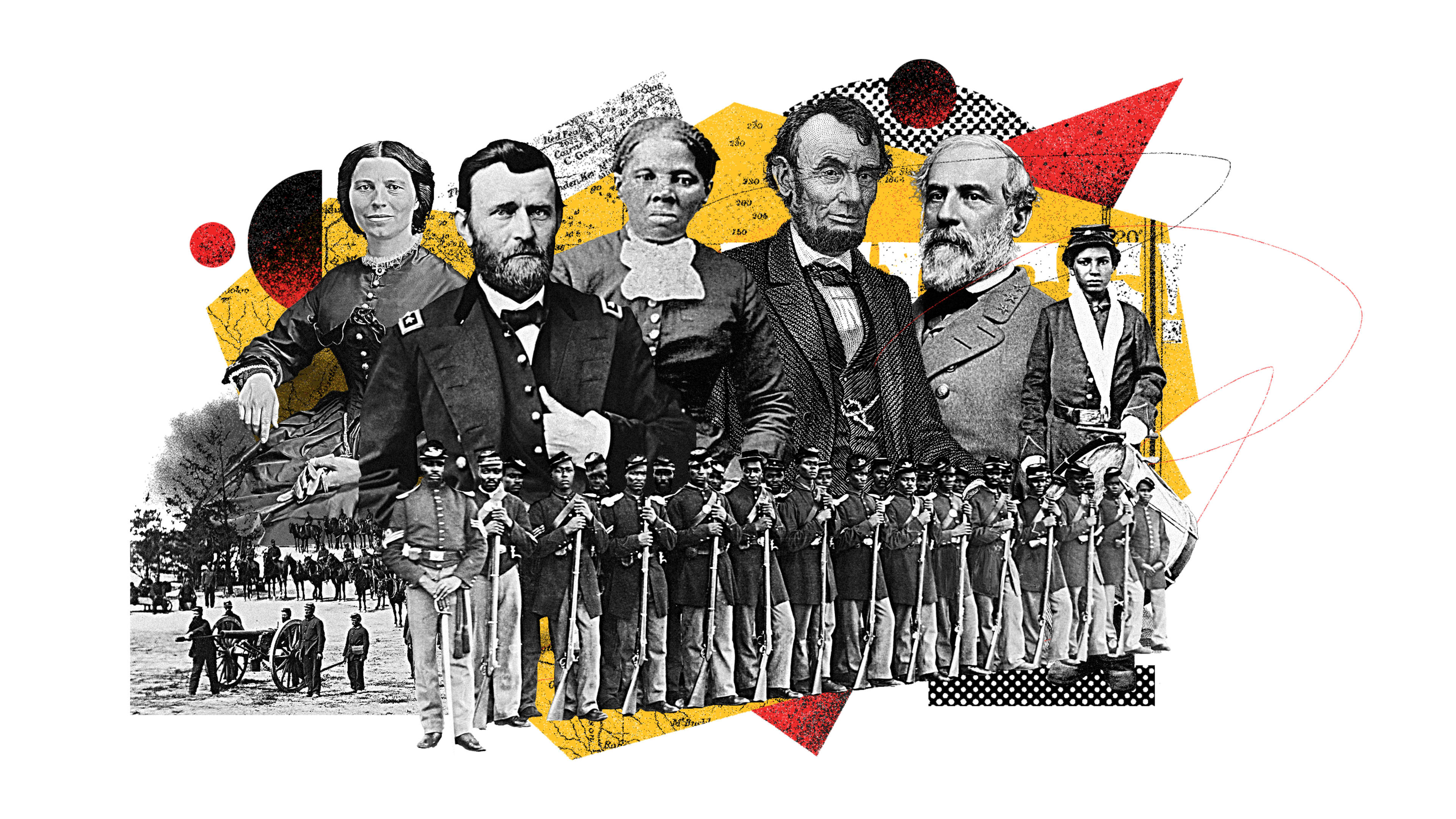
With his leg gone, Sickles’ days of active combat were over, but his public life remained as volatile as ever. During Reconstruction, President Andrew Johnson appointed him as the military governor of the Second Military District, which oversaw North and South Carolina. True to form, Sickles ruled with an iron fist, clashing frequently with local civilian authorities. His aggressive policies eventually angered President Johnson, who relieved him of command in 1867. During this highly contentious era, the Union army took on monumental responsibilities, a period that highlighted the complex, evolving contributions of military personnel charged with enforcing federal civil rights laws in the South.
In 1869, President Ulysses S. Grant appointed Sickles as the U.S. Minister to Spain. His diplomatic stint was defined by further scandals, including rumors of an affair with the exiled Queen Isabella II. Sickles returned to the United States and served a final term in the House of Representatives from 1893 to 1895. His most lasting post-war contribution was sponsoring the legislation that officially established the Gettysburg National Military Park, ensuring the preservation of the historic battlefield where he had lost his leg.
Lesser-Known Facts About Daniel Sickles
- An Annual Visit to His Own Leg: After donating his shattered bones to the Army Medical Museum (now the National Museum of Health and Medicine), Sickles reportedly made annual visits to the museum on the anniversary of the battle to view his own leg, which was displayed alongside the very cannonball that struck it.
- The “Yankee King of Spain”: Sickles’ lavish lifestyle and rumored romantic escapades in Madrid led Spanish newspapers to mockingly refer to the American diplomat as the “Yankee King of Spain.”
- Battlefield Fund Scandals: Late in life, as the chairman of the New York State Monuments Commission, Sickles was accused of embezzling over $27,000 in monument funds. While he was forced out of office, his political allies protected him from facing criminal prosecution.
Why Daniel Sickles Still Matters Today
Daniel Sickles’ legacy continues to reverberate through American society. In the courtroom, his pioneering use of the temporary insanity defense laid the foundation for modern legal arguments surrounding mental state and criminal responsibility. On the battlefield, his aggressive post-war efforts to establish the Gettysburg National Military Park are the primary reason the historic site remains preserved for millions of tourists and historians today. His life illustrates the chaotic, dramatic intersections of politics, law, and military history in 19th-century America.
People Also Ask
How did Daniel Sickles lose his leg?
Daniel Sickles lost his right leg at the Battle of Gettysburg on July 2, 1863, when it was shattered by a Confederate cannonball during the intense fighting at the Peach Orchard.
Why was Daniel Sickles acquitted of murder?
Sickles was acquitted of murder by successfully pleading temporary insanity—the first time this defense was successfully used in U.S. history. His defense argued that he was driven to temporary madness by the discovery of his wife’s affair with Philip Barton Key II.
Where is Daniel Sickles’ leg buried?
Daniel Sickles’ leg is not buried; instead, his skeletonized leg bones and the cannonball that struck him are preserved and on display at the National Museum of Health and Medicine in Silver Spring, Maryland.
Conclusion
Daniel Sickles was a man of extreme contradictions—a murderer who escaped justice, an insubordinate general who nearly lost Gettysburg, and a passionate preservationist who saved one of America’s most sacred battlefields. His life of sheer bravado, political manipulation, and historical firsts ensures that he remains one of the most compelling and controversial figures of the American Civil War era.


