The name Benedict Arnold is deeply etched into the fabric of American history, serving as the ultimate synonym for betrayal, treason, and bad faith. Yet, before his shocking defection during the American Revolutionary War, Arnold was widely regarded as one of the Continental Army’s most brilliant, daring, and indispensable field commanders. His early military exploits saved the infant rebellion from premature collapse on multiple occasions, making his subsequent transition to history’s most infamous turncoat a tragedy of epic proportions. To understand Arnold is to explore the volatile intersection of raw courage, toxic pride, systemic injustice, and personal ruin that characterized the birth of the United States.
Historical Background: From Prosperous Merchant to Reluctant Rebel
Born in Norwich, Connecticut, in 1741, Benedict Arnold was not destined for infamy from the start. He grew up in a comfortable household and attended private schools during his youth, but his family’s fortunes took a dark turn when his merchant seaman father suffered severe financial losses and fell into alcoholism. Forced to abandon his formal education at age 14, young Arnold was apprenticed to an apothecary, a profession that taught him discipline, business, and medicine. By his mid-20s, he had successfully established himself as a wealthy merchant and sea captain in New Haven, trading heavily with Canada and the West Indies. He understood how maritime trade functioned, and during this era, one could observe how merchants utilized trade routes and what role did the Caribbean play in the Revolutionary War as a backdrop for both commerce and conflict.
When the British Parliament introduced the highly controversial Sugar Act and Stamp Act in the 1760s, Arnold’s thriving mercantile business was severely threatened. Like many colonial merchants of his era, he turned to smuggling untaxed goods such as rum and molasses to bypass British customs. Arnold’s fiery temperament was already on display during these years; he once publicly whipped a man who attempted to report his smuggling activities to the British authorities. When the flames of rebellion began to flicker, Arnold naturally aligned himself with the patriot cause, becoming a key leader in the New Haven chapter of the Sons of Liberty and taking command of a local militia company.
The Soldier Who Saved the Revolution
Before his fall from grace, Arnold’s battlefield record was nothing short of miraculous. In April 1775, upon hearing of the clashes at Lexington and Concord, Arnold marched his militia company to seize a local powder magazine, famously declaring that only Almighty God could stop him. Shortly thereafter, he joint-commanded the capture of Fort Ticonderoga alongside frontiersman Ethan Allen, securing critical heavy artillery that would later help liberate Boston. This early phase of the war was marked by rapid shifts in leadership, and historians often debate the complex power structures of the era and who commanded the Continental Army before Washington arrived to consolidate colonial forces.
Later in 1775, Arnold undertook a grueling, heroic march through the frozen wilderness of Maine to launch a surprise attack on Quebec. Though the Canadian campaign ultimately failed and Arnold sustained a severe wound to his left leg, his sheer determination won him the admiration of General George Washington. In 1776, when British General Sir Guy Carleton attempted to launch an invasion via Lake Champlain to split the colonies in two, Arnold used his naval expertise to construct a makeshift fleet from scratch. At the Battle of Valcour Island, Arnold’s outgunned vessels fought the British to a standstill. Although most of his fleet was ultimately destroyed, he delayed the British advance long enough to force them into winter quarters, effectively saving the revolution from an early grave.
Arnold’s finest hour came at the pivotal Battle of Saratoga in 1777. Despite being stripped of his command by his rival, General Horatio Gates, Arnold defied orders, rode onto the battlefield, and led a brilliant, decisive charge that shattered the British lines. He was shot through the same left leg, leaving it permanently shortened by two inches. This victory convinced France to enter the war as an American ally, marking the true turning point of the conflict.
The Catalysts of Betrayal: Pride, Debt, and Peggy Shippen
If Arnold was such a magnificent hero, why did he decide to betray his country? The answer lies in a toxic mix of wounded pride, financial desperation, and political disillusionment. Despite his heroic sacrifices, the Continental Congress repeatedly passed him over for promotion, advancing five junior officers ahead of him. Furthermore, rival generals like Gates and Ethan Allen actively sought to minimize Arnold’s contributions and smear his reputation. While struggling with his physical injuries, Arnold found himself drowning in personal debt, partly incurred by funding his own military campaigns.
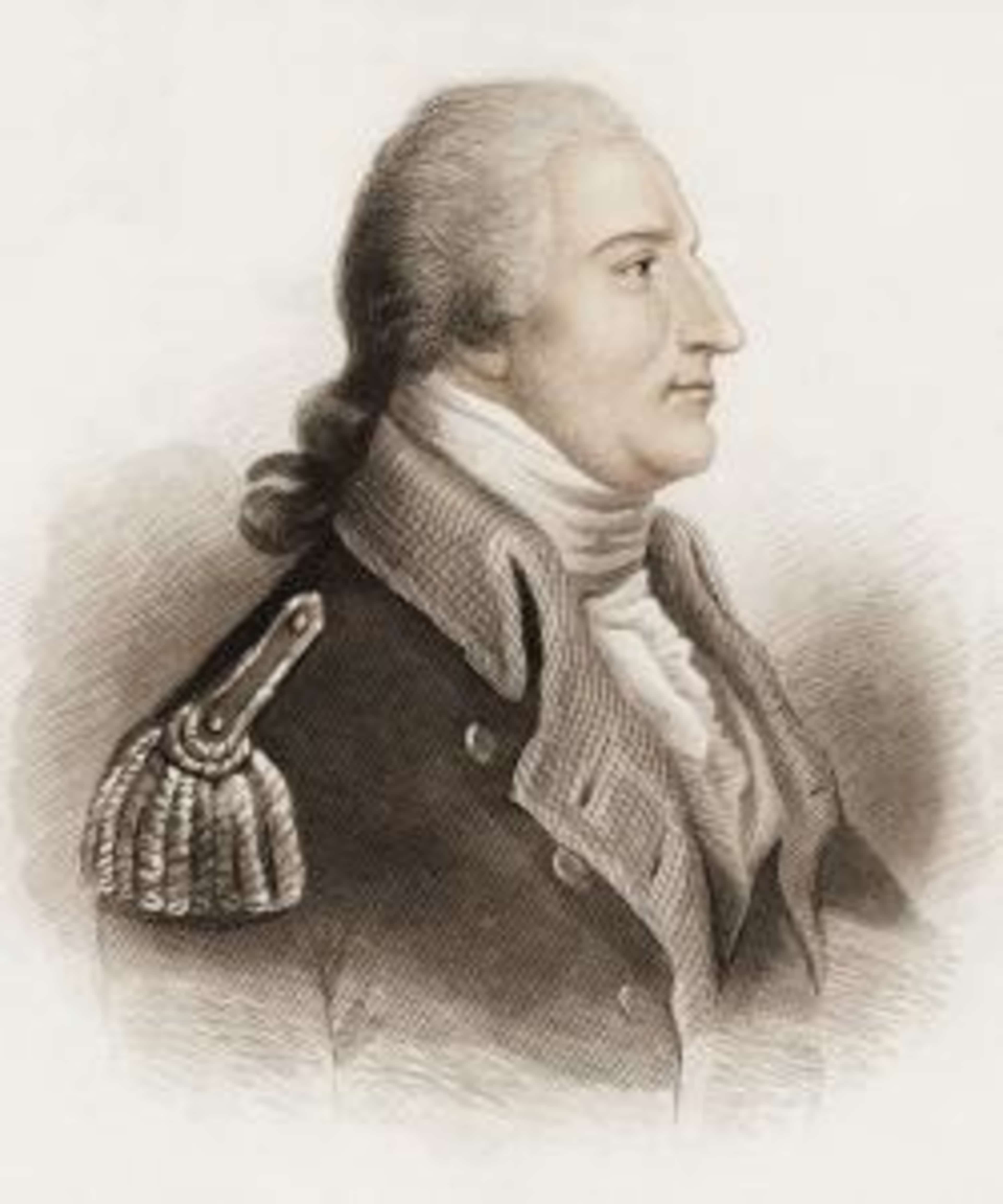
His resentment deepened when he was appointed military governor of Philadelphia in 1778. There, he fell in love with and married Peggy Shippen, a beautiful, high-society young woman from a prominent Loyalist family. Shippen had close ties to British officers, including Major John André, the head of British intelligence. Under Shippen’s influence and driven by his own bitterness, Arnold initiated secret communications with British General Henry Clinton in May 1779, offering his services to the Crown in exchange for 20,000 British pounds and a command in the British Army.
The Exposure of the West Point Conspiracy
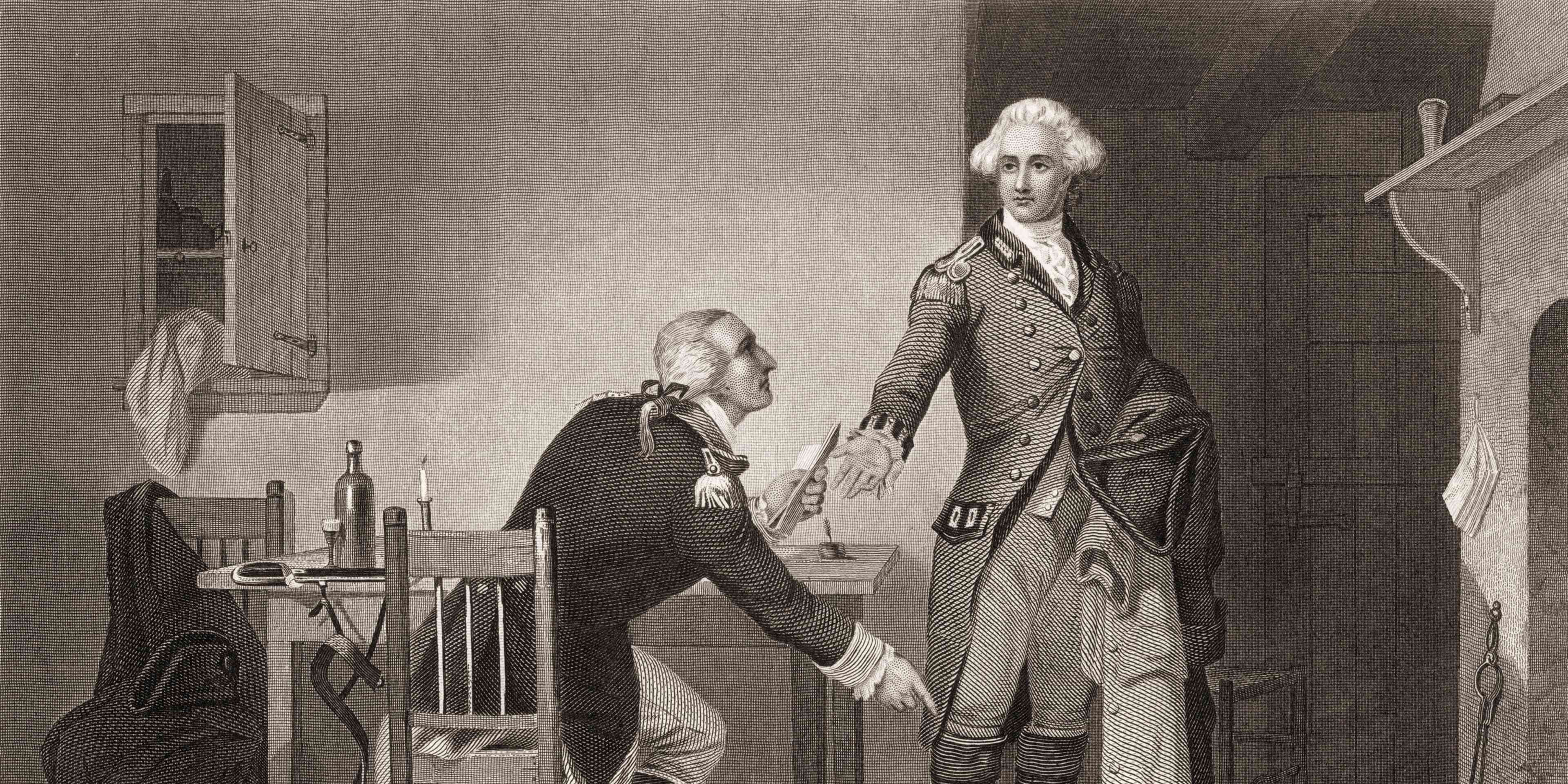
By 1780, Arnold had successfully obtained command of West Point, a highly strategic fort on the Hudson River. Surrendering West Point to the British would have given them control of the Hudson, effectively cutting New England off from the rest of the colonies and potentially ending the American rebellion. In September 1780, Arnold met secretly with British Major John André to finalize the surrender plans.
However, the conspiracy collapsed due to a twist of fate. While attempting to return to British lines in civilian disguise, André was captured by three patriotic militiamen: John Paulding, David Williams, and Isaac Van Wart. Suspecting he was a spy, they searched him and discovered the highly incriminating plans of West Point hidden inside his boot. Arnold received word of André’s capture just hours before George Washington arrived at his headquarters. Fleeing immediately, Arnold escaped aboard the British warship HMS Vulture, leaving his wife Peggy to successfully feign hysteria and avoid immediate suspicion. André was tried, convicted of espionage, and hanged on October 2, 1780.
Chronological Timeline of Arnold’s Rise and Fall
- 1741: Benedict Arnold is born in Norwich, Connecticut.
- 1760s: Arnold operates as a successful sea merchant and smuggler, protesting the Stamp and Sugar Acts.
- May 1775: Jointly captures Fort Ticonderoga with Ethan Allen, securing vital artillery.
- December 1775: Leads the daring assault on Quebec, where he is wounded in the leg.
- October 1776: Commands the makeshift American fleet at the Battle of Valcour Island.
- October 1777: Achieves military glory at the Battle of Saratoga but suffers another crippling leg injury.
- May 1779: Begins secret, coded correspondence with British forces.
- September 1780: The West Point plot is exposed; Arnold escapes to British lines while John André is captured.
- 1781: Arnold commands British troops in destructive raids against Virginia and Connecticut.
- 1801: Dies in London, largely ignored and impoverished, buried without military honors.
Fascinating Lesser-Known Facts About Benedict Arnold
1. The Pistol Duel Over an Insult to Yankee Manners
Long before the war, Arnold was notorious for his quick temper and obsession with honor. During a trading voyage in Honduras, a British sea captain named Croskie called Arnold “a damned Yankee, destitute of good manners” after Arnold missed a social invitation. Outraged, Arnold demanded a duel. The next day, the two faced off with pistols. Croskie fired first and missed. Arnold fired next, grazing Croskie’s arm, and warned that if Croskie missed again, the next shot would be fatal. Croskie promptly apologized, and honor was satisfied.
2. George Washington’s Secret Kidnapping Mission
Furious at the betrayal, George Washington was determined to make a public example of Arnold. He enlisted Sergeant Major John Champe in a highly dangerous double-agent mission. Champe “deserted” to the British in New York, joined Arnold’s newly formed American Legion, and plotted with local spies to kidnap Arnold from his garden and spirit him back to New Jersey. The plan was foiled at the very last minute when Arnold’s unit was suddenly ordered to board ships for a campaign in the South.
3. The Boot Monument of Saratoga
At the Saratoga National Historical Park stands one of the most unusual monuments in the world: the Boot Monument. It features a stone carving of a military boot and a general’s coat, dedicated to the “most brilliant soldier” of the Continental Army who was “desperately wounded” during the battle. Highly telling of his complex legacy, the monument completely omits Benedict Arnold’s name, honoring his heroic leg while erasing the man who later betrayed his nation.
Why the Legacy of Benedict Arnold Still Matters Today
The story of Benedict Arnold remains incredibly relevant because it forces us to confront the fragile nature of loyalty, patriotism, and historical memory. It reminds us that history is rarely written in absolute black and white. Arnold’s military genius was real, and without his early victories, the United States might never have won its independence. Yet, his legacy is a cautionary tale of how personal grievances, pride, and financial greed can completely erase a lifetime of heroic sacrifice. It challenges modern society to think about how we honor historical figures and how we define national identity.
People Also Ask
Why did Benedict Arnold betray America?
Benedict Arnold betrayed America due to deep-seated resentment over being passed over for promotion by the Continental Congress, financial debts, and the influence of his loyalist wife, Peggy Shippen. He believed his contributions were unappreciated and sought both wealth and recognition from the British Crown.
What was the Boot Monument?
The Boot Monument is a unique historical marker at Saratoga National Historical Park that honors the leg wound Benedict Arnold suffered during his heroic charge in 1777. While it praises his military brilliance, it does not mention his name because of his subsequent treason.
What happened to Benedict Arnold after the Revolutionary War?
After the war, Arnold moved to London, England. However, he was widely distrusted by the British, who viewed him as an unprincipled turncoat. He struggled financially, received only a fraction of the reward money he had been promised, and died in relative obscurity in 1801.
Conclusion
Benedict Arnold’s life remains one of the most tragic and fascinating chapters of early American history. He was a man of immense talent, physical courage, and military foresight, yet his inability to master his own ego and anger led to his eternal disgrace. By studying his rise and fall, we gain a deeper, more nuanced understanding of the immense personal and political costs associated with the birth of a nation.


