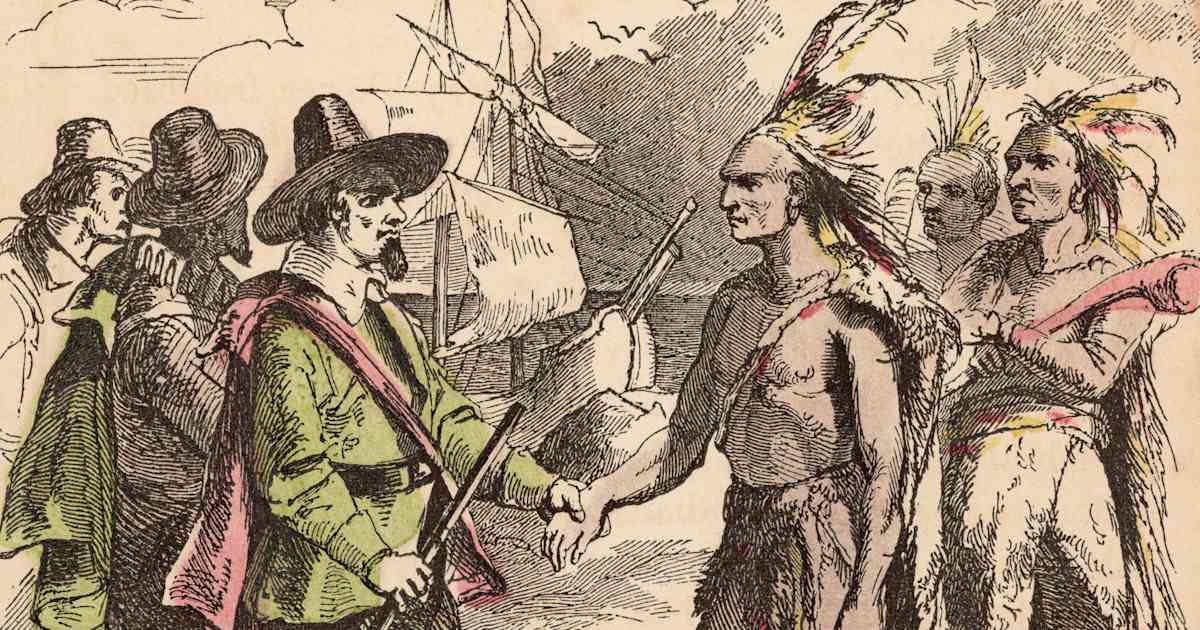
On the chilly morning of November 9, 1620, after enduring more than sixty grueling days at sea, the passengers and crew aboard the Mayflower finally spotted the low-lying shoreline of Cape Cod. It was a moment of immense relief and profound joy for the exhausted travelers. However, this sigh of relief was quickly followed by a stark realization: they were nowhere near their intended destination. While the name “Plymouth” is forever etched into the collective memory of American history as the birthplace of the Pilgrims’ colony, historical records reveal that this iconic landing was actually the result of navigational errors, roaring winter breakers, and a desperate struggle for survival. The Pilgrims never intended to settle in New England; their sights were set much further south, near the mouth of the Hudson River. This twist of fate not only redirected their voyage but also reshaped the geopolitical map of colonial North America forever.
The True Destination: Why the Hudson River?
To understand the sheer magnitude of the Mayflower’s detour, one must first look at the geopolitical and religious motivations behind the voyage. The Pilgrims—originally known as Separatists—had fled English persecution to live in Leiden, Holland. However, fearing the loss of their English identity and seeking economic self-determination, they made the bold decision to cross the Atlantic. For a comprehensive look at their motivations, historians often explore why the Pilgrims came to America to establish a godly commonwealth of their own.
When the Pilgrims negotiated the terms of their departure, they secured a land patent from the Virginia Company of London. This patent granted them the legal authority to settle in the northernmost reaches of the territory claimed by the Virginia Company, which at the time skirted the 41st parallel—essentially the mouth of the Hudson River in modern-day New York. During their exile in Holland, the Pilgrims had read glowing reports of this fertile region, which had been explored and charted by Henry Hudson during his Dutch-sponsored voyage in 1609. The Hudson River offered excellent prospects for agriculture, fur trading, and deep-water navigation, making it the ideal spot for a nascent English colony. Settling there would place them under English jurisdiction while keeping them far enough away from the established Jamestown settlement to practice their religion without interference.
The Terrifying Voyage and the Shoals of Cape Cod
The journey across the North Atlantic was nothing short of a nightmare. Setting sail in September 1620, the Mayflower encountered fierce autumn gales and massive equinoctial storms. For weeks, the ship was battered by mountainous waves, forcing the passengers to remain huddled in the damp, dark, and cramped cargo decks. To delve deeper into the physical hardships faced by the travelers, read about the Mayflower ship and the historic compact that kept them together under extreme duress.
When the New England coastline was finally sighted on November 9, Mayflower master Christopher Jones attempted to steer the vessel south toward their chartered destination at the Hudson River. However, as they sailed along the eastern coast of Cape Cod, they ran directly into the dangerous shoals and roaring breakers of Pollock Rip, a treacherous stretch of water known for shipwrecks. Facing blustery headwinds, failing light, and rapidly depleting provisions, Master Jones realized that attempting to force a passage south through these uncharted waters was a suicide mission. With the safety of his passengers hanging in the balance, Jones made the fateful decision to turn back north, seeking shelter in the deep, protected harbor of what is now Provincetown, Massachusetts.
A Chronological Timeline of the Voyage and Settlement
- September 16, 1620: The Mayflower departs from Plymouth, England, carrying 102 passengers and roughly 30 crew members.
- November 9, 1620: The crew spots the coastline of Cape Cod, realizing they have drifted far north of their Hudson River target.
- November 10, 1620: Christopher Jones attempts to sail south but is turned back by treacherous shoals and fierce headwinds.
- November 11, 1620: The Mayflower anchors in Provincetown Harbor. Recognizing they are outside English-chartered territory, the leaders draft and sign the Mayflower Compact to prevent mutiny and establish law.
- November–December 1620: Scouting parties, led by Miles Standish, explore Cape Cod to find a suitable location for a permanent settlement.
- December 1620: The Pilgrims select Plymouth—a site previously cleared by Native Americans—and begin construction on their new home.
Key Historical Figures and Their Roles
Several pivotal figures played critical roles in navigating the crises of the voyage and the unexpected landing:
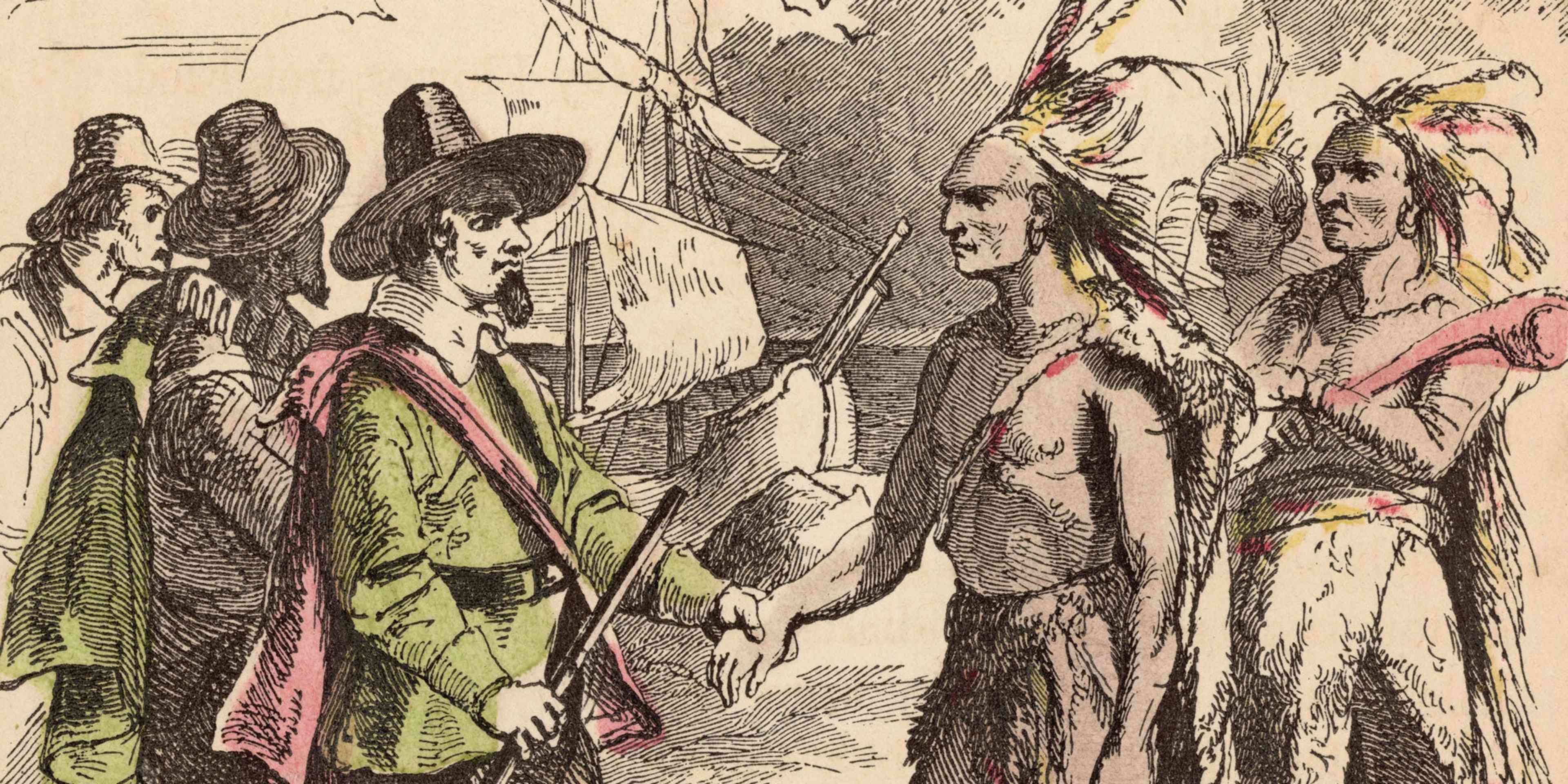
- William Bradford: A deeply religious leader who would eventually serve as the governor of Plymouth Colony for over thirty years. Bradford’s detailed journal, Of Plimoth Plantation, remains the primary historical source for the voyage, detailing the joy of seeing land followed by the harsh realization of their geographic isolation.
- Master Christopher Jones: The experienced captain of the Mayflower. His quick thinking and navigational expertise saved the ship from shipwrecking on the shoals of Cape Cod. Jones remained with the colonists through their devastating first winter, providing vital shelter and support before sailing back to England in the spring of 1621.
- John Carver: A wealthy merchant who helped secure financing for the voyage. Carver was elected as the first governor of Plymouth Colony and was instrumental in drafting the Mayflower Compact to preserve social order in New England.
The Mayflower Compact: Democracy Born of Necessity
The decision to abandon the journey to the Hudson River created an immediate legal and political crisis. Because the Mayflower had anchored in New England, they were settling on land that fell outside the jurisdiction of their Virginia Company charter. Some of the non-Separatist passengers (referred to by the Pilgrims as “Strangers”) argued that since they were outside English territory, no one had the legal authority to command them, and they were free to do as they pleased once they went ashore.
To prevent total anarchy, the colony’s leaders gathered in the Mayflower’s cabin on November 11, 1620, to draft a self-governing agreement. Signed by 41 of the male passengers, the document established a “civil body politic” bound by just and equal laws. This emergency measure, born entirely out of their accidental landing, became a foundational milestone in the development of American democracy, asserting that government derives its authority from the consent of the governed.
The Geopolitical Ripple Effects: The Rise of New York
Had the Mayflower successfully negotiated the shoals of Cape Cod and landed at the mouth of the Hudson River, the entire landscape of American history would have looked vastly different. The Hudson River valley would have become a stronghold of English Puritanism, likely leading to a highly religious, structured, and homogenous society in what is today New York.
Instead, the Pilgrims’ failure to claim the Hudson River left a power vacuum that other European powers were quick to exploit. Recognizing the strategic and economic value of the region, Dutch merchants established a fur-trading post in Manhattan in 1624, which grew into the bustling settlement of New Amsterdam. Unlike the highly religious Plymouth Colony, New Amsterdam was founded strictly for commerce, paving the way for the cosmopolitan, ethnically diverse, and commercially driven metropolis that eventually became New York City.
Lesser-Known Historical Facts About the Landing
- The Mayflower was not a passenger ship: Built to transport cargo like French wine and wool, the ship was never designed to house over a hundred human beings for months at sea. The stagnant air, lack of sanitation, and damp quarters contributed heavily to the widespread sickness that decimated the colony during their first winter.
- They did not land on Plymouth Rock first: The Pilgrims’ very first landfall was actually at the tip of Cape Cod in present-day Provincetown. They spent five weeks exploring the surrounding wilderness and searching for a viable settlement site before finally crossing Cape Cod Bay to establish the Plymouth Colony.
- The Pilgrims stole Native American corn: During their early explorations of Cape Cod, a scouting party discovered a cached supply of corn buried by the local Wampanoag people. Desperate for food and seed, the Pilgrims took the corn, though they recorded in their journals that they intended to (and later did) pay the Native Americans back once they established contact.
Why the Accidental Landing Still Matters Today
The accidental detour of the Mayflower highlights how profoundly chance and environmental factors shape the course of human history. The Pilgrims’ unintended arrival in New England forced them to interact with the Wampanoag Nation, leading to a complex history of alliance, survival, and eventual devastating conflict. Furthermore, the legal vacuum created by their landing prompted the creation of the Mayflower Compact, which directly influenced the democratic framework that would guide the writers of the United States Constitution over a century later. Today, Plymouth stands as a monument to resilience, adaptation, and the unexpected paths that defined the birth of a nation.
People Also Ask
Did the Pilgrims intend to land at Plymouth?
No, the Pilgrims did not intend to land at Plymouth. Their original destination was the mouth of the Hudson River (in modern-day New York), where they held a legal patent to establish an English settlement. Fierce winter storms and dangerous shoals off Cape Cod forced them to seek shelter in New England instead.
Why did the Mayflower change course?
The Mayflower changed course after encountering violent autumn storms in the Atlantic Ocean that blew the ship hundreds of miles off course. When they tried to sail south toward the Hudson River, they ran into dangerous shoals and headwinds, forcing them to turn back and seek refuge in Cape Cod Harbor.
What is the historical significance of the Mayflower Compact?
The Mayflower Compact was written because the Pilgrims landed outside the jurisdiction of their legal charter. It was the first document to establish self-government and the rule of law in the New World, serving as a vital precursor to American democratic systems.
Conclusion
The landing at Plymouth was not a planned act of colonization but a desperate detour born of survival. Driven off course by the unforgiving Atlantic, the Pilgrims turned a potential maritime disaster into a historic opportunity. By adapting to their unexpected surroundings, drafting their own laws of self-governance, and navigating the challenges of a new wilderness, they laid the foundation for a society that would eventually evolve into the United States of America.


