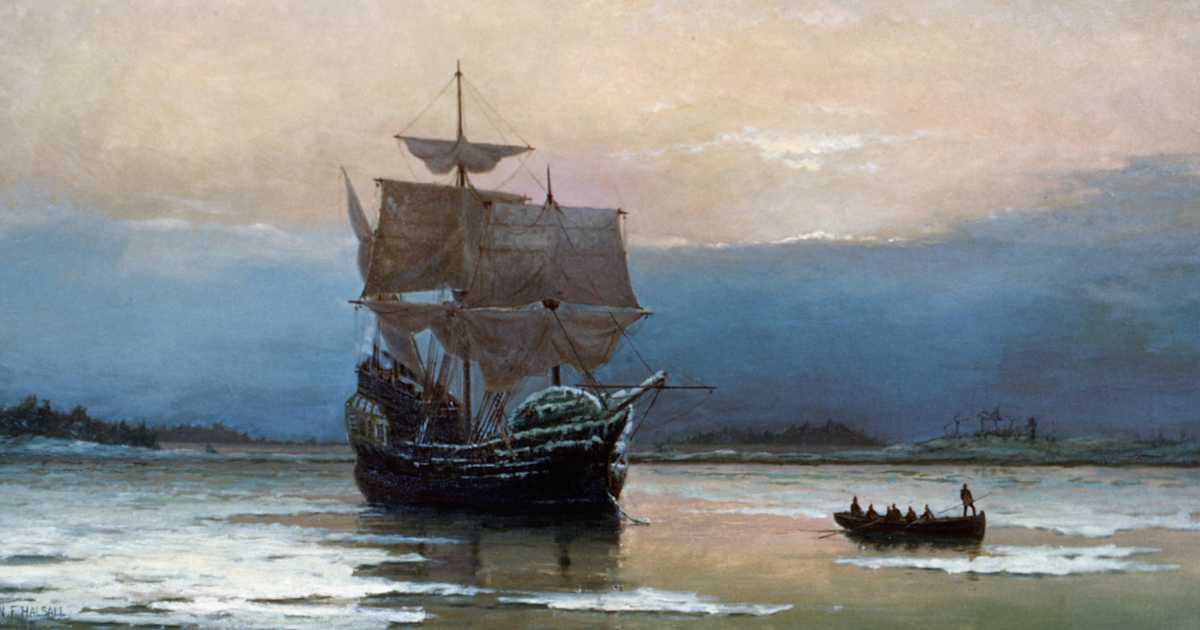
In September 1620, a small, battle-worn merchant vessel named the Mayflower slipped out of the harbor of Plymouth, England, embarking on a treacherous 66-day journey across a tumultuous Atlantic Ocean. On board were 102 passengers—a mixture of religious dissidents seeking a spiritual sanctuary and secular adventurers looking for economic fortune—unwittingly poised to rewrite the course of global history. This historic voyage was not merely an arduous crossing of the sea; it was the crucible in which the fundamental concepts of American democracy, civic covenant, and cultural encounter were forged. From the drafting of the revolutionary Mayflower Compact to the precarious survival of a fledgling colony through the cold New England winter, the story of the Mayflower represents a defining chapter of the American legacy. To understand the complex, often painful, yet foundational narrative of the United States, one must trace it back to this fragile wooden ship, the people who sailed upon her, and the crucial, complex alliances they formed with the Indigenous Wampanoag tribe on the shores of Cape Cod.
Historical Background: Seeking Zion in the Wilderness
The origins of this fateful crossing lay in the deep religious fractures of post-Reformation England. In the early 17th century, under the reign of King James I, the Church of England maintained many traditional practices that a radical group of Protestants, known as Separatists, found intolerable. Unlike the Puritans—who wished to reform the Anglican Church from within—these Separatists believed the state church was beyond saving. They formed underground congregations, most notably in the small village of Scrooby in Nottinghamshire. Facing persecution, fines, and imprisonment, this congregation made the difficult decision to flee England in 1608, seeking refuge in the religiously tolerant city of Leiden (Leyden) in Holland (the Netherlands).
While Leiden offered safety, life there presented severe challenges. Barred from the powerful Dutch craft guilds, the English immigrants were relegated to grueling, low-paying manual labor in the textile industry. Furthermore, as the years pressed on, the Separatists watched with growing anxiety as their children began to assimilate into the secular, cosmopolitan Dutch culture. Fearing the loss of their English identity and the dilution of their strict religious devotion, the leaders of the Leiden congregation—including William Bradford and Elder William Brewster—began planning a second, bolder migration. They envisioned a plantation in the ‘New World,’ a place where they could live as English subjects while worshiping in absolute purity, free from external worldly corruption.
The Journey Across the Atlantic: Storms, Sabotage, and Survival
To finance their monumental endeavor, the Separatists partnered with a group of London merchants, known as the Merchant Adventurers, who agreed to advance the necessary funds in exchange for seven years of labor and shared profits. Through these backers, they secured a patent from the Virginia Company of London to settle near the mouth of the Hudson River (then considered the northern reaches of Virginia).
In July 1620, a portion of the Leiden congregation sailed to Southampton, England, to meet up with a second group of passengers recruited by the financial backers. These secular settlers, whom the religious Separatists referred to as ‘Strangers,’ were vital to the colony’s physical survival, bringing practical skills in carpentry, blacksmithing, and defense. The expedition was planned to utilize two ships: the Mayflower and a smaller vessel, the Speedwell.
However, almost as soon as they set sail in August 1620, the Speedwell began to leak uncontrollably. After two frustrating turnarounds to ports in Dartmouth and Plymouth for repairs, the Speedwell was deemed unseaworthy. Squeezing as many passengers and vital supplies as possible onto the Mayflower, the expedition was forced to abandon the second ship. On September 16, 1620, the Mayflower set sail alone under the command of Captain Christopher Jones.
Because of these lengthy delays, the Mayflower crossed the Atlantic during the height of the autumn storm season. The 102 passengers—along with approximately 30 crew members—were crammed into the dark, damp, and suffocatingly tight space of the cargo hold and gun deck. For 66 days, the ship was battered by violent gale-force winds and massive Atlantic swells. The conditions were miserable; seasickness was rampant, and the air was thick with the stench of unwashed bodies and spoiling food. During one particularly fierce tempest, a giant structural beam in the middle of the ship cracked, threatening to abort the voyage. Using a large iron jack screw brought by the passengers, the crew managed to shore up the beam, allowing the battered vessel to press on. Amidst the chaos, one child was born at sea—appropriately named Oceanus Hopkins—while only one passenger died during the crossing.
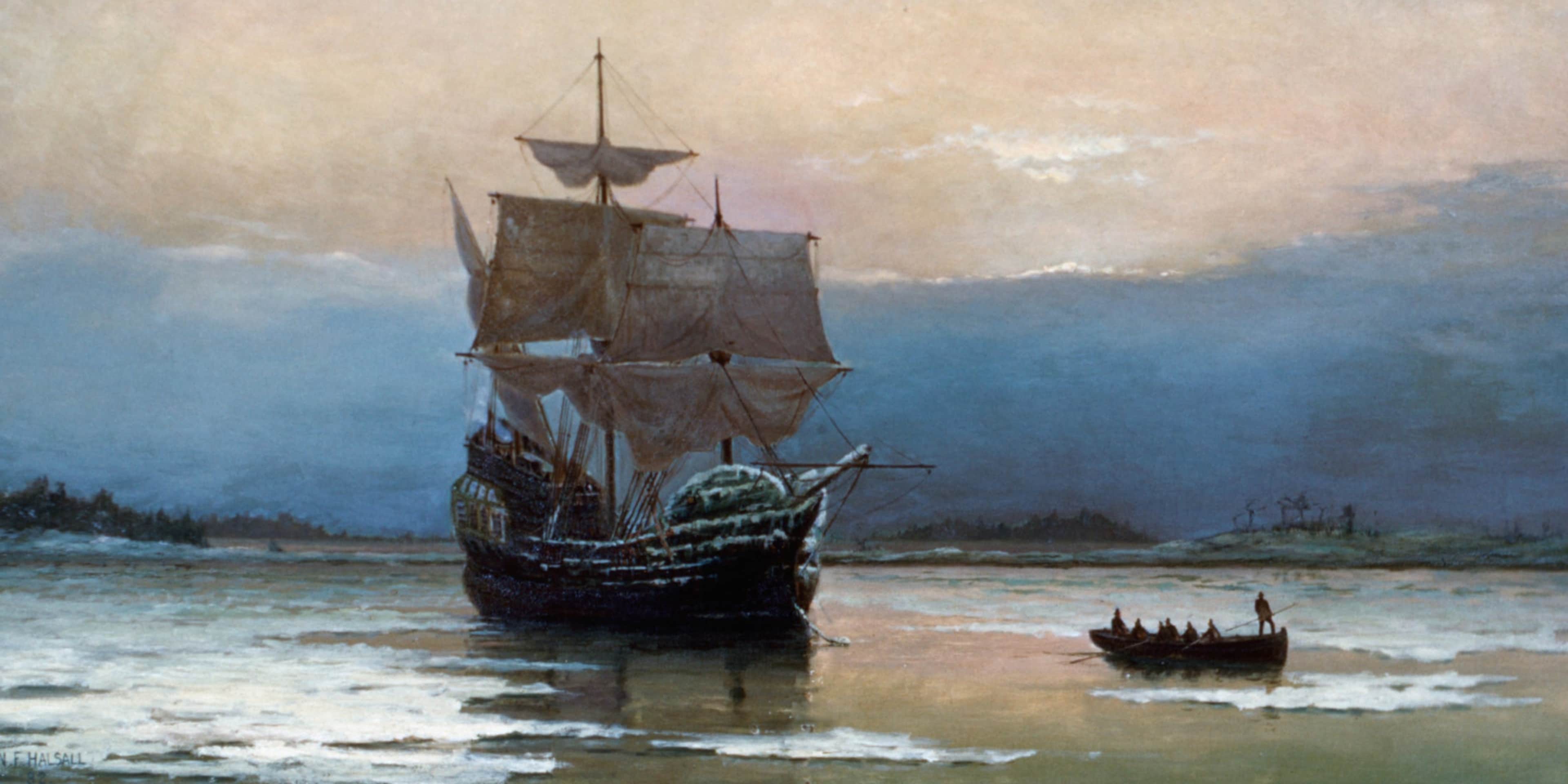
On November 21 (November 11 under the Julian calendar), 1620, the crew sighted land at Cape Cod. Realizing they were far north of their intended destination near the Hudson River and lacking the authority of their Virginia patent, Captain Jones attempted to sail south, but dangerous shoals and shifting winds forced them to turn back. They dropped anchor in what is now Provincetown Harbor, Massachusetts.
The Mayflower Compact: A Foundation of Democracy
Finding themselves outside the jurisdiction of the Virginia Company, several of the secular ‘Strangers’ began to voice mutinous sentiments, arguing that since they were landing in an uncharted territory with no legal charter, ‘none had power to command them.’ To prevent anarchy and ensure the survival of the collective group, the leaders drafted a historic covenant.
Known today as the Mayflower Compact, this brief document was signed on November 21, 1620, by 41 of the adult male passengers onboard. By signing, they agreed to ‘covenant and combine ourselves together into a civil Body Politick’ and to enact ‘just and equal Laws’ for the general good of the colony, promising ‘all due Submission and Obedience.’ The Compact was a groundbreaking precedent: it established a government based on the consent of the governed, rather than the divine right of kings. Although they maintained their loyalty to King James I, this early covenant became a foundational pillar of American self-rule and democratic philosophy.
The Grim First Winter and the Wampanoag Alliance
After exploring the coast of Cape Cod, the colonists selected a site for their settlement, naming it Plymouth after the English port they had left behind. The timing could not have been worse; they arrived at the onset of a brutal New England winter. Lacking proper shelter on land, the colonists spent the winter living onboard the cramped, freezing Mayflower.
This period, known as the ‘Great Sickness,’ saw the colony decimated by scurvy, pneumonia, tuberculosis, and exposure. At its worst, only a handful of healthy colonists remained to care for the dying. Of the 102 passengers, more than half perished before the spring of 1621. The tragedy was particularly devastating for the women: of the 19 adult women who boarded the Mayflower, only five survived the winter.
The colony’s survival was hanging by a thread when, in March 1621, an Indigenous man named Samoset walked boldly into the settlement, greeting them in English. Samoset, an Abenaki sachem who had learned English from European fishermen, returned shortly after with Tisquantum, better known as Squanto. Squanto was a Patuxet Wampanoag who had been kidnapped years earlier by an English captain, sold into slavery in Spain, escaped to London, and eventually made his way back home, only to find his entire village wiped out by an epidemic.
Squanto, speaking fluent English, became an invaluable guide and translator. He taught the struggling English settlers how to plant local crops like maize (corn), beans, and squash using fish as fertilizer, how to tap maple trees, and where to catch fish and hunt game. More importantly, Squanto facilitated a peace treaty between the Plymouth colonists and Massasoit (Ousamequin), the great sachem of the Wampanoag tribe. Facing threats from the rival Narragansett tribe, Massasoit saw a strategic military alliance with the gun-bearing English as a means to protect his people. This treaty of mutual defense and peace would endure for over half a century.
The First Thanksgiving: History vs. Myth
By the autumn of 1621, thanks to Wampanoag assistance, the colonists harvested a bountiful crop of corn and secured enough provisions for the coming winter. To celebrate their survival, Governor William Bradford organized a harvest feast, which we now remember as the ‘First Thanksgiving.’
While modern mythology often depicts a peaceful, highly idealized family dinner, the historical event was a three-day diplomatic and community festival. The colonists were joined by Massasoit and approximately 90 Wampanoag men, who brought five deer to the feast. The attendees feasted on wild fowl, venison, fish, and corn, engaging in military drills and games of skill. This event served to solidify the political and military alliance between the two distinct cultures, though the long-term history of settler expansion would eventually bring devastating conflict to the region.
Key Figures of the Plymouth Colony
- William Bradford: A dedicated leader of the Separatists who served as the Governor of Plymouth Colony for over thirty years. His detailed journal, Of Plimoth Plantation, remains the most complete historical record of the Mayflower voyage and the early years of the settlement.
- John Carver: The chief organizer of the voyage and the first Governor of Plymouth Colony. He was a primary architect of the Mayflower Compact but tragically died during the first spring of 1621.
- Myles Standish: An English military officer hired by the Pilgrims to serve as their military advisor. He designed the colony’s defenses and led several exploration and defense missions.
- Massasoit (Ousamequin): The grand sachem of the Wampanoag Confederacy. His diplomatic vision and commitment to peace allowed both his people and the early English settlers to survive and coexist during a period of massive demographic upheaval.
Long-Term Impact on America and the Indigenous Narrative
Over the decades, Plymouth Colony grew steadily, though it was eventually absorbed into the larger, more powerful Puritan Massachusetts Bay Colony in 1691. Yet, the legacy of the Mayflower remained central to the American identity. The Mayflower Compact acted as a spiritual and practical predecessor to the U.S. Constitution, demonstrating that a self-governing community could successfully draft its own laws and govern by consent.
However, the long-term impact on the Indigenous peoples was catastrophic. The peace established by Massasoit and Bradford eroded as generations of settlers arrived, hungry for land. By 1675, relations had disintegrated into King Philip’s War, one of the deadliest conflicts per capita in American history, resulting in the near-devastation of the Wampanoag and other local Native tribes. Modern historians and Indigenous advocates emphasize the importance of viewing the Mayflower story not just as a triumphant tale of European discovery, but as the beginning of a complex, tragic era of colonization and cultural survival.
Fascinating and Lesser-Known Facts About the Mayflower
- The Speedwell’s Sabotage: Historians suspect that the crew of the Speedwell may have intentionally caused the ship to leak. Eager to back out of a dangerous, multi-year voyage to the New World, they reportedly over-masted the ship, causing the hull to twist and leak under full sail.
- The Ship was a Wine Carrier: Before its famous voyage, the Mayflower was primarily used to transport French wine and cognac. The residual acidic wine fumes and spills inside the cargo hold are believed to have helped sanitize the ship, killing harmful molds and bacteria, which may have saved many passengers from deadly diseases during the crossing.
- The Famous Name Came Much Later: The Separatists who founded Plymouth did not call themselves ‘Pilgrims’. They referred to themselves as ‘Saints’ and the other passengers as ‘Strangers’. The term ‘Pilgrims’ did not gain widespread popularity until the late 18th century, particularly around the time of the colony’s bicentennial celebrations.
Why It Still Matters Today
The Mayflower voyage continues to resonate because it addresses fundamental questions about the American experiment. How do distinct communities build a shared society from scratch? What are the responsibilities of citizens under a self-governing covenant? In a modern, highly pluralistic society, the Mayflower story invites us to examine both the democratic ideals laid down in the Mayflower Compact and the profound, often tragic consequences of early European colonization on Indigenous peoples. It is a story of resilience, alliance, and conflict that remains at the core of the ongoing American dialogue.
People Also Ask (FAQ)
Who actually signed the Mayflower Compact?
The Mayflower Compact was signed by 41 adult male passengers aboard the ship, including prominent figures like John Carver, William Bradford, Edward Winslow, and Myles Standish. No women or children signed the document, in accordance with the legal and social customs of the 17th century.
What is the difference between Pilgrims and Puritans?
While both groups were English Protestants who objected to the practices of the Church of England, they had different approaches. The Pilgrims and Puritans differed in that the Pilgrims (Separatists) believed the Church of England was beyond reform and sought to break away completely. The Puritans wanted to remain within the church and ‘purify’ it from the inside out. The Puritans eventually founded the much larger Massachusetts Bay Colony in 1630.
How many passengers survived the first winter in Plymouth?
Out of the 102 passengers who arrived on the Mayflower, only 53 survived the devastating winter of 1620-1621. Disease, malnutrition, and exposure killed nearly half of the settlers, with women being the hardest hit; only five of the nineteen adult women survived.
Conclusion
The journey of the Mayflower and the establishment of Plymouth Colony remain some of the most pivotal milestones in early American history. It is a narrative of extraordinary human endurance, the birth of early democratic ideals through the Mayflower Compact, and a profound cultural encounter that reshaped the North American continent. By examining this history in its full, multifaceted truth—celebrating the early triumphs of self-government while honoring the complex history of the Indigenous Wampanoag people—we gain a deeper, more honest understanding of the foundations upon which modern America was built.


