In the spring of 1607, three English ships carrying 104 men and boys sailed into the Chesapeake Bay, hoping to establish a highly profitable empire in the New World. Supported by the Virginia Company, these initial Jamestown settlers sought gold, glory, and a passage to the Orient, dreaming of wealth that would rival the Spanish Empire. However, the reality of the Virginia wilderness was unforgiving, and the settlers soon found themselves utterly unprepared for the trials ahead. By the winter of 1609–1610, a period famously known as the Starving Time, the colony was brought to the brink of complete annihilation. Trapped inside James Fort, surrounded by defensive Powhatan forces, and deprived of food, the desperate colonists were forced to resort to survival cannibalism, eating horses, dogs, leather, and eventually, the corpses of their fellow settlers. For centuries, reports of this horrific desperation were dismissed by historians as mere propaganda or sensationalism. Yet, modern forensic archaeology has revealed a darker truth, providing uncontestable evidence of these gruesome survival tactics. This is the harrowing story of how the very first permanent English settlers in North America ate the dead to survive.
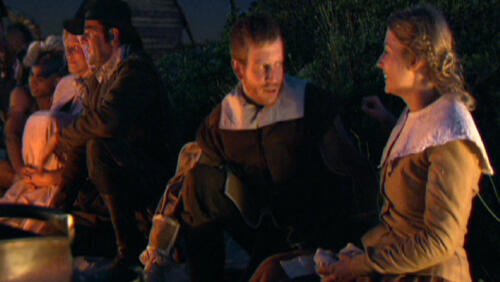
The Grim Reality Behind the Jamestown Dream
The founding of Jamestown on May 14, 1607, marks a pivotal moment in American history. Funded by wealthy investors of the Virginia Company, the expedition was driven by mercantilist competition. However, the choice of location was deeply flawed. The settlers constructed James Fort on a marshy peninsula off the James River, a site selected primarily for its defensive advantages against Spanish warships. Unfortunately, the swampy environment was a breeding ground for mosquitoes carrying malaria, and the water was brackish and highly contaminated. Furthermore, the early settlers were largely gentlemen who considered manual labor beneath them, along with a few artisans, leaving the colony severely lacking in skilled farmers. This structural dysfunction made a sustainable food supply nearly impossible without aid. To understand the broader context of this historic endeavor, one must look at the overall Jamestown colony history, which is characterized by a series of miscalculations, political strife, and extreme environmental struggles.
Timeline of a Catastrophe: 1607 to 1610
To comprehend how the colony deteriorated into absolute desperation, we must examine the chronological sequence of events that culminated in the winter of 1609–1610:
- May 1607: The Susan Constant, Godspeed, and Discovery land at Jamestown with 104 colonists.
- Winter 1607–1608: Only 38 of the original settlers survive due to disease, food shortages, and conflict with the Powhatan people. Captain John Smith takes control of the colony.
- September 1608: Smith is elected president of the council and institutes his famous “no work, no food” policy, stabilizing the colony and enforcing trade with the Powhatan Confederacy.
- August 1609: A massive hurricane scatters a third supply fleet. One key vessel, the Sea Venture, is shipwrecked on Bermuda, while other ships arrive in Jamestown without adequate food, dumping hundreds of sick and hungry new colonists into the struggling settlement.
- October 1609: Captain John Smith is severely injured in a mysterious gunpowder explosion and returns to England, leaving the colony leaderless.
- November 1609 to May 1610: The Starving Time occurs. Chief Powhatan places James Fort under siege, cutting off trade and trapping the settlers inside.
- May 1610: The survivors of the Sea Venture finally arrive from Bermuda on two makeshift ships, finding only 60 emaciated survivors out of the 500 colonists who were alive just eight months earlier.
Key Figures of the Starving Time
Several individuals played critical, contrasting roles during this period, shaping the destiny of the colony and documenting its darkest hour. Understanding their perspectives reveals what life was like in early Jamestown during its most challenging days.
- Captain John Smith: Smith’s aggressive trade tactics and military leadership maintained a fragile peace with local tribes. When he was forced to return to England, the colony lost its only effective liaison and disciplinarian, triggering a rapid collapse in order.
- Chief Powhatan (Wahunsenacawh): The supreme leader of the Powhatan Confederacy. Recognizing the English as an existential threat to his people’s land and resources, Powhatan ordered a total trade embargo and placed the fort under siege, effectively using starvation as a siege weapon.
- George Percy: Serving as the acting president of the colony during the Starving Time, Percy was tasked with managing a dying population. He penned the most famous, chilling firsthand accounts of the famine, describing how settlers dug up corpses from graves to survive.
- “Jane” (The Forensic Witness): Though her real identity remains a mystery, “Jane” is the name given to a 14-year-old girl whose bones were recovered from a trash pit in 2012. Her remains served as the first physical, incontrovertible proof that the Starving Time cannibalism actually occurred.
The Perfect Storm: Why the Starving Time Happened
The Starving Time was not the result of a single failure, but rather a catastrophic convergence of environmental, political, and social crises. First, scientific tree-ring data reveals that the settlers arrived in the midst of the worst regional drought in 800 years. This environmental disaster decimated the agricultural yields of both the English and the Powhatan, making the Native Americans highly reluctant to trade their scarce corn supplies.
Second, the political instability within James Fort was crippling. The sudden departure of John Smith left a power vacuum that George Percy struggled to fill. Without a strong military presence to deter them, Powhatan warriors took advantage of the colonists’ weakness. Any settler who ventured outside the wooden walls of James Fort to forage, hunt, or gather firewood was immediately ambushed and killed. The fort became a self-inflicted prison.
Finally, the arrival of the damaged third supply fleet worsened the situation exponentially. The ships arrived with hundreds of new mouths to feed but almost no provisions, as their supply ship had been lost. Within weeks, the meager reserves of the colony were entirely depleted, setting the stage for a winter of unprecedented horror.
The Forensic Proof: Unearthing “Jane”
For centuries, mainstream historians debated whether the written accounts of cannibalism in Jamestown were true or merely politically motivated embellishments designed to discredit the Virginia Company. Skeptics pointed to the sensationalized writing of George Percy and John Smith, both of whom had political axes to grind. However, in 2012, archaeologists from the Jamestown Rediscovery project made a shocking discovery in a 17th-century trash cellar inside James Fort.
Among the butchered remains of horses, dogs, and rats lay the fragmented skull and severed shinbone of a human female. Named “Jane” by researchers, the bones were sent to Dr. Douglas Owsley, the chief forensic anthropologist at the Smithsonian Institution’s National Museum of Natural History. Dr. Owsley’s analysis revealed a horrifying reality: the bones showed clear, post-mortem cut marks made by multiple sharp metal implements. Tentative chops to the forehead and forceful blows to the back of the skull indicated a desperate, amateurish attempt to open the cranium and extract the brain and facial tissue for consumption. Isotopic analysis showed that Jane was likely an English maidservant who had arrived on the ill-fated 1609 fleet, only to perish and be consumed by her starving companions.
Pivotal Turning Points: Abandonment and Unexpected Rescue
By May 1610, the colony had practically ceased to function. When Sir Thomas Gates arrived from Bermuda with the survivors of the Sea Venture, he was horrified to find only 60 skeletal survivors clinging to life inside the filthy, decaying fort. Realizing that the settlement was completely untenable, Gates made the difficult decision to abandon Jamestown entirely. On June 7, 1610, the remaining settlers boarded four small ships, bid farewell to the wretched fort, and began sailing down the James River toward the Atlantic, intending to return to England.
However, the course of American history changed overnight. As they neared the mouth of the river, they encountered an advancing fleet commanded by the newly appointed governor, Lord De La Warr (Thomas West). De La Warr brought fresh supplies, 150 brand-new settlers, and a strict military regime. He ordered the fleeing colonists to turn around and reoccupy Jamestown. This extraordinary coincidence prevented the permanent collapse of the English presence in Virginia, turning a moment of total defeat into a renewed, albeit brutal, colonial campaign.
The Long-Term Legacy: From Tragedy to Empire
The survival of Jamestown changed the geopolitical landscape of the world. Had the colony been abandoned, the French, Spanish, or Dutch might have consolidated control over the mid-Atlantic coast. Instead, De La Warr’s harsh reforms and the subsequent introduction of Spanish tobacco seeds by John Rolfe in 1612 transformed Jamestown into a highly lucrative commercial enterprise. Tobacco cultivation became the economic engine of Virginia, establishing the plantation system that would dominate the American South for centuries.
Furthermore, the lessons learned from the Starving Time forced the English to abandon their dreams of finding gold and instead focus on establishing structured, self-sufficient communities. This hard-won stability eventually led to the creation of the House of Burgesses in 1619, laying the earliest groundwork for representative democracy in America. Regrettably, this success came at a devastating cost to the indigenous populations, as the expanding tobacco plantations led to systematic land theft and violent conflicts that decimated the Powhatan Confederacy.
Lesser-Known Facts of Early Jamestown
The history of Jamestown is filled with bizarre and surprising details that are often omitted from textbooks. If you are intrigued by these unusual historical events, you can explore more 10 things you may not know about the Jamestown colony to discover the sheer complexity of this settlement.

- The “Powdered Wife” Incident: One of the most infamous stories from the Starving Time involved a colonist who murdered his pregnant wife, salted her remains (a preservation technique known as “powdering”), and ate her. Upon discovery, he was executed by his fellow settlers, a testament to the fact that even in absolute desperation, the colony tried to maintain a semblance of legal order.
- Poison in the Water: Modern hydrology studies show that during the summer and winter droughts, the James River’s flow decreased, allowing ocean saltwater to creep upriver. This created a ‘salinity trap’ at Jamestown, meaning the settlers were unknowingly drinking brackish, feces-contaminated water that caused salt poisoning, dysentery, and severe mental confusion, which likely worsened their desperate decision-making.
- The Sea Venture Miracle: The shipwreck of the supply fleet’s flagship, the Sea Venture, on the uninhabited island of Bermuda actually inspired William Shakespeare’s famous play, The Tempest.
Why the Jamestown Desperation Matters Today
The tragic story of the Jamestown Starving Time remains a vital case study in human resilience, environmental vulnerability, and the ethics of survival. It serves as a stark reminder of what happens when human societies are pushed past their absolute ecological and social limits. Today, the ongoing archaeological excavations at Historic Jamestowne continue to reveal new truths, bridging the gap between historical literature and cold, physical reality. It challenges us to reflect on the immense sacrifices, moral compromises, and sheer fortuity that shaped the foundational years of the American experience.
People Also Ask
Why did the Jamestown settlers starve?
The settlers starved due to a combination of severe drought, lack of agricultural skills, a hostile siege by the Powhatan Confederacy that trapped them inside the fort, and the arrival of a supply fleet that brought hundreds of new colonists without any food provisions.
Is there physical proof of cannibalism in Jamestown?
Yes. In 2012, archaeologists discovered the butchered remains of a 14-year-old girl, dubbed “Jane.” Forensic analysis by the Smithsonian Institution confirmed that her skull and shinbone had post-mortem cuts and chops consistent with survival cannibalism.
Who was in charge during the Starving Time?
George Percy was the acting president of the colony’s council during the winter of 1609–1610, having taken over after Captain John Smith was injured and returned to England.
Conclusion
The harrowing winter of 1609–1610 at Jamestown was a period of unimaginable suffering, where the boundaries of human morality were pushed to their absolute limits. Driven by starvation and trapped by conflict, the surviving settlers did the unthinkable, eating the dead to keep the flame of the first permanent English colony alive. Today, the legacy of Jamestown stands not just as a tale of colonial expansion, but as a deeply human story of survival against all odds, validated by modern science and etched forever into the bedrock of American history.


