The Declaration of Independence is arguably the most famous and influential secular document in modern history. Adopted during the scorching Philadelphia summer of 1776, this single piece of parchment did far more than formalize a political separation from Great Britain; it boldly articulated a revolutionary vision of human rights and self-governance. Today, we look back at the Declaration of Independence as the foundational cornerstone of the United States, yet the actual history of how it was conceived, debated, and preserved is shrouded in popular myths and historical misconceptions. Far from a seamless, unanimous agreement, the document emerged from fierce political debates, deep-seated anxieties, and a fragile coalition of delegates who risked their lives for treason against the British Crown. Understanding the complex realities behind this iconic birth certificate of America reveals a deeply human, messy, and courageous process. In this exploration, we dive into the lesser-known historical truths, the crucial moments of the Second Continental Congress, and nine surprising facts that change how we view the birth of a nation.
The Historical Background: A Path Paved with Conflict
By the time the Second Continental Congress convened in Philadelphia in May 1775, the relationship between Great Britain and the 13 colonies had deteriorated past the point of easy reconciliation. Armed skirmishes had already erupted at Lexington and Concord in April of that year, signaling that the cold war of political protest had turned hot. Yet, despite the bloodshed, total independence was not yet a foregone conclusion. Many colonial leaders and citizens still hoped for reconciliation with King George III, viewing themselves as loyal British subjects fighting merely for their constitutional rights as Englishmen.
The primary catalysts for the final break were rooted in decades of economic exploitation, political disenfranchisement, and military escalation. Following the French and Indian War, the British Parliament sought to recoup its war debts by levying unprecedented taxes on the colonies without granting them representation in Parliament. Landmark acts, such as the Stamp Act and the Tea Act, combined with the coercive “Intolerable Acts,” fostered a growing sense of unified resistance. Thomas Paine’s publication of Common Sense in January 1776 acted as a massive spark, presenting a lucid, persuasive argument for independence that resonated with both elite politicians and everyday citizens alike.
Key Timeline: The Road to July 4, 1776
The transition from colonial resistance to sovereign independence was a deliberate and structured process. Below is the chronological breakdown of how the historic document was realized:
- June 7, 1776: Richard Henry Lee of Virginia introduces a resolution to the Continental Congress declaring that “these United Colonies are, and of right ought to be, free and independent States.”
- June 11, 1776: Congress appoints a “Committee of Five”—consisting of Thomas Jefferson, John Adams, Benjamin Franklin, Roger Sherman, and Robert R. Livingston—to draft a formal declaration.
- July 2, 1776: The Second Continental Congress votes overwhelmingly in favor of Richard Henry Lee’s motion for independence, with 12 of the 13 colonies voting “yes” and New York abstaining.
- July 4, 1776: After days of rigorous debate and editing, Congress officially adopts the final text of the Declaration of Independence.
- July 9, 1776: The New York provincial congress officially votes to support the Declaration, aligning all 13 colonies.
- August 2, 1776: The formal, handwritten parchment copy (the engrossed version) is signed by the majority of the congressional delegates.
The Prominent Figures of the Revolution
The creation and implementation of the Declaration of Independence relied heavily on a handful of crucial figures, each playing a distinct, irreplaceable role:
- Thomas Jefferson: Serving as the primary draftsman, Jefferson infused the document with the philosophical ideals of the European Enlightenment, particularly the concepts of natural rights popularized by John Locke. His masterful prose transformed a political resolution into an immortal treatise on human dignity.
- John Adams: Known as the “Atlas of Independence,” Adams was the fierce debater who tirelessly championed the cause on the Congress floor, convincing skeptical delegates that a complete break with Britain was not only necessary but inevitable.
- Benjamin Franklin: As the senior statesman and diplomat, Franklin added vital editorial polish to Jefferson’s draft, famously changing Jefferson’s phrase “We hold these truths to be sacred and undeniable” to the far more direct and powerful “We hold these truths to be self-evident.”
- John Hancock: As the President of the Second Continental Congress, Hancock was the first to sign the document. His large, stylish signature became a defiant symbol of revolution, legendarily written large enough so “King George could read it without his spectacles.”
These figures reflected the surprising diversity of the early American colonies, representing various regional interests, theological beliefs, and philosophical backgrounds, all uniting under a singular, perilous cause.
9 Surprising Facts About the Declaration of Independence
While the broader strokes of the American Revolution are well-documented, these nine surprising details shed light on the lesser-known realities of this iconic text:
1. Independence Was Voted on July 2, Not July 4
Though Americans celebrate their nation’s birth on July 4, the decisive vote for independence actually occurred two days prior, on July 2. John Adams was so convinced that July 2 would go down in history that he wrote to his wife, Abigail, predicting that future generations would celebrate the date with fireworks, parades, and massive bonfires. July 4 was simply the date when Congress formally adopted the specific, edited text of the document.
2. The Majority of Delegates Signed on August 2
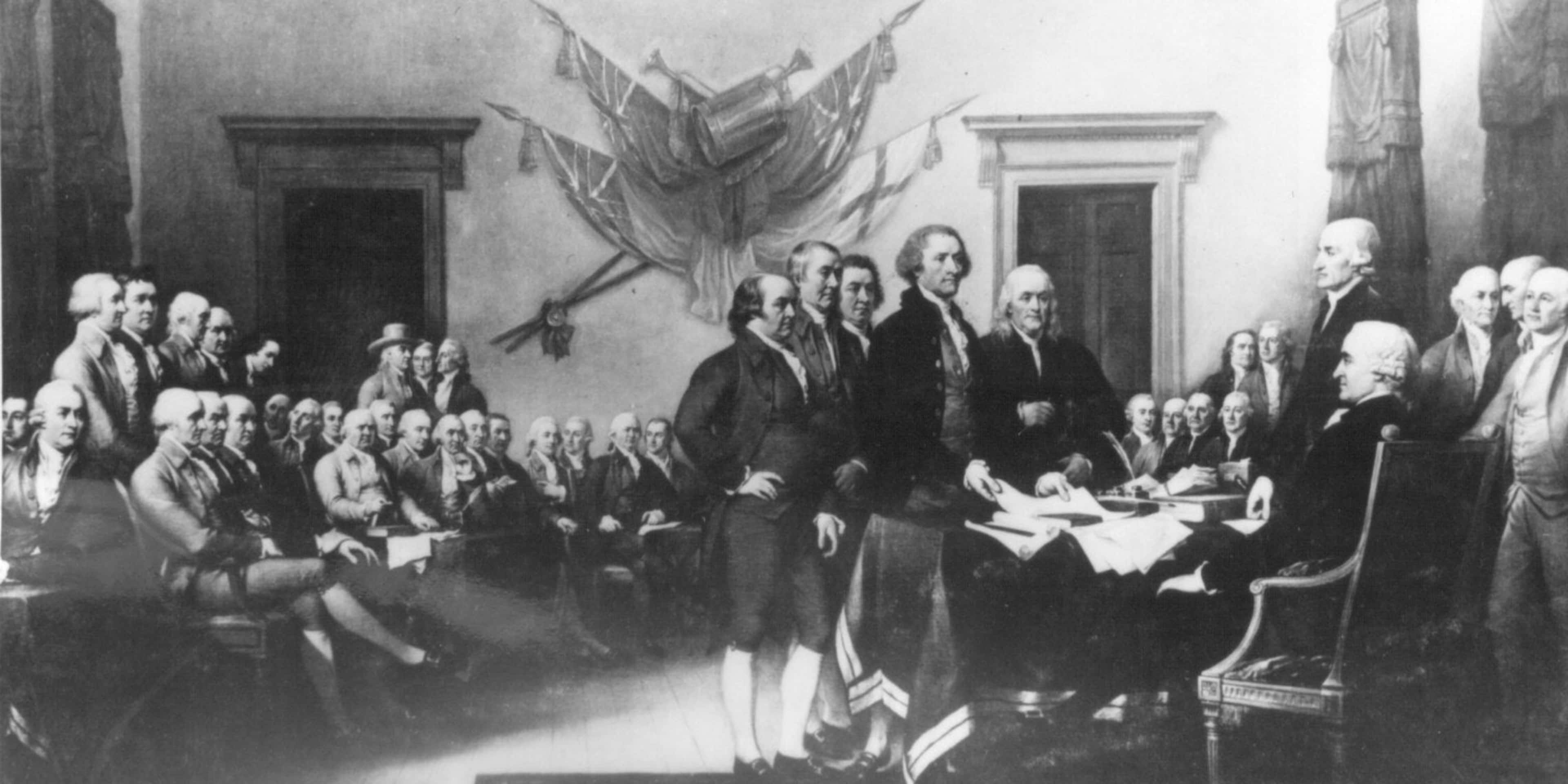
Contrary to popular belief and romantic paintings depicting a grand, unanimous signing ceremony on July 4, the physical signing did not take place that day. It took nearly a month for the document to be “engrossed”—beautifully handwritten on animal parchment. The formal signing occurred on August 2, 1776. Several delegates who were absent signed even later, while two prominent delegates, John Dickinson and Robert R. Livingston, never signed it at all.
3. The Original “Dunlap Broadsides” Predate the Signed Parchment
Immediately after adopting the text on July 4, the Committee of Five took the manuscript to Philadelphia printer John Dunlap. On the night of July 4, Dunlap printed hundreds of copies—known as “Dunlap broadsides”—to be dispatched to colonial assemblies, newspapers, and the military. These printed broadsides represent the very first official public version of the Declaration. Today, only 26 of these rare documents are known to have survived.
4. New York’s Delegation Was Late to Vote
During the historic vote on July 2, New York was the only colony to abstain. The New York delegates were in favor of independence personally, but their home assembly in New York had not yet given them the official authority to vote. It was not until July 9, after receiving permission from home, that New York officially cast its supporting vote, making the declaration fully unanimous.
5. A Royal Statue Was Melted Down for Bullets
When the Declaration of Independence was read aloud to George Washington’s troops in New York City on July 9, 1776, it sparked a raucous celebration. Driven by revolutionary fervor, a crowd of soldiers and citizens marched to Bowling Green and pulled down a massive lead statue of King George III on horseback. The lead was subsequently melted down and molded into more than 42,000 musket balls to be used against the incoming British army.
6. Eight of the Signers Were Foreign-Born
While the vast majority of the 56 signers were born in North America, eight of them were born across the Atlantic in the United Kingdom. This group included two born in England (Button Gwinnett and Robert Morris), one in Wales (Francis Lewis), two in Scotland (James Wilson and John Witherspoon), and three in Ireland and Northern Ireland (George Taylor, Matthew Thornton, and James Smith).
7. One Signer Recanted Under Duress
Richard Stockton, a lawyer and delegate from Princeton, New Jersey, holds the tragic distinction of being the only signer of the Declaration of Independence to recant his support. Captured by British forces in late 1776, Stockton was subjected to brutal prison conditions and starvation. To secure his release, a broken Stockton signed a statement repudiating his support for the American cause and swearing allegiance to King George III.
8. The Enormous Age Gap Between the Signers
The signers of the Declaration of Independence spanned several generations. The oldest man to sign was Benjamin Franklin, who was 70 years old and suffering from gout. The youngest was Edward Rutledge, a 26-year-old lawyer from South Carolina, who was just a few months younger than fellow South Carolinian Thomas Lynch Jr.
9. It Was Secretly Evacuated to Fort Knox During WWII
Following the Japanese attack on Pearl Harbor in December 1941, colonial documents in Washington, D.C. were deemed to be in immediate danger of foreign attack. The signed Declaration, along with the U.S. Constitution, was packed in a secure, custom-built container wrapped in 150 pounds of protective gear. Guarded by Secret Service agents, it was transported by train to Fort Knox, Kentucky, where it remained safely locked away in a secure vault until 1944.
The Long-Term Impact on America and the World
The immediate goal of the Declaration of Independence was to forge foreign alliances, specifically with France, by demonstrating that the colonies were serious about a total separation from Britain. However, its long-term impact stretched far beyond the battlefields of the Revolutionary War. It revolutionized global political philosophy, acting as a direct inspiration for the French Revolution’s Declaration of the Rights of Man and of the Citizen in 1789, as well as subsequent independence movements across Latin America, Asia, and Africa.
Domestically, the Declaration laid the ethical groundwork for America’s ongoing struggles for civil rights. Over time, the statement that “all men are created equal” was invoked by abolitionists like Frederick Douglass, women’s suffragists at the Seneca Falls Convention, and civil rights leaders like Martin Luther King Jr. to expose the hypocrisy of slavery and segregation, continually pushing the nation to live up to its founding creed. Understanding the evolving geography of the original 13 states highlights how this local colonial struggle transformed into a continent-spanning republic fueled by these universal ideals.
Why It Still Matters Today
In the modern era, the Declaration of Independence remains a living document rather than a dusty relic of the 18th century. It serves as a universal standard against which we measure the health of our democracy and our commitment to human rights. The concept that governments derive their “just powers from the consent of the governed” remains a vital touchstone in discussions about voting rights, representation, and the limits of executive power. It challenges each generation of Americans to ask: Are we truly securing the unalienable rights of life, liberty, and the pursuit of happiness for all people?
People Also Ask
Who actually wrote the Declaration of Independence?
While the draft was formally presented by the “Committee of Five,” Thomas Jefferson was selected to write the original text. Jefferson wrote the draft over several days in a rented room in Philadelphia, with subsequent edits made by John Adams, Benjamin Franklin, and the wider Continental Congress.
Was the Declaration of Independence signed on July 4?
No. While the text was adopted on July 4, 1776, the official parchment document was signed by most of the delegates on August 2, 1776, after it had been formalised and beautifully handwritten onto parchment.
Where is the original Declaration of Independence located today?
The original, signed parchment copy of the Declaration of Independence is on permanent public display in the Rotunda for the Charters of Freedom at the National Archives in Washington, D.C., displayed alongside the Constitution and the Bill of Rights.
Conclusion
The Declaration of Independence remains a monumental testament to the power of ideas. From its turbulent drafting and narrow escapes during wartime to its lasting legacy as a global beacon of freedom, the story of this document is a reminder that the United States was founded on a daring philosophical promise. By understanding the historical realities and surprising truths behind its creation, we gain a deeper appreciation for the fragile, revolutionary spark that lit the path toward modern democracy.


