In the painful aftermath of the American Civil War and the devastating collapse of Reconstruction, thousands of newly freed Black Americans faced a grim reality in the American South. Stripped of their newly acquired political rights, terrorized by white supremacist groups, and trapped in economic bondage through sharecropping, they sought a path to true liberation. This yearning for self-determination culminated in the late 1870s and early 1880s with the ‘Great Exodus’—a mass migration of up to 40,000 African Americans to the Great Plains, primarily Kansas. At the heart of this historic movement was Benjamin ‘Pap’ Singleton, a charismatic and determined formerly enslaved man who styled himself as the ‘Black Moses.’ By offering a vision of land ownership and racial autonomy, Singleton became a pivotal catalyst in early African American migration. Understanding his crusade and the journey of the ‘Exodusters’ provides an essential window into the enduring struggle for civil rights, demonstrating how marginalized groups shaped the geography and moral landscape of the American West.
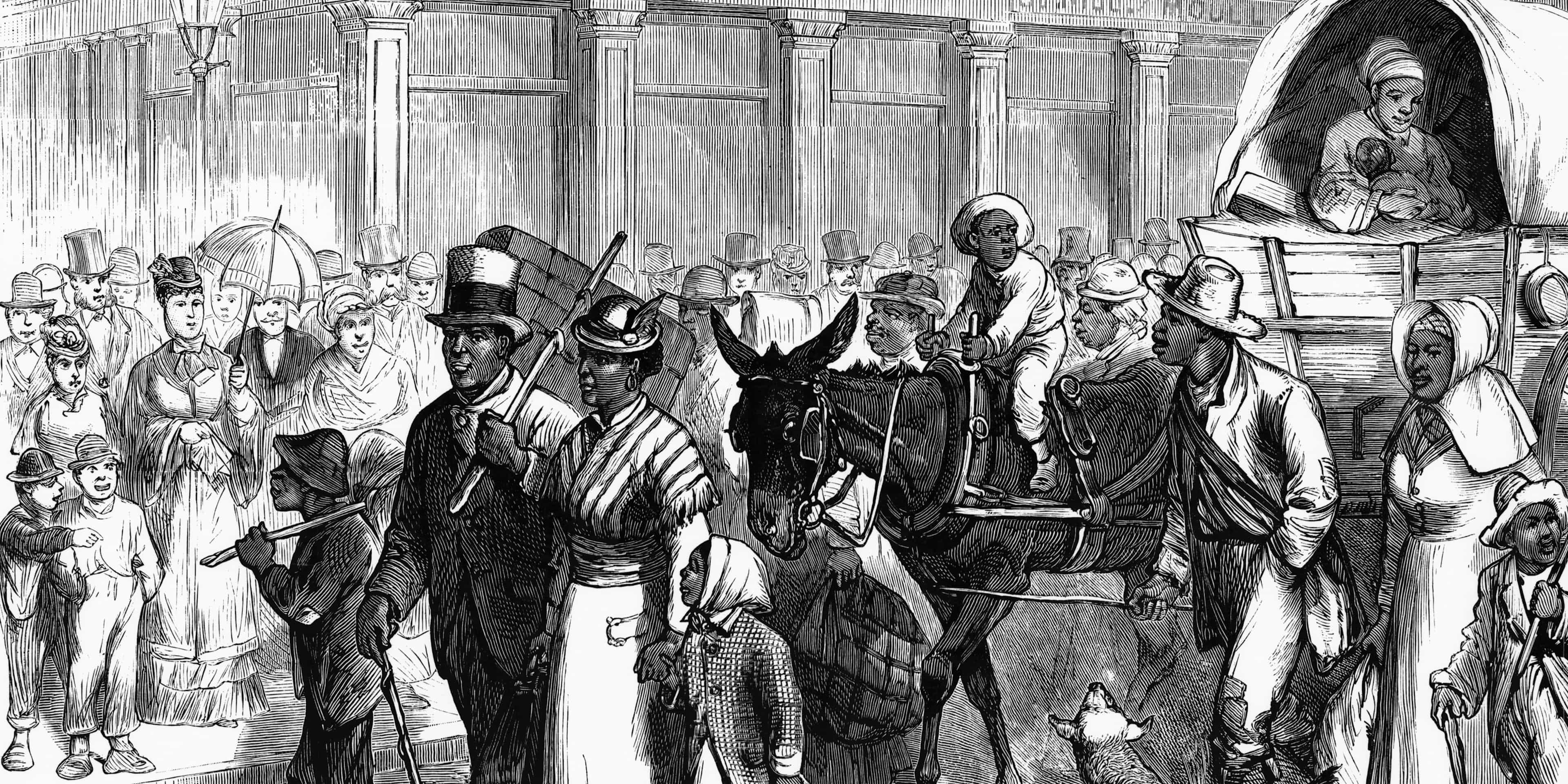
The Collapse of Reconstruction and the Call of the West
To understand the Exoduster movement, one must examine the turbulent period of post-Civil War Reconstruction (1865–1877). Initially, the era promised radical change: the passage of the 13th, 14th, and 15th Amendments represented great strides for freedom in U.S. history, dismantling the institution of slavery and extending citizenship and voting rights to Black men. However, the federal government’s commitment to protecting these rights evaporated with the Compromise of 1877, which withdrew federal troops from the South.
Without federal enforcement, Southern white Democrats quickly regained political dominance. They passed restrictive ‘Black Codes’ and systematically rewrote state constitutions to disenfranchise Black voters. Economically, freedpeople were coerced into exploitative sharecropping systems that closely mirrored the financial bondage of slavery. Facing escalating racial violence, including public lynchings and night rides by the Ku Klux Klan, Black families recognized that true freedom was impossible in the former Confederacy.
During this era, federalism allowed Southern states to implement laws that severely restricted Black advancement. The constitutional crisis created by Southern states violating federal amendments highlighted how the Founding Fathers divided power between states and federal governments, often leaving marginalized groups vulnerable to local tyranny when federal enforcement waned. This power vacuum forced Black families to seek their own solutions outside the South.
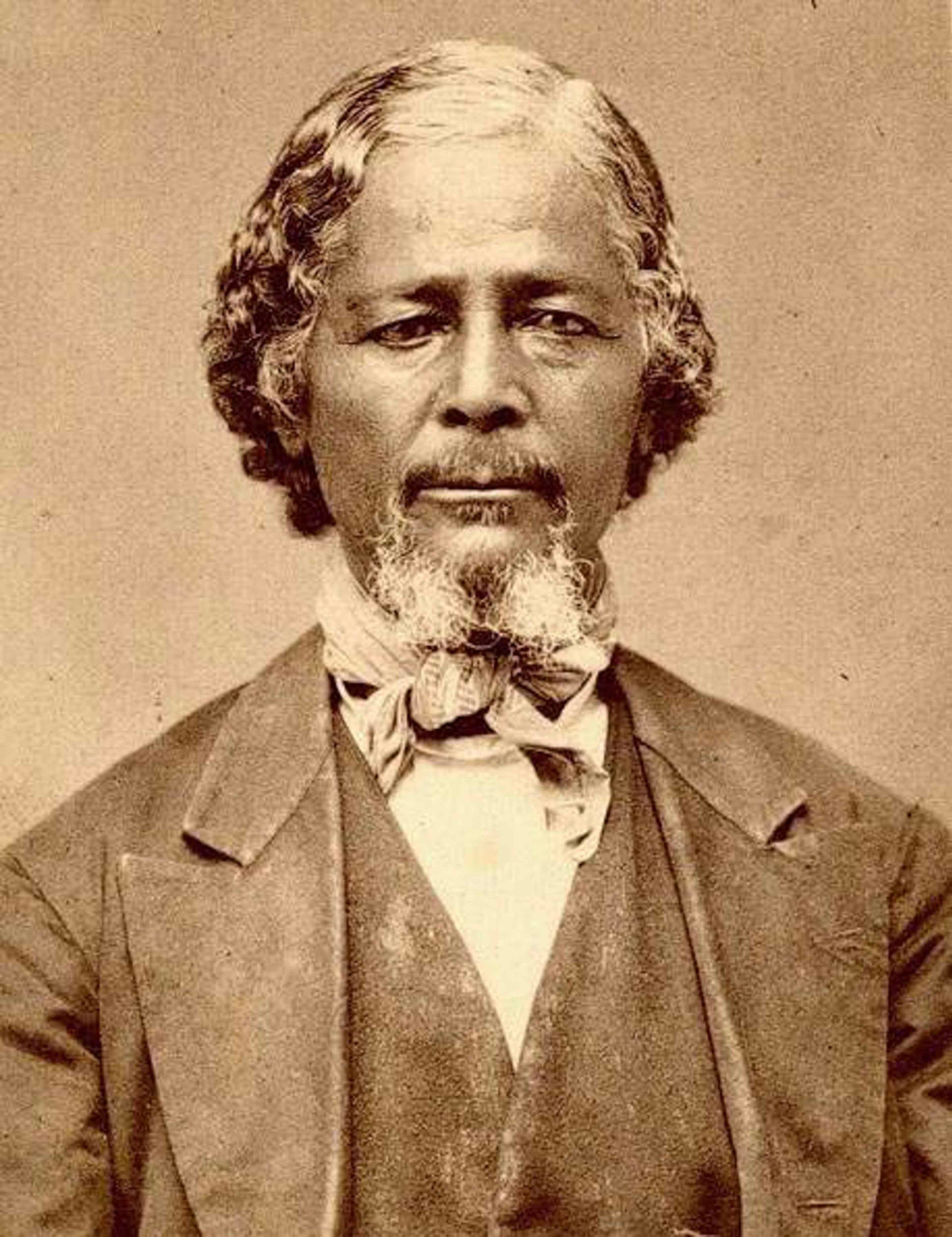
Who Was Benjamin ‘Pap’ Singleton?
Born into slavery in Nashville, Tennessee, in 1809, Benjamin ‘Pap’ Singleton spent much of his early life attempting to escape. After multiple unsuccessful attempts, he successfully fled to Canada and later settled in Detroit, Michigan, where he ran a boarding house that welcomed other fugitive slaves. During this time, he watched other pioneers, such as Elizabeth Freeman, who sued for her freedom, pave early legal pathways to liberty, but Singleton believed that physical relocation and geographic autonomy were the ultimate solutions for his people.
After the Civil War, Singleton returned to Tennessee, hoping to acquire land for Black farmers. However, he quickly realized that Southern whites refused to sell productive land to Black buyers at fair prices. Convinced that racial cohabitation in the South was an impossibility, Singleton turned his gaze westward. He envisioned establishing independent Black colonies where African Americans could farm, build businesses, and govern themselves free from white supremacy. To accomplish this, he co-founded the Edgefield Real Estate and Homestead Association in 1878 to organize and finance mass migration.
Why Kansas? The Promised Land of the Plains
Kansas held a near-mythic status in the minds of Black Americans. Decades earlier, the territory had been the violent battleground known as ‘Bleeding Kansas,’ where abolitionists like John Brown fought to keep the soil free from the taint of slavery. It had also served as a crucial terminus for the Underground Railroad.
Furthermore, the Homestead Act of 1862 provided a powerful economic incentive, offering 160 acres of public land to any citizen who committed to farming it for five years. For families who had spent generations working land they could never own, the promise of fertile, cheap land in a state associated with freedom was irresistible.
Key Timeline of the Exoduster Movement
- 1862: President Abraham Lincoln signs the Homestead Act, laying the groundwork for Western settlement.
- 1873: Benjamin ‘Pap’ Singleton makes his first exploratory trip to Kansas to scout land for potential farming colonies.
- 1874: Singleton establishes the first Black settlement, the Singleton Colony, bringing 300 settlers to southeastern Kansas.
- 1877: Nicodemus, Kansas, is established by a coalition of Black ministers and developers, becoming the most famous all-Black town of the era.
- 1878: Singleton establishes the Dunlap Colony on the former Kansa Diminished Reservation, relocating hundreds of Tennesseans.
- 1879: The ‘Great Exodus of 1879’ peaks as up to 20,000 ‘Exodusters’ from Mississippi, Louisiana, and Texas flee the Deep South for Kansas.
- 1880: Singleton testifies before a U.S. Senate committee investigating the mass migration, boldly defending the rights of Black migrants to seek better lives.
The Harsh Realities and Tribal Displacements
The journey to Kansas was fraught with peril. Most Exodusters traveled by steamboat up the Mississippi River to St. Louis, Missouri. Lacking financial resources, thousands became stranded on the St. Louis docks, suffering from disease, hunger, and exposure. Private relief organizations, rather than state authorities, stepped in to prevent a humanitarian catastrophe.
Upon arriving in Kansas, the migrants faced challenges that tested their resolve. Much of the prime farmland had already been claimed, leaving them with dry, rocky, or less fertile parcels. Living conditions were primitive; many families spent their first winters in sod houses dug directly into the prairie earth. Furthermore, they did not escape racial prejudice. Local white communities often met the sudden influx of thousands of impoverished Black settlers with hostility, demanding segregated spaces and refusing to offer civic aid.
The establishment of these colonies also intersected with the complex history of Native American displacement. Singleton’s settlements, such as the Dunlap Colony, were founded on former Kansa Diminished Reservation lands, while other groups settled on former Cherokee lands. While the Exodusters sought refuge from oppression, their migration occurred within the broader context of federal policies that dismantled Indigenous reservations to make way for homesteaders.
The crisis sparked heated national debate. Prominent Black leader Frederick Douglass publicly opposed the exodus, arguing that mass migration was a ‘delusional scam’ that abandoned the fight for civil rights in the South and left Black people uprooted and vulnerable. Conversely, Singleton and other organizers maintained that leaving was the only way to guarantee physical survival and economic autonomy.
Lesser-Known Historical Facts
- The Coffin Maker’s Motivation: Before organizing the migration, Singleton worked as a cabinet maker and coffin builder in Nashville during Reconstruction. Building coffins for Black victims of racial violence cemented his belief that Black and white Americans could not live peacefully together in the South.
- Exclusion of “Loafers” and Politicians: Singleton was incredibly selective about who he invited to his colonies. His circulars explicitly stated that he wanted hardworking, practical ‘good citizens,’ specifically banning politicians, elite intellectuals, and ‘loafers,’ whom he believed would corrupt the work ethic of the communities.
- The Back-to-Africa Shift: Later in his long life, as the Kansas colonies struggled and local prejudice increased, Singleton lost faith in America altogether. He turned his efforts toward organizing international migration, supporting movements to relocate Black Americans to Liberia or Cyprus.
Long-Term Impact on America
The Exoduster movement fundamentally altered the demography and culture of the American West. Black settlers established successful communities, built churches, founded newspapers, and created robust educational networks. Nicodemus, Kansas, stands today as a National Historic Site, preserving the legacy of these brave pioneers. Furthermore, the migration forced the federal government to confront the severe failures of Reconstruction, highlighting the deep structural flaws in how civil rights were protected across state lines.

Why the Exoduster Legacy Matters Today
Today, the story of ‘Pap’ Singleton and the Exodusters remains highly relevant. It represents the first massive, self-directed migration of African Americans out of the South, foreshadowing the Great Migration of the 20th century. It challenges the traditional, Eurocentric narrative of Western expansion by centering Black agency and ambition. Understanding this history helps us contextualize modern struggles for voting rights, economic equity, and geographic justice, serving as a powerful reminder of the lengths to which human beings will go to secure their fundamental liberties.
People Also Ask (FAQ)
Who were the Exodusters?
The Exodusters were African Americans who migrated from states along the Mississippi River to Kansas, Oklahoma, and Colorado during the late 1870s to escape post-Reconstruction racial oppression and secure land under the Homestead Act of 1862.
Why did Benjamin ‘Pap’ Singleton call himself the ‘Black Moses’?
Singleton believed he was chosen by God to lead his people out of the ‘bondage’ of the American South and into the ‘New Canaan’ of the American West, drawing parallels to the biblical story of Exodus.
Was the Exoduster migration successful?
While many migrants struggled with harsh weather, poor soil, and local prejudice, many successfully built thriving autonomous communities, schools, and churches that lasted for generations. Towns like Nicodemus, Kansas, became symbols of Black self-sufficiency.
Conclusion
Benjamin ‘Pap’ Singleton’s crusade was a bold, imperfect, and courageous attempt to carve out a space of safety and dignity for Black Americans. While the realities of the Kansas frontier rarely matched the idyllic promises of his promotional pamphlets, the Exodusters demonstrated extraordinary resilience. Their legacy survives not only in the historic towns they founded but in the enduring American story of seeking freedom against all odds.


