The story of the American Revolution is often painted in broad, heroic strokes of liberty, constitutional rights, and patriotic valor. Yet, beneath the grand narratives of founding fathers lies the deeply complex and tragic reality of the marginalized soldiers who bled for a freedom they were systematically denied. Among these forgotten heroes, Jude Hall stands out as a towering figure of resilience. Born into slavery in New Hampshire, Hall served as a formidable Black Revolutionary War soldier, enduring some of the conflict’s bloodiest campaigns only to return home to a nation that could not—or would not—protect his own children from the predatory reach of human traffickers. His life encapsulates the profound contradictions of early America, where the fight for national independence existed alongside the brutal, daily threat of enslavement for free Black families.
Historical Background: From Slavery in Kensington to the Vanguard of Liberty
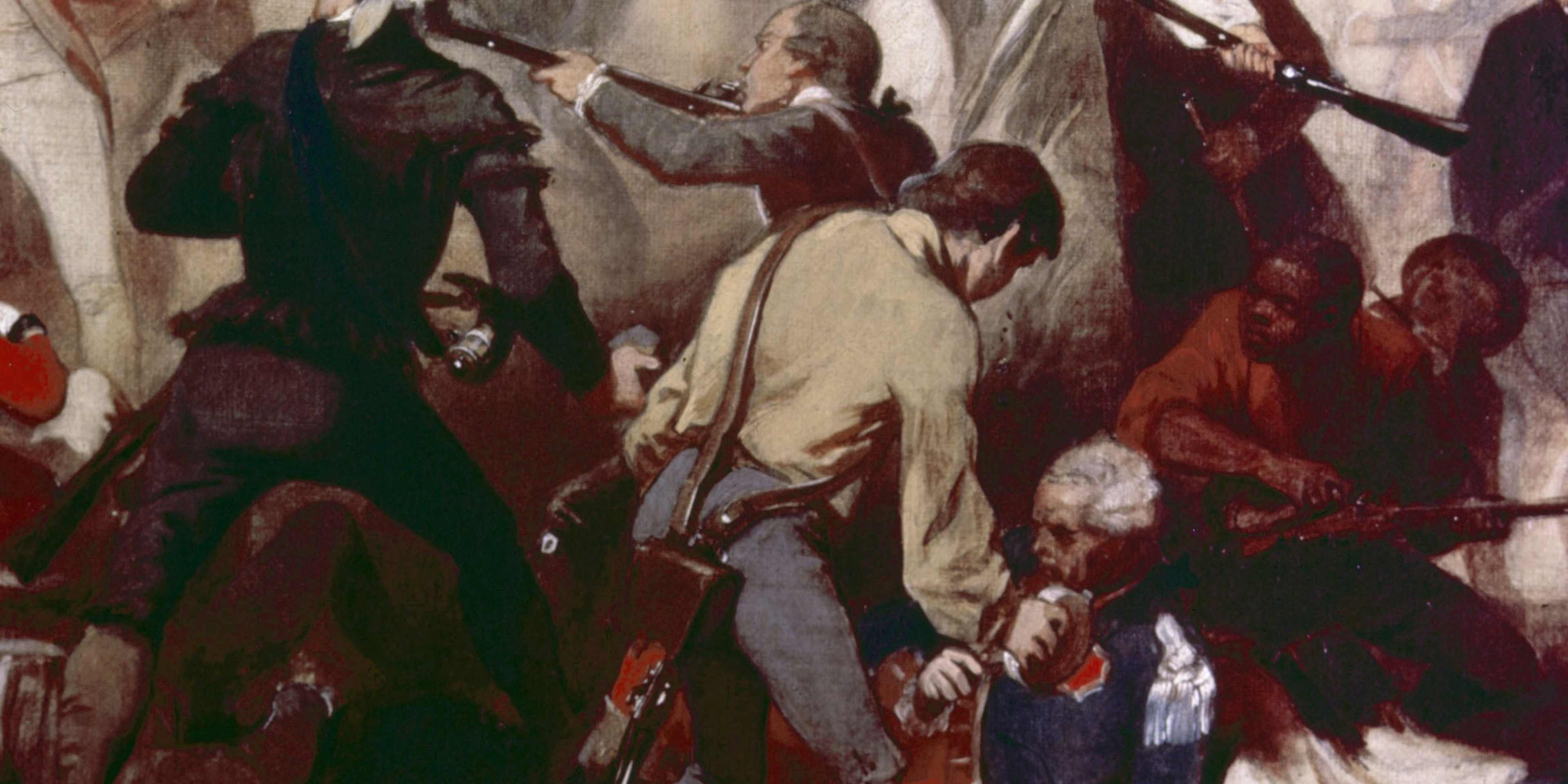
Jude Hall (sometimes documented as Judas Hall) was born into slavery around 1747 in Kensington, New Hampshire. In his early years, he was held in bondage by Captain Philemon Blake before being sold to Nathaniel Healy. Dissatisfied with his new master and sensing the historical tides turning, Hall made a daring decision as conflict loomed. In May 1775, just weeks after the battles of Lexington and Concord, he ran away to enlist in the Continental forces. Before New Hampshire became a battleground for liberty, life in the Northern colonies was complex and highly dependent on localized systems of labor and trade. These structures are detailed in our look at fascinating facts about the thirteen colonies, where legal and social practices regarding Black residents varied widely from region to region.
The Status of Black Soldiers in the Revolution
At the start of the war, the Continental Army’s policy toward Black and Indigenous recruits was inconsistent and frequently hostile. Many white leaders, including George Washington initially, opposed arming enslaved men out of fear of slave rebellions. However, as the need for manpower grew increasingly desperate, the Continental Army welcomed Black soldiers. By the end of the hostilities, at least 6,600 Black and Indigenous patriots had fought for the American cause, serving in fully integrated units—a level of military integration that wouldn’t be seen again in American history until the mid-20th century.
The Legendary Soldier Known as “Old Rock”
Jude Hall enlisted as a private in Jacob Hind’s Company of the 3rd New Hampshire Regiment, commanded by General Enoch Poor. His physical prowess quickly became the stuff of local legend; contemporary accounts described him as a massive, exceptionally strong man who could easily lift a full barrel of cider and drink directly from its bunghole. This immense physical strength, combined with his unwavering courage under fire, earned him the reverent military nickname “Old Rock”.
Baptism of Fire at Bunker Hill
On June 17, 1775, Hall faced his first major trial at the Battle of Bunker Hill. Stationed along the crucial rail fence that stretched down to the Mystic River, the New Hampshire regiments bore the brunt of the British assault. During the ferocious exchange, a British cannonball struck the dirt directly next to Hall, throwing him headlong across the battlefield. Undeterred, he survived the ordeal and went on to serve for nearly eight years—making him one of the longest-serving soldiers of the entire war, Black or white.
From Trenton to the Swamp of Monmouth
Hall’s military resume reads like a map of the Revolution’s most turning points. He fought at Ticonderoga, survived the freezing winter at Valley Forge, and stood his ground at Trenton, Hubbardton, and the decisive Battle of Saratoga. It was during the grueling, suffocating heat of the Battle of Monmouth in June 1778 that his reputation as “Old Rock” was firmly cemented as he stood firm amidst a chaotic retreat. He also participated in General John Sullivan’s 1779 expedition, demonstrating a relentless commitment to the Continental cause until his honorable discharge in 1783.
Key Events Timeline of Jude Hall’s Life
To understand the trajectory of Jude Hall’s extraordinary life, it is helpful to examine the key milestones that defined his transition from slave to celebrated soldier, and finally, to a grieving father:
- 1747: Jude Hall is born into slavery in Kensington, New Hampshire.
- May 10, 1775: Hall runs away from his owner, Nathaniel Healy, to enlist in the 3rd New Hampshire Regiment.
- June 17, 1775: Hall fights bravely at the Battle of Bunker Hill, surviving a near-miss from a cannonball.
- 1777–1779: Participates in critical northern campaigns, including Ticonderoga, Hubbardton, Saratoga, and Sullivan’s Expedition.
- June 1778: Earns the moniker “Old Rock” for his steadfastness at the Battle of Monmouth.
- 1783: Receives an honorable discharge, securing his legal freedom from slavery.
- September 1785: Marries Rhoda Paul, daughter of the prominent free Black veteran Caesar Paul.
- July 21, 1789: Awarded a small plot of land in Exeter, New Hampshire, for his wartime service, establishing a homestead at what became known as “Jude’s Pond”.
- Early 1800s: Three of Hall’s sons—James, Aaron, and William—are systematically kidnapped and sold into southern and Caribbean slavery.
- 1827: Jude Hall dies in Exeter, New Hampshire, at approximately 80 years of age.
- November 22, 1833: Son-in-law Robert Roberts delivers a sworn affidavit detailing the kidnappings to support Rhoda’s widow pension application.
Post-War Life: The Precariousness of Northern Freedom
Upon his discharge, Jude Hall settled in Exeter, New Hampshire, a town notable for its unusually high concentration of free African Americans—comprising nearly five percent of the town’s population in the late 18th century. In 1785, Hall married Rhoda Paul, a member of a respected free Black family. Her father, Caesar Paul, was also a veteran who had been freed after serving in the French and Indian War. While some enslaved individuals sought liberty on the battlefield, others leveraged the courts. Around this same time in nearby Massachusetts, Elizabeth Freeman sued for her freedom and won a landmark case that helped dismantle slavery in that state. In New Hampshire, however, the legal landscape remained far more ambiguous.
Slavery was not officially outlawed in New Hampshire until the ratification of the 13th Amendment in 1865. The state’s white political establishment largely ignored the issue, believing the enslaved population was too small to warrant legislative action. This statutory negligence left free Black families like the Halls in a state of extreme vulnerability. Lacking birth certificates, formal freedom papers, or the legal right to testify against white citizens in court, they lived under the constant, terrifying shadow of the slave catcher’s noose.
The Kidnapping of the Hall Sons: A Devastating Betrayal
Despite Jude Hall’s status as a war hero and a recognized land-owning yeoman, he was powerless to shield his family from the lucrative, predatory trade of human trafficking. Kidnapping free Black youths in the North to sell to labor-starved Southern plantations was a thriving, low-risk business. The tragic fate of three of the Hall sons was preserved only because of an 1833 affidavit delivered in Boston by Hall’s son-in-law, Robert Roberts, an influential Black author and activist who had married Jude’s daughter, Dorothy.
James Hall: Stolen for a Four-Dollar Debt
The first tragedy struck when an Exeter local named David Wedgewood arrived at the Hall homestead while Jude was away. Wedgewood claimed that James Hall, Jude’s 18-year-old son, owed him a trivial sum of four dollars. Over the desperate, physical protests of Rhoda, Wedgewood seized the teenager, bound him, and dragged him to a jail in Newburyport, Massachusetts. By the following morning, James was aboard a southern-bound vessel. He was sold to a French planter in Kentucky and later seen imprisoned in a New Orleans jail as a runaway. He was never seen by his family again.
Aaron Hall: Trapped in Rhode Island
In 1807, James’s brother, Aaron Hall, went to Providence, Rhode Island, looking for maritime work. While there, a predatory merchant tricked him into signing a contract for clothing, instantly fabricating a debt Aaron could not pay. Aaron was intercepted in Roxbury, Massachusetts, while trying to walk home, forcibly dragged back to Providence, and sent to sea on a vessel bound for parts unknown. He vanished without a trace.
William Hall: A Decade of Bondage and a Daring Escape
The third brother, William, was kidnapped in Newburyport while serving aboard the barque Hannibal. He was sold into brutal slavery in the West Indies. Remarkably, William survived ten grueling years of enslavement before orchestrating a daring escape to England. There, he rose to become the captain of a British coal ship (a collier). Though William eventually managed to send word to his mother after his father’s death, the trauma and distance prevented him from ever returning to the shores of New Hampshire.
Lesser-Known Facts About Jude Hall and His Family
- The Cider Barrel Feat: Local histories in New Hampshire frequently recalled Jude Hall’s immense physical frame, noting that “Old Rock” was so strong he could lift a massive wooden barrel of cider entirely by himself and drink directly from the bunghole.
- A Tradition of Civil War Service: The Hall family’s fight for freedom did not end with Jude. Two of his grandsons carried on his martial legacy during the American Civil War. Aaron Hall served in the famous 54th Massachusetts Volunteer Infantry (the first official Black regiment), while Moses Hall fought in the 3rd United States Colored Infantry.
- The Echoes of Caesar Paul: Jude’s father-in-law, Caesar Paul, was also a historically significant figure. Enslaved by Major John Gilman, Caesar accompanied his master into the French and Indian War, surviving combat and eventual liberation in 1771, passing down a proud family tradition of military service.
Why Jude Hall’s Story Matters Today
Jude Hall’s life serves as a stark, necessary counterweight to sanitized narratives of early American history. It reminds us that the American Revolution was not a monolith, and that the promise of “life, liberty, and the pursuit of happiness” was a highly selective covenant. Though Jude Hall’s family suffered unspeakable losses, their story of survival, military service, and persistent resistance constitutes one of the many early, grueling great strides for freedom in U.S. history.
Today, the site of his homestead in Exeter is marked by “Jude’s Pond,” and a memorial stone stands in the Winter Street Cemetery. Hall’s legacy challenges us to look closely at the gaps in historical protection, the precarious nature of civil rights, and the debt of gratitude owed to the “Forgotten Patriots” who fought for a country that did not yet recognize their basic humanity.
People Also Ask
Who was Jude Hall?
Jude Hall was a prominent Black Revolutionary War soldier from New Hampshire. Born into slavery around 1747, he escaped to enlist in the Continental Army in 1775 and fought in major battles such as Bunker Hill, Saratoga, and Monmouth, earning the nickname “Old Rock” for his strength and bravery.
Why were Jude Hall’s sons sold into slavery?
Despite Jude Hall’s status as a veteran, early 19th-century New Hampshire did not have robust legal protections or birth certificates for free Black citizens. Exploiting this legal vulnerability, predatory kidnappers abducted three of Hall’s sons—James, Aaron, and William—using fabricated debts and force to sell them into southern and Caribbean slavery.
Did Jude Hall’s family fight in the Civil War?
Yes. The legacy of fighting for freedom continued in the Hall family. Two of Jude Hall’s grandsons, Aaron and Moses Hall, enlisted in the Union Army during the Civil War, serving in the 54th Massachusetts Infantry and the 3rd US Colored Infantry, respectively.
Conclusion
The life of Jude “Old Rock” Hall is a powerful testament to both the bravery of early Black patriots and the profound, systemic failures of the early American republic. Though he fought valiantly from the dirt of Bunker Hill to the heat of Monmouth to secure a nation’s independence, he was tragically left to watch that same nation fail to protect his sons from the horrors of the slave trade. By remembering Jude Hall, we honor not only his immense battlefield sacrifices but also the enduring, multi-generational struggle of Black Americans seeking the full promise of the liberty they helped win.


1 comment