When General George Washington assumed command of the Continental Army in June 1775, he did not inherit a polished, professional military. Instead, he took charge of a deeply fractured, poorly supplied, and rag-tag assembly of local militias who had little concept of unified discipline. Historian David McCullough famously depicted Washington’s monumental task: turning raw, independent-minded farmers, blacksmiths, and merchants into a cohesive force capable of challenging the greatest global superpower of the 18th century, Great Britain. The story of Washington’s leadership is not just a tale of tactical maneuvers, but a profound study in perseverance, structural transformation, and psychological endurance. By examining his trials, his strategic pivots, and the heavy toll paid by his troops, we gain a clear understanding of how this unlikely army secured American independence. This transformation established the bedrock of the United States, forever changing the global geopolitical landscape.
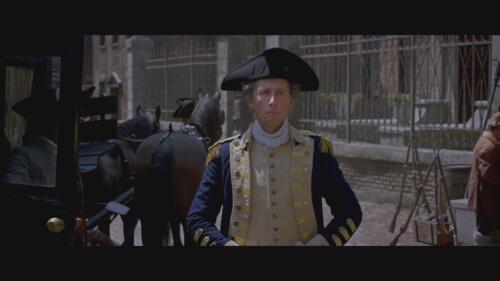
Historical Background: A Nation and An Army in the Making
The year 1775 was a time of unprecedented political chaos in the American colonies. Following the explosive clashes at Lexington and Concord in April, the Second Continental Congress realized that localized militia resistance would not suffice against the disciplined British Army. On June 14, 1775, Congress officially established the Continental Army, initiating a desperate search for a leader who could unite the disparate colonies. When looking at who commanded the Continental Army before Washington, we find figures like Artemas Ward, who held temporary command over the forces surrounding Boston, but lacked the national appeal and commanding presence needed to unite thirteen fiercely independent colonies.
George Washington of Virginia was unanimously selected as Commander-in-Chief. He accepted the commission on June 15, refusing a salary and asking only that his personal expenses be covered. He arrived in Cambridge, Massachusetts, in July 1775, finding a camp filled with enthusiastic but completely undisciplined men, lacking proper sanitation, standardized uniforms, and, most critically, gunpowder and heavy artillery. The socio-political stakes were astronomically high: a failure to build a legitimate, professional army would mean swift execution for the revolutionary leaders and the immediate crushing of the American dream of self-governance.
The Complex Role of Indigenous Nations
In commanding the Continental Army, Washington also had to navigate complex diplomatic relations with Native American nations. The Revolutionary War deeply fractured long-standing alliances, particularly within the Haudenosaunee (Iroquois) Confederacy. While nations like the Oneida and Tuscarora provided invaluable support, scouting, and provisions to Washington’s starving troops, others sided with the British to protect their ancestral lands from colonial encroachment. This devastating civil war among indigenous nations highlights the deep complexities of the period and the immense sacrifices made by native peoples during the founding of the United States.
Chronological Timeline of Washington’s Command
- June 1775: Washington is appointed Commander-in-Chief of the newly formed Continental Army by the Second Continental Congress.
- March 1776: Through tactical ingenuity and the arrival of heavy artillery from Fort Ticonderoga, Washington successfully forces the British to evacuate Boston.
- August–September 1776: The catastrophic Battle of Long Island. Washington’s forces suffer major losses, but he executes a brilliant night-time retreat across the East River, saving his army from total annihilation.
- December 1776: Crossing the icy Delaware River on Christmas night, Washington leads a surprise attack on Hessian forces at Trenton, drastically boosting colonial morale at a time when the revolution seemed lost.
- Winter 1777–1778: The army withdraws to Valley Forge, Pennsylvania, enduring a brutal winter that serves as the ultimate crucible for military training and endurance.
- October 1781: With the vital assistance of the French Navy and ground forces, Washington corners General Cornwallis at Yorktown, Virginia, forcing the British surrender that effectively wins the war.
- December 1783: Washington formally resigns his military commission to Congress in Annapolis, Maryland, establishing a monumental precedent for civilian control over the military.
Key Figures and Their Lasting Impact
While George Washington was the undisputed face of the revolutionary struggle, he relied heavily on an exceptional circle of officers and advisors who helped him reshape the military landscape:
George Washington
As Commander-in-Chief, Washington’s greatest asset was not his tactical genius—he lost more battles than he won—but his profound resilience and emotional intelligence. He kept the army together through sheer force of will, understanding that as long as the Continental Army existed, the American Revolution remained alive.
Baron Friedrich Wilhelm von Steuben
A Prussian military officer who arrived at Valley Forge in February 1778. Von Steuben transformed the ragged camp. He wrote the standard drill manual, taught the soldiers how to use bayonets effectively, and reformed camp hygiene, turning a sickly militia into a highly lethal, standardized fighting machine.
General Nathanael Greene
Often considered Washington’s most brilliant strategist, Greene was given command of the Southern Theater. His hit-and-run tactics exhausted the British forces under Lord Cornwallis, driving them toward their ultimate entrapment at Yorktown.
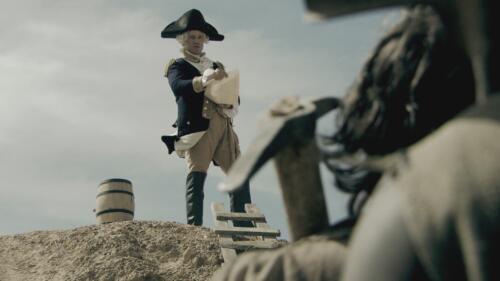
Marquis de Lafayette
A young, wealthy French aristocrat who volunteered his services without pay. Lafayette became a surrogate son to Washington, a brilliant battlefield commander, and a crucial diplomatic bridge that secured French financial and naval intervention.
The Crucible of Transformation: Tactics and Turning Points
To defeat the global power of Great Britain, Washington had to completely reinvent his approach to warfare. Early in his life, during the French and Indian War, Washington had hungered for a commission in the British regular military. This early experience taught him British tactics, but more importantly, it exposed their rigid vulnerabilities. When he took command of the Continental Army, he realized he could not defeat the British in a traditional European-style war of attrition. Instead, he adopted the Fabian Strategy—a military doctrine focused on avoiding decisive pitch battles that could destroy his army, opting instead to harass, exhaust, and outlast the enemy.
This strategy faced its greatest test during the winter of 1777-1778. The starving soldiers at Valley Forge faced rampant disease, freezing temperatures, and a severe lack of basic provisions like shoes and blankets. Yet, rather than disbanding, the army used this period of isolation to train. Under Von Steuben’s rigorous instruction, the men emerged in the spring of 1778 with a unified tactical doctrine, renewed discipline, and a deep-seated pride that proved they could stand toe-to-toe with British regulars.
Another major turning point was Washington’s masterclass in intelligence gathering. Recognizing that he was outmatched in conventional firepower, Washington established the Culper Spy Ring. By utilizing sophisticated codes, invisible ink, and double agents, Washington stayed steps ahead of British commanders, turning espionage into one of his most powerful weapons of war.
The Long-Term Impact on the American Republic
The transformation of the Continental Army had profound structural, cultural, and constitutional impacts on the emerging United States. By successfully integrating men from different colonies—New Englanders, Virginians, and Pennsylvanians—into a singular fighting unit, Washington helped forge a unified American identity long before the Constitution was even drafted.
Furthermore, Washington’s actions at the end of the war set a global standard for republican virtue. In late 1783, after the signing of the Treaty of Paris, Washington chose to willingly give up absolute power. He wrote a powerful circular letter to the states, outlining his vision for the young nation’s survival. In this document, we find George Washington’s advice on American unity, warning that local jealousies and a weak central government could destroy everything the soldiers had fought and died to achieve. His voluntary resignation shocked European monarchs, who fully expected him to declare himself king, and solidified the American tradition of peaceful transitions of power.
Lesser-Known Historical Anecdotes
1. The Secret Plot Against His Life
In 1776, a clandestine conspiracy to assassinate or kidnap George Washington was uncovered. Shockingly, the plot involved members of his own elite security detail, known as the Life Guards, along with the Loyalist Mayor of New York. One of the conspirators, Thomas Hickey, was court-martialed and publicly hanged before thousands of spectators in New York City, demonstrating the extreme, covert dangers Washington faced daily.

2. The Unintentional Vaccination Pioneer
Smallpox was a deadlier enemy to the Continental Army than British bayonets. Recognizing that an epidemic could end the revolution instantly, Washington secretly ordered the mass inoculation of his troops using a risky method called variolation (introducing live smallpox virus into a small cut). This bold, early public health initiative successfully protected his army and is considered one of his most vital, non-military victories.
3. A Tall Figure of Authority
Standing at roughly 6 feet 2 inches, Washington was a physical giant in an era when the average American male stood around 5 feet 7 inches. This imposing physical presence, combined with his quiet, deliberate manner of speaking, projected an immediate aura of command that helped command respect from European allies and rowdy colonial soldiers alike.
Why It Still Matters Today
The legacy of Washington’s leadership of the Continental Army remains a foundational pillar of modern American democracy. The absolute supremacy of civilian authority over the military is a direct result of Washington’s respectful relationship with the Continental Congress, even when they failed to properly fund or supply his starving men. In an era where democratic norms are constantly tested worldwide, Washington’s decision to lay down his sword and step away from supreme power serves as a timeless reminder that the strength of a free nation lies not in its rulers, but in its institutions and the shared commitment of its citizens.
People Also Ask
How did George Washington turn a rag-tag group of men into a disciplined fighting machine?
Washington achieved this through strategic structural reforms, severe disciplinary measures to curb colonial regional rivalries, the implementation of professional espionage networks, and, most importantly, by bringing in European experts like Baron von Steuben. Von Steuben standardized drilling, weapons handling, and camp hygiene during the pivotal winter at Valley Forge.
What was Washington’s biggest challenge during the Revolutionary War?
His greatest challenge was not the British Army itself, but the chronic lack of resources, funding, food, and basic military supplies from a weak and divided Continental Congress. This was compounded by short-term soldier enlistments, which meant Washington was constantly training new recruits as veteran soldiers’ contracts expired.
What is the historical significance of Washington’s Circular to the States?
Written in 1783 as he prepared to retire as General of the Continental Army, the Circular to the States was Washington’s “legacy letter.” In it, he urged the states to form a strong, unified federal union, warning that without cohesive national government, mutual respect, and a robust defense system, the newly independent states would fall prey to foreign empires or civil war.
Conclusion: The Undying Legacy of Washington’s Command
George Washington’s command of the Continental Army was a masterclass in resilient leadership, adaptability, and high moral character. By guiding a fragile, underfunded military through the darkest days of the Revolutionary War, Washington did more than win battles—he fostered a collective national consciousness. His transformation of the army and his voluntary surrender of power established the essential precedents of civilian supremacy and peaceful transition that continue to define the United States of America to this day.


