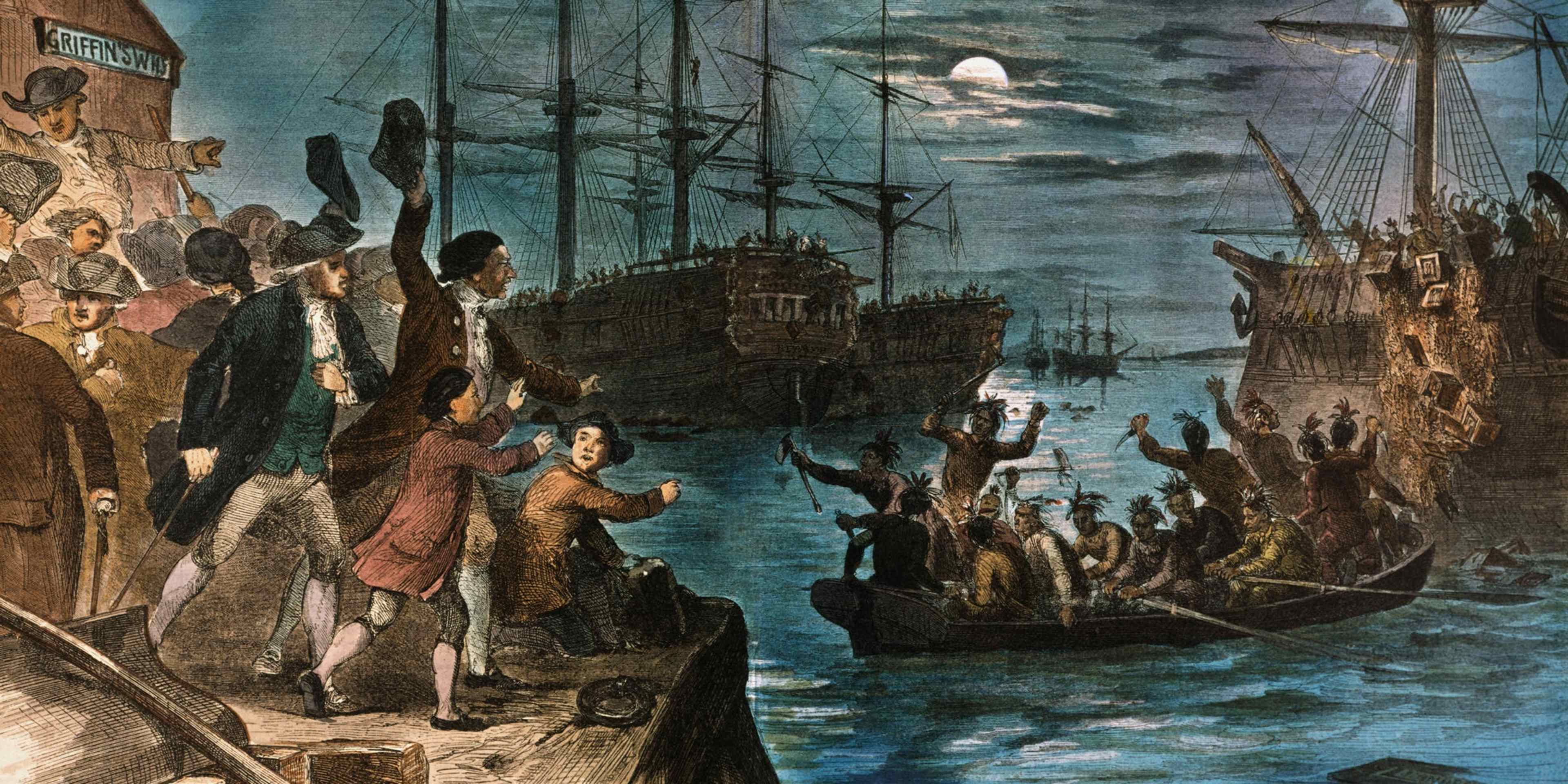
The Boston Tea Party stands as one of the most iconic acts of civil disobedience in global history, a dramatic catalyst that set the American colonies on an irreversible path toward independence. On the chilly night of December 16, 1773, at Griffin’s Wharf in Boston, Massachusetts, a group of frustrated and organized patriots known as the Sons of Liberty took a defiant stand against British imperial overreach. By dumping 342 chests of British East India Company tea into the harbor, these early Americans protested “taxation without representation” and challenged the absolute authority of King George III and the British Parliament. This bold demonstration was not merely a dispute over tea tariffs; it was a profound clash of political philosophies regarding liberty, representation, and colonial self-determination. Understanding the Boston Tea Party is vital to comprehending the birth of the United States, as it unified fractured colonies, provoked a brutal British crackdown, and ignited the spark of the American Revolutionary War.
The Historical Background: Colonial Grievances and British Imperial Debt
To fully grasp the magnitude of the Boston Tea Party, one must examine the geopolitical landscape of the mid-18th century. Following the conclusion of the French and Indian War (the North American theater of the Seven Years’ War) in 1763, Great Britain emerged victorious but financially depleted. The British national debt had skyrocketed, prompting Parliament to seek new revenue streams. Because the war had been fought in large part to defend the American frontier, British authorities believed it was entirely fair for the colonists to share the financial burden. However, this policy marked a dramatic shift from the era of “salutary neglect,” during which the colonies had enjoyed substantial economic and political autonomy. To study the geographical layout and development of these distinct regions, historians often refer to the 13 colonies map and their unique geographic and economic identities which illustrate how interconnected yet politically isolated the colonies were prior to British consolidation efforts.
The Escalation of Punitive Taxes
In 1765, the British Parliament passed the Stamp Act, imposing a direct tax on virtually all printed paper used in the colonies, including newspapers, legal documents, playing cards, and pamphlets. This act sparked widespread outrage and prompted the first organized colonial resistance. Although the Stamp Act was repealed in 1766 due to massive boycotts and protests, Parliament quickly followed with the Townshend Acts of 1767. These laws levied import duties on essential colonial commodities, such as glass, lead, paper, paint, and tea. The colonists argued that because they had no elected representatives in the British Parliament, any tax levied upon them without their consent was an act of tyranny—coining the famous rallying cry, “No taxation without representation.”
Chronological Timeline of the Boston Tea Party and Its Prelude
- 1765: Parliament passes the Stamp Act, triggering widespread colonial protests and the formation of the Sons of Liberty.
- 1767: The Townshend Acts are enacted, placing duties on highly demanded goods, including tea.
- March 5, 1770: The Boston Massacre occurs. British soldiers open fire on a hostile crowd of Bostonians, killing five and wounding several others, deeply intensifying colonial resentment.
- May 10, 1773: Parliament passes the Tea Act, granting the financially struggling British East India Company a monopoly on the colonial tea trade and allowing them to bypass colonial merchants.
- November 27, 1773: The merchant ship Dartmouth arrives at Griffin’s Wharf loaded with East India Company tea. It is followed shortly by two other tea-laden vessels, the Eleanor and the Beaver.
- December 16, 1773: After Governor Thomas Hutchinson refuses to allow the tea ships to return to Britain without paying the tariff, the Sons of Liberty execute the Boston Tea Party.
- June 1774: King George III and Parliament retaliate by passing the Coercive Acts (referred to by colonists as the Intolerable Acts).
- September 5, 1774: The First Continental Congress convenes in Philadelphia to coordinate colonial resistance against British tyranny.
Key Figures of the Protest and Their Legacies
The events leading up to and during the night of December 16, 1773, were driven by dynamic, strong-willed historical figures. Foremost among them was Samuel Adams, a master political organizer, writer, and leader of the Boston Sons of Liberty. Adams utilized his persuasive prose to rally working-class citizens and wealthy merchants alike against British policies. While he did not personally throw the tea overboard, Adams was the mastermind behind the public meetings at the Old South Meeting House that set the stage for the protest.
Another critical figure was John Hancock, one of the wealthiest merchants in New England. Hancock was a major financier of the patriot cause, but he also had a personal stake in resisting British monopolies: he was a prominent importer of smuggled Dutch tea. By bypassing official British channels, Hancock and other merchants offered colonists tax-free tea, a trade directly threatened by the Tea Act. To learn more about how colonial societies operated on a day-to-day level, exploring some fascinating facts about the 13 colonies provides rich context on the mercantile economy that drove these legendary merchants.
We also have vital records of the event from ordinary citizens, such as George Robert Twelves Hewes, a Boston shoemaker. Hewes was one of the last surviving participants of the Boston Tea Party. His detailed memoirs, published decades later, provided historians with invaluable eyewitness testimony regarding how orderly and disciplined the protest actually was. Hewes recalled that the participants acted under strict instructions to destroy only the tea, avoiding looting or personal violence.
The Core Causes and Geopolitical Context
The immediate catalyst for the protest was the Tea Act of May 1773. Contrary to popular belief, the Tea Act did not actually raise taxes on tea. In fact, it allowed the financially distressed British East India Company to sell tea directly to the colonies at prices lower than even the smuggled Dutch tea. However, the catch was that the Townshend tea tax remained in effect. Colonial leaders recognized this as a clever ploy by Parliament to bribe the colonists into accepting the principle of taxation without representation. Accepting the cheaper British tea meant implicitly acknowledging Parliament’s right to tax them. Furthermore, the monopoly threatened the livelihood of independent colonial merchants, who were completely bypassed by the East India Company’s distribution network.
Major Turning Points: From Peace to Overboard Destruction
The crisis reached a tipping point when the Dartmouth, the Eleanor, and the Beaver docked at Griffin’s Wharf. Under British maritime law, the ships had twenty days to unload their cargo and pay the duties. If they did not, customs officials were legally authorized to seize the cargo. Royal Governor Thomas Hutchinson, a staunch loyalist, insisted that the tea must be unloaded and the duties paid before the ships could return to England. The colonists, meanwhile, refused to let the cargo touch dry land.
On the morning of December 16—the final day of the twenty-day deadline—over 5,000 colonists gathered at the Old South Meeting House. When word arrived that Governor Hutchinson had once again refused to let the ships depart peacefully, Samuel Adams reportedly declared, “This meeting can do nothing more to save the country!” This statement served as a prearranged signal. A group of approximately 100 to 150 men, many of them disguised with blankets, soot, and charcoal, marched down to Griffin’s Wharf. In an organized fashion, they boarded the three vessels, split open 342 chests of tea with tomahawks, and dumped more than 90,000 pounds of tea into Boston Harbor, valued at nearly one million dollars in today’s currency.
Long-Term Impact on America and the Road to Revolution
The immediate British reaction to the Boston Tea Party was one of fury. King George III and Parliament felt they could no longer tolerate Massachusetts’ defiance. In early 1774, they passed the punitive Coercive Acts, designed specifically to punish Boston and reassert imperial control. These acts closed Boston Harbor to all commerce, effectively abolished the Massachusetts Constitution, replaced the elected local government with a military governor, and forced colonists to quarter British troops. Rather than breaking the spirit of the colonists, these harsh measures had the opposite effect. Colonies from New Hampshire to Georgia rallied to Boston’s defense, sending food and supplies. This shared suffering fostered a newfound sense of American unity and led directly to the assembly of the First Continental Congress, where local leaders laid the groundwork for an independent colonial government. This political mobilization was also reflected in social spheres; as tension escalated, even colonial political culture and early elections began to reflect a sharp divide between staunch loyalists and passionate patriots.
Lesser-Known Facts and Historical Anecdotes
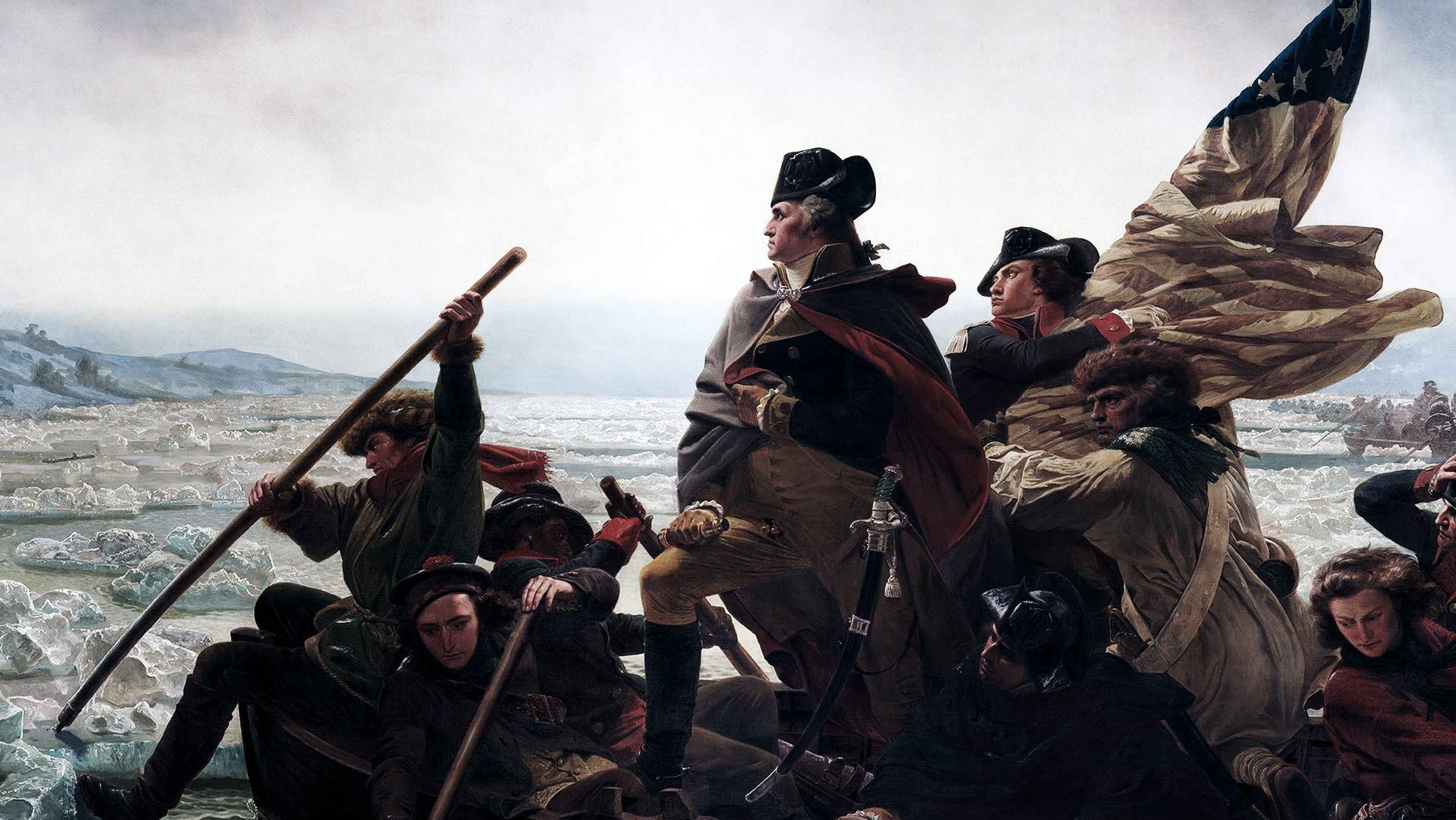
- George Washington Disapproved of the Destruction: Although George Washington supported the political cause of Boston, he privately condemned the destruction of the tea, viewing it as a dangerous violation of private property rights. Like many wealthy colonial elites, Washington believed that property rights were a cornerstone of liberty.
- Benjamin Franklin Offered to Pay for the Tea: Ever the diplomat and pragmatist, Benjamin Franklin was shocked by the property damage and offered to personally reimburse the British East India Company for the lost tea, provided Parliament repealed the coercive tax. His offer, however, was ignored by British officials.
- There Was a Second Boston Tea Party: Just three months after the famous protest, in March 1774, sixty Bostonians boarded the ship Fortune and dumped 30 chests of tea into the harbor. While it did not garner the same historical fame, it demonstrated that the spirit of defiance had spread rapidly.
Why the Boston Tea Party Still Matters Today
The legacy of the Boston Tea Party continues to reverberate in modern political discourse. It remains one of the ultimate historical symbols of grassroots activism, civil disobedience, and resistance against unjust authority. From the modern “Tea Party” political movement to global discussions on fair taxation, government accountability, and representation, the events at Griffin’s Wharf continue to serve as a blueprint for citizens demanding a voice in their government. It reminds us that democratic systems are not passive; they require active vigilance, courage, and a commitment to preserving individual liberties.
People Also Ask
What was the main cause of the Boston Tea Party?
The main cause was the passage of the Tea Act of 1773, which granted a monopoly to the British East India Company and preserved the Townshend tea tax without colonial consent. This was viewed by the colonists as a direct violation of their right to “no taxation without representation.”
How much tea was destroyed, and what would it be worth today?
The Sons of Liberty destroyed 342 chests of tea, weighing approximately 45 tons (90,000 pounds). In today’s currency, the value of the destroyed tea is estimated to be close to $1,000,000.
Why did the protesters disguise themselves?
The protesters disguised themselves with blankets and coal dust to protect their identities from British officials and loyalist neighbors. Many of the participants continued to keep their involvement a secret even after American independence, fearing civil and legal prosecution for the destruction of private property.
Conclusion
The Boston Tea Party was far more than an act of colonial vandalism; it was a defining moment of political defiance that forged a new American identity. By standing up against British tyranny at Griffin’s Wharf on December 16, 1773, the patriots of Boston demonstrated that they valued self-determination and liberty above material comfort. In doing so, they united the thirteen colonies, forced the hand of the British Empire, and set in motion a chain of events that culminated in the birth of a free and independent United States.


