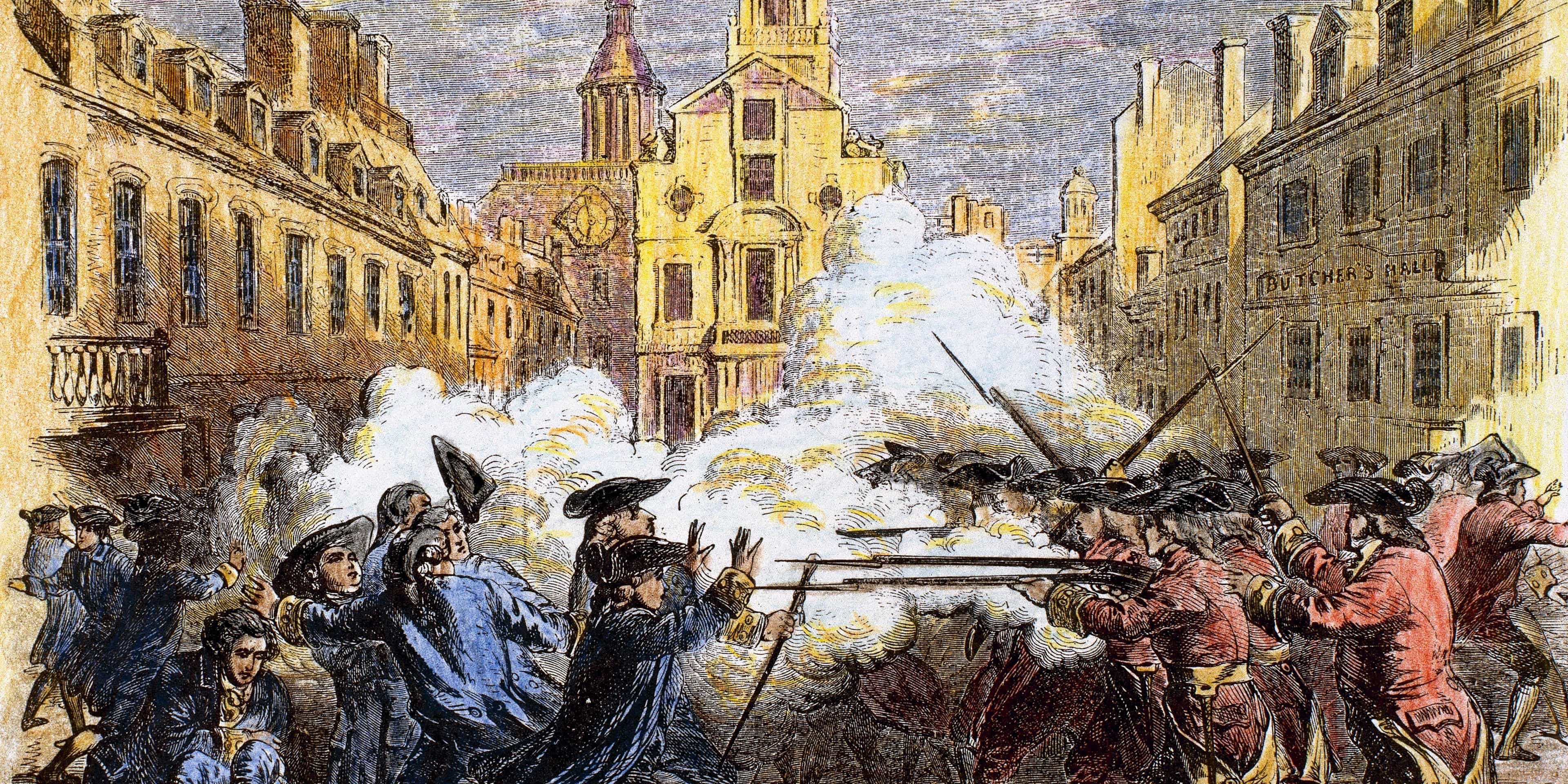
The Boston Massacre of March 5, 1770, stands as one of the most defining flashpoints in early American history, a tragic event that set the American colonies on an irreversible path toward open rebellion and independence. On a freezing, snow-covered night on King Street, a tense confrontation between a hostile crowd of Bostonians and a small squad of British Redcoats escalated into a lethal volley of musket fire. When the smoke cleared, five colonists lay dead or mortally wounded, sparking a wave of outrage that spread far beyond the borders of Massachusetts. This fatal clash was not an isolated incident of violence, but rather the explosive culmination of years of mounting economic, political, and social friction under British imperial rule. By transforming local grievances into a unified colonial struggle, the tragedy became a masterclass in political propaganda and a profound test of the colonial legal system. Ultimately, the events of that cold March evening crystallized the ideological divide between Great Britain and its subjects, laying the intellectual and emotional foundations of a new sovereign nation.
The Brewing Storm: Historical Background and Imperial Tension
To understand why the Boston Massacre occurred, one must examine the turbulent decade preceding 1770. Following the end of the Seven Years’ War in 1763, Great Britain found itself burdened with immense national debt. Believing that the American colonies should help pay for their own defense, the British Parliament enacted a series of taxation measures, most notably the Stamp Act of 1765 and the Townshend Acts of 1767. These laws imposed duties on essential imported goods such as glass, lead, paint, paper, and tea. The colonists, who possessed no elected representation in Parliament, vehemently protested these measures under the rallying cry of “no taxation without representation.”
Boston quickly emerged as the beating heart of the Patriot resistance. The local population, guided by radical leaders like Samuel Adams and organized groups like the Sons of Liberty, engaged in spirited and occasionally violent boycotts of British goods. In response to mass protests, riots, and the harassment of customs officials, the British Crown dispatched several regiments of regular infantry to occupy the city in October 1768. To the citizens of Boston, the presence of thousands of heavily armed Redcoats patrolling their streets, demanding quarter, and enforcing unpopular imperial decrees felt like a hostile foreign invasion. It was during this period of severe unrest that the dynamics of colonial identity began to shift dramatically, illustrating how three colonial towns shaped the course of early American history through their localized resistance to royal authority.
Sociopolitical Causes and Economic Context
The tension in Boston was not purely ideological; it was deeply aggravated by daily socioeconomic grievances. The presence of British troops created an economic crisis for the city’s working class. British soldiers were poorly paid and often sought part-time, off-duty employment in Boston’s shipyards and ropewalks to supplement their wages. This put them in direct competition with local laborers, who were already suffering from an economic downturn caused by British trade restrictions. Street brawls and verbal insults between off-duty soldiers and local workingmen became commonplace.
These skirmishes reached a fever pitch in early March 1770. On March 2 and 3, a series of violent street fights broke out between British regulars and a group of Boston ropemakers, leaving individuals on both sides bruised and highly agitated. Rumors quickly circulated through the taverns and docks that a major confrontation was imminent, with both sides openly speaking of revenge. This localized economic anxiety reflected broader systemic issues across the continent, as colonists grappled with the tightening grip of British mercantilism, a reality thoroughly documented in the study of the geographic layout and governance of the Thirteen Colonies.
A Chronological Timeline of the Tragedy
- 1767: Parliament passes the Townshend Acts, sparking widespread colonial boycotts and unrest.
- October 1768: British troops arrive in Boston to restore order and enforce customs laws.
- March 2-3, 1770: Violent brawls break out between Boston ropemakers and British soldiers, escalating municipal hostilities.
- March 5, 1770 (Early Evening): Sentry Private Hugh White strikes a young wigmaker’s apprentice, Edward Garrick, with his musket butt, drawing an angry crowd to the Custom House on King Street.
- March 5, 1770 (Night): A crowd of hundreds pelt the soldiers with ice, oyster shells, and clubs. Amid the chaos, Private Hugh Montgomery fires the first shot, triggering a general volley that kills five colonists.
- March 6, 1770: Acting Governor Thomas Hutchinson arrests Captain Thomas Preston and his men, promising a fair trial. British troops are ordered to withdraw to Castle Island in Boston Harbor.
- October-December 1770: John Adams and Josiah Quincy defend Preston and the soldiers in court, resulting in Preston’s acquittal and the light sentencing of two soldiers.
- March 5, 1771: Samuel Adams organizes the first annual “Massacre Day” commemoration, cementing the event as a symbol of British tyranny.
Key Historical Figures and Their Roles
Crispus Attucks
A sailor and dockworker of African and Native American heritage, Crispus Attucks was a prominent figure at the front of the protesting crowd on King Street. Wielding a heavy wooden cordwood stick, Attucks was among the first to be struck by British bullets, dying instantly. Today, he is widely celebrated as the first martyr of the American Revolution and an enduring symbol of African American patriotism and sacrifice.
Captain Thomas Preston
The commanding British officer of the 29th Regiment of Foot on duty during the massacre. Preston was well-regarded by many locals but found himself tasked with protecting the Custom House and his trapped sentry. Preston consistently maintained that he never ordered his men to fire on the crowd, a crucial defense point that ultimately saved him from the gallows.
John Adams
Despite being a committed Patriot who opposed British taxation, John Adams agreed to act as the defense attorney for Captain Preston and the accused soldiers. Believing that every individual deserved a fair trial and that the rule of law must prevail over mob rule, Adams successfully argued that the soldiers acted in self-defense, securing their acquittal. This principled stance remains one of his greatest contributions to American jurisprudence.
Paul Revere
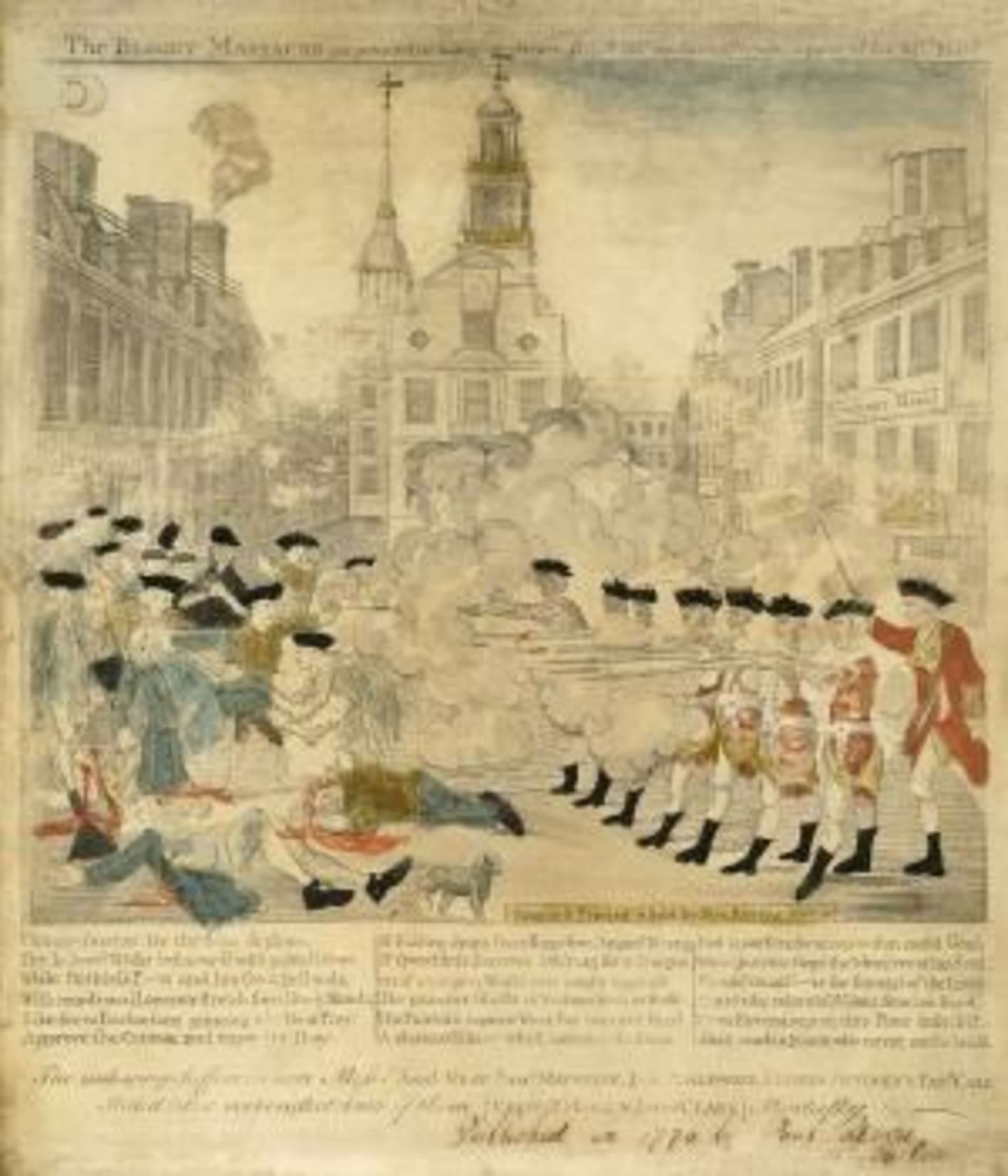
A silversmith and member of the Sons of Liberty, Paul Revere created the famous copper plate engraving titled “The Bloody Massacre Perpetrated in King Street.” Revere’s illustration was highly sensationalized and historically inaccurate, depicting the British soldiers standing in an organized line, firing a coordinated volley into a peaceful, unarmed crowd. This image became one of the most effective pieces of political propaganda in American history, turning public sentiment firmly against the British Crown.
The Fateful Night of March 5, 1770
The confrontation began when a young wigmaker’s apprentice named Edward Garrick began taunting a British officer over an unpaid debt. Private Hugh White, guarding the Custom House where the Crown’s tax revenues were stored, defended the officer. As Garrick’s insults continued, White lost his temper and struck the boy in the face with his musket. The physical altercation quickly drew a crowd of nearby citizens who began heckling White, throwing snowballs, chunks of ice, and coal at him. As the church bells began to ring—traditionally a warning of a fire—more people poured into the streets, swelling the crowd into an angry mob of several hundred.
Surrounded and pinned against the locked doors of the Custom House, White cried out for assistance. Captain Thomas Preston led a relief squad of seven soldiers to rescue the sentry, forming a tight defensive semicircle with their bayonets fixed. Preston pleaded with the crowd to disperse, but the mob, emboldened and angry, dared the soldiers to pull their triggers. In the confusion, a wooden club thrown from the crowd struck Private Hugh Montgomery, knocking him to the icy ground. Upon recovering his feet, Montgomery fired his musket into the crowd. Seconds later, other soldiers panicked and opened fire without direct orders, leaving five colonists dead or dying on the cobblestones.
The Legal Battle: Facts vs. Passion
The immediate aftermath of the shooting threatened to plunge Boston into an all-out civil war. Disaster was only averted when acting Governor Thomas Hutchinson promised that the law would take its course. The subsequent trials of Captain Preston and his men became a monumental event in Anglo-American legal history. John Adams, along with co-counsel Josiah Quincy, took the highly unpopular case to demonstrate that the American colonists were not lawless rebels, but civilized people who respected the justice system. To explore the legal environment of this era, historians often look at other surprising historical details about the thirteen colonies and how early courts functioned under imperial pressure.
During the trials, Adams brilliantly argued that the soldiers were besieged by a dangerous, armed mob of “saucy boys” and dockworkers. He utilized the testimony of key witnesses, including local ropemaker Richard Palms, to prove that Captain Preston had not ordered his men to fire. Adams famously declared to the jury: “Facts are stubborn things; and whatever may be our wishes, our inclinations, or the dictates of our passions, they cannot alter the state of facts and evidence.” Preston was acquitted, and of the eight soldiers tried, six were fully acquitted. The remaining two, Hugh Montgomery and Matthew Kilroy, were found guilty of the lesser charge of manslaughter and punished by being branded on their thumbs with an “M” before being discharged.
Lesser-Known Facts About the Boston Massacre
- The False Fire Alarm: The ringing of the church bells that drew hundreds of Bostonians into the streets was actually a false alarm. In colonial Boston, church bells were the primary alarm system for fires, causing unsuspecting citizens to rush out with buckets, only to find themselves in the middle of a military standoff.
- The Branding Punishment: Under English common law, the two convicted soldiers escaped the death penalty by pleading “benefit of clergy.” By proving they could read, their sentences were reduced to branding on the thumb, preventing them from ever using the “benefit of clergy” defense again.
- The Title Shift: The event was not universally called the “Boston Massacre” until years later. Initially, Patriots referred to it as “The Bloody Massacre on King Street,” while British authorities and Loyalists described it as the “unhappy disturbance at Boston.”
Long-Term Impact and Why It Matters Today
The legacy of the Boston Massacre is profound. Although the immediate tensions eased slightly after the trials, the event left a permanent psychological scar on the relationship between the colonies and Great Britain. The annual “Massacre Day” orations kept the memory of British aggression fresh, serving as a powerful ideological bridge that led directly to the Boston Tea Party of 1773, the battles of Lexington and Concord in 1775, and ultimately, the Declaration of Independence in 1776. John Adams later remarked that “on that night, the foundation of American independence was laid.”
Today, the Boston Massacre remains highly relevant. It serves as an enduring lesson on the dangers of militarized law enforcement, the power of media and political propaganda to shape public perception, and the vital importance of maintaining the rule of law and due process, even in times of extreme public hysteria and political polarization.
People Also Ask (FAQ)
Why is the Boston Massacre considered a turning point in American history?
It was the first time British soldiers fired upon and killed American colonists, transforming a dispute over taxation and governance into a physical conflict. The incident was heavily publicized by Patriot leaders, uniting the individual colonies against what they perceived as British tyranny.
Did Captain Preston actually order his men to fire?
No. Historical evidence and court testimonies from the trial indicate that Captain Preston did not order his men to fire. He was standing in front of his soldiers’ muskets, a position he would not have taken if he had commanded them to shoot.
Who were the five victims of the Boston Massacre?
The five victims were Crispus Attucks, Samuel Gray, James Caldwell, Samuel Maverick, and Patrick Carr. All five are buried in the Granary Burying Ground in Boston, Massachusetts.
Conclusion: The Stubborn Legacy of March 5
The Boston Massacre was far more than a street brawl gone wrong. It was a tragic, explosive manifestation of the deep-seated constitutional and economic crises that plagued the British Empire in North America. The memory of the fallen on King Street became a rallying cry for liberty, showing how a single moment of violence can change the trajectory of an entire global empire. Through the legal integrity of John Adams and the revolutionary passion of the Sons of Liberty, the tragedy of the Boston Massacre helped forge the very concept of American identity—one built on the delicate, hard-won balance of civil liberty, justice, and self-governance.


