In the spring of 1864, the American Civil War was entering its fourth agonizing year, and the nation’s future hung in a precarious balance. To break the bloody stalemate, President Abraham Lincoln turned to his newly appointed Lieutenant General, Ulysses S. Grant, tasking him with executing a relentless war of attrition. This decision birthed the Overland Campaign, a brutal six-week military offensive in Virginia that pitted Grant directly against the legendary Confederate General Robert E. Lee for the very first time. Spanning from May 4 to June 24, 1864, this campaign was not just a series of clashes; it was a fundamental shift in Union military doctrine. Instead of retreating after suffering devastating losses, as previous generals had done, Grant pressed relentlessly forward. This ruthless strategy ultimately transformed the nature of American warfare, pushing both armies to their absolute limits and setting the stage for the war’s final, desperate chapter. Understanding the Overland Campaign is critical to grasping how the Union eventually preserved the nation and dismantled the institution of slavery, altering the trajectory of American history forever.
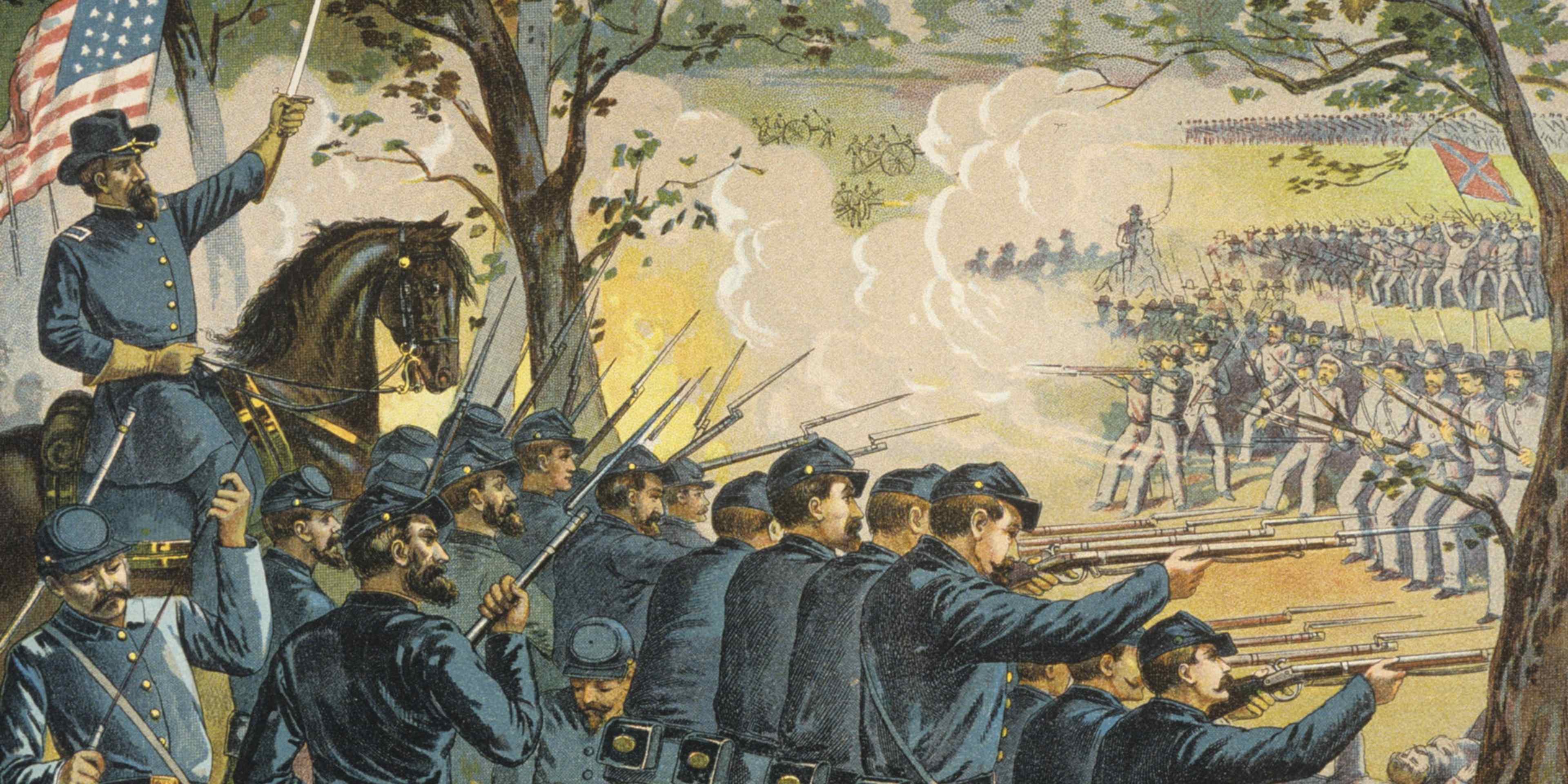
Historical Background: A Nation at the Crossroads
By early 1864, the American Civil War had reached a grim, exhausting impasse. While Union victories at Gettysburg and Vicksburg in July 1863 had turned the tide in favor of the North, the Confederate Army of Northern Virginia, commanded by General Robert E. Lee, remained undefeated and highly defensive. Back in Washington, President Abraham Lincoln faced a looming election in November. He knew that without a decisive military victory, the war-weary Northern public might vote him out of office in favor of a peace candidate willing to recognize Confederate independence.
To break this deadlock, Lincoln looked to the Western Theater’s breakout star: Ulysses S. Grant. Known for his aggressive tactics and stubborn resolve, Grant was promoted to Lieutenant General in March 1864. This was a rank of immense prestige, previously held during wartime only by George Washington. To put this in context, early military command structures in America were highly experimental; exploring who commanded the Continental Army before Washington reveals how rare and elevated this status truly was. Armed with this new authority, Grant designed a coordinated national strategy to strike the Confederacy on all fronts simultaneously, with the Overland Campaign serving as the main spearhead in Virginia.
Causes and Context of the Overland Campaign
The core strategic cause of the Overland Campaign was the need to permanently destroy Lee’s Army of Northern Virginia. Previous Union commanders in the East, such as George McClellan, Joseph Hooker, and George Meade, had repeatedly fought Lee, suffered high casualties, and then retreated to lick their wounds. This pattern allowed Lee’s smaller army time to reinforce, reposition, and maintain its defense of Richmond. Grant realized that the Confederacy’s greatest vulnerability was its lack of manpower and resources. While the North could replace fallen soldiers, the blockaded South could not.
Grant’s objective was not merely to capture the Confederate capital of Richmond, but to engage Lee’s army in continuous, relentless combat. By keeping Lee pinned down, Grant would also prevent the Confederates from sending reinforcements to the Western Theater, where General William Tecumseh Sherman was beginning his legendary march toward Atlanta. This shift to a “war of attrition” was politically risky and physically brutal, but Grant believed it was the only way to quickly end the rebellion and preserve the Union.
The Chronological Timeline of the Campaign (May – June 1864)
The Overland Campaign was a non-stop, forty-day slugfest that moved through the dense forests and muddy crossroads of Virginia. Here is how the key operations unfolded:
- May 4, 1864: The Army of the Potomac, numbering around 115,000 men, crosses the Rapidan River, officially initiating the campaign.
- May 5–7, 1864: The Battle of the Wilderness erupts in a dense tangle of woods west of Fredericksburg. The dry underbrush catches fire, creating a horrific inferno. The battle ends in a bloody stalemate.
- May 7, 1864: Instead of retreating, Grant orders his troops to march south toward Spotsylvania Court House, a move that electrifies Union morale.
- May 8–21, 1864: The Battle of Spotsylvania Court House. This includes the infamous, 20-hour hand-to-hand fight at the “Bloody Angle” on May 12 during a driving rainstorm.
- May 11, 1864: Union cavalry under Philip Sheridan defeats Confederate cavalry at Yellow Tavern, mortally wounding legendary Southern general J.E.B. Stuart.
- May 23–26, 1864: The Battle of North Anna. Lee constructs an ingenious “inverted V” defensive line, preventing Grant from achieving a decisive breakthrough.
- May 28–30, 1864: Minor engagements at Totopotomoy Creek as Grant continues to slide his army around Lee’s right flank.
- May 31 – June 12, 1864: The Battle of Cold Harbor. Grant orders a massive, ill-fated frontal assault on June 3, resulting in thousands of Union casualties in less than an hour.
- June 12–15, 1864: Grant brilliantly slips away from Cold Harbor, crosses the wide James River, and marches toward the rail hub of Petersburg, ending the Overland Campaign and initiating a nine-month siege.
Key Historical Figures and Their Crucial Roles
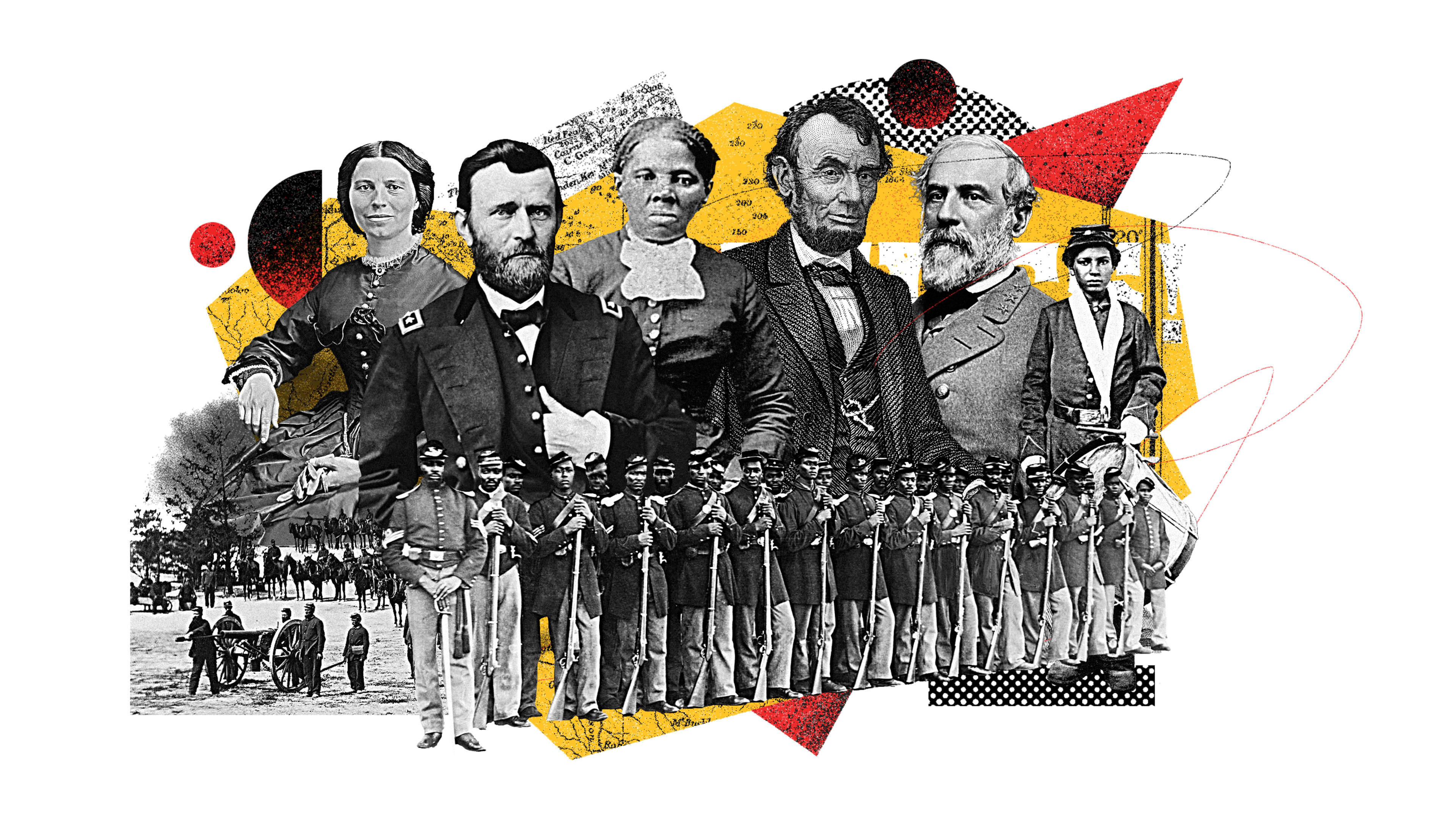
The campaign was characterized by a legendary chess match between two of America’s greatest military minds, supported by a cast of determined officers:
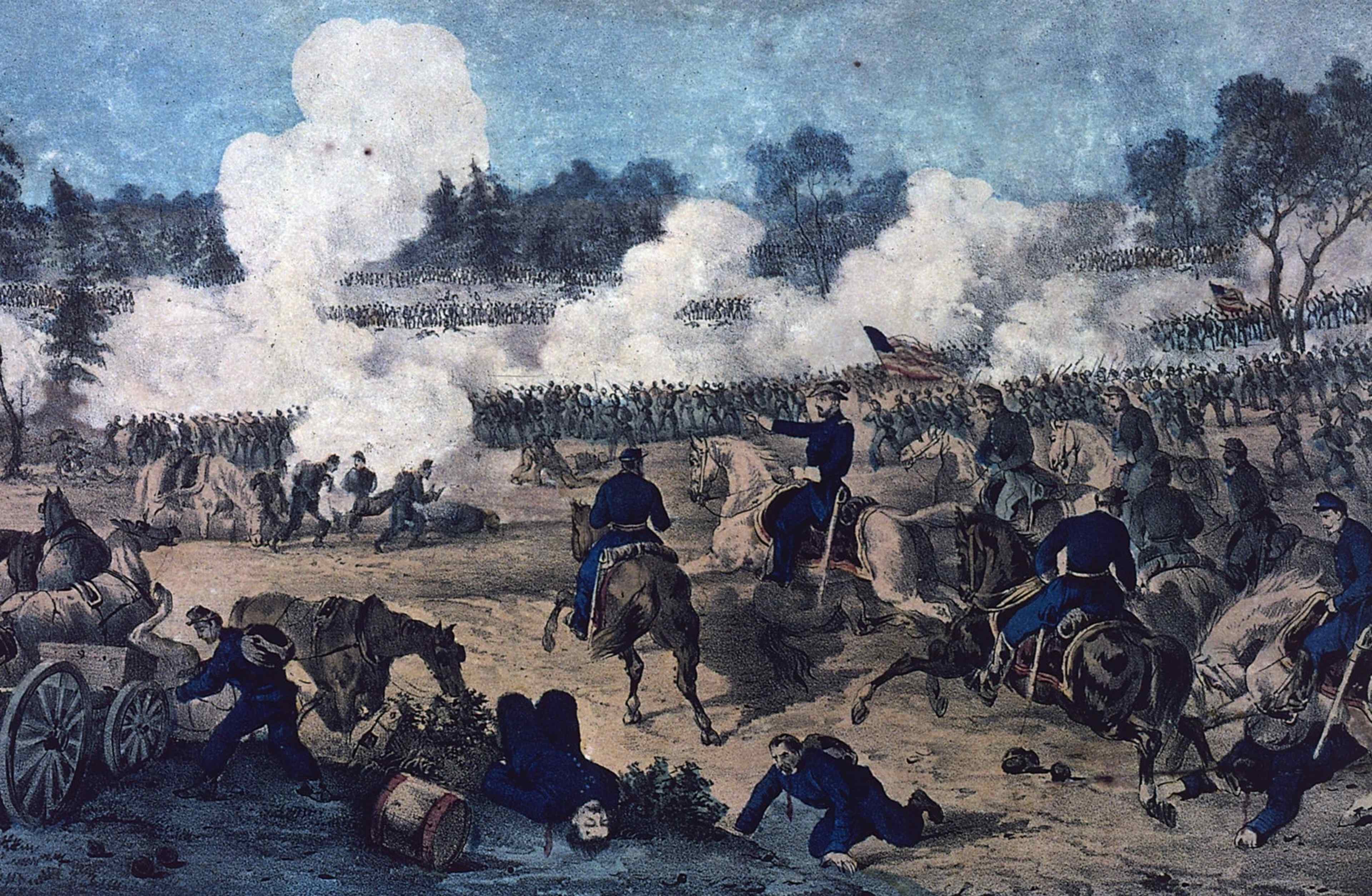
- Ulysses S. Grant: The General-in-Chief who accompanied the Army of the Potomac. Grant’s relentless determination and refusal to accept defeat became the driving force of the Union war effort.
- Robert E. Lee: Commander of the Army of Northern Virginia. Facing a massive numerical disadvantage, Lee utilized his superior knowledge of Virginia’s terrain and advanced defensive earthworks to repeatedly stymie Union advances.
- George G. Meade: The actual tactical commander of the Army of the Potomac. Meade had to navigate the awkward position of having his boss, Grant, traveling with his army and dictating overall strategy.
- Winfield Scott Hancock: Union Second Corps commander whose troops led the desperate assault on the Confederate “Mule Shoe” salient at Spotsylvania.
- James Longstreet: Lee’s dependable “Old War Horse.” He was critically wounded by friendly fire during the Battle of the Wilderness, eerily echoing the death of Stonewall Jackson a year prior.
Major Turning Points of the Six Bloody Weeks
Within this relentless campaign, several critical turning points altered the course of the war. The first came on the night of May 7, following the horrific stalemate in the Wilderness. Historically, Union armies that suffered high casualties against Lee retreated back across the river. Some of these historical withdrawals are even remembered among the era’s most brilliant military retreats. However, when the Union soldiers reached the Chancellorsville crossroads and realized Grant was directing them south toward Richmond rather than north to safety, they began to sing and cheer. Grant had made it clear: there would be no turning back.
Another pivotal moment occurred at the “Bloody Angle” in Spotsylvania on May 12. The sheer savagery of the combat here redefined the limits of human endurance. For twenty hours, men fought hand-to-hand over a log breastwork, often firing blindly through cracks in the timber. The fighting was so intense that an oak tree nearly two feet in diameter was completely severed by bullet impacts alone. This battle solidified the transition of the Civil War from a conflict of maneuvers into a brutal war of attrition.
Finally, the disaster at Cold Harbor on June 3 served as a sobering lesson in the lethality of modern, entrenched warfare. Grant’s decision to order a frontal assault against heavily fortified Confederate positions resulted in a slaughter so severe that Union soldiers pinned papers with their names and home addresses to the backs of their coats so their bodies could be identified. Grant later wrote in his memoirs that Cold Harbor was the only assault he ever regretted ordering.
The Long-Term Impact on America
The Overland Campaign had a profound and lasting impact on the United States, shaping both its military legacy and political landscape. By grinding down Lee’s army, Grant ensured that the Confederacy could never again launch an offensive campaign. Though the campaign cost the Union nearly 55,000 casualties and the Confederates 33,000, Lee’s losses (exceeding 50% of his starting force) were irreplaceable. This exhaustion paved the way for the fall of Petersburg and Richmond in April 1865, leading directly to Lee’s surrender at Appomattox Court House.
Politically, the continuous pressure kept Lincoln’s re-election campaign alive. Though the high casualty lists initially horrified the Northern public, the progress toward Richmond and Sherman’s subsequent capture of Atlanta convinced voters that victory was near. Lincoln’s re-election in late 1864 sealed the fate of the Confederacy and ensured the implementation of the 13th Amendment, forever abolishing slavery.
Lesser-Known Facts and Fascinating Anecdotes
- The Flaming Forest: During the Battle of the Wilderness, the thick, dry underbrush was ignited by the muzzle flashes of thousands of muskets. Hundreds of wounded soldiers, unable to crawl away, were tragically burned alive. The horrifying screams of these men forced both Union and Confederate soldiers to temporarily pause fighting to try to rescue them.
- Bullet-Severed Trees: At Spotsylvania, the gunfire was so dense and continuous that a 22-inch white oak tree was completely mowed down by rifle bullets. The stump of this tree was later recovered and is currently preserved in the Smithsonian Institution’s National Museum of American History.
- Grant’s Quiet Grief: Known for his stoic and unyielding public persona, the immense loss of life during the Battle of the Wilderness briefly broke Grant’s resolve. Witnesses reported that on the night of May 6, the general went into his tent, threw himself onto his cot, and wept bitterly. Yet, the next morning, he was as resolute as ever.
Why the Overland Campaign Still Matters Today
Today, the Overland Campaign is studied in military academies worldwide as a prime example of the transition from traditional 19th-century warfare to the “total war” of the 20th century. The extensive trench networks built during this campaign foreshadowed the brutal trench warfare of World War I. Furthermore, the campaign prompts modern discussions about the ethics of military command, the cost of victory, and the immense sacrifices required to preserve democracy and human rights. It serves as a stark reminder that the freedom and unity Americans enjoy today were bought at a tragic, unimaginable price.
People Also Ask
Who won the Overland Campaign?
While Robert E. Lee won several tactical victories, notably at Cold Harbor, the Overland Campaign was a strategic victory for Ulysses S. Grant and the Union. Grant successfully wore down the Confederate army, prevented them from launching offensives, and forced them into a siege at Petersburg, which ultimately led to their surrender.
What battles were part of the Overland Campaign?
The major battles of the Overland Campaign included the Battle of the Wilderness, the Battle of Spotsylvania Court House, the Battle of North Anna, and the Battle of Cold Harbor.
Why did Ulysses S. Grant not retreat?
Grant understood that previous Union commanders had failed because they allowed Robert E. Lee time to recover after battles. Grant was determined to keep constant pressure on Lee, knowing that the Union had the resources and manpower to win a war of attrition, whereas the Confederacy did not.
Conclusion
The Overland Campaign remains one of the most harrowing yet decisive chapters in American history. Over six bloody weeks, the relentless duel between Ulysses S. Grant and Robert E. Lee altered the course of the Civil War. By refusing to retreat and maintaining a steadfast focus on the destruction of the Confederate army, Grant paved the hard road to Union victory, cementing his legacy as the commander who saved the nation.


