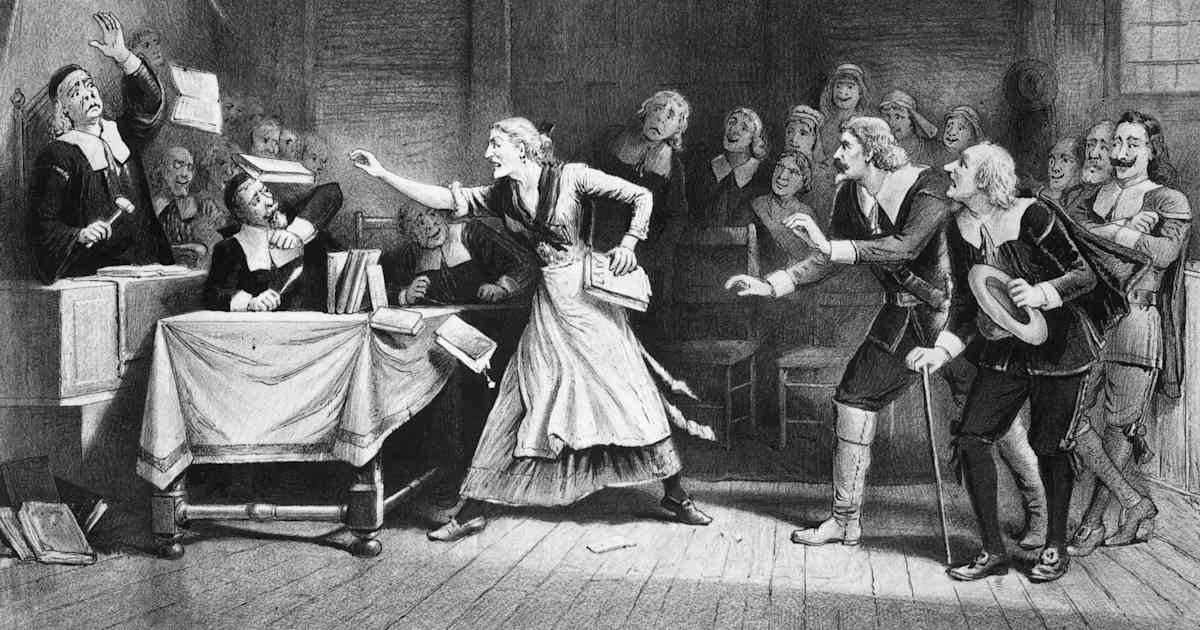
The winter of 1692 in Salem Village, Massachusetts, was bitter, dark, and pregnant with anxiety. Far from the bustling harbors of Boston, this small, isolated farming community was about to become the epicenter of the most notorious and tragic episode of collective paranoia in American history: the Salem witch trials. What started as a few young girls suffering from inexplicable, violent convulsions quickly spiraled into a colony-wide legal and moral catastrophe. Driven by a volatile mix of strict Puritan theology, psychological trauma from brutal frontier wars, local land disputes, and systemic legal failures, the hysteria claimed the lives of twenty innocent people and permanently reshaped the trajectory of American jurisprudence. To truly understand how this tragedy unfolded, we must peel back the layers of myth and examine the historical, political, and social conditions that transformed a routine theological belief into a deadly, uncontrollable panic.
The Dark Heritage of Witchcraft in Colonial New England
To modern minds, the concept of witchcraft belongs strictly to the realm of fantasy and folklore. However, for the 17th-century Puritans who settled the Massachusetts Bay Colony, the supernatural was as real and tangible as the rocky soil they tilled. They believed that the physical world was a constant battleground between God and the Devil. Witchcraft was not merely a spiritual sin; it was a heinous crime of treason against the state, legally punishable by death. Crucially, the events in Salem were not an isolated historical anomaly. The English colonists brought centuries-old European traditions of witch hunting across the Atlantic. Indeed, there had already been several documented instances of execution and witchcraft trials before Salem took place, mostly scattered throughout Connecticut and Boston. The unique tragedy of Salem was not that it occurred, but rather the unprecedented speed and scale at which it consumed an entire society.
A Chronology of Paranoia: The Key Events of 1692
The rapid escalation of the Salem witch trials is best understood through its devastating chronological progression:
- January 1692: Nine-year-old Betty Parris and eleven-year-old Abigail Williams, the daughter and niece of Salem\’s minister Reverend Samuel Parris, begin exhibiting bizarre behaviors. They scream, throw objects, crawl under furniture, and contort their bodies in agonizing ways.
- February 1692: Unable to find a physical ailment, local physician Dr. William Griggs diagnoses the girls\’ condition as the result of “the Evil Hand” of witchcraft. Under intense pressure from adults, the girls name their alleged tormentors: Tituba, an enslaved Caribbean woman in the Parris household; Sarah Good, a homeless beggar; and Sarah Osborne, an elderly, impoverished woman.
- March 1692: The local magistrates interrogate the accused. While Good and Osborne maintain their innocence, Tituba delivers a dramatic, detailed confession. She claims the devil approached her in the form of a black dog or a red cat, and that a coven of witches was actively plotting to destroy Salem. This explosive confession ignites widespread panic.
- May 1692: The newly appointed Governor of Massachusetts, William Phips, arrives from England. Confronted with jails overflowing with accused witches, he establishes a special judicial court: the Court of Oyer and Terminer.
- June 10, 1692: Bridget Bishop, a local tavern owner known for her independent lifestyle and colorful dress, becomes the first person hanged on Gallows Hill.
- July – September 1692: The executions accelerate. On August 19, five people are hanged, including the respected former minister George Burroughs. On September 19, eighty-year-old Giles Corey is pressed to death with heavy stones for refusing to enter a plea.
- October 1692: As prominent citizens—including Governor Phips\’ own wife—are accused, the theological and political tides turn. Phips suspends the Court of Oyer and Terminer and bans the use of spectral evidence.
- May 1693: Governor Phips issues a general pardon, releasing the remaining prisoners and bringing an end to the darkest chapter in early colonial history.
Under the Surface: The True Causes of the Mass Hysteria
Why did this panic take hold of Salem so deeply? Historians point to five interlocking socio-political and economic catalysts:
1. Declining Puritan Hegemony and Shifting Demographics
By the late 17th century, the absolute cultural and political monopoly of the Puritans was beginning to fracture. The arrival of merchants, Quakers, and Anglicans introduced a new era of pluralism, diluting the original religious intensity. As the Puritans noticed the religious diversity of the 13 colonies expanding, they felt they were losing their divine “City upon a Hill.” They interpreted this cultural shift as a sign of God\’s displeasure and a direct assault by Satan, leading to heightened spiritual paranoia.
2. Frontier Warfare and Post-Traumatic Stress
The colony was under constant threat of violence. King Philip\’s War (Metacom\’s Rebellion) had devastated the New England frontier just years earlier. Many refugees from the bloody northern skirmishes with Native American tribes had fled to Salem. The constant threat of sudden, violent attack created a climate of chronic fear and PTSD. In the Puritan mind, the indigenous peoples were agents of the devil, and the physical threat of frontier war merged with the spiritual threat of witchcraft.
3. Social and Economic Rivalries within Salem
Salem was deeply divided into two distinct factions. Salem Town was a prosperous, secular, and politically influential mercantile port. In contrast, Salem Village was a poorer, highly religious, agrarian community that felt exploited and marginalized by the Town. Most of the accusers lived in the conservative, struggling Salem Village, while many of the accused lived along the trade routes closer to Salem Town, revealing that long-standing class resentment and land disputes fueled many of the accusations.
4. Gender Politics and Puritan Patriarchal Structures
Puritan society was strictly patriarchal. Women were expected to be submissive, quiet, and domestic. Those who stepped outside these rigid boundaries—such as widows who owned property, women who spoke their minds, or those without male protectors—were viewed with intense suspicion. The trials became a mechanism to discipline non-conforming women and re-establish patriarchal control.
5. The Admission of Spectral Evidence
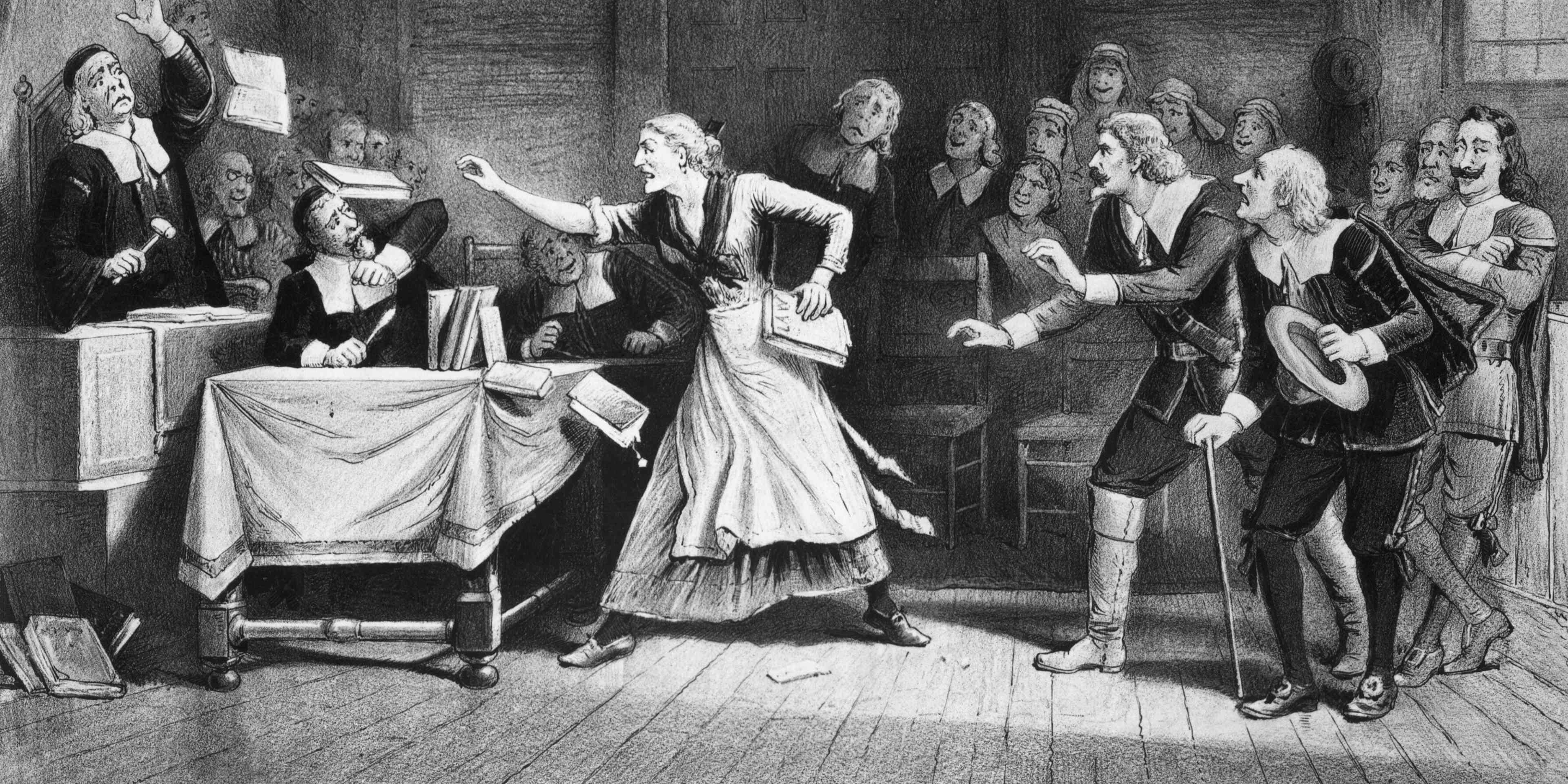
From a legal perspective, the single greatest catalyst for the high conviction rate was the use of “spectral evidence.” This allowed the court to accept testimony based on dreams and visions. If an accuser claimed that the “specter” of a neighbor pinched or choked them, the accused had no way to prove an alibi, as only the victim could see the spirit. This glaring legal loophole made defense virtually impossible.
The Pillars and Victims: Crucial Figures of the Trials
The tragedy of Salem was defined by individuals whose actions either fueled the flames or stood as monuments of courage:
- The Accusers: While the symptoms began with Betty Parris and Abigail Williams, the primary accusers of the Salem witch trials soon grew to include several other local girls, including twelve-year-old Ann Putnam Jr. and Mercy Lewis. Historically, their motivations remain a mystery; theories range from mass clinical hysteria and clinical ergot poisoning to deliberate manipulation by adults seeking to settle local grudges.
- Rebecca Nurse: A 71-year-old grandmother of exemplary piety. Her accusation shocked the community, proving that no one—regardless of their religious devotion—was safe. Her initial acquittal was overturned by the judge, and she was hanged on July 19, 1692.
- Giles Corey: An elderly farmer who refused to stand trial. Under English law, if he did not plead guilty or not guilty, he could not be tried, thereby preventing the government from confiscating his estate and leaving his property to his sons. He was subjected to peine forte et dure (pressing with heavy stones) and died after two days of torture, famously muttering only “more weight.”
- William Stoughton: The chief magistrate of the Court of Oyer and Terminer. Stoughton was an uncompromising Puritan who relentlessly permitted spectral evidence and fiercely pursued convictions, never expressing regret for his role in the executions.
The Turning Point: How the Madness Dissolved
The collapse of the witch-hunting apparatus came as rapidly as its rise. By late summer, the accusers had grown exceedingly bold, naming elite figures far outside the socio-economic margins of Salem Village. When accusations touched Lady Mary Phips, the wife of the Governor, and prominent Harvard-educated ministers like Increase Mather, the ruling class intervened. Increase Mather published an influential treatise, Cases of Conscience Concerning Evil Spirits, in which he famously argued that it was far better for ten guilty witches to escape than for one innocent person to be condemned. This intellectual shift, combined with Governor Phips\’ executive order to ban spectral evidence, stripped the court of its primary weapon. Without spectral evidence, the cases collapsed, and the collective fever broke.
The Long-Term Impact on the American Legal and Social Landscape
The Salem witch trials left an indelible scar on the American psyche, but they also catalyzed profound structural changes in American law and society. The absolute failure of the Salem courts led to a complete overhaul of colonial jurisprudence. It established the bedrock principle of “innocent until proven guilty” and revolutionized the rules of evidence, permanently banning subjective spiritual or spectral experiences from courtrooms. Furthermore, the tragedy dealt a terminal blow to the political power of the Puritan clergy, accelerating the transition toward a more secular, rational legal framework and laying the philosophical groundwork for the separation of church and state that would eventually be enshrined in the United States Constitution.
Surprising and Lesser-Known Facts About Salem
- No One Was Burned at the Stake: Despite popular myths safety-valving European witch-hunt history, none of the victims in Salem were burned. Nineteen were hanged, one was pressed to death, and several others died in the squalid conditions of the local prisons.
- The Ergot Poisoning Theory: In 1976, researcher Linnda Caporael proposed that the girls\’ strange physical symptoms might have been caused by ergotism—a form of poisoning caused by consuming rye infected with the fungus Claviceps purpurea. Under wet conditions, this fungus produces chemicals similar to LSD, causing hallucinations, spasms, and delusions.
- Public Repentance: Years after the trials, several participants publicly confessed their errors. Ann Putnam Jr. offered a formal written apology in 1706, stating she had been deluded by Satan. Judge Samuel Sewall publicly confessed his guilt and fasted annually in penance for his role in the executions.
Why the Salem Witch Trials Matter Today
The phrase “witch hunt” remains one of the most powerful metaphors in modern political discourse. From the Red Scare of the 1950s to modern-day social media public cancellations, the Salem witch trials serve as a timeless warning of the dangers of moral panic, groupthink, and the erosion of due process. When fear is weaponized by those in power and coupled with a legal system that values conformity over evidence, justice is inevitably the first victim. Remembering Salem is not merely an exercise in colonial history; it is an ongoing civic duty to protect objective truth, rational discourse, and the human rights of the vulnerable against the howling winds of collective hysteria.

People Also Ask
Who was the first person executed in the Salem witch trials?
Bridget Bishop was the first person tried, convicted, and executed during the Salem witch trials. She was hanged on June 10, 1692. Bishop was an easy target for accusations due to her outspoken nature, ownership of local taverns, and non-traditional attire.
Did any of the accused confess to practicing witchcraft?
Yes, several of the accused confessed, most notably Tituba, the enslaved Caribbean woman. Confessing was often a survival strategy; those who confessed and cooperated with the magistrates were generally spared execution, while those who maintained their innocence, like Rebecca Nurse and John Proctor, were hanged.
Where did the Salem witch trials take place?
While the trials occurred in Salem Town, the majority of the accusations, conflicts, and initial “afflictions” originated in Salem Village, which is modern-day Danvers, Massachusetts. Some accused individuals also came from surrounding towns such as Andover and Ipswich.
Conclusion
The Salem witch trials of 1692 stand as a somber monument to the devastating consequences of fear, prejudice, and unchecked authority. In a span of just a few months, a community tore itself apart, sacrificing its own neighbors to appease an invisible threat. Yet, out of the ashes of Gallows Hill, American society forged a more rigorous, rational, and protective legal system. By honoring the memory of the victims and studying the socio-political fractures that made their persecution possible, we safeguard our modern institutions against the recurring cycles of mass hysteria.


