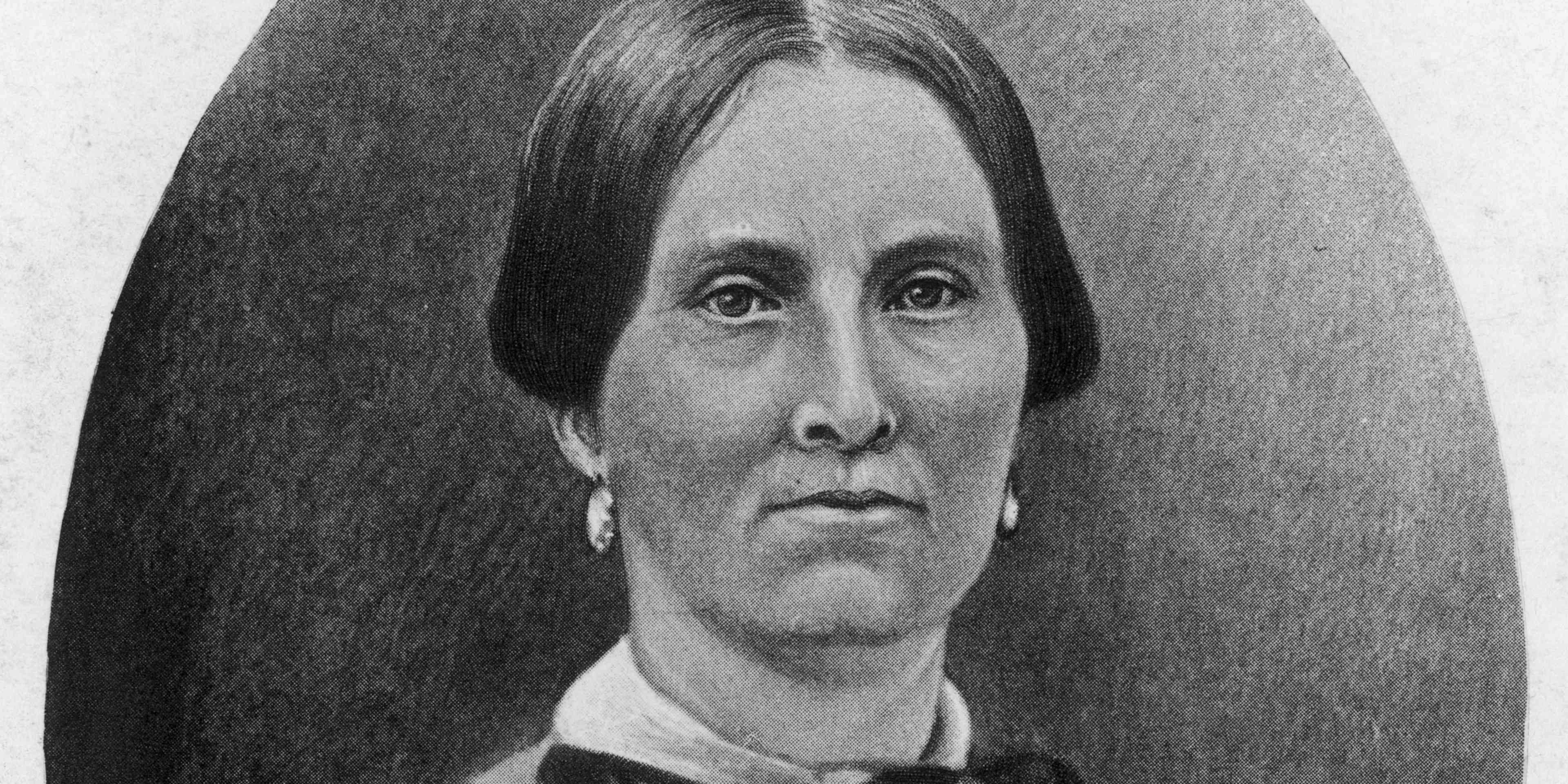
The assassination of President Abraham Lincoln on April 14, 1865, remains one of the most shocking and deeply defining moments in American history. While the nation grieved the tragic loss of its visionary leader, a massive federal dragnet quickly descended upon Washington, D.C., seeking to root out every member of the conspiracy orchestrated by John Wilkes Booth. Among those swept up in the frantic search was Mary Surratt, a 42-year-old widowed boardinghouse owner whose life would soon end on a federal gallows. As the first woman executed by the United States federal government, her involvement in the conspiracy has sparked over a century of intense historical debate. Was she an active, calculating Confederate agent who facilitated the murder of the president, or was she an innocent landlady caught in a web of family loyalties, political hysteria, and military vengeance? By examining her background, the timeline of the conspiracy, and the deeply controversial trial that sealed her fate, we can begin to uncover the layers of mystery surrounding this polarizing historical figure.
The Historical Background: A Nation Divided and a Widow in Need
To understand the tragedy of Mary Surratt, one must first look at the sociopolitical climate of the American Civil War. Mary Jenkins Surratt was born in Maryland around 1823, raised in a slaveholding family, and later married John Harrison Surratt, an alcoholic and abusive landowner. The couple operated a farm, a tavern, and a post office in Maryland—an area heavily populated by Confederate sympathizers. When her husband died in 1862, Mary was left in severe financial ruin, saddled with debts and struggling to support her family. In an effort to secure a stable income, Mary decided to rent out the Maryland tavern and relocate to Washington, D.C., where she converted a townhouse she had inherited on H Street into a local boardinghouse. This seemingly practical business decision would ultimately lead to her destruction.
As a slaveholding border state, Maryland was deeply divided. Although it officially remained part of the Union, many of its citizens, including the Surratt family, harbored passionate Southern loyalties. Mary’s oldest son, Isaac, quickly left to fight for the Confederate Army, while her younger son, John Surratt Jr., became a courier and spy for the Confederate Secret Service. It was through John Jr.’s espionage work that the Surratt boardinghouse became a sanctuary for rebel agents. In late 1864, John Jr. met John Wilkes Booth, the charismatic stage actor and die-hard Confederate sympathizer. Booth recognized the strategic value of the Surratt family, using their D.C. boardinghouse and their Maryland tavern as safe houses to organize his clandestine operations.
Chronological Timeline of the Conspiracy and Arrest
To comprehend how Mary Surratt became entangled in Booth’s deadly plot, it is helpful to trace the chronological sequence of events leading up to her fateful trial:
- 1862: John Surratt Sr. dies, leaving Mary in financial distress. She rents out the family tavern in Surrattsville, Maryland, to a man named John M. Lloyd.
- Autumn 1864: Mary Surratt relocates to her townhouse on H Street in Washington, D.C., and opens a boardinghouse.
- December 1864: John Surratt Jr. introduces John Wilkes Booth to his mother. Booth becomes a frequent visitor to the H Street boardinghouse.
- Early 1865: Booth and John Surratt Jr. formulate a plot to kidnap President Lincoln and exchange him for Confederate prisoners of war. Conspirators Lewis Powell, George Atzerodt, and David Herold begin meeting regularly at Mary’s boardinghouse.
- April 11, 1865: Mary Surratt travels to her Maryland property. She allegedly speaks with John Lloyd about preparing weapons that had been hidden at the tavern earlier.
- April 14, 1865: Mary visits the tavern again on the very afternoon of the assassination. She delivers a package containing a field glass and tells Lloyd to have the “shooting irons” ready. Later that night, John Wilkes Booth shoots Abraham Lincoln at Ford’s Theatre.
- April 17, 1865: Military authorities raid Mary Surratt’s boardinghouse. During the raid, conspirator Lewis Powell arrives disguised as a laborer. Mary denies knowing him, which immediately incriminates her. She is arrested and taken into custody.
- May 9, 1865: The military trial of the Lincoln conspirators begins.
- June 30, 1865: Mary Surratt is found guilty of treason and conspiracy.
- July 7, 1865: Mary Surratt is hanged alongside three other conspirators in the yard of the Old Arsenal Penitentiary.
Important Figures and Their Lasting Impact
The tragic story of Mary Surratt features a cast of characters whose actions determined her survival and eventual execution:
- John Wilkes Booth: The mastermind behind the assassination. Booth utilized Mary’s properties to store weapons and coordinate with his co-conspirators. His actions directly led to the downfall of everyone associated with him.
- John Surratt Jr.: Mary’s son and Booth’s right-hand man. John Jr. was heavily involved in the plot but fled the country immediately after the assassination. He escaped to Canada, then Europe, and eventually served in the Papal Zouaves before being captured in Egypt in 1866. Because he was tried later by a civilian court rather than a military tribunal, he escaped execution and lived until 1916. Many historians believe that if John had surrendered earlier, he might have saved his mother’s life.
- John M. Lloyd: The tenant who leased Mary’s Maryland tavern. His damning testimony was the cornerstone of the prosecution’s case [1]. He claimed that Mary had instructed him to prepare the “shooting irons” and weapons on the day of the assassination, providing the direct link showing Mary had foreknowledge of Booth’s violent intentions.
- President Andrew Johnson: Lincoln’s successor who signed Mary’s death warrant. Despite numerous pleas for clemency based on her age and gender, Johnson remained unmoved, famously declaring that she “kept the nest that hatched the egg.”
Causes and Context: Espionage and War-Torn Devotion
The tragedy of Mary Surratt cannot be analyzed in a vacuum; it was born from the desperate espionage networks of a collapsing Confederacy. During the Civil War, Washington, D.C., was a hotbed of spycraft, with agents continuously slipping across the Potomac River to relay Union military secrets to Richmond. This clandestine environment was reminiscent of earlier American conflicts, such as when George Washington used spies to win the American Revolution, though this Civil War network had far darker motives. Mary Surratt’s tavern and boardinghouse served as vital hubs for this rebel network [1]. Her staunch devotion “body and soul to the cause of the South” blinded her to the extreme dangers of harboring individuals like Booth [1], ultimately turning her home into the logistical birthplace of a presidential murder.
Major Turning Points: The Shift to Violence and the Military Tribunal
The conspiracy underwent a dramatic turning point in April 1865 [1]. Originally, Booth and John Surratt Jr. planned only to kidnap Lincoln [1]. However, as the Confederacy collapsed and Lincoln gave a speech advocating for African American suffrage, Booth’s plan escalated from a kidnapping plot to a triple assassination targeting Lincoln, Vice President Andrew Johnson, and Secretary of State William Seward. Mary Surratt claimed she was only aware of the initial kidnapping plan, but her actions on the day of the assassination—specifically delivering weapons-related messages—suggested she remained cooperative even as the plot turned lethal.
Another critical turning point was the decision by the U.S. government to try the conspirators before a military commission rather than a civilian court [1]. This controversial move bypassed standard civilian justice—a stark contrast to the early republic’s history where even enemy combatants received rigorous defense, such as when John Adams defended British soldiers in the Boston Massacre trials. Tried by military officers under the shadow of a grieving nation, Mary’s defense was severely restricted, and her conviction was swift.
Long-Term Impact on America
The execution of Mary Surratt had profound structural and legal consequences for the United States. In April 1866, the U.S. Supreme Court issued the landmark Ex parte Milligan decision [1], which ruled that trying civilians before military tribunals is unconstitutional when civilian courts are open and functioning. This ruling came too late to save Mary, but it directly allowed her son, John Surratt Jr., to receive a civilian trial by jury [1], which eventually saved his life.
Furthermore, Mary’s execution altered how the American public viewed the treatment of female criminals. While colonial America had witnessed controversial executions of women—such as during the dark eras where women weren’t the only victims of the Salem witch trials—the federal hanging of a woman shocked the late 19th-century public. The widely published photograph of a hooded Mary Surratt dangling from the gallows in her long black dress caused a severe public backlash [1], leading to a long-lasting reluctance to execute female offenders in the United States.
Lesser-Known Facts and Historical Anecdotes
- The Literary Connection: Mary Surratt was the first cousin once removed of Edward Fitzgerald, who was the father of the legendary American author F. Scott Fitzgerald [1]. Additionally, her husband was a second cousin to Francis Scott Key, the author of “The Star-Spangled Banner” [1].
- A Daughter’s Lifelong Grief: Mary’s daughter, Anna Surratt, was only 22 at the time of the trial [1]. After her mother’s execution, Anna spent the rest of her life in grief, trying to clear her family’s name [1]. She eventually married and died in 1904, choosing to be buried in an unmarked grave right next to her mother in Mount Olivet Cemetery [1].
- The Irony of Ford’s Theatre: Years after the assassination, Anna’s husband, William Tonry, was fired from his job at the surgeon general’s office in an act of political revenge [1]. Ironically, his laboratory was located inside the former Ford’s Theatre, which had been converted into government offices [1].
Why It Still Matters Today
The case of Mary Surratt remains highly relevant in contemporary legal and ethical discussions. It forces us to confront the delicate balance between national security and constitutional civil liberties during times of crisis. The debate over whether Mary was a willing participant or a victim of guilt by association mirrors modern legal challenges involving conspiracy laws, military detentions, and the right to a fair trial. Her story is a cautionary tale about how easily public hysteria and executive overreach can compromise the integrity of the judicial system during moments of national trauma.
People Also Ask (FAQ)
Was Mary Surratt actually guilty?
Historians remain divided. While Mary denied knowing about the assassination plot, the testimony of John Lloyd regarding the hidden weapons and her lie about not knowing Lewis Powell when he arrived at her house strongly suggest she was, at the very least, an active accomplice in Booth’s operations.
Why was Mary Surratt executed by a military court?
In the immediate aftermath of Lincoln’s death, the federal government declared that the President was the commander-in-chief of the military during an active rebellion, classifying the assassination as an act of war. This allowed them to try the conspirators before a military commission, which required a lower standard of evidence and bypassed standard jury trials.
What happened to Mary’s son, John Surratt?
John Surratt Jr. fled the country and eluded capture for over a year [1]. He was finally arrested in Egypt in 1866 [1]. Because of the Supreme Court’s Ex parte Milligan ruling, he was tried in a civilian court [1]. His trial ended in a hung jury, and he was released on bail, eventually living a long life as a teacher and clerk before dying in 1916 [1].
Conclusion
Mary Surratt’s journey from a struggling Maryland widow to the federal gallows is one of the most tragic and legally contentious chapters of the American Civil War era. Whether she was a committed Confederate conspirator or a tragic victim of war-fueled vengeance, her death marked a critical turning point in the history of American jurisprudence. Today, her legacy lives on as a haunting reminder of the high cost of justice, the dangers of political polarization, and the enduring complexity of the American story.


