The Salem witch trials remain one of the most chilling and dark chapters in American colonial history, evoking vivid images of puritanical zeal, spectral allegations, and the systematic execution of innocent women. Yet, while popular memory and cultural retellings often paint this mass hysteria as an exclusive tragedy of womanhood, a closer inspection of the historical record reveals a more complex and expansive net of paranoia. Indeed, the men of the Salem Witch Trials were also swept into the vortex of suspicion, facing accusations, sham trials, and ultimate execution on the gallows. Understanding the plight of these men—husbands, ministers, landholders, and community leaders—not only reframes our understanding of the gender dynamics at play but also illuminates the terrifying reality of a legal system stripped of fundamental safeguards. Their stories of resistance, tragic demises, and ultimate sacrifices are pivotal in recognizing how deeply personal vendettas, local rivalries, and societal fears can hijack justice. This article explores the forgotten stories of the male victims of Salem, shedding light on their trials and their profound, enduring legacy on modern American law and culture.
The Historical Background: Salem in 1692
To understand how a thriving Massachusetts colony descended into a nightmare of mutual suspicion, one must look at the highly fragile sociopolitical climate of early 1692. The Province of Massachusetts Bay was a deeply religious Puritan society. To the Puritans, the Devil was not a metaphorical figure of evil, but an active, physical entity who sought to dismantle their holy ‘city upon a hill.’ This acute spiritual anxiety was further compounded by real-world terrors. The colony was actively embroiled in King William’s War (part of the French and Indian Wars), which brought devastating skirmishes with French forces and their Indigenous allies, the Wabanaki Confederacy. Refugees from the war-torn northern frontier flooded into Salem Village, carrying tales of violence and loss, which intensified the community’s general state of post-traumatic stress and collective dread.
Furthermore, Salem itself was deeply divided. High-stakes political factions struggled for control over the local church, with bitter rivalries pitting the agrarian Salem Village (now Danvers) against the wealthier, maritime-focused Salem Town. It was within this tinderbox of fear, religious extremism, and neighborly grudges that the first spark was struck. In January 1692, Betty Parris, the nine-year-old daughter of Salem Village’s minister Reverend Samuel Parris, and her eleven-year-old cousin Abigail Williams began displaying bizarre physical symptoms. They screamed, barked like dogs, threw objects, and contorted their bodies in agonizing ways. A local physician, unable to find a medical explanation, declared them ‘bewitched’. Soon, the main accusers of the Salem witch trials, a growing circle of young local girls, began crying out the names of those they claimed were tormenting their spirits.
The Timeline of Terror: Key Events of 1692
The hysteria escalated rapidly from local panic to a centralized legal crusade. Here is a chronological breakdown of the key events that shaped this grim year:
- January 1692: Elizabeth ‘Betty’ Parris and Abigail Williams fall ill and exhibit bizarre behaviors in the home of Reverend Samuel Parris.
- February 1692: Local magistrates John Hathorne and Jonathan Corwin issue the first arrest warrants for Tituba, Sarah Good, and Sarah Osborne based on the girls’ accusations.
- May 27, 1692: Governor William Phips establishes a special Court of Oyer and Terminer to hear the growing backlog of witchcraft cases.
- June 10, 1692: Bridget Bishop becomes the first person convicted and executed by hanging on Gallows Hill.
- August 19, 1692: A major execution day takes place on Gallows Hill. Five individuals, including four prominent men—George Burroughs, John Proctor, John Willard, and George Jacobs Sr.—are hanged.
- September 19, 1692: Giles Corey, an eighty-one-year-old farmer, is pressed to death with heavy stones over three days for refusing to stand trial.
- September 22, 1692: The final round of executions occurs. Eight people are hanged, including Samuel Wardwell Sr., a local fortune-teller who recanted his confession.
- October 1692: Under pressure from leading colonial intellectuals and clergy, Governor Phips bans the use of ‘spectral evidence’ in court and dissolves the Court of Oyer and Terminer, effectively ending the execution phase of the trials.
The Crucial Male Figures of the Salem Witch Trials
Though women represented the majority of the accused, several men played major roles as victims whose trials exposed the dark underbelly of the Salem courts. Their resistance and eventual executions are landmark moments of the hysteria.
Reverend George Burroughs
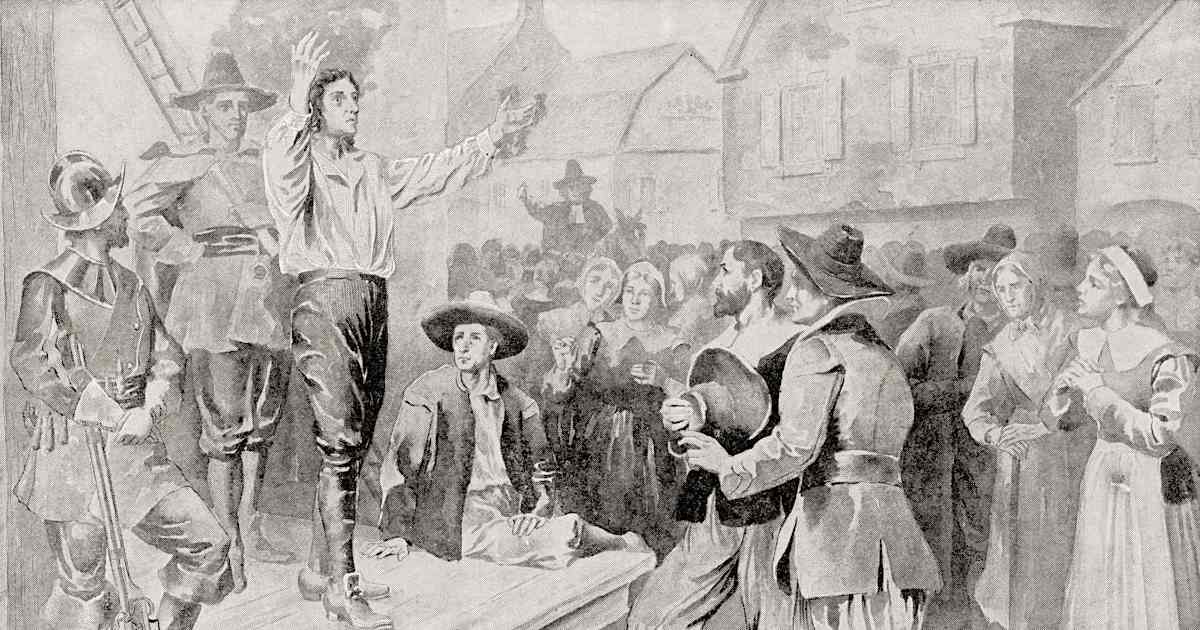
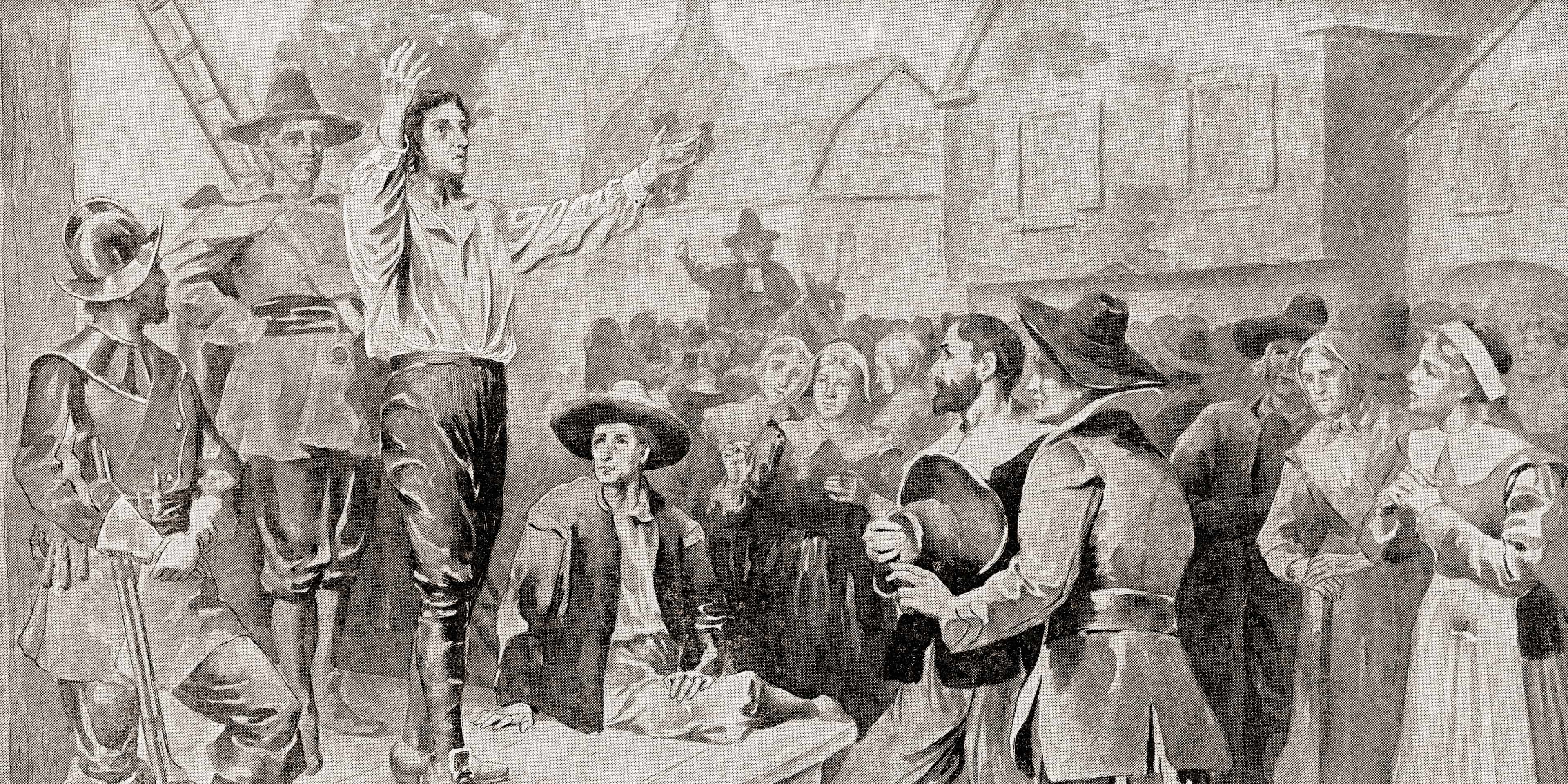
Perhaps no male execution shocked the colonial establishment more than that of George Burroughs. A highly athletic and charismatic Puritan minister, Burroughs had previously served in Salem Village but left due to intense, unresolved disputes over back-pay and loans, notably with the influential Putnam family. When the witch hunt broke out, his former neighbors used his legendary physical strength—such as his ability to lift a heavy gun with a single finger—as ‘proof’ of diabolical power. Burroughs was dragged back from Maine to stand trial. On the gallows, right before his hanging, Burroughs did the unthinkable: he perfectly recited the Lord’s Prayer, a feat believed to be physically impossible for a witch under Puritan theology. While the crowd wept and called for his pardon, the influential minister Cotton Mather intervened, convincing the onlookers that the Devil could easily masquerade as an angel of light. Burroughs was executed anyway.
John Proctor
John Proctor was a wealthy, outspoken 60-year-old tavern keeper and farmer who openly expressed his contempt for the trials. He famously beat his servant, Mary Warren, when she began exhibiting the ‘afflicted’ symptoms, which temporarily cured her of her fits. Proctor publicly declared that the accusers were liars and that the magistrates were fools. This defiance sealed his fate. When his pregnant wife, Elizabeth Proctor, was accused, John stood by her in court, only for the accusers to turn their sights on him. Both were convicted, but Elizabeth’s execution was delayed due to her pregnancy, saving her life. John, however, was hanged on August 19, his brave struggle later immortalized in Arthur Miller’s classic play The Crucible.
Giles Corey
Giles Corey was an 81-year-old farmer whose death remains the most gruesome event of the entire trials. Accused of witchcraft after defending his wife, Martha, Corey understood the corrupt nature of the Court of Oyer and Terminer. He knew that if he pleaded guilty or not guilty and was convicted, the colony would confiscate his extensive property, leaving his family with nothing. To prevent this, Corey exercised a legal loophole by refusing to stand trial or enter any plea. Under English common law, the punishment for refusing to plead was peine forte et dure—pressing with heavy stones. For three agonizing days, Corey was laid on the ground as heavy boulders were piled onto his chest. He remained defiantly silent, reportedly uttering only ‘More weight!’ before dying on September 19, 1692. Because he never stood trial, his estate remained intact and was successfully passed down to his heirs.
John Willard
John Willard served as Salem’s deputy constable and was initially tasked with arresting those accused of witchcraft. However, as he witnessed the obviously manufactured nature of the accusations, Willard’s conscience got the better of him. He publicly refused to make further arrests, expressing grave doubts about the validity of the trials. Almost immediately, the accusers turned on him. Seeking refuge, Willard fled Salem but was captured, returned, and condemned to hang based on spectral evidence and long-held family grudges, illustrating that even those within the colonial law enforcement apparatus were not safe from the mob.
Samuel Wardwell Sr.
Samuel Wardwell Sr. of Andover was a local carpenter, farmer, and eccentric known for telling fortunes and performing palm readings. When the hysteria spread to Andover, Wardwell was arrested. Believing that a confession would spare his life, as it had for many others, Wardwell initially confessed to making a pact with the Devil. However, tormented by the guilt of lying before God, Wardwell did something exceptionally brave: he recanted his confession and declared his absolute innocence. The court viewed his recantation as supreme arrogance and a sign of further demonic corruption. He was hanged on September 22, the final male victim of the gallows.
Causes and Societal Context: Setting the Stage for Madness
The Salem Witch Trials did not happen in a vacuum. While many point to the psychological or medical theories of the events—such as ergot poisoning, a rye-fungus hallucinogen—the crisis was primarily driven by structural, socioeconomic, and religious pressures. While many think of this tragedy as an isolated incident, there had been earlier colonial witch hunts in New England that set a dangerous precedent for the events in Salem. However, the scale in 1692 was unprecedented due to several factors:
- Socioeconomic Division: Salem Village was divided between poor, traditional farmers who supported the local church and the wealthy, mercantilist Salem Town residents. Most of the accusers lived in the struggling village, while the accused often lived in the prosperous areas.
- Legal Instability: In 1684, King Charles II had revoked the Massachusetts Bay Colony’s original charter. The colony operated without a stable, recognized legal framework for years until a new charter arrived in mid-1692, creating a legal vacuum where local magistrates could easily abuse their authority.
- The Role of Spectral Evidence: The court allowed ‘spectral evidence,’ which was the testimony of victims claiming they were being tormented by the invisible ‘specter’ of the accused. Since this evidence was impossible to disprove, a mere accusation was practically a death sentence.
Major Turning Points: The Collapse of the Court
The executions of high-profile men like George Burroughs and the horrific torture of Giles Corey served as pivotal turning points. When Burroughs recited the Lord’s Prayer perfectly, it sowed seeds of profound doubt among the spectators. Furthermore, Giles Corey’s brutal death shocked the conscience of many moderate colonists who realized the court had abandoned all semblance of Christian charity and English justice.
In October 1692, the highly respected minister Increase Mather, president of Harvard College, published a decisive tract titled Cases of Conscience Concerning Evil Spirits. In it, he famously stated: ‘It were better that ten suspected witches should escape, than that one innocent person should be condemned.’ Backed by this clerical opposition, Governor William Phips stepped in, prohibited the use of spectral evidence, and dissolved the Court of Oyer and Terminer. By May 1693, all remaining prisoners were pardoned and released, bringing a sudden end to the madness.
The Long-Term Impact on American Law and Society
The Salem Witch Trials left a deep, indelible scar on the American psyche, but they also catalysed a major evolution in the American legal system. The blatant failures of the Salem courtrooms directly influenced the development of foundational legal protections that Americans enjoy today. Key among these was the formalization of the presumption of innocence—the doctrine of ‘innocent until proven guilty’. The trials also underscored the critical danger of mixing religious doctrine with judicial authority, laying an early philosophical brick for the separation of church and state later enshrined in the United States Constitution. Furthermore, the right to legal counsel, the right to cross-examine accusers, and the exclusion of subjective, unscientific evidence (like modern-day ‘spectral evidence’) became central pillars of the American justice system.
Lesser-Known Facts and Surprising Anecdotes
- The Witch-Hunt’s Canine Victims: Humans were not the only ones targeted by the paranoia. During the peak of the hysteria, two dogs were executed in Salem after being accused of casting the ‘evil eye’ and bewitching local girls.
- The Devil’s Smoke: At the execution of Samuel Wardwell, while he was proclaiming his innocence on the gallows, a puff of smoke from the executioner’s pipe blew directly into his face, causing him to cough. The crowd of accusers immediately shouted that the Devil was physically hindering him from speaking, sealing his demise.
- Giles Corey’s Clever Defiance: By refusing to plead, Giles Corey bypassed a legal system designed to strip families of their land. His gruesome death remains the only instance of peine forte et dure ever recorded in Massachusetts legal history.
Why It Still Matters Today
Today, the term ‘witch hunt’ is frequently used in modern political discourse, but the historical reality of Salem reminds us of the true danger of unchecked public hysteria and the erosion of due process. The story of the men and women who died in Salem is a cautionary tale about the fragility of justice in the face of fear and groupthink. For readers seeking a more immersive look into these dark months, several excellent pieces of historical literature on the trials offer deep archival insights into the primary sources and court transcripts, helping us ensure that such a miscarriage of justice is never repeated.
People Also Ask (FAQ)
How many men were executed during the Salem Witch Trials?
A total of six men were executed during the Salem Witch Trials. Five of them (George Burroughs, John Proctor, John Willard, George Jacobs Sr., and Samuel Wardwell Sr.) were hanged on Gallows Hill, while one man, Giles Corey, was pressed to death under heavy stones.
Were witches burned at the stake in Salem?
No, contrary to popular myth, no one was burned at the stake in Salem. Under English law, witchcraft was a felony, which was punished by hanging. Burning at the stake was used in continental Europe but was not practiced for witchcraft in the American colonies.
What is spectral evidence?
Spectral evidence was a form of legal evidence where an accuser claimed that the ‘specter’ or spirit of the accused was attacking or tormenting them in a dream or vision. Because only the victim could see the specter, it was impossible for the defense to disprove.
Conclusion
The Salem Witch Trials represent a tragic convergence of religious extremism, geopolitical instability, and deeply personal neighborly feuds. By remembering the stories of the men of Salem alongside the women, we gain a more complete, nuanced, and profoundly human understanding of this historical disaster. Their bravery in the face of a rigged court and their ultimate sacrifices helped shape the modern principles of American justice, proving that the protection of individual liberties must always triumph over the loudest shouts of a panicked mob.


