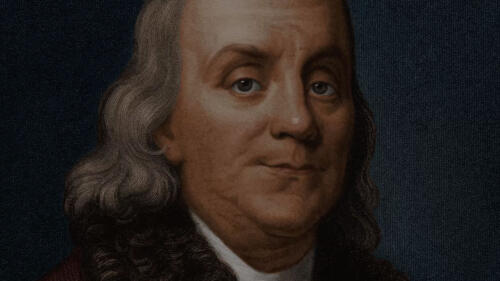
Benjamin Franklin is widely remembered as the quintessential American polymath: the pragmatic writer of Poor Richard’s Almanac, the visionary scientist who tamed lightning, and the venerable diplomat who signed both the Declaration of Independence and the Constitution. Yet, beneath this public veneer of sober diligence lay a far more enigmatic figure—a man whose private life was deeply entwined with the shadow world of secret societies, esoteric lodges, and elite underground clubs. From his early days of founding self-improvement circles in Philadelphia to the scandalous rumors of his involvement with Britain’s infamous Hellfire Club and his eventual leadership of Paris’s most elite Masonic lodge, Franklin understood that the levers of history were often turned in the dark. These secret and fraternal networks were not merely eccentric pastimes; they were crucial geopolitical tools that allowed Franklin to weave the web of espionage, alliance, and philosophy required to win American independence.
Historical Background: The Enlightenment and the Rise of Esoteric Networks
To fully comprehend Benjamin Franklin’s clandestine activities, we must examine the sociopolitical landscape of the mid-to-late 18th century. This was the era of the Enlightenment, a transformative period where traditional authorities—namely absolute monarchies and the religious establishment—were being intellectually challenged. In this environment, private clubs, intellectual salons, and fraternal organizations flourished as safe spaces where forward-thinking men could discuss radical ideas like democracy, humanism, and scientific progress without fear of censorship or royal retribution.
Key Events Timeline of Franklin’s Secret Affiliations
- 1727: A 21-year-old Franklin establishes the Junto Club (also known as the ‘Leather Apron Club’) in Philadelphia, a mutual-improvement group of young tradesmen and artisans.
- 1730/1731: Franklin is initiated into St. John’s Masonic Lodge in Philadelphia, marking the beginning of a lifelong commitment to Freemasonry.
- 1734: Franklin edits, prints, and distributes James Anderson’s The Constitutions of the Free-Masons, the very first Masonic book published in the Americas. That same year, he is elected Grand Master of Pennsylvania.
- 1757–1775: Franklin lives in London as a colonial agent. During this time, he develops a close friendship with Sir Francis Dashwood and begins visiting the notorious caves of West Wycombe.
- 1776: After signing the Declaration of Independence, Franklin is dispatched to Paris to secure a military alliance with France. He soon joins the legendary French Masonic lodge, La Loge des Neuf Sœurs (The Lodge of Nine Sisters).
- 1778: Franklin famously facilitates the initiation of the legendary French philosopher Voltaire into the Lodge of Nine Sisters, just weeks before Voltaire’s death.
- 1779: Franklin is elected Worshipful Master (Venerable Master) of the Lodge of Nine Sisters, serving in this elite leadership role until 1781.
The Three Faces of Franklin’s Secret Networks
The Junto Club: Philadelphia’s Crucible of Civic Progress
Long before he was rubbing shoulders with European aristocrats, Franklin recognized the power of collaborative networks. In 1727, he gathered eleven of his closest friends—including a mathematician, a surveyor, and a shoemaker—to form the Junto. They met every Friday evening to debate questions of morality, philosophy, and politics. This was no mere drinking club; it was an engine of civic transformation. Under Franklin’s guidance, the Junto became the launching pad for some of America’s most foundational public institutions. The meetings directly inspired the creation of the first subscription library (the Library Company of Philadelphia), the Union Fire Company, the University of Pennsylvania, and the Pennsylvania Hospital. The Junto eventually evolved into the American Philosophical Society, which remains a prestigious scholarly institution to this day.
The Freemasons & The Parisian Lodge of Nine Sisters
Franklin’s Masonic journey began in earnest in 1730/1731, and for over half a century, the fraternity served as both his spiritual home and his ultimate networking tool. Freemasonry’s emphasis on meritocracy, universal brotherhood, and deistic philosophy aligned perfectly with Franklin’s personal worldview. However, it was during his diplomatic mission to France that his Masonic ties yielded their greatest historical dividends. In Paris, Franklin affiliated with the highly influential lodge La Loge des Neuf Sœurs. This lodge was not a secretive temple of occult rituals, but rather a vibrant hub of the French intelligentsia, counting among its members scientists, artists, and political heavyweights. As Worshipful Master from 1779 to 1781, Franklin leveraged this powerful network of Enlightenment thinkers to lobby the French nobility, generate public sympathy for the American cause, and ultimately secure the crucial military and financial aid that proved to be one of the primary ways French support turned the tide of the war. Through the bonds of fraternal brotherhood, Franklin transformed intellectual admiration into tangible ships, soldiers, and gold.
The Hellfire Club: Political Debauchery or Secret Diplomacy?
Of all the secret societies linked to Benjamin Franklin, none has generated more sensational rumors than the infamous Hellfire Club. Properly known as the Order of the Knights of St. Francis of Wycombe (and later the Monks of Medmenham Abbey), the group was founded in England by the wealthy aristocrat and politician Sir Francis Dashwood. The club held its meetings at Medmenham Abbey and within the labyrinthine, man-made chalk tunnels of the Hellfire Caves in West Wycombe. The popular press and local gossip whispered of black magic, mock-pagan rituals, devil worship, and wild sexual orgies. While much of this was theatrical satire designed to mock conventional religion and shock polite society, the club had a serious political undercurrent. Its membership included prominent British lords, members of Parliament, and high-ranking officials like John Montagu (the 4th Earl of Sandwich) and the radical journalist John Wilkes. Franklin, who lived in London as a colonial agent for nearly two decades, was a frequent and welcome guest of Sir Francis Dashwood. While some historians debate whether Franklin was a formal initiate or merely a highly favored guest, he certainly spent weeks enjoying Dashwood’s hospitality at West Wycombe. In these subterranean chambers, surrounded by wine, wit, and high-stakes political players, Franklin was able to quietly gauge the political landscape of the British Empire, gather intelligence, and engage in unofficial, backchannel diplomacy as tensions between Great Britain and her colonies neared the boiling point.
Causes and Context: Why Secret Societies Flourished
To modern eyes, the reliance on secret societies might seem like the plot of a gothic novel, but in the 18th century, it was a practical necessity. Before the widespread freedom of the press and the establishment of formal democratic institutions, discussing political reform or criticizing the crown could easily lead to charges of treason. Lodge rooms and private clubs provided a rare sanctuary. Within these tiled doors, social hierarchies were symbolically suspended. An artisan like Franklin could sit as an equal with aristocrats, united by shared symbols and a commitment to Enlightenment ideals. Furthermore, as the colonies prepared to break away from the mother country, these networks became invaluable pipelines for covert communication and intelligence. The same fraternal bonds that bound men together in a Philadelphia lodge or a Parisian salon were used to organize resistance, distribute revolutionary pamphlets, and coordinate efforts. Franklin was a master of using these pre-existing structures to unify the disparate colonies. His early efforts in fostering colonial cooperation, such as when he sought to illustrate the necessity of unity by showing how Benjamin Franklin’s viral political cartoon united the 13 colonies, laid the groundwork for the eventual colonial coordination. When the war began, these underground connections transitioned seamlessly into active espionage and diplomatic rings.
Major Turning Points: From Colonial Mediator to Radical Revolutionary
Franklin’s career of secrecy hit several major turning points that forever altered the course of American history. The first occurred when he realized that his efforts to reconcile Great Britain and the colonies were futile. Up until the early 1770s, Franklin had used his British connections—including those within Dashwood’s elite circles—to advocate for colonial rights within the British Empire. However, as the political climate deteriorated, Franklin’s dual status as a British postmaster and a colonial representative became untenable. His shift from an imperial mediator to a radical revolutionary was finalized in 1775 when he returned to America just in time to help draft the historic document that officially severed ties with the crown. The drafting of the Declaration of Independence was not merely an act of political philosophy; it was a declaration of total commitment, and Franklin used his extensive networks to ensure that the document reached the eyes of sympathetic European allies who could help the fledgling nation survive.
Long-Term Impact on America
The legacy of Franklin’s involvement in secret societies extends far beyond the battlefield of the Revolutionary War. First, the civic model established by the Junto helped define the American tradition of community-led public service. Rather than relying on a monarch or a state-mandated church to build libraries, schools, and hospitals, American citizens learned to organize themselves through voluntary associations. Second, the secular, deistic principles championed within Masonic lodges left an indelible mark on the framing of the U.S. Constitution, which prioritized the separation of church and state, religious tolerance, and merit-based leadership. Finally, Franklin’s masterful use of clandestine networks set a precedent for American diplomacy and intelligence-gathering, demonstrating that sometimes the most effective treaties are negotiated not in open courts, but in the quiet, fraternal salons of global power brokers.
Lesser-Known Facts and Historical Curiosities
The Craven Street Bones: Anatomy or Sinister Rites?
In 1997, conservationists restoring Franklin’s former London home at 36 Craven Street made a gruesome discovery: over 1,200 human bones, including those of infants, buried in a windowless room beneath the garden. Skeptics immediately pointed to Franklin’s ties to the Hellfire Club, whispering of dark rituals and human sacrifices. However, the historical truth is far more scientific. Franklin’s young friend and fellow boarder, William Hewson, was a pioneering anatomist who ran a secret, illegal anatomy school in the house. At the time, dissecting human bodies was highly restricted, forcing medical students to rely on grave robbers for specimens. Once Hewson was finished teaching, he quietly buried the skeletal remains in the basement to avoid prosecution. Franklin almost certainly knew about the school and may have even assisted his friend in securing specimens, but the bones were the result of scientific inquiry, not occult ceremonies.
Initiating Voltaire into the ‘Nine Sisters’
One of the most dramatic moments in Masonic history occurred on April 7, 1778, when the 84-year-old French philosopher Voltaire was initiated into the Lodge of Nine Sisters. Weak and nearing death, the great thinker was escorted into the lodge room by Benjamin Franklin. In a deeply symbolic gesture that captivated the Parisian public, Franklin presented Voltaire with the Masonic apron that had once belonged to the French philosopher Claude Adrien Helvétius. The two men embraced to thunderous applause, symbolizing the union of American revolutionary pragmatism and French philosophical brilliance.
Why It Still Matters Today
In an era dominated by digital communication and public transparency, the 18th-century world of secret societies still holds a powerful fascination. Pop culture often caricatures these groups as sinister cabals plotting world domination. However, studying Franklin’s involvement in these clubs reveals a different truth: secret societies were the original professional networking platforms, collaborative think tanks, and incubators of social capital. Today, as we grapple with polarization and the decline of physical civic spaces, the story of Franklin and his lodges reminds us of the critical importance of face-to-face dialogue, mutual self-improvement, and the cultivation of diverse, cross-disciplinary networks to solve the complex problems of society.
People Also Ask
Was Benjamin Franklin actually in the Hellfire Club?
While Franklin was a close friend of Sir Francis Dashwood (the club’s founder) and spent considerable time at his West Wycombe estate and the Hellfire Caves, there is no official membership roster proving he was a formal initiate. However, he was a frequent guest and highly active in the elite social circles associated with the group during his time in London.
Did Benjamin Franklin practice devil worship?
No. The rumors of devil worship and black magic associated with the Hellfire Club were largely sensationalized gossip or theatrical parodies performed by the members to mock conventional religious hypocrisy. Franklin himself was a deist who believed in a rational Creator and championed moral virtue and civic duty.
What was the difference between the Junto and Freemasonry?
The Junto was a small, localized discussion club founded by Franklin in Philadelphia for young artisans and tradesmen focused on mutual self-improvement and civic projects. Freemasonry was a much larger, international fraternal organization with established rituals, symbols, and a global network of lodges that Franklin utilized for both personal development and high-level international diplomacy.
Conclusion
Benjamin Franklin’s legacy as a Founding Father is secure, but our understanding of his achievements is incomplete without acknowledging the shadow networks he navigated so masterfully. Whether debating local reforms in the modest meeting rooms of the Philadelphia Junto, engaging in high-stakes backchannel diplomacy in the scandalous Hellfire Caves of West Wycombe, or securing the survival of a new nation in the elegant halls of Paris’s Lodge of Nine Sisters, Franklin was a master of the social game. He understood that progress, alliance, and revolution required more than just public declarations; they required trust, brotherhood, and a willingness to operate in the quiet spaces where history is truly made.


