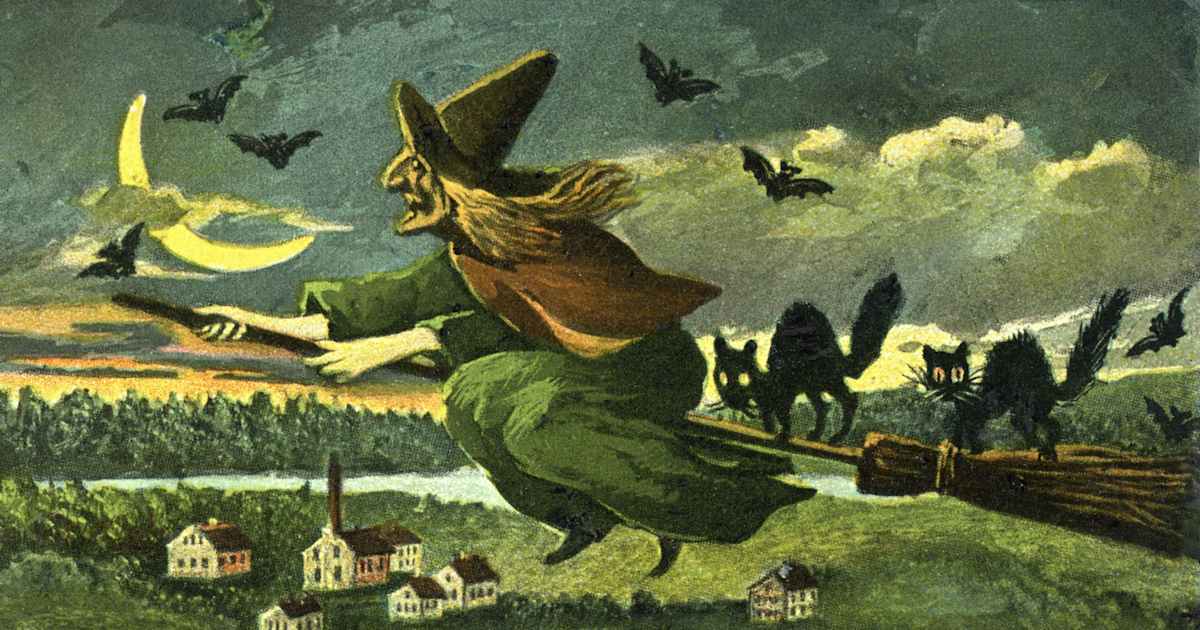
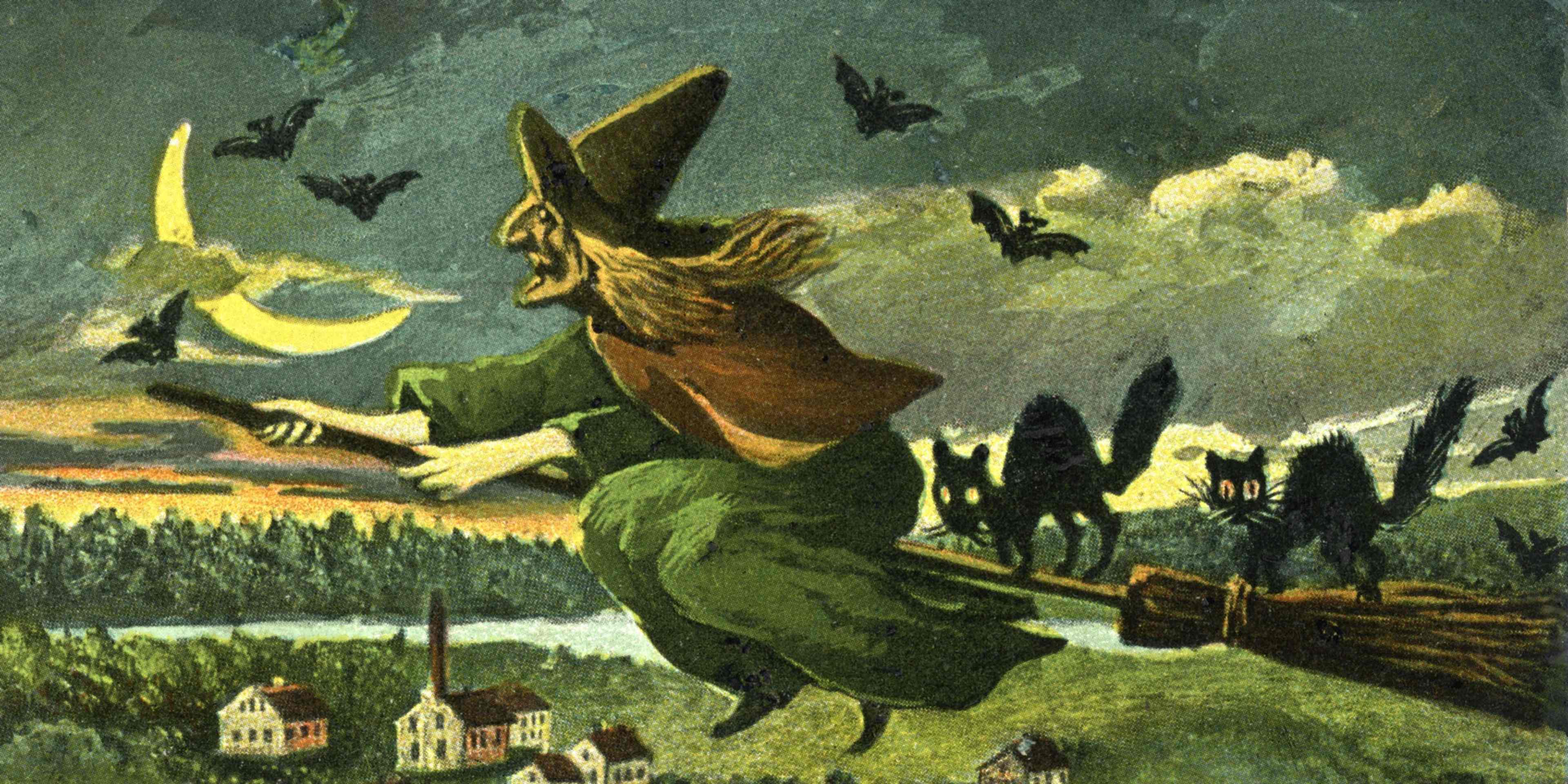
The iconic image of a green-skinned witch cackling as she flies across a full moon on a wooden broomstick is one of the most recognizable symbols of Halloween in modern pop culture. Yet, the history behind how a humble household cleaning tool became a vessel for the occult is a dark, complex tale of religious persecution, medieval pharmacology, and gender politics. To understand why do witches ride brooms, we must travel back to the late Middle Ages, a time when European societies were gripped by existential dread, heretic hunts, and a deep suspicion of female autonomy. This fascinating evolution didn’t just stay in Europe; it crossed the Atlantic, deeply influencing early American folklore, shaping the psychological landscape of the infamous Salem Witch Trials, and eventually transforming into a beloved, commercialized American holiday tradition. Investigating the roots of the witch on a broomstick reveals how ordinary domestic tools were weaponized by religious authorities to police the boundaries of society, gender, and spiritual orthodoxy.
Historical Background: The Roots of the Besom and the Brew
The broom itself is one of humanity’s oldest tools, with the act of sweeping dating back to ancient times when people bundled twigs, reeds, and other natural fibers to clear dust and ash from their hearths. In early English history, these sweeping tools were known as besoms, named after the ‘broom’ shrub commonly used in their construction. Because maintaining the hearth was historically categorized as women’s work, the besom became an indelible symbol of female domesticity. However, as the Middle Ages progressed, the symbol of the broom underwent a profound, dark transformation. What was once an emblem of domestic duty was reinterpreted by the medieval Catholic Church as a tool of rebellion, heresy, and supernatural subversion.
The Chemical Catalyst: Tropane Alkaloids and ‘Flying’ Ointments
Historically, the legendary ability of witches to take flight was not attributed to magic alone, but to a highly real, complex understanding of botany and pharmacology. During the medieval period, local healers, herbalists, and accused sorcerers formulated special ointments and salves using wild plants. Modern science has revealed that these brews were made from highly toxic plants such as Atropa belladonna (deadly nightshade), Hyoscyamus niger (henbane), Mandragora officinarum (mandrake), and Datura stramonium (jimsonweed). These plants contain high concentrations of tropane alkaloids, hallucinogenic chemicals that alter perception, cause vivid dreams, and induce a sensation of weightlessness or floating.
Ingesting these mind-altering substances orally was highly dangerous, often causing severe gastrointestinal distress, blindness, or fatal poisoning. To bypass these issues, medieval practitioners discovered that the chemicals could be absorbed safely and far more effectively through the skin and mucous membranes. Historical accounts suggest that individuals would mix these herbs into lard or oil to create ‘flying ointments.’ They would then apply these mixtures to highly vascularized areas of their bodies—including under the arms and the groin. The most notorious method involved greasing a wooden staff, pole, or broom handle with the ointment and mounting it, allowing the active chemicals to absorb transdermally, which triggered intensely vivid, hallucinatory sensations of soaring through the night sky.
Chronological Timeline of the Flying Witch Legend
The evolution of the broomstick-riding witch spans centuries, shifting from a localized legal accusation to a universally recognized pop-culture trope. Below is the historical trajectory of how this legend was constructed:
- 1324 — The Sorcery Trial of Lady Alice Kyteler: In Kilkenny, Ireland, a wealthy Norman widow named Lady Alice Kyteler was accused of witchcraft by her stepchildren. During a search of her home, investigators discovered a ‘pipe of ointment’ used to grease a wooden staff. This trial represents the first documented connection between witchcraft, psychoactive ointments, and the physical act of ‘riding’ a stick.
- 1451 — Martin Le Franc’s Le Champion des Dames: The French poet Martin Le Franc published a manuscript featuring the earliest known illustrations of witches flying on broomsticks. The drawings depicted two women—one riding a broom and the other a plain white stick. They were identified as Waldensians, a reformist Christian sect branded as heretics by the Church.
- 1453 — Guillaume Edelin’s Unlikely Confession: Guillaume Edelin, a Doctor of Divinity and prior from Saint-Germain-en-Laye, was arrested for criticizing the Church’s witchcraft panics. Under intense torture, Edelin confessed to submitting to the Devil and riding a broom to attend the witches’ Sabbath, making him the first recorded individual to confess to this specific act.
- 1470 — Jordanes de Bergamo’s Quaestio de Strigis: Theologian Jordanes de Bergamo penned a treatise describing how witches allegedly anointed wooden staffs and rode them to clandestine meetings, or applied the flying ointment to ‘other hairy places’ of the body.
- 16th Century — Pieter Bruegel’s Chimney Illustrations: Celebrated Dutch artist Pieter Bruegel the Elder created highly influential etchings depicting witches flying out of chimneys on broomsticks, firmly cementing the association between witches, brooms, and chimneys in the European imagination.
- 1692 — The Salem Witch Trials: The deep-seated fears of spectral travel and devilish covenants migrated with European Puritans to colonial Massachusetts, leading to the executions of twenty people in Salem.
Key Figures Who Shaped the Witchcraft Narrative
Several historical actors played critical roles in constructing, prosecuting, and popularizing the myth of the flying witch:
1. Lady Alice Kyteler
A wealthy merchant and moneylender from Kilkenny, Ireland, Alice Kyteler married four times, accumulating massive wealth that drew the ire of her stepchildren and the church. Her trial in 1324 transitionally marked the shift from prosecuting simple heresy to prosecuting devil-worship and sorcery. While Alice managed to escape to England, her servant Petronilla de Meath was burned at the stake, and the accusation of her ‘greased staff’ became a foundational text for the witch-hunting manual writers of the next two centuries.
2. Guillaume Edelin
An Augustinian prior and highly educated theologian, Guillaume Edelin made history in 1453 as the first person to confess to broomstick flight. Ironically, Edelin had been an outspoken critic of the inquisitorial panic, preaching that witchcraft was a delusion. His public criticism of the Church’s overreach led to his arrest, and under torture, his confession was used to validate the very superstitions he had fought against. He spent the remainder of his life chained in a dungeon in Évreux.
3. Bishop Richard de Ledrede
The English Bishop of Ossory, Richard de Ledrede, was educated in the papal court of Avignon, where he became highly radicalized regarding heresy and demonic pacts. Seeking to assert ecclesiastical power over secular authorities in Ireland, Ledrede used the Kyteler case to introduce continental European concepts of demonology and the witches’ sabbat to the British Isles, aggressively hunting those accused of using flying ointments.
Causes and Sociopolitical Context: Gender and Religious Control
The association between witches and broomsticks was not accidental; it was born from deep-seated anxieties surrounding gender roles, religious dissent, and the social order of early modern Europe. The broom was a gendered tool, representing the highly restricted, domestic sphere to which women were expected to belong. By depicting a woman flipping the broom upside down, straddling it, and flying out of her home into the wild night, the Church created a powerful visual metaphor for domesticity gone wild. It suggested that women who stepped outside of their prescribed social roles were actively submitting to demonic forces.
Furthermore, the early illustrations in Martin Le Franc’s Le Champion des Dames labeled the flying women as ‘Vaudoises’ or Waldensians. This Christian group, founded in the 12th century, rejected the authority of the Pope and, most shockingly for the medieval Church, allowed women to preach and administer sacraments. By associating these religious reformers with demonic broom-riding, the Catholic Church successfully demonized its political and theological rivals, transforming them from reform-minded Christians into terrifying agents of Satan in the public mind.
Turning Points: From Medieval Terror to Pop Culture Symbol
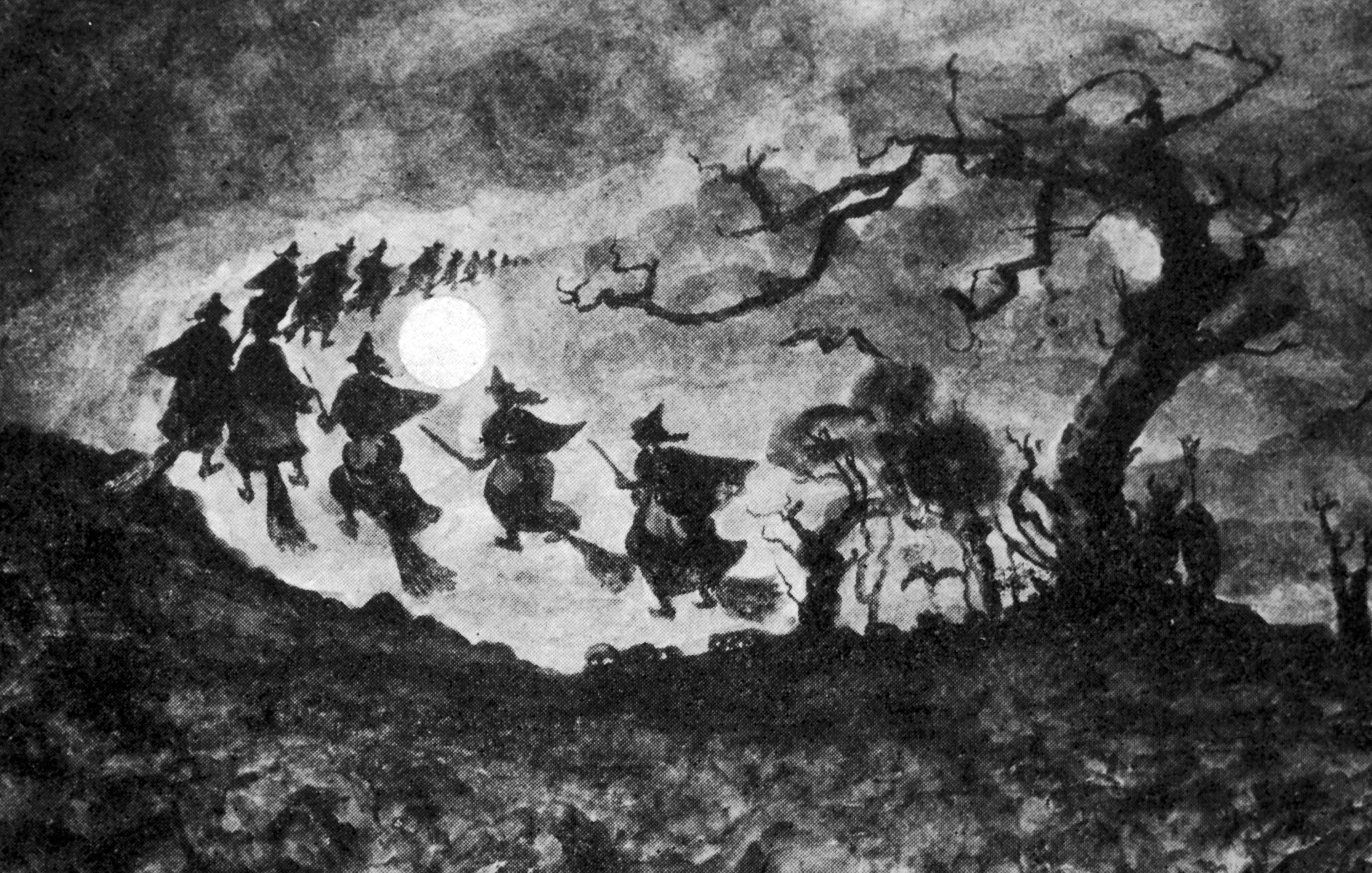
As the Enlightenment swept through Europe and North America during the 18th century, legal prosecutions for witchcraft dwindled and eventually ceased. The terrifying theological threat of the flying witch began to transition into folklore, children’s literature, and holiday tradition. A major turning point occurred in the United States during the late 19th and early 20th centuries with the commercialization of Halloween. Drawing heavily from European folklore, early American publishers and greeting card companies popularized the aesthetic of the green-skinned, broom-riding witch. This image was forever immortalized in global popular culture by Margaret Hamilton’s portrayal of the Wicked Witch of the West in the 1939 classic film, The Wizard of Oz. What was once a confession extracted under horrific torture became a beloved symbol of autumn festivities.
Long-Term Impact on American Culture and Society
The legacy of the European witch panics left an indelible mark on the development of the American identity. In 1692, the Puritan settlement of Salem, Massachusetts, became the epicenter of the Salem Witch Trials, a tragedy directly fueled by the European theological literature on spectral flight and pacts with the Devil. While colonial court transcripts reveal that the accused in Salem were alleged to have flown on poles, trees, or animals rather than traditional broomsticks, the broader European mythology of the flying witch formed the core of the psychological panic. Today, Salem has completely rebranded its tragic history, transforming itself into a global tourism hub centered around witch lore, where the broomstick has been embraced as a symbol of local history and commercial tourism.
Moreover, the physical broom itself underwent a major technological revolution in America. In 1797, a Massachusetts farmer named Levi Dickenson revolutionized the sweeping industry by creating a highly efficient broom using sorghum, commonly known as ‘broomcorn.’ Later, in the early 19th century, the American religious sect known as the Shakers invented the flat, modern broom that we use today. This industrial modernization of the broom occurred just as the folklore of the flying witch was transitioning into American children’s literature. In contemporary America, the broom has also been reclaimed by the rapid growth of Neo-Pagan and Wiccan movements. For modern Wiccans, the broom (or besom) is no longer a symbol of demonic flight, but a sacred ritual tool used to symbolically sweep away negative spiritual energies from a sacred space, completing a multi-century journey of cultural reclamation.
Lesser-Known Facts About the History of Witches and Brooms
- The Pagan Fertility Leap: Anthropologists suggest the legend of the flying broom may have roots in pre-Christian European fertility rituals. To encourage the growth of their crops, rural farmers would gather under the full moon and dance while leaping astride poles, pitchforks, and brooms. This ‘broomstick dance’ was often misunderstood or intentionally recharacterized by Christian inquisitors as witches flying to nocturnal orgies.
- The Chimney Signal: In early modern Europe, it was a common domestic custom for a woman to prop her broom up outside her door or place it inside the chimney to let her neighbors know she was away from the home. This practical household signal likely inspired the popular folklore that witches exited their houses by flying up and out of their chimneys.
- The First Broom Rider Was a Priest: Despite the modern stereotype of the witch being exclusively female, the first recorded confession of riding a broom came from a male Catholic priest, Guillaume Edelin, in 1453.
Why This History Still Matters Today
The dark history of how witches came to ride brooms is far more than a trivia answer for Halloween; it serves as a powerful case study in how dominant cultural institutions can weaponize ordinary objects to marginalize, demonize, and control vulnerable populations. By looking past the whimsical modern stereotype of the flying witch, we uncover a history of systemic misogyny, religious persecution, and the tragic suppression of indigenous botanical knowledge. It challenges us to examine how modern stereotypes are created, who they target, and how easily historical trauma can be sanitized into commercial entertainment.
People Also Ask
Why did witches allegedly ride broomsticks?
The myth arose from medieval accounts of ‘flying ointments’ made from hallucinogenic plants like belladonna and henbane. To avoid severe illness from swallowing these toxins, practitioners applied the salves transdermally to sensitive skin, often using a greased wooden staff or broom handle. The resulting hallucinations of flight and weightlessness were interpreted by inquisitors as literal physical flight.
Who was the first person to confess to riding a broom?
The first recorded confession came from Guillaume Edelin, a French Catholic priest and prior, in 1453. He confessed under torture after criticizing the Church’s escalating witch hunts.
Did accused witches actually fly on brooms during the Salem Witch Trials?
No. While the Salem Witch Trials of 1692 were heavily influenced by European beliefs in spectral travel, court records show that the accused were alleged to have ridden on poles, tree branches, or beasts, rather than broomsticks. The association of Salem witches with the broomstick is a later addition of 19th and 20th-century American folklore and pop culture.
Conclusion
The legendary image of the witch flying on a broomstick has traveled a long, tortuous path from the torture chambers of medieval Europe to the front porches of modern American suburbs. What began as a complex mix of pagan fertility rituals, transdermal hallucinogenic pharmacology, and a patriarchal desire to police female domesticity was forged by the fires of the Inquisition into an enduring symbol of heresy. Over the centuries, American culture adapted and transformed this dark history, reshaping the terrifying specter of the flying witch into a beloved symbol of seasonal celebration and spiritual reclamation. By understanding the historical reality behind the myth, we pay respect to the thousands of individuals who suffered during the witch trials and gain a deeper appreciation for the complex tapestry of folklore that continues to shape our world today.


