In the spring of 1865, Washington, D.C., was a city swept up in a whirlwind of jubilant celebration. After four long, agonizing years of conflict, the American Civil War was finally drawing to its dramatic conclusion. The Confederate capital of Richmond had fallen, Petersburg was secured, and General Robert E. Lee had surrendered his army to Ulysses S. Grant at Appomattox Court House. The Union had endured, and the capital was alive with bonfires, music, and a collective sigh of relief. Yet, amidst this atmosphere of triumph, President Abraham Lincoln felt a profound, heavy responsibility. When a massive crowd gathered outside the White House on the evening of April 11, 1865, expecting a rousing, triumphant victory speech, they were met instead with a highly detailed, sober, and legislative blueprint for the future of the nation. This historic address, delivered from the second-floor balcony of the White House, would be the final public speech of Abraham Lincoln. Instead of gloating over the defeated South, Lincoln chose this moment to outline his vision for Reconstruction, making a historic, public declaration in favor of Black suffrage that would ultimately seal his tragic fate.
The Historical Context of April 1865: A Nation on the Brink of Peace
To understand the weight of Lincoln’s final speech, one must look at the immense challenges facing post-Civil War America. The war had preserved the Union and brought about the end of slavery, but it also left the South devastated, millions of former slaves in a state of legal limbo, and a deeply divided political landscape. The process of Reconstruction—how to readmit the seceded Southern states and secure the civil rights of newly emancipated African Americans—was the most contentious issue of the era. The political factions in Washington were deeply polarized. Moderate Republicans, led by Lincoln, favored a more gradual, conciliatory approach to bring the Southern states back into the fold, hoping to heal national wounds quickly. On the other hand, Radical Republicans demanded strict punishments for Confederate leaders and immediate, full civil and political rights for Black Americans. The central question was how to rebuild the national authority without sacrificing the hard-won victories of emancipation.
The Prelude: Restlessness, Dreams, and “Dixie”
As the news of Lee’s surrender spread, Washington erupted in joy. On April 10, 1865, a crowd of approximately 3,000 citizens gathered outside the White House, clamoring for the President to speak. Lincoln, however, demurred, explaining that he wanted to prepare his remarks carefully for the following evening. To satisfy the enthusiastic crowd, he made a lighthearted request to the Marine Band. Lincoln requested they play “Dixie,” the unofficial anthem of the Confederacy. “I have always thought ‘Dixie’ one of the best tunes I have ever heard,” Lincoln told the laughing crowd. “Our adversaries over the way attempted to appropriate it, but I insisted yesterday that we fairly captured it.” This gesture, combining humor with a subtle message of reconciliation, showed Lincoln’s desire to reunify the cultural fabric of the nation.
Despite the public cheer, Lincoln’s private thoughts were haunted by dark, prophetic premonitions. He confided to his wife, Mary Todd Lincoln, and close friends about a series of disturbing dreams. In one particularly vivid dream, he walked through a mourning White House and entered the East Room, where he saw a shrouded corpse guarded by soldiers. When he asked who had died, a soldier replied, “The President… he was killed by an assassin!” In another dream, Lincoln saw himself on a mysterious vessel gliding rapidly toward a dark, unknown shore—a dream he had previously experienced before major Union victories like Antietam and Gettysburg. While he hoped this dream portended a swift surrender of the remaining Confederate forces under General Joseph Johnston, it cast a somber shadow over his final days.
The Address on April 11: A Blueprint for Reconstruction
On the evening of Tuesday, April 11, 1865, the White House lawn was packed with hundreds of eager citizens. When Lincoln appeared at the second-floor window of the North Portico, he was met with deafening applause. To read his prepared text in the dim evening light, his friend and journalist Noah Brooks stood beside him, holding a single candle, while Lincoln’s young son, Tad, scrambled on the floor to catch the pages as the President dropped them. Lincoln began his speech by acknowledging the joy of the hour, promising a day of national thanksgiving, but he immediately pivoted to the complex, challenging realities of Reconstruction. He warned that rebuilding the nation was a task “fraught with great difficulty” and that there was no existing template for how to handle seceded states that had abandoned their constitutional relations with the Union.
The Louisiana Experiment and the Case for Gradual Progress
The core of Lincoln’s address was a defense of his reconstruction policies, specifically focusing on the newly established free-state government in Louisiana. Under Lincoln’s “Ten Percent Plan,” if ten percent of a seceded state’s 1860 voting population took an oath of allegiance to the Union, they could establish a new state government. Louisiana had done this, drafting a new constitution that outlawed slavery, established economic independence for African Americans, and created a public school system open to both races. However, this new government was heavily criticized by Radical Republicans because it did not grant voting rights to Black men.
Lincoln argued that while the Louisiana government was imperfect, it was a vital starting point. He contended that it was far better to work with and improve this existing “nucleus” of loyalty than to discard it and start from scratch. He pointed out that Louisiana’s new legislature had the authority to grant franchise to Black citizens in the future and had already pledged its support for the ratification of the 13th Amendment, which would permanently outlaw slavery throughout the United States.
A Historic Public Declaration: Lincoln Advocates for Black Suffrage
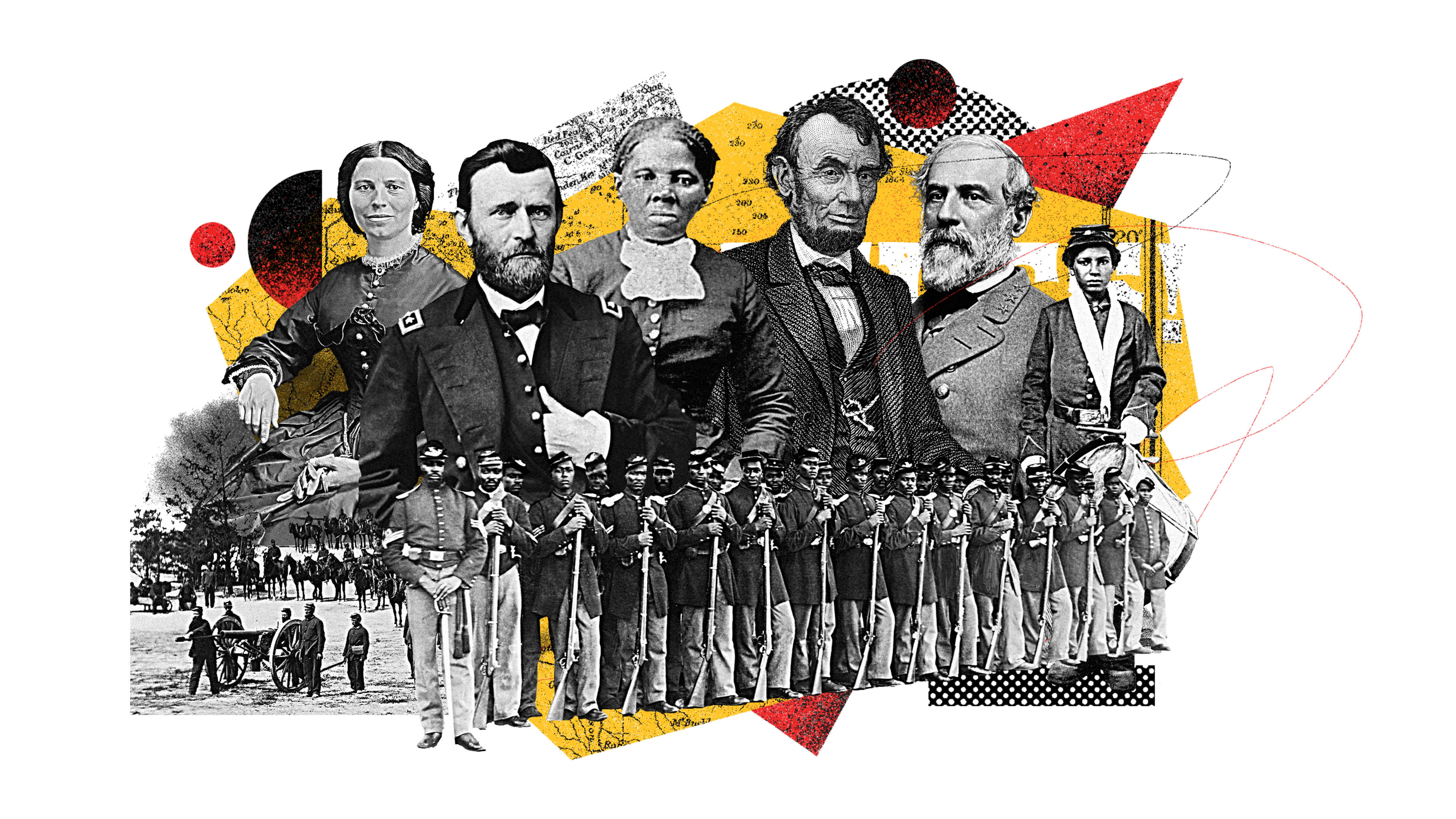
Though Lincoln’s speech was highly policy-oriented and lacked the poetic resonance of his Second Inaugural Address, it contained a monumental, historic shift. For the first time in his presidency, Lincoln publicly advocated for the right of Black Americans to vote. He stated, “It is unsatisfactory to some that the elective franchise is not given to the colored man. I would myself prefer that it were now conferred on the very intelligent, and on those who serve our cause as soldiers.” This inclusion was a clear acknowledgment of the crucial contributions of black heroes throughout US military history, whose service in the Union Army had been instrumental in saving the republic. By publicly supporting even limited Black suffrage, Lincoln broke new political ground, signaling that the post-war United States must move toward true racial equality.
The Turning Point: A Fatal Voice in the Crowd
While many in the audience found the policy-heavy speech dry and disappointing, there was one listener who understood its radical implications all too well. Standing in the crowd on the White House lawn was John Wilkes Booth, a well-known actor and passionate Confederate sympathizer. Booth had spent months plotting to kidnap Lincoln to ransom him for Confederate prisoners of war. Hearing the President advocate for Black voting rights transformed Booth’s anger into a lethal obsession. Booth turned to his co-conspirator, Lewis Powell, and hissed: “That means n—- citizenship! Now, by God, I’ll put him through. That is the last speech he will ever make.” Three days later, on Good Friday, April 14, 1865, Booth carried out his murderous threat, shooting Lincoln at Ford’s Theatre. Lincoln died the following morning, making the April 11 address the final speech of his life.
Timeline of Lincoln’s Final Days
- April 9, 1865: Confederate General Robert E. Lee surrenders to Union General Ulysses S. Grant at Appomattox, effectively ending the military capability of the Confederacy.
- April 10, 1865: A celebratory crowd gathers at the White House; Lincoln delivers brief spontaneous remarks and requests “Dixie.”
- April 11, 1865: Lincoln delivers his final public speech from the White House balcony, outlining his Reconstruction policy and endorsing limited Black suffrage.
- April 14, 1865: Lincoln is assassinated by John Wilkes Booth at Ford’s Theatre in Washington, D.C.
- April 15, 1865: Abraham Lincoln passes away, and Vice President Andrew Johnson is sworn in as the 17th President of the United States.
The Long-Term Impact on America
The assassination of Abraham Lincoln was a catastrophe for the Reconstruction era. With his death, the nation lost its most skilled political consensus-builder. Lincoln’s successor, Andrew Johnson, was a Southern Democrat who opposed Black civil rights and clashed bitterly with the Radical Republicans in Congress. This political warfare led to Johnson’s impeachment and a chaotic, deeply flawed Reconstruction process. Despite these setbacks, Lincoln’s final speech laid the intellectual and moral groundwork for the future. The ideas he championed—national reconciliation, constitutional amendments to secure freedom, and the expansion of the franchise—would eventually culminate in the passage of the 14th and 15th Amendments, establishing citizenship and voting rights for African Americans. The ongoing struggle to protect these rights remains a defining narrative in the quest to fulfill the founding principles of the nation.
Lesser-Known Facts About Lincoln’s Final Speech
- A Family Affair on the Balcony: While Lincoln spoke, his young son Tad sat at his feet. As Lincoln dropped the written pages of his speech to the floor, Tad playfully gathered them up, helping his father manage the manuscript in the dark.
- The Candle Holder: Because there was no electricity, Lincoln’s close friend, journalist Noah Brooks, had to stand behind a curtain on the balcony, holding a single candle to illuminate the pages for the President.
- The Fate of Dixie: Lincoln’s defense of playing “Dixie” was his way of showing the South that they would not be treated as conquered subjects, but as fellow citizens who were free to share their culture in a reunified country.
Why It Still Matters Today
Abraham Lincoln’s final speech is a powerful reminder that winning a war is only half the battle; building a lasting, just peace is often far more difficult. The debates Lincoln raised on April 11, 1865—regarding federal authority, state autonomy, and voting rights—continue to shape American political discourse today. Issues surrounding voter registration, civil rights legislation, and systemic equality are direct continuations of the conversations started during Reconstruction. Lincoln’s willingness to evolve his own views on race and citizenship serves as an enduring model of leadership in times of deep national division.
People Also Ask
What was the main topic of Lincoln’s final speech?
The main topic of Lincoln’s final speech, delivered on April 11, 1865, was the Reconstruction of the seceded Southern states, specifically focusing on the newly established government in Louisiana and the path forward for national reconciliation.
Did Lincoln advocate for Black voting rights in his last speech?
Yes. For the first time in public, Lincoln expressed his support for granting the right to vote to certain Black Americans, specifically those he deemed “very intelligent” and those who had served as soldiers in the Union Army.
Why did Lincoln’s final speech anger John Wilkes Booth?
John Wilkes Booth was an ardent white supremacist and Confederate sympathizer. Hearing the President of the United States publicly endorse Black suffrage and citizenship enraged Booth, prompting him to abandon his kidnap plot and resolve to assassinate Lincoln.
Conclusion
Abraham Lincoln’s last public address was not the triumphant victory lap the American public expected, but a thoughtful, pragmatic, and visionary blueprint for a reconstructed United States. By advocating for the reintegration of the Southern states and taking his first public step toward Black suffrage, Lincoln demonstrated his commitment to both national unity and progressive civil rights. Though his life was cut short by an assassin’s bullet just days later, the ideas articulated in his final speech laid the foundation for the constitutional amendments that would eventually redefine American citizenship. Today, Lincoln’s final words stand as a testament to the enduring challenge of building a more perfect union.


