The assassination of President Abraham Lincoln in April 1865 remains one of the most agonizing turning points in United States history, casting a long shadow of grief and political vengeance across a nation newly emerging from the Civil War. At the center of this maelstrom of retribution was Mary Surratt, a widowed boarding house owner whose home became the alleged nerve center for John Wilkes Booth’s conspiratorial circle. Mary Surratt earned the tragic and highly controversial distinction of being the first woman executed by the United States federal government. This deep dive into her life, trial, and legacy explores how an ordinary woman from Maryland was swept up in the nation’s most infamous murder plot, raising profound and enduring questions about wartime justice, executive overreach, and constitutional rights.
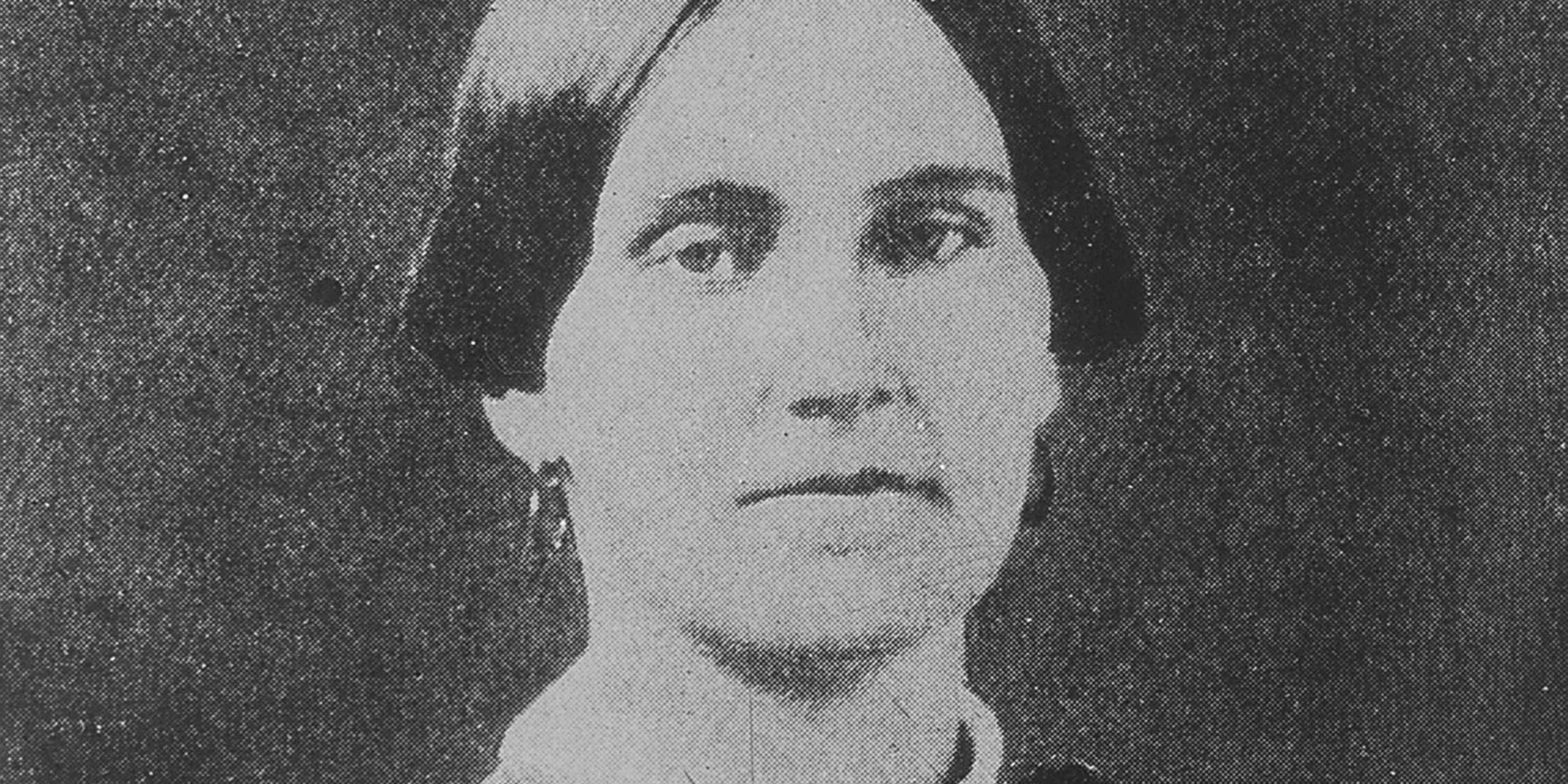
The Historical Background: From Maryland Tavern to D.C. Boarding House
To understand the path that led Mary Surratt to the gallows, one must examine her background and the deeply divided environment of mid-19th-century America. Born Mary Elizabeth Jenkins around 1823 in Prince George’s County, Maryland, her upbringing was typical of a Southern-sympathizing Marylander. Raised in a slaveholding family and educated at a Catholic female seminary, she married John Harrison Surratt in 1840. The couple eventually settled on a large tract of land in southern Maryland, building a farmhouse that served as a tavern, inn, and local polling place. This rural outpost eventually became known as Surrattsville (modern-day Clinton, Maryland).
In addition to serving spirits and lodging, the property also functioned as a local post office, a hub of daily life where neighbors exchanged news and letters. This showcases a time when communities relied on local tavern-keepers long before the creation of the advanced postal network of modern times. If you are curious about the evolution of these early communications, you can read more about how the US Post Office has delivered the mail through the decades. During the Civil War, the slaveholding Surratt family was fiercely loyal to the Confederacy. Their tavern quickly became a known safe house and courier station for the Confederate underground, serving as a vital link in the espionage network running between Richmond and Canada.
When John Surratt Sr. died in 1862, Mary was left with mounting debts and three children to support: Isaac, Anna, and John Jr. Unable to manage the vast property alone, Mary made a fateful decision in late 1864. She leased the Maryland tavern to a former D.C. policeman named John M. Lloyd and moved her family to a brick townhouse she owned at 541 H Street in Washington, D.C. To secure an income, she opened this townhouse as a boarding house. This transition brought her from the fringes of the Maryland countryside directly into the heart of the wartime Union capital—a city crawling with soldiers, politicians, and spies.
The Gathering Storm: John Wilkes Booth and the Conspiracy
The H Street boarding house quickly became a meeting place for Confederate sympathizers and agents. Mary’s youngest son, John Surratt Jr., was deeply involved in Confederate espionage, working as a courier carrying dispatches. Through these connections, John Jr. was introduced to John Wilkes Booth, a famous, charismatic actor and passionate Confederate zealot, by Dr. Samuel Mudd in late December 1864. Booth began frequenting the Surratt boarding house, finding it an ideal location to recruit and organize a band of conspirators.
Initially, Booth’s grand design was not assassination, but a daring plot to kidnap President Abraham Lincoln. The plan was to capture Lincoln and smuggle him across the Potomac River to Richmond, where he would be used as a bargaining chip to force the Union to release Confederate prisoners of war or sue for peace. Booth recruited a diverse crew of co-conspirators, including Lewis Powell (a towering, violent former Confederate soldier), George Atzerodt (a carriage painter and smuggler), David Herold (an easily led pharmacy clerk), and John Surratt Jr. themselves. The boarding house served as their meeting ground, with Mary Surratt frequently interacting with Booth and the others, serving them tea and exchanging polite pleasantries.
However, the military collapse of the Confederacy in April 1865 completely shattered Booth’s kidnapping plans. With Robert E. Lee’s surrender and Richmond in Union hands, Booth’s desperation turned into homicidal rage. He transformed the kidnapping plot into a coordinated, multi-pronged assassination attempt aimed at decapitating the Union government. Booth would target President Lincoln; Lewis Powell would assassinate Secretary of State William Seward; and George Atzerodt would murder Vice President Andrew Johnson.
A Chronology of Tragedy: The Timeline of Events
- May 1823: Mary Elizabeth Jenkins is born near Waterloo, Maryland.
- 1840: Mary marries John Harrison Surratt, establishing a life in Maryland.
- August 1862: John Surratt Sr. dies, leaving Mary with immense financial debt and a complicated estate.
- November 1864: Mary leases her Maryland tavern to John Lloyd and relocates to Washington, D.C., opening her boarding house on H Street.
- December 1864: John Wilkes Booth begins visiting the H Street boarding house, using it as a base for his conspiracy.
- April 14, 1865: Booth shoots President Lincoln at Ford’s Theatre. Lincoln dies the following morning. Simultaneously, William Seward is severely wounded in a knife attack by Lewis Powell.
- April 17, 1865: Union investigators raid Mary Surratt’s boarding house. Lewis Powell arrives during the raid, and Mary’s denial of knowing him leads to her immediate arrest.
- May 12, 1865: Mary Surratt’s trial begins before a nine-member military commission in Washington, D.C.
- July 5, 1865: Mary Surratt is found guilty of treason and conspiracy. Five of the nine military judges sign a plea for clemency, which is rejected or ignored by President Andrew Johnson.
- July 7, 1865: Mary Surratt is executed by hanging at the Arsenal Penitentiary, alongside Lewis Powell, David Herold, and George Atzerodt.
The Turning Point: The Night of the Assassination and the Arrest
On the afternoon of April 14, 1865, just hours before Lincoln would sit in the presidential box at Ford’s Theatre, Mary Surratt traveled to her former tavern in Maryland. According to John M. Lloyd, Mary delivered a package—which was later revealed to contain Booth’s field glasses—and told him to have ‘those shooting irons’ ready, as some guests would be calling for them that night. This fateful journey would become the most damning piece of physical evidence against her, indicating she had prior knowledge of Booth’s plans that evening.
Following the assassination, Washington was thrown into complete chaos. The government initiated a massive manhunt. Late on the night of April 17, military detectives arrived at Mary Surratt’s boarding house to question her and place the residents under arrest. In a dramatic twist, as the officers were preparing to leave with Mary, a knock came at the door. It was Lewis Powell, disguised as a laborer carrying a pickaxe. Powell had spent the last three days hiding in the woods after his brutal attack on Secretary Seward. When detectives asked Mary if she knew the man at her door, she famously swore, ‘Before God, sir, I do not know this man, and I have never seen him.’
Detectives immediately recognized the falsehood. Powell was a regular guest at her boarding house under various aliases. While her defenders later argued that Mary was suffering from failing eyesight and that the hallway was dimly lit, the prosecution seized on this denial as absolute proof of her active participation in the conspiracy. Mary Surratt was arrested on the spot and taken into custody.
Important Figures and Their Historical Roles
The trial and execution of Mary Surratt involved several key players whose decisions altered the course of American legal history:
- John Wilkes Booth: The mastermind behind the assassination who utilized Mary’s properties for logistics, ultimately dying in a Virginia barn after refusing to surrender.
- Mary Surratt: The boarding house owner who was accused of acting as the ‘nest that hatched the egg,’ providing shelter, transportation of weapons, and coordination for the assassins.
- John Surratt Jr.: Mary’s son and a key Confederate courier who fled to Canada and then Europe immediately after the assassination, leaving his mother to face the military court alone.
- Andrew Johnson: The newly sworn-in President of the United States who signed the death warrant and refused to grant clemency, facing long-term historical scrutiny for his handling of the execution.
- Joseph Holt: The Judge Advocate General of the U.S. Army who prosecuted the case, aggressively pushing for a military conviction and later accused of withholding the judges’ clemency petition from the President.
The Military Tribunal: Justice in a Time of National Crisis
The decision to try Mary Surratt and her co-conspirators before a nine-member military commission, rather than a civilian court, remains one of the most controversial legal choices in American history. Washington, D.C., was technically under martial law, and Secretary of War Edwin Stanton insisted that the assassination of the Commander-in-Chief was an act of war. However, civilian courts in the District of Columbia were fully operational. Under a military commission, the defendants were stripped of many basic constitutional rights. They could not testify in their own defense, they were shackled in heavy irons, and a unanimous jury verdict was not required to secure a conviction.
The atmosphere in the courtroom was charged with extreme grief and fury. The nine military judges, all Union officers, viewed the defendants not merely as accused criminals, but as active enemies of the state. This prosecution raised intense debates about executive overreach and constitutional questions raised during Aaron Burr’s notorious treason case decades prior, highlighting the delicate balance between national security and individual liberty during periods of crisis.
Long-Term Impact on America: Legal Precedents and Social Echoes
Mary Surratt’s hanging on July 7, 1865, had a profound and unsettling impact on the American collective consciousness. The sight of a middle-aged woman, dressed in black, being led to the gallows shocked a nation that had just endured four years of brutal warfare but was unprepared for the federal execution of a woman. This controversial event recalls earlier dark chapters of American history, such as the 5 notable women hanged in the Salem witch trials, where public hysteria and fear-driven judicial proceedings led to irreversible and highly debated executions.
The long-term legal ramifications of the trial were monumental. Just a year after her execution, the United States Supreme Court issued its landmark ruling in Ex parte Milligan (1866). The Court declared that trying civilians in military tribunals when civilian courts are open and functioning is unconstitutional. This ruling was a direct rebuke to the methods used to convict Mary Surratt. Had Mary’s trial been delayed or held in a standard civil court, she almost certainly would have avoided the death penalty. Her son, John Surratt Jr., who was captured in 1866 and tried in a civilian court in 1867, benefited from this legal shift; his trial ended in a hung jury, and he walked free, demonstrating the immense difference between military and civil justice.
Lesser-Known Facts and Surprising Anecdotes
The story of Mary Surratt is filled with fascinating, lesser-known details that continue to intrigue historians:
- The Clemency Petition Controversy: Five of the nine military judges signed a formal petition begging President Andrew Johnson to commute Mary’s sentence to life in prison due to her age and gender. For years afterward, Johnson and Judge Advocate General Joseph Holt engaged in a bitter public feud. Johnson claimed he never saw the petition, asserting that Holt suppressed it. Holt spent the rest of his life gathering affidavits from Cabinet members to prove that Johnson had indeed read the petition and actively rejected it.
- The Bad Eyesight Defense: Mary’s defense attorneys argued that her failure to recognize Lewis Powell on the night of April 17 was due to her severe, chronic vision problems rather than a desire to protect him. Witnesses testified that she frequently struggled to read or recognize faces in low light, but this defense was ignored by the commission.
- The Haunted Boarding House: The townhouse at 541 H Street where the conspiracy was plotted still stands today in Washington, D.C.’s Chinatown. Over the years, it has served as a grocery store, a restaurant, and a historic landmark, with local folklore claiming the building is haunted by the restless spirit of Mary Surratt.
Why Mary Surratt Still Matters Today
The case of Mary Surratt remains highly relevant in contemporary discussions about law, civil liberties, and the limits of executive power during times of national trauma. Whenever the United States faces existential threats—whether during the World Wars, the Cold War, or the post-9/11 era—the tension between civil liberties and national security reemerges. Mary Surratt’s trial is a powerful historical case study of what can happen when constitutional protections are bypassed to achieve swift political justice. Her story forces us to grapple with a fundamental question: Can a nation truly preserve its democratic values if it abandons its legal principles in moments of extreme fear?
People Also Ask (FAQs)
Was Mary Surratt actually guilty of the conspiracy?
Historians remain divided. While she almost certainly knew about the initial plan to kidnap Abraham Lincoln, it is highly debated whether she was aware of John Wilkes Booth’s shift to assassination. Her delivery of the ‘shooting irons’ on the afternoon of the murder strongly suggests she was assisting in a major covert operation, but whether she knew it would result in Lincoln’s death remains a mystery.
Why was Mary Surratt executed if her son escaped?
John Surratt Jr. fled the country immediately after the assassination, leaving his mother to face the military court alone. Because she owned the boarding house where the plots were hatched and lied to investigators about knowing Lewis Powell, she became the prime target for a public demanding swift justice.
Where is Mary Surratt buried?
Mary Surratt was originally buried on the grounds of the Arsenal Penitentiary where she was executed. In 1869, her family was finally permitted to exhume her body, and she was reinterred at Mount Olivet Cemetery in Washington, D.C., where her grave remains a frequent stop for historians and tourists.
Conclusion: The Enduring Legacy of the H Street Boarding House
Mary Surratt’s transition from an ordinary Maryland tavern owner to a convicted conspirator in the death of Abraham Lincoln is one of the most tragic and legally complex narratives in American history. Her execution on a sweltering July day in 1865 served as a stark symbol of a wounded nation’s desperate search for closure. Today, she is remembered not just as a historical footnote, but as a cautionary symbol of how fragile justice can be when tested by national crisis. Her legacy challenges us to look beyond the simple narratives of guilt and innocence to understand the broader, deeper struggles of a nation trying to heal itself while wrestling with the very meaning of the Constitution.


