When we picture the United States of America, one of the most immediate and striking images that comes to mind is the bald eagle. With its snowy-white head, dark brown body, and piercing yellow gaze, this majestic raptor has come to represent freedom, power, and independence. But how did this predatory bird rise to such esteemed heights in American lore? The story of the bald eagle’s elevation to the status of America’s national bird is not a simple tale of unanimous admiration. Instead, it is a complex, multi-year journey involving committee gridlock, creative compromises, and a deep-seated desire to establish a unique identity separate from old European empires. Beyond its political adoption, the bald eagle represents a powerful bridge between the deep spiritual traditions of Indigenous Americans and the modern conservation movements that saved it from the brink of extinction.

Indigenous Roots: The Eagle’s Sacred Legacy Before 1776
Long before European explorers set foot on the shores of North America, the bald eagle already held a position of supreme honor. For countless generations, many Indigenous nations across the continent revered the eagle as a sacred creature. In various Native American cultures, eagles are considered messengers to the Creator, symbolizing courage, wisdom, strength, and spiritual healing. Eagle feathers are treated with the utmost respect and are used in sacred ceremonies, dances, and as symbols of great achievements. By examining this pre-colonial heritage, we see that the bald eagle was a symbol of the American landscape’s raw power and spiritual depth long before it was ever stamped onto official government parchment.
Historical Background: The Quest for a National Seal
The political journey of the bald eagle began on a monumental day: July 4, 1776. Immediately after the Continental Congress approved the declaration of sovereignty, they realized that a new, independent nation needed a physical symbol of its authority to sign treaties and validate official state documents. The Congress appointed a distinguished committee composed of Benjamin Franklin, Thomas Jefferson, and John Adams to design the Great Seal of the United States. This was a monumental task, especially considering that the Declaration of Independence was also a list of grievances against a monarchy that possessed its own elaborate royal heraldry. The new nation needed something completely different, yet equally commanding.
The First Committees Fail to Deliver
Designing a symbol that satisfied everyone proved to be incredibly difficult. The first committee, despite its brilliant minds, came up with designs that were deemed too complex or politically unappealing. Franklin suggested an image of Moses parting the Red Sea, while Jefferson proposed a depiction of the children of Israel in the wilderness. John Adams favored a classical theme featuring the mythological choice of Hercules. Dissatisfied, Congress rejected the proposals and formed a second committee in 1780, and then a third in 1782. None of these committees could produce a design that captured the unified spirit of the young republic.
The Breakthrough: Charles Thomson and William Barton
Frustrated by the ongoing delays, the Continental Congress handed over all the work of the three previous committees to Charles Thomson, the Secretary of Congress, in mid-June 1782. Thomson, an analytical and practical man, examined the submitted materials. He was particularly drawn to a design from the third committee created by William Barton, a young Pennsylvania lawyer with a keen interest in heraldry. Barton’s design featured a small, white eagle. Thomson recognized the symbolic potential of the eagle, which had been used as a standard of power since the Roman Empire. However, instead of using a generic European eagle, Thomson made a brilliant and historically significant modification: he specified that the bird must be an American bald eagle (Haliaeetus leucocephalus), a species unique to North America.
Thomson redesigned the seal to make the bald eagle the central focal point. He placed an olive branch (representing peace) in its right talon and a bundle of 13 arrows (representing war and the original colonies) in its left talon. On June 20, 1782, the Continental Congress officially adopted Thomson’s design, forever linking the bald eagle to the identity of the United States.
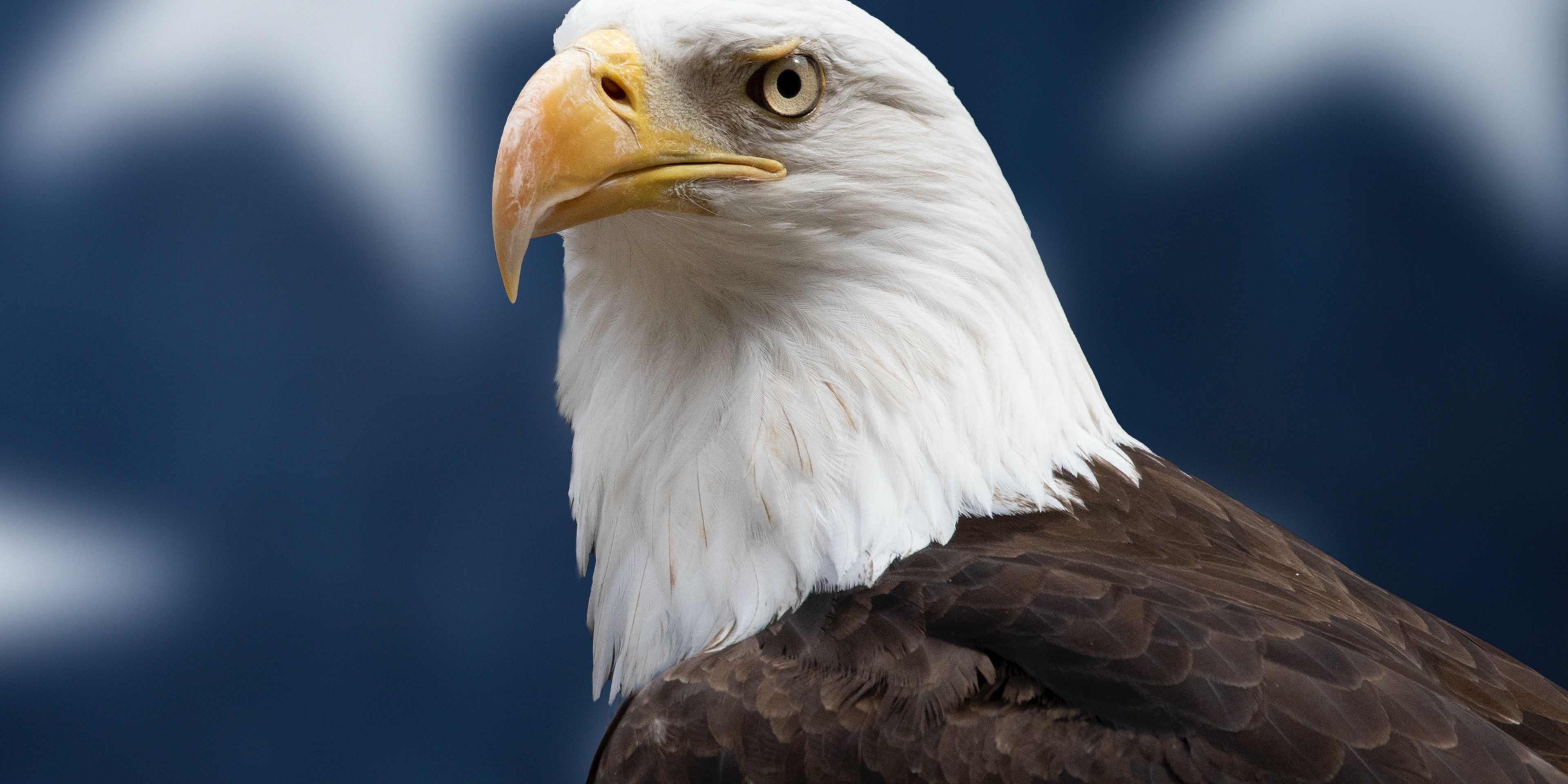
Timeline of the Eagle’s Symbolic and Physical Journey
- July 4, 1776: The Continental Congress appoints Franklin, Jefferson, and Adams to design a national seal.
- June 20, 1782: The bald eagle is officially adopted as the central figure of the Great Seal of the United States.
- Late 1800s: Industrialization, habitat loss, and active hunting cause a severe decline in the bald eagle population, dropping from an estimated 100,000 nesting pairs to critical lows.
- 1940: Congress passes the Bald Eagle Protection Act, making it illegal to hunt, kill, or sell the species.
- Post-World War II: The widespread agricultural use of the chemical pesticide DDT contaminates the eagle’s food chain, causing their eggshells to become extremely thin and break during incubation.
- 1963: The nesting population in the lower 48 states plummets to an all-time low of only 417 breeding pairs.
- 1978: The bald eagle is listed under the Endangered Species Act across most of the United States.
- 1995: Thanks to the ban on DDT and intense conservation efforts, the eagle’s status is upgraded from endangered to threatened.
- June 28, 2007: The bald eagle is officially removed from the Endangered Species List, representing one of the greatest conservation victories in human history.
Debunking the Benjamin Franklin Turkey Myth
One of the most persistent legends in American history is that Benjamin Franklin passionately advocated for the wild turkey to be the national bird instead of the bald eagle. While this makes for a humorous anecdote, it is historically inaccurate. Franklin never made a formal proposal to Congress to make the turkey the national symbol. The origin of this myth comes from a private letter Franklin wrote to his daughter, Sarah Bache, in 1784, two years after the Great Seal was adopted. In the letter, Franklin criticized the bald eagle’s behavior, calling it a ‘bird of bad moral character’ because it often steals fish from other birds. He remarked that the wild turkey was a much more respectable, courageous bird and a true native of America. However, this was a personal musing rather than a serious political campaign.
The Battle Against Extinction: A Major Turning Point
While the bald eagle successfully conquered American iconography, its physical survival became a dramatic battleground in the 20th century. The introduction of the synthetic pesticide DDT after World War II threatened to wipe out the species entirely. As chemical runoff entered waterways, it accumulated in the tissues of fish, which were the primary food source for eagles. The chemical disrupted the birds’ calcium metabolism, resulting in dangerously thin eggshells. The publication of Rachel Carson’s groundbreaking book Silent Spring in 1962 sounded the alarm on DDT, triggering a monumental shift in public awareness and environmental policy.
The federal government intervened by banning DDT in 1972 and enacting strict legal safeguards. This historic rescue effort highlighted the delicate balance of federal authority, illustrating how the Founding Fathers divided power between states and federal governments to allow for sweeping federal protections when national treasures are at stake. Today, the bald eagle’s recovery stands as a shining testament to what can be achieved through coordinated ecological action.
Long-Term Impact: From Great Seal to Global Icon
Over the past two centuries, the bald eagle has evolved from a simple graphic on a seal into an omnipresent symbol of American culture. It has appeared on coins, military medals, federal buildings, and postage stamps. The eagle’s image became crucial in reinforcing a sense of national unity during challenging historical eras, such as the Civil War and the World Wars. Just as early citizens debated the design of national banners, as discussed in the history of whether did Betsy Ross really make the first American flag, the bald eagle became an essential thread in the visual fabric of the nation’s identity.
Lesser-Known Facts About the National Bird
- The Fake Voice: The screeching cry you hear in movies when a bald eagle is shown on screen is almost always a lie. Real bald eagles have a relatively weak, high-pitched chirping or whistling sound. Hollywood sound designers regularly substitute the fierce, dramatic scream of the red-tailed hawk to make the eagle sound more imposing.
- The Changing Face: Rumors once circulated that the eagle’s head on the Great Seal turned toward the arrows during times of war and toward the olive branch during times of peace. In reality, the design has always been fixed. However, in 1945, President Harry Truman officially ordered the eagle’s head to be permanently turned toward the olive branch of peace to symbolize America’s commitment to global harmony.
- Eagle Eye Vision: A bald eagle’s eyesight is roughly four to eight times stronger than that of a human with perfect vision. They can spot prey from miles away while soaring thousands of feet in the air.
Why It Still Matters Today
The bald eagle remains a vital symbol today because it reflects both the ideals and the challenges of the American experiment. Its inclusion on the Great Seal speaks to the revolutionary era’s desire to build a sovereign identity rooted in the natural strength of the American continent. Furthermore, its dramatic rescue from the brink of extinction reminds us of our ongoing responsibility to protect the natural world. The bald eagle is not just a static symbol on a piece of currency; it is a living, breathing emblem of resilience, recovery, and natural majesty.
People Also Ask
Did Benjamin Franklin actually want the turkey as the national bird?
No. While Benjamin Franklin criticized the bald eagle as a bird of ‘bad moral character’ and praised the wild turkey in a private letter to his daughter in 1784, he never formally proposed the turkey to Congress as the national symbol.
Why is it called a ‘bald’ eagle?
The term ‘bald’ does not mean the bird lacks feathers. It comes from the Old English word ‘balde’, which means white or white-headed. The name refers directly to the stark contrast of the adult bird’s white head feathers against its dark body.
How many bald eagles exist today?
Due to successful federal conservation efforts, the bald eagle population has exploded. Today, there are over 300,000 bald eagles living across the United States, showcasing one of the most successful environmental recoveries in history.
Conclusion
Ultimately, the bald eagle’s journey to becoming America’s national bird is a rich tapestry woven from political necessity, heraldic artistry, and environmental redemption. From its ancient status as a sacred messenger in Indigenous traditions to its modern role as a symbol of conservation success, the bald eagle continues to soar high as a powerful reminder of America’s past, present, and future promise.


