The American Revolution is often romanticized as a unified, heroic struggle for liberty, but it was, in reality, America’s first deeply polarizing civil war. While passionate patriots took up arms to shake off the British Crown, a substantial portion of the population remained fiercely loyal to King George III. These individuals, known as Loyalists or Tories, made up an estimated twenty percent of the colonial populace. Far from being a monolithic group of wealthy British elites, the Loyalist camp was incredibly diverse, consisting of royal governors, modest merchants, enslaved people seeking emancipation, and Indigenous nations striving to protect their ancestral homelands. Exploring the lives of the most famous Loyalists of the Revolutionary War reveals a complex tapestry of duty, pragmatism, and profound personal tragedy. Their stories challenge the simplistic narratives of the founding era and shed light on the immense human cost of building a new nation.
Historical Background: A Nation Divided
Following the conclusion of the French and Indian War in 1763, Great Britain found itself saddled with immense national debt. In response, Parliament passed a series of tax acts on the American colonies, sparking fierce resistance. This volatile period created deep social fissures. To counter the growing rebellion, the British actively sought to divide the colonists, utilizing various strategies. To understand how deep these divisions ran, one can examine how the British actively sought to recruit colonists to their side by offering protection, land grants, and political stability. Loyalists believed that preserving the British Empire was the only way to prevent total societal anarchy, maintaining that a flawed but structured British rule was vastly superior to the chaotic, unpredictable nature of independence.
Chronological Timeline of the Loyalist Crisis (1765–1783)
- 1765: Parliament passes the Stamp Act. Angry mobs in Boston target Royal officials, including Lieutenant Governor Thomas Hutchinson, whose home is looted and nearly destroyed.
- 1770: The Boston Massacre occurs, escalating tensions to an all-time high. Amidst the chaos, colonial leaders struggle to maintain order, a time during which John Adams defended the British soldiers to preserve the rule of law.
- 1773: The passage of the Tea Act leads to the Boston Tea Party. Customs officer John Malcolm is tarred and feathered for the first time in Maine.
- 1774: Thomas Hutchinson is forced to sail to England in a desperate, unsuccessful attempt to broker peace.
- 1775: The Revolutionary War officially begins at Lexington and Concord. Lord Dunmore, the Royal Governor of Virginia, issues a proclamation offering freedom to any enslaved person who escapes their patriot masters and fights for the Crown.
- 1776: Mohawk leader Joseph Brant (Thayendanegea) successfully convinces four of the Six Nations of the Iroquois Confederacy to ally with the British. Meanwhile, Royal Governor William Franklin is arrested by patriot forces in New Jersey.
- 1781: The British surrender at Yorktown, effectively ending major combat operations in North America and leaving Loyalists vulnerable to patriot retribution.
- 1783: The Treaty of Paris officially ends the war. Up to 70,000 Loyalists are forced to flee the newly formed United States as refugees, settling in Canada, the Caribbean, and Great Britain.
Seven Famous Loyalists of the Revolutionary War
1. William Franklin: The Son Who Chose the King
Perhaps no Loyalist story is more tragic than that of William Franklin, the illegitimate son of the famous Founding Father, Benjamin Franklin. Despite his birth, William and his father enjoyed a remarkably close relationship early in life, working together on intellectual pursuits. Using his father’s immense political influence, William was appointed the Royal Governor of New Jersey, where he established a strong reputation as a dedicated political reformer.
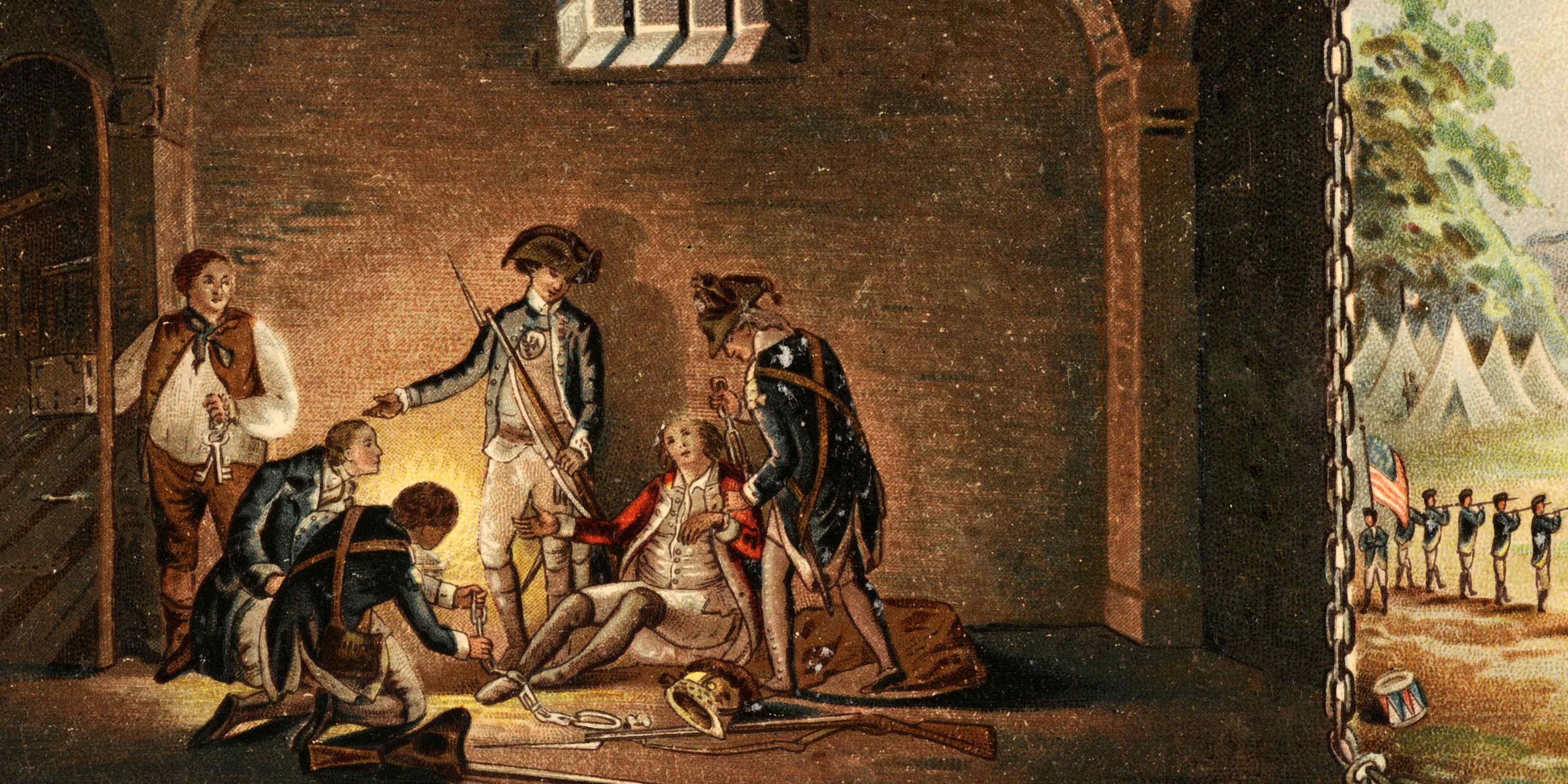
As the drums of war grew louder, Benjamin Franklin begged his son to resign and join the Patriot cause. William adamantly refused. In 1775, he warned the New Jersey Legislature that choosing revolution would lead to “anarchy, misery, and all the horrors of a civil war.” In 1776, William was arrested, thrown into solitary confinement, and denied permission to see his dying wife. Following a prisoner exchange in 1778, he organized Loyalist guerrilla raids against patriot forces. He eventually fled to London, and he and his father never reconciled.
2. Thomas Hutchinson: The Pragmatic Governor
Born into a prominent, old Massachusetts family, Thomas Hutchinson was a highly successful merchant, respected judge, and eventually the Governor of the Massachusetts Bay Colony. Hutchinson was a pragmatist who personally opposed British tax policies like the Stamp Act, yet felt duty-bound to enforce them. This stance made him a primary target for patriot rage; in 1765, an angry mob ransacked his Boston mansion, destroying his priceless historical library.
During the explosive Boston Tea Party crisis of 1773, Hutchinson refused to let tea ships return to England without paying their duties, provoking the Sons of Liberty to dump the cargo into the harbor. Believing he could still broker a peace agreement, Hutchinson sailed to England in 1774. He never saw his beloved home state of Massachusetts again, dying in exile in London, deeply heartbroken.
3. John Malcolm: The Twice-Tarred Customs Officer
In contrast to the tragic dignity of Hutchinson, John Malcolm was an overzealous, highly combative British customs officer whose abrasive personality repeatedly made him the target of patriot mobs. In 1773, after aggressively seizing a patriot vessel in Maine and threatening the crew, Malcolm was disarmed, covered in hot tar and feathers, and paraded through the streets by local sailors.
Unfazed, Malcolm moved to Boston, where in 1774 he struck a local shoemaker—who happened to be a member of the Sons of Liberty—with a cane. An angry crowd gathered outside his house. Rather than backing down, the 50-year-old Malcolm taunted them from his window. The mob dragged him out, stripped him naked in freezing temperatures, and poured hot tar and feathers directly onto his bare skin. Malcolm fled to England shortly thereafter, carrying strips of his own scarred flesh in a box to present to the King as proof of his suffering.
4. Thomas Brown: The Vengeful Ranger
Thomas Brown was a wealthy young merchant who arrived in Georgia in 1774. When he refused to sign an association boycotting trade with Great Britain, the local Sons of Liberty tortured him, fracturing his skull and burning the soles of his feet. This brutal victimization transformed Brown into an aggressive, militaristic counter-revolutionary.
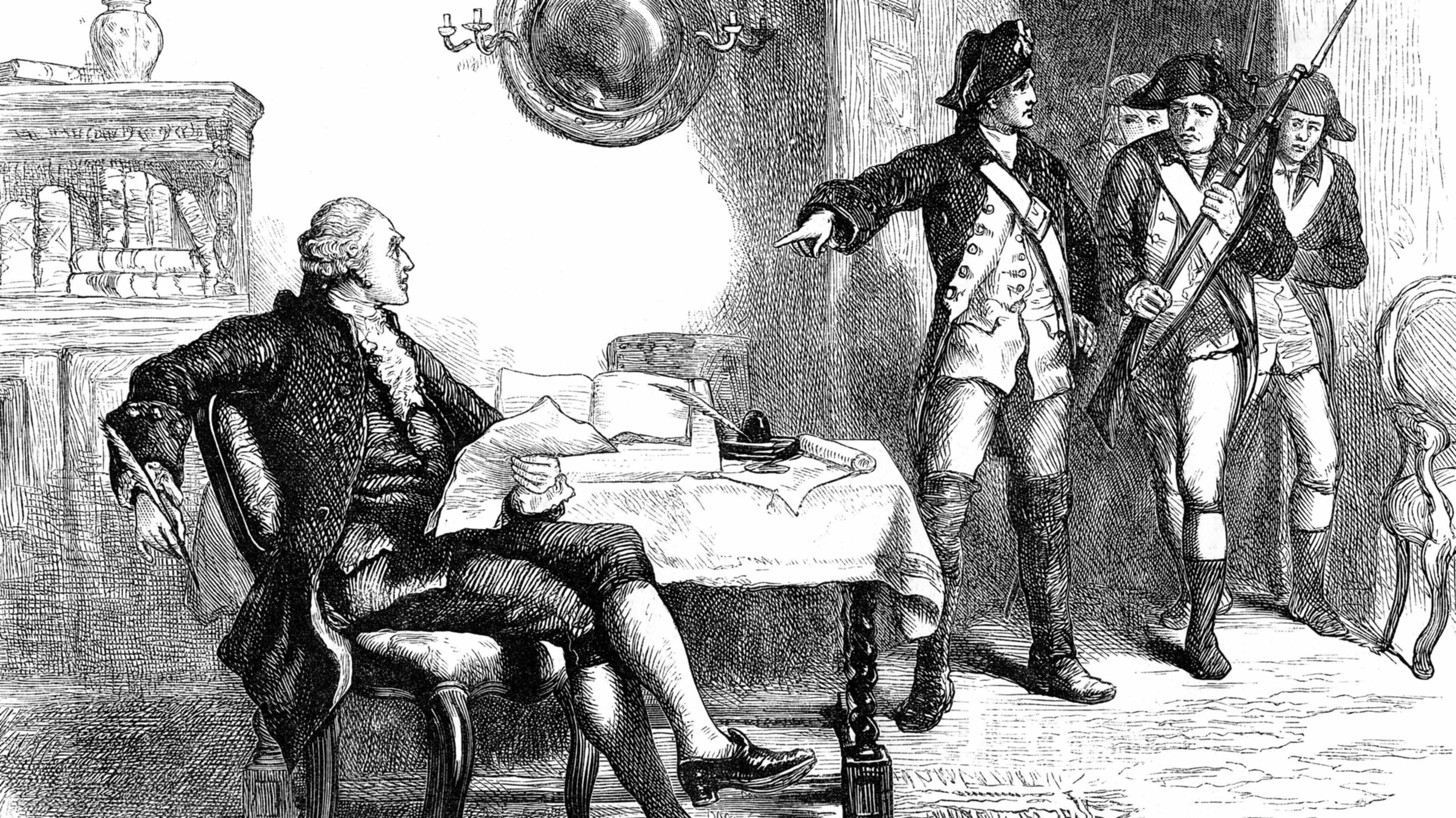
Brown fled to East Florida, where he formed the King’s Rangers, a highly effective Loyalist regiment. Alongside local Creek and Cherokee allies, Brown conducted daring, ruthless frontier raids against patriot positions in Georgia and the Carolinas. Following the war, Brown and his surviving rangers relocated to the Bahamas, where he established a successful sugar plantation and served in the colonial legislature.
5. Joseph Brant (Thayendanegea): The Mohawk Diplomat
Joseph Brant, known in his native Mohawk language as Thayendanegea, was a brilliant statesman and military leader. Educated in British colonial schools and fluent in multiple languages, Brant possessed deep connections to both Native American and white colonial societies. His sister’s marriage to Sir William Johnson, the British superintendent of Indian Affairs, further solidified his ties to the Crown.
Brant recognized that a patriot victory would likely lead to unchecked colonial expansion into indigenous lands. In 1775, he convinced four of the six Iroquois nations to ally with the British, believing the Crown was more likely to honor its land treaties. Brant traveled to London, where he was celebrated by the British aristocracy. Returning to the colonies, he led highly effective campaigns in the Mohawk Valley. Though portrayed by patriot propaganda as a ruthless villain, Brant spent his post-war years tirelessly negotiating with both British and American governments to secure sovereign lands for his people in Canada.
6. Boston King: The Search for True Liberty
For many, the Revolutionary War was not about abstract taxation, but literal survival. Boston King was an enslaved young man in South Carolina who took advantage of the British promises of emancipation. Escaping his master, King made his way to British lines, surviving a devastating smallpox epidemic and several near-captures at sea.
When the war ended, the British stood by their promise. King and his wife Violet were among the 3,000 formerly enslaved Black Loyalists who received “certificates of freedom” from British commanders. They were evacuated to Nova Scotia, Canada. Despite facing harsh winters and racial hostility, King became a prominent Methodist preacher. He eventually migrated to Sierra Leone in West Africa, where he wrote a highly influential memoir detailing his remarkable journey from slavery to freedom.
7. Jonathan Boucher: The Pistol-Wielding Preacher
Jonathan Boucher was an Anglican rector in Virginia and Maryland who was a close personal friend of George Washington. Boucher was an outspoken critic of revolutionary philosophy, regularly utilizing his pulpit to denounce patriot firebrands like Patrick Henry and Thomas Paine. His fiery sermons and defense of the Crown quickly made him a prime target for local revolutionary militias.
Undeterred, Boucher continued to preach his loyalist views, famously keeping two loaded pistols on his pulpit to defend himself. One Sunday, a patriot mob gathered to drag him from his church. In a dramatic show of defiance, Boucher shouted “God Save the King,” grabbed a local patriot leader, held a pistol to his neck, and safely escorted himself out of the building. He fled to Britain in 1775, where he authored one of the earliest comprehensive histories of the American Revolution.
Key Turning Points in the Loyalist Struggle
The fate of the Loyalists shifted dramatically during several key moments of the conflict. The first was Lord Dunmore’s Proclamation of 1775. While it successfully recruited thousands of Black Loyalists, it deeply terrified wealthy southern plantation owners, driving many moderate colonists directly into the Patriot camp. Another critical turning point was the entry of France into the war in 1778, which forced Britain to redeploy military resources away from protecting Loyalist communities to fight a global war. Finally, the signing of the Treaty of Paris in 1783 left Loyalists largely defenseless, as the American government failed to enforce treaty clauses meant to restore confiscated Loyalist properties.
Long-Term Societal and Geopolitical Impact
The defeat of the Loyalists had profound geopolitical consequences. The mass exodus of over 70,000 Loyalists to Canada fundamentally reshaped the cultural and political landscape of the region, leading to the creation of New Brunswick and ensuring that Canada remained a loyal dominion of the British Empire. For the Indigenous nations who sided with the Crown, the patriot victory resulted in massive land loss and the systematic dismantling of the Iroquois Confederacy.
Domestically, the demonization of those who sided with the Crown forever altered how Americans viewed political dissent. This long-term cultural shift is highly apparent when analyzing historical figures who switched sides, such as why Benedict Arnold chose to betray the American cause. Arnold’s actions cemented a national narrative that equated dissent with treason, overshadowing the genuine ideological and moral convictions of many lifelong Loyalists.
Lesser-Known Historical Anecdotes
- Benjamin Franklin’s Cold Revenge: Benjamin Franklin was so deeply hurt by his son William’s loyalty to the King that in his will, he left William virtually nothing, writing that his son’s actions had been “like a stab to the heart.”
- The Loyalist Safe Haven of East Florida: Throughout the war, East Florida remained fiercely loyal to the Crown, acting as a crowded sanctuary for thousands of southern Loyalist refugees before Britain ultimately traded the territory back to Spain in 1783.
- Tarring and Feathering was True Torture: While often depicted in historical cartoons as a lighthearted humiliation, the practice of tarring and feathering utilized boiling-hot pine tar that caused severe third-degree burns and tore away flesh during its removal.
Why the Loyalist Legacy Still Matters Today
Understanding the Loyalist perspective is vital because it reminds us that history is rarely a simplistic tale of good versus evil. The Loyalists were not inherently villainous; they were individuals who valued stability, the rule of law, and historical continuity over the unpredictable risks of armed rebellion. Their stories prompt us to reflect on the nature of political polarization, the human cost of ideological divisions, and the delicate balance between maintaining order and pursuing revolutionary change in modern societies.
People Also Ask
Who was the most famous Loyalist during the American Revolution?
William Franklin, the Royal Governor of New Jersey and son of Benjamin Franklin, is widely considered the most famous Loyalist due to his prominent political standing and his tragic, permanent family split with his father.
What percentage of colonists were Loyalists?
Historians estimate that approximately 15% to 20% of the white colonial population were active Loyalists, while another large portion of the population remained entirely neutral throughout the conflict.
What happened to the Loyalists after the war?
Following the Treaty of Paris in 1783, tens of thousands of Loyalists had their properties confiscated and fled as refugees. The majority resettled in Nova Scotia, Ontario, England, and the Caribbean.
Conclusion
The stories of these seven famous Loyalists highlight the complex, tragic human reality of the American Revolution. Far from being a uniform group of passive royal subjects, they were individuals who made active, difficult choices based on their personal principles, security, and hopes for the future. By remembering their struggles, we gain a far deeper, more honest understanding of the painful civil war that birthed the United States.


