The summer of 1864 was a crucible for the United States. Three years of bloody conflict had left the nation deeply scarred, weary, and fractured. In the North, political dissent was rising, and President Abraham Lincoln faced a precarious re-election campaign that many political insiders believed he was destined to lose. The fate of the Union hung in the balance, resting heavily on the shoulders of the federal armies in the field. It was in this high-stakes environment that Major General William Tecumseh Sherman launched the Atlanta Campaign, a series of brutal battles and brilliant maneuvers in northern Georgia designed to pierce the heart of the Confederacy. This campaign was not merely a military endeavor; it was a psychological and political masterpiece that ultimately saved Lincoln’s presidency, shattered Southern morale, and redefined the nature of modern warfare forever.
Historical Background & The Strategic Crux of Atlanta
To understand the monumental significance of the Atlanta Campaign, one must examine the strategic landscape of early 1864. After being appointed General-in-Chief of all Union armies, Ulysses S. Grant designed a unified strategy to apply relentless, simultaneous pressure on the Confederacy from multiple directions. While Grant personally took on General Robert E. Lee in Virginia, he entrusted his close friend and trusted lieutenant, William Tecumseh Sherman, with the Western theater of operations. Sherman’s objective was clear: advance into Georgia, engage and destroy the Confederate Army of Tennessee, and capture the city of Atlanta.
Why was Atlanta so critical? Often referred to as the “Gate City” of the South, Atlanta was a vital industrial powerhouse and the second-most important railroad hub in the Confederacy. Four major railroad lines intersected in the city, carrying weapons, food, and reinforcements to Confederate armies across both the Eastern and Western theaters. It was also home to key munitions factories, iron foundries, and textile mills. Capturing Atlanta would effectively sever the Confederacy’s logistical spine. Furthermore, with the Northern public increasingly fatigued by the mounting casualties, the Lincoln administration desperately needed a major military breakthrough to counter growing anti-war movements that threatened to force a negotiated peace and allow the Southern states to secede permanently.
The Chronological Timeline of the Campaign
The Atlanta Campaign was not a single, decisive battle, but rather a grueling four-month campaign of maneuver, entrenchment, and bloody skirmishes. Below is the chronological breakdown of how the campaign unfolded in 1864:
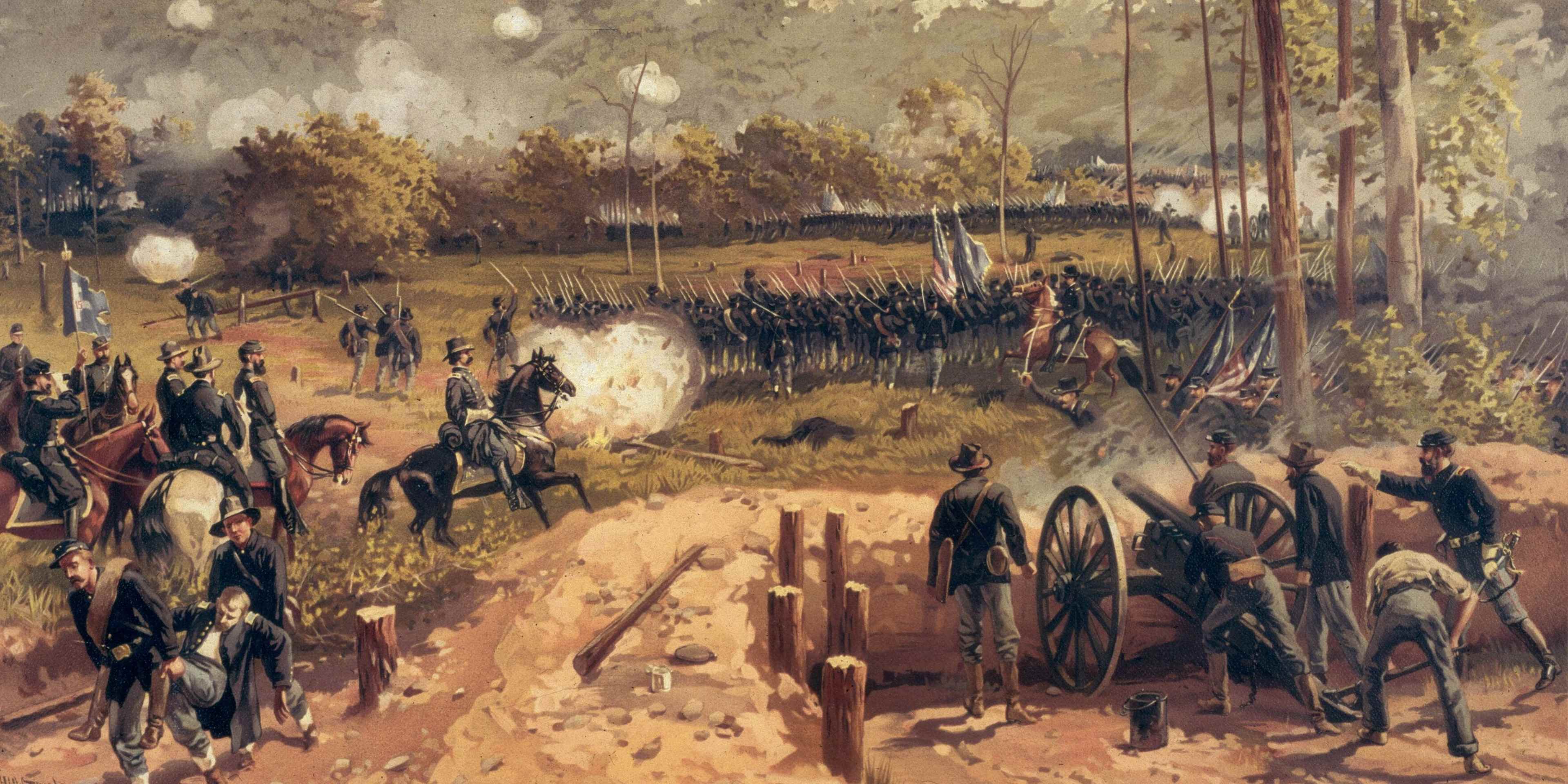
- May 1864: The Campaign Begins. Sherman’s massive force of roughly 100,000 men began its march southward from Chattanooga, Tennessee. Facing him was General Joseph E. Johnston and the Confederate Army of Tennessee, numbering around 60,000. Johnston, a brilliant defensive strategist, preferred to fight from heavily fortified positions, hoping to draw Sherman into a costly frontal assault. Recognizing this, Sherman utilized flanking maneuvers—slipping around Johnston’s flanks—to force the Confederates to repeatedly abandon their positions at Rocky Face Ridge, Resaca, and New Hope Church.
- June 27, 1864: The Battle of Kennesaw Mountain. Frustrated by constant maneuvering and hoping to break Johnston’s line, Sherman ordered a direct frontal assault on the heavily fortified Confederate positions at Kennesaw Mountain. The result was a disastrous Union defeat, costing Sherman over 3,000 casualties compared to Johnston’s 1,000. This battle proved the extreme lethality of mid-19th-century defensive fortifications.
- July 17, 1864: Enter John Bell Hood. Confederate President Jefferson Davis, frustrated by Johnston’s constant retreats and failure to halt the Union advance, replaced him with General John Bell Hood, a notoriously aggressive officer. Hood immediately went on the offensive, launching massive attacks at Peachtree Creek (July 20) and the Battle of Atlanta (July 22). While these attacks were incredibly fierce, Sherman’s seasoned veterans repulsed them, inflicting unsustainable casualties on the Confederate forces.
- August 1864: The Siege of Atlanta. Sherman chose not to launch a direct assault on the heavily fortified city of Atlanta. Instead, he initiated a siege and systematically cut the railroad lines feeding the city. The climax came at the Battle of Jonesborough (August 31 – September 1), where Union forces successfully severed the Macon & Western Railroad, Atlanta’s last remaining supply line.
- September 2, 1864: The Fall of Atlanta. With his supply lines cut and his army facing starvation, Hood evacuated the city, destroying military depots and ammunition trains as he fled. Union troops entered the city the following day. Sherman famously telegraphed Washington: “Atlanta is ours, and fairly won.”
Key Figures and Their Legacy
Major General William Tecumseh Sherman
A visionary and controversial military mind, Sherman recognized that the Civil War was a struggle between entire societies, not just armies. His actions during the Atlanta Campaign and his subsequent March to the Sea cemented his reputation as the pioneer of “total war”—a doctrine aimed at destroying the enemy’s economic capability and psychological will to fight.
General Joseph E. Johnston
Johnston’s cautious, defensive strategy preserved his army but frustrated Confederate leadership. Historians still debate whether his defensive tactics could have worn down Northern resolve and defeated Lincoln at the ballot box had he not been prematurely replaced by Hood.
General John Bell Hood
Known for his immense physical bravery (having lost the use of one arm at Gettysburg and a leg at Chickamauga), Hood’s aggressive tactics ultimately decimated his own army, hastening the fall of the very city he was tasked to protect.
Turning Points: The Political and Military Shockwaves
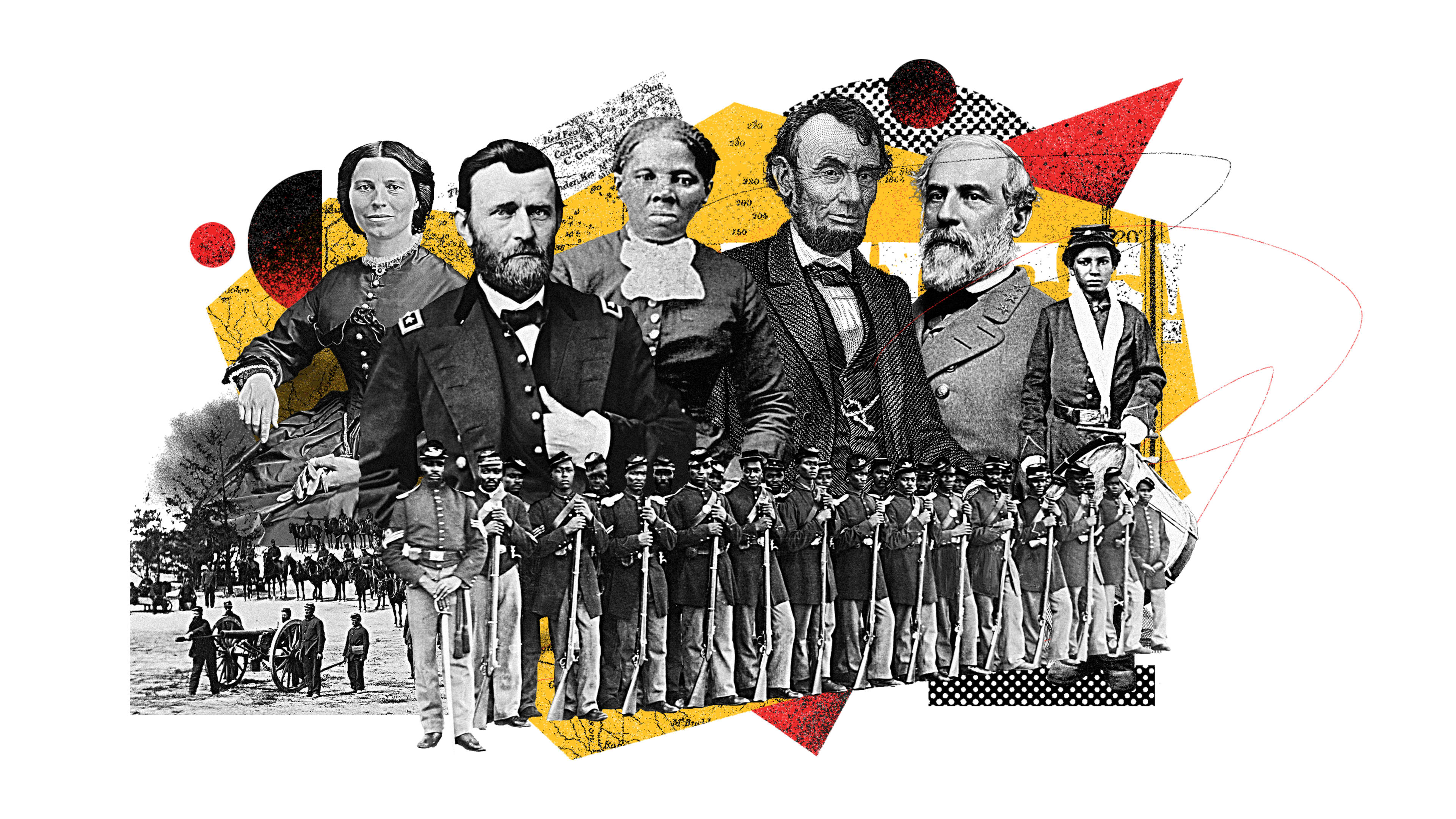
The capture of Atlanta was arguably the most important political turning point of the American Civil War. Prior to September 1864, the Northern public was deeply disillusioned. The Democratic Party had nominated George B. McClellan on a platform advocating for peace negotiations. Even Lincoln believed he would lose the upcoming election. The fall of Atlanta instantly rejuvenated Northern morale. It proved to voters that victory was not only possible but imminent. Consequently, Lincoln won a landslide re-election in November, destroying any hope the Confederacy had of achieving independence through a negotiated peace.
Furthermore, the fall of Atlanta paved the way for Sherman’s famous March to the Sea. Departing Atlanta in mid-November, Sherman and 60,000 soldiers marched 285 miles to Savannah, destroying agricultural resources, bending railroad tracks, and bringing the harsh realities of war directly to the Southern home front. This march deeply impacted the millions of enslaved people in Georgia, many of whom self-liberated by escaping to the Union lines. Their courage and contributions are celebrated among the many Black heroes throughout US military history who fought tirelessly to dismantle the institution of slavery and preserve the Union.
Lesser-Known Facts of the Atlanta Campaign
1. The Truth About the Burning of Atlanta
While popular culture (notably the film Gone with the Wind) portrays Sherman burning the entire city of Atlanta out of sheer malice, the reality is more complex. Sherman did order the destruction of all military infrastructure, including machine shops and depots. However, the initial fires were set by retreating Confederate forces who blew up 81 boxcars loaded with ammunition to prevent them from falling into Union hands. The resulting explosions and winds spread the flames to civilian quarters, leaving roughly 40 percent of the city in ashes.
2. The Ingenious “Sherman’s Neckties”
During the March to the Sea, Union troops developed a methodical technique to permanently destroy Southern railroads. They would tear up the tracks, pile the wooden ties, set them on fire, and heat the iron rails over the flames. Once red-hot, the soldiers would twist the iron rails around tree trunks. These twisted rails, resembling bow ties, were completely unusable and could not be easily repaired, crippling Confederate transportation for the remainder of the war.
3. The Rise of the “Bummers”
Sherman’s army traveled light, relying almost entirely on the land for food. Authorized foraging parties, known as “bummers,” collected livestock, corn, and sweet potatoes. While instructed to respect private property unless resisted, the bummers frequently plundered wealthy plantations, stripping the Georgia countryside of its agricultural wealth to feed the marching Union columns.
Why the Atlanta Campaign Still Matters Today
The legacy of the Atlanta Campaign reverberates through modern history in several profound ways. Strategically, Sherman’s targeting of industrial infrastructure and logistical networks foreshadowed the strategic bombing campaigns of World War II and modern doctrines of economic warfare.
On a civic level, the destruction and subsequent rebuilding of Atlanta shaped the city’s modern identity. Choosing the mythical phoenix and the Latin motto Resurgens (“rising again”), Atlanta transformed itself from a ruined rail junction into the commercial and cultural capital of the American South. Finally, the campaign highlighted the immense challenges of post-war national healing. As the nation transitioned into the Reconstruction era, the deep divisions sown by the war raised critical questions about justice, reconciliation, and presidential authority. For decades, historians have studied how American presidents ended up with the power to pardon to understand how Abraham Lincoln and Andrew Johnson attempted to heal a fractured nation by granting clemency to former Confederates after the war’s end.
People Also Ask
Why was the Atlanta Campaign a major turning point in the Civil War?
The Atlanta Campaign was a major turning point because the capture of Atlanta severely damaged the Confederate supply network and greatly boosted Northern morale. Most importantly, it secured the re-election of President Abraham Lincoln in November 1864, ensuring that the Union would fight until the complete surrender of the Confederacy.
Did General Sherman really burn all of Atlanta?
No, Sherman did not burn the entire city. He ordered the destruction of military infrastructure and government buildings. However, fleeing Confederate troops blew up ammunition trains, which caused fires to spread out of control, ultimately destroying about 40 percent of Atlanta.
Who won the Atlanta Campaign?
The Union won the Atlanta Campaign. Under the leadership of Major General William Tecumseh Sherman, Union forces successfully maneuvered around Confederate defenses, besieged the city, and forced the retreat of Confederate General John Bell Hood in September 1864.
Conclusion
The Atlanta Campaign of 1864 remains one of the most decisive chapters in American history. Through a mixture of brilliant maneuver warfare and the unforgiving application of total war, General William Tecumseh Sherman broke the back of the Confederacy and changed the political landscape of the United States. As Atlanta rose from its ashes in the decades that followed, the campaign stood as a stark reminder of the devastating costs of division—and the resilient power of national renewal.


