The American Civil War was a conflict of unprecedented scale, transforming not only the nation’s social fabric but also its physical landscapes. At the heart of this struggle lay the Union defense of Washington—the political epicenter of the United States, which overnight became one of the most vulnerable targets of the Confederacy. Located mere miles from rebel territory, the federal capital faced the constant, looming threat of invasion. Over the course of four grueling years, the Union engineered a defensive masterpiece, converting an undefended, open city into the most heavily fortified capital in the world. This massive military feat involved a complex web of earthen forts, trenches, and heavy artillery that successfully deterred Confederate aggression. Understanding this defensive transformation reveals how military engineering, political desperation, and sheer human labor coalesced to safeguard the Union at its darkest hour.
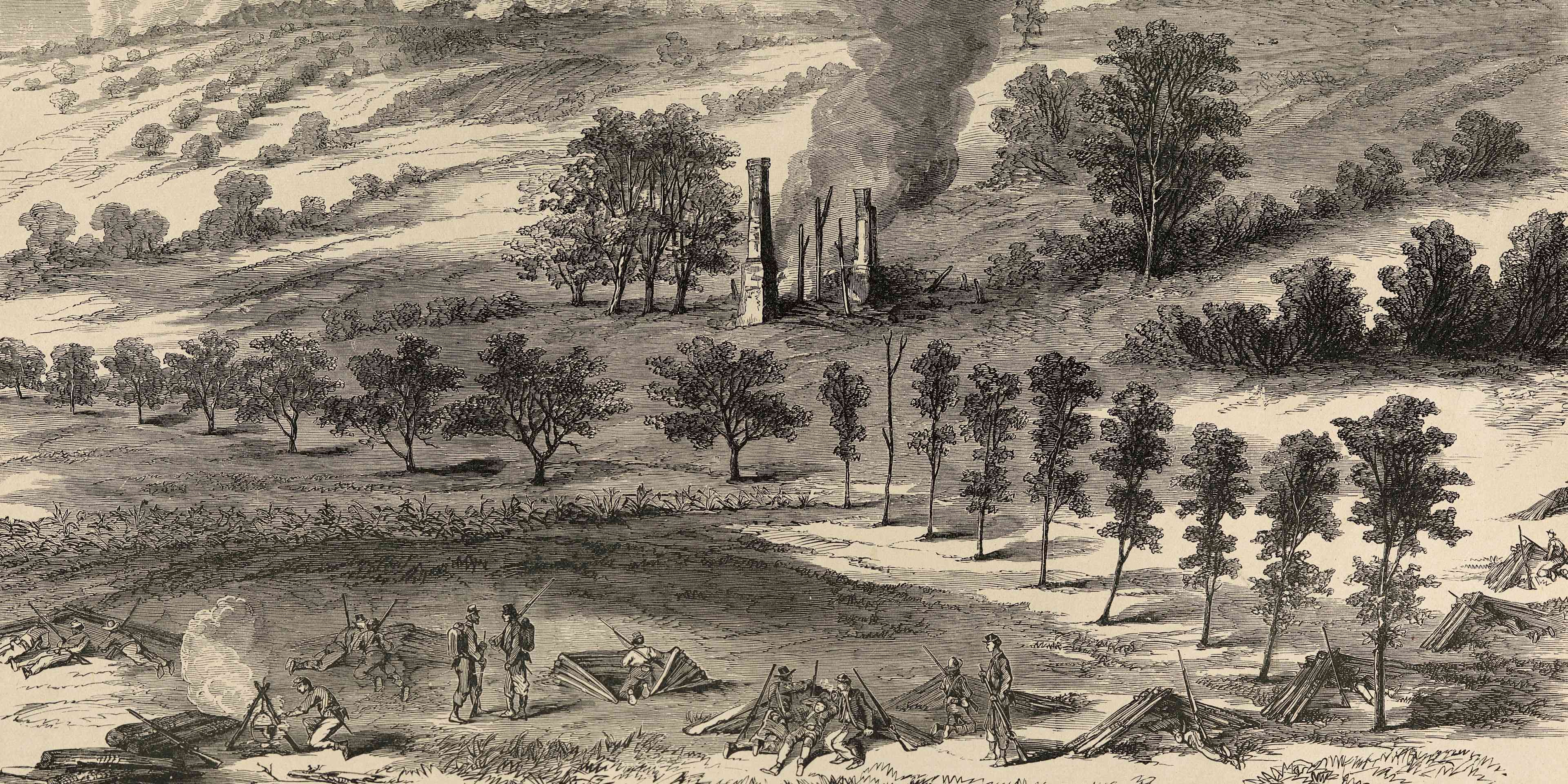
Historical Background and the Capital’s Early Vulnerability
At the outbreak of the American Civil War in April 1861, Washington, D.C. was remarkably exposed. The city was surrounded by Maryland to the north and east, and Virginia to the south and west. When Virginia voted to secede on May 23, 1861, the Confederacy’s border was literally separated from the Union capital by nothing more than the width of the Potomac River. Maryland, while remaining in the Union, was a slave-holding state with deeply divided loyalties, making Washington, D.C. a federal island in a highly hostile region.
Initially, the city was defended by a single, outdated military outpost: Fort Washington, located 16 miles downriver. Designed by the Founding Fathers to defend against naval threats from the Potomac, it was practically useless against an overland infantry assault. Recognizing the immense peril, President Abraham Lincoln and his administration realized that losing the capital would spell the end of the Union, as European powers would likely recognize Confederate independence.
Key Events Timeline (1861-1865)
To understand the rapid militarization of Washington, we must look at the key chronological milestones of its defense:
- April 13, 1861: The fall of Fort Sumter triggers the Civil War; Virginia’s subsequent secession leaves D.C. directly exposed.
- May 24, 1861: Union forces execute their first offensive action, crossing the Potomac River to capture Alexandria and the high ground of Arlington, neutralizing immediate threat angles.
- July 21, 1861: The disastrous Union defeat at the First Battle of Bull Run (Manassas) shocks northern leadership, demonstrating that the Confederate Army is a potent force capable of striking the capital.
- Winter 1861–1862: Major General John G. Barnard directs the construction of the initial 37 forts, creating a formidable 35-mile defensive perimeter.
- July 11–12, 1864: Confederate Lieutenant General Jubal A. Early launches a direct assault on Washington, leading to the Battle of Fort Stevens, where Union reinforcements narrowly save the city.
- April 1865: The war ends with Washington possessing 68 active forts, 93 batteries, and over 800 heavy cannons.
The Architects and Important Figures of D.C.’s Defenses
Several key figures played indispensable roles in securing the capital:
- President Abraham Lincoln: The political anchor of the defense. Lincoln insisted on keeping a minimum of 30,000 troops near the capital at all times, a requirement that frequently frustrated offensive-minded generals like George B. McClellan.
- Major General John G. Barnard: Appointed as the Chief Engineer of the Army of the Potomac, Barnard was the tactical genius who designed and built the ring of forts. He is remembered historically as the “Father of the Defenses of Washington.”
- Lieutenant General Jubal A. Early: The daring Confederate general who recognized the temporary depletion of Union troops in 1864 and marched his forces directly to the gates of Washington.
- Oliver Wendell Holmes Jr.: A young Union officer (and future Supreme Court Justice) who famously yelled at Lincoln to take cover during the Battle of Fort Stevens.
Engineering the “Impenetrable Ring”
The construction of Washington’s defenses was a monumental engineering marvel. Pierre L’Enfant’s original, spacious diamond-shaped layout made the city difficult to defend with linear fortifications. Instead, Major General Barnard opted for a “ring” system of disconnected but mutually supporting earthen forts.
Rather than brick and mortar, which would shatter under modern rifled artillery, these forts were built using thick, rammed earth walls capable of absorbing heavy cannon fire. To build them, thousands of soldiers, local laborers, and escaped slaves (contrabands of war) cleared hundreds of acres of dense forests. The military utilized this cleared timber to build an abatis—a defensive obstacle made of sharpened tree branches pointing toward the enemy—and to lay down miles of military corduroy roads. The physical toll on these laborers was immense, echoing the engineering hardships and brutal logistics historically seen during the revolutionary winter at Valley Forge.

In addition to the physical labor of clear-cutting forests, the builders dug massive dry moats around each fort, connected them with 20 miles of infantry trenches (rifle pits), and constructed 93 artillery batteries. At its peak, this perimeter stretched 37 miles. To prevent a naval attack via the Potomac River, Lieutenant Colonel Barton Alexander even engineered the “Alexandria Chain”—a massive 400-foot obstruction made of heavy iron chains held afloat by logs and anchored by 23 massive anchors.
The Battle of Fort Stevens: The Ultimate Test
By 1864, the defense of Washington faced its greatest crisis. General Ulysses S. Grant, seeking to crush Robert E. Lee’s Army of Northern Virginia, stripped the Washington garrisons of seasoned infantry to reinforce his Overland Campaign. This left the capital defended by a mere 9,000 soldiers, most of whom were untrained raw recruits or convalescent veterans from the Veteran Reserve Corps.
Seizing this vulnerability, Confederate General Robert E. Lee ordered Lieutenant General Jubal A. Early to march through the Shenandoah Valley, cross the Potomac into Maryland, and attack Washington from the north. On July 11, 1864, Early’s 14,000-man army arrived before Fort Stevens, located in the northernmost part of the District.
This battle is historic for several reasons, not least of which because President Abraham Lincoln personally rode out to the fort to observe the fighting. Standing atop the parapet in his signature black top hat, Lincoln was a prime target for Confederate snipers. After a soldier standing near him was wounded, a young officer (long believed to be Oliver Wendell Holmes Jr.) shouted, “Get down, you damned fool!” Lincoln complied, escaping unharmed.
The arrival of the Union VI and XIX Corps, sent rushing back by Grant, bolstered the defenses just in time. Witnessing the massive earthworks and the sudden influx of battle-hardened Union reinforcements, Early realized an assault would be suicidal. He retreated back into Virginia, famously remarking that his forces had spent the day looking at fortifications of “impenetrable character.”
The Unsung Labor and Long-Term Impact
The creation of the defenses of Washington had profound social and infrastructural consequences. The sheer volume of labor required to build 68 forts could not have been achieved without the help of thousands of formerly enslaved people who fled to the Union lines. Often referred to as “contrabands,” these men and women built the very walls that kept the Confederacy at bay, marking another significant chapter in the long history of the contributions of Black heroes in U.S. military history.

The physical footprint of these forts also permanently reshaped the geography of Washington, D.C. Forests that had stood for centuries were completely leveled, changing the ecology of the Potomac basin. After the war, the federal government dismantled most of the forts, returning the land to private owners, but the military roads built to connect the forts eventually laid the groundwork for the modern transportation grid of Washington, D.C. and its surrounding suburbs.
Lesser-Known Facts About D.C.’s Defenses
- Robert E. Lee’s Former Estate: The Union’s first offensive action in May 1861 was the seizure of Arlington Heights, which belonged to Mary Anna Custis Lee, wife of Confederate General Robert E. Lee. The Union converted this strategic high ground into Fort McPherson and Fort Whipple. To ensure the Lees could never return, the Union began burying its dead in the estate’s garden, which eventually grew into Arlington National Cemetery.
- The River Chain That Never Was Used: The “Alexandria Chain,” a massive river obstruction designed to block Confederate gunboats, was built at a cost of thousands of dollars but was never actually deployed in active combat.
- A President Under Direct Fire: Abraham Lincoln is the only sitting American president to have come under active enemy fire during a military engagement while in office, during the Battle of Fort Stevens.
Why It Still Matters Today
Today, the remnants of the Civil War defenses are preserved as part of the Civil War Defenses of Washington, managed by the National Park Service. Green spaces like Fort Stevens Park, Fort Dupont, and Fort Ward offer modern visitors a peaceful escape, but they serve as stark reminders of a time when the United States was physically divided. These sites challenge us to reflect on the fragility of democracy and the immense sacrifices required to preserve a unified nation.
People Also Ask
Why did the Union build so many forts around Washington, D.C.?
The Union built 68 forts to secure the sprawling, low-lying capital from an overland invasion. Because the city was surrounded by Confederate Virginia and a politically unstable Maryland, a robust, 360-degree defensive ring was deemed necessary to prevent a catastrophic political defeat.
Did any battles take place in Washington, D.C. during the Civil War?
Yes. The Battle of Fort Stevens, fought on July 11–12, 1864, was the only battle fought within the borders of the District of Columbia. It successfully repelled a Confederate invasion led by General Jubal A. Early.
What happened to the Civil War forts after the war?
After the Confederate surrender in 1865, the Union rapidly decommissioned the forts. The heavy artillery was salvaged, the timber was sold, and the land was returned to its original private owners. Today, several of these sites are preserved as historic public parks.
Conclusion
The rapid transformation of Washington, D.C., from an undefended federal outpost in 1861 to the most heavily fortified city in the world by 1865, is a testament to the engineering genius and sheer determination of the Union. Through the strategic foresight of engineers like John G. Barnard, the hard labor of thousands of soldiers and freedmen, and the steadfast leadership of Abraham Lincoln, the capital survived its greatest existential threat. The earthworks of Fort Stevens stand today not just as mounds of soil, but as enduring monuments to the resilience of a nation that refused to fall apart.


