When General George Washington led the Continental Army against the mighty British Empire, he did not stand alone on the battlefield of freedom. While textbook narratives frequently highlight the actions of the Founding Fathers, the heroic women of the American Revolution played an indispensable, highly dangerous, and ultimately transformative role in securing the nation’s independence. From disguising themselves as male infantrymen to orchestrating high-stakes espionage rings in the heart of enemy-occupied territory, these women shattered the rigid gender expectations of the 18th century. Their acts of extraordinary bravery were not merely auxiliary to the war effort; they were pivotal strategic interventions that directly altered the course of American history. Understanding their sacrifices provides a richer, more accurate perspective on the monumental struggle that gave birth to the United States.
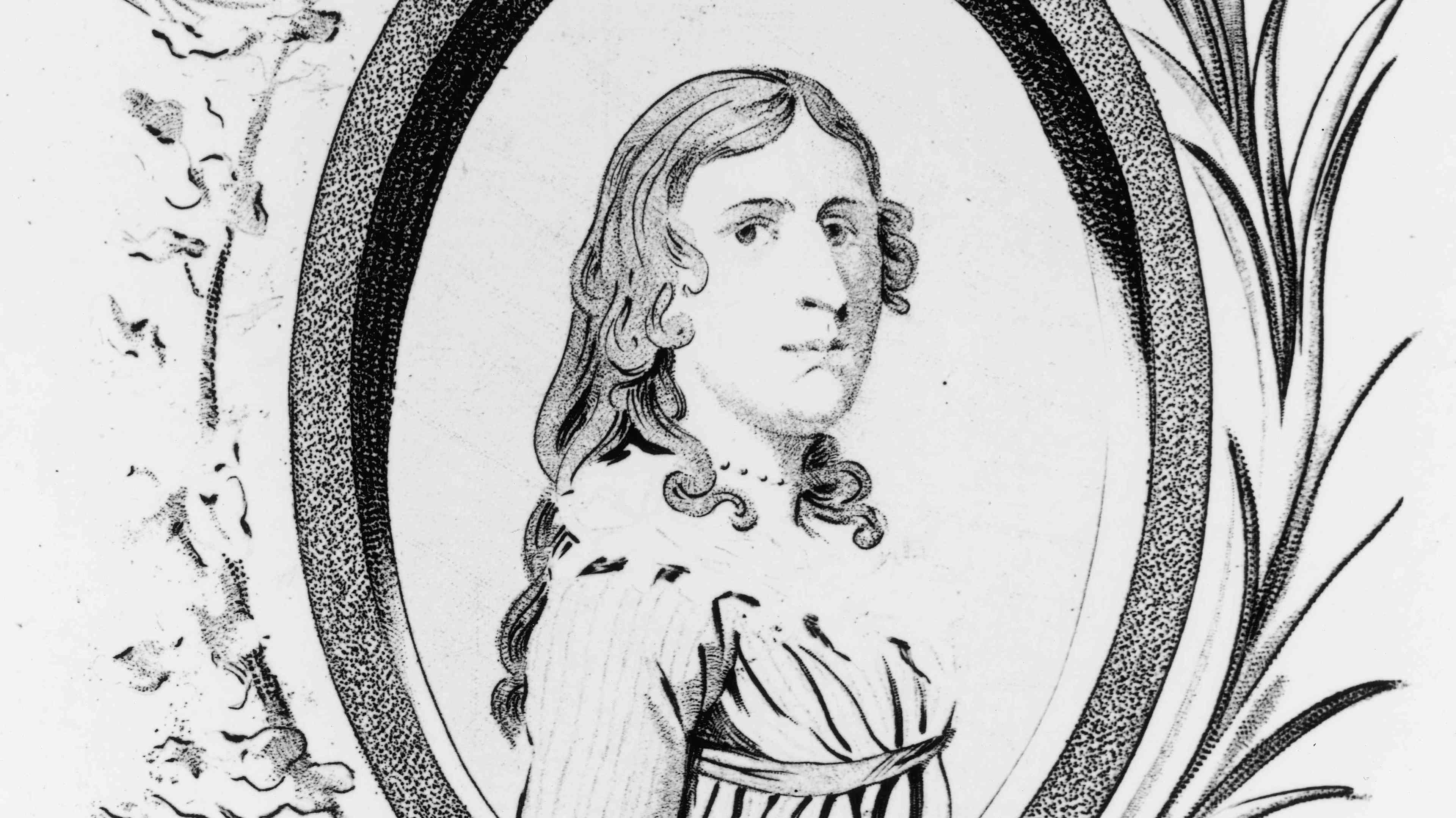
To fully appreciate these contributions, one must examine the socio-political climate of the era. For generations, the social and political landscape of the 13 colonies dictated strict domestic boundaries for female settlers under the legal doctrine of coverture, which meant women had no independent legal existence apart from their husbands or fathers. Yet, as tensions over British taxation without representation escalated, women quickly found powerful ways to express their political agency. They organized mass boycotts of British imports through the Daughters of Liberty, turning domestic tasks like spinning yarn into acts of political resistance. Echoing the courageous spirit of historical figures like Anne Hutchinson, whose theological defiance challenged early colonial authorities, these Revolutionary women pushed past traditional limits to shape public discourse and support the front lines.
A Chronology of Female Heroism (1773–1783)
The active resistance of women evolved in lockstep with the timeline of the Revolutionary War. Below is a chronological breakdown of how these individual efforts shaped the struggle for independence:
- 1773: Sarah Bradlee Fulton acts as a key strategist behind the Boston Tea Party, helping disguise the Patriots and later concealing their identities.
- 1775: Mercy Otis Warren publishes influential anti-British satirical plays, rallying public opinion as the war officially begins.
- 1776: Margaret Cochran Corbin bravely defends Fort Washington in Manhattan after her husband is killed at his cannon post.
- 1777 (April): Sixteen-year-old Sybil Ludington rides forty miles through a stormy night to warn militia forces of a British advance on Danbury, Connecticut.
- 1777 (December): Lydia Barrington Darragh eavesdrops on British officers occupying her home and delivers vital intelligence directly to Washington’s encampment.
- 1778: Mary Ludwig Hays (popularly known as “Molly Pitcher”) serves water and operates a cannon during the grueling heat of the Battle of Monmouth.
- 1780: Esther de Berdt Reed establishes the Ladies Association of Philadelphia, launching the war’s most successful domestic fundraising campaign.
- 1782: Deborah Sampson enlists in the 4th Massachusetts Regiment under the male alias Robert Shurtliff, fighting on the front lines for over a year.
- 1783: Sampson’s true identity is discovered by a military physician, leading to an honorable discharge and a lifelong fight for veterans’ rights.
The Stories of Nine Patriots Who Risked Everything
1. Deborah Sampson: The Soldier Who Fought in Disguise
Born into extreme poverty and bound to years of indentured servitude, Deborah Sampson possessed an unyielding desire for freedom. In 1782, at the age of 21, she disguised herself as a man named Robert Shurtliff and enlisted in the 4th Massachusetts Regiment. Known for her remarkable physical strength and endurance, Sampson fought alongside her male peers for 17 months. When she was shot in the thigh during a skirmish with Loyalist raiders, she desperately extracted a musket ball from her own leg using a penknife and a sewing needle to avoid medical discovery. Her secret was finally revealed in the summer of 1783 when she lost consciousness due to a severe malignant fever. Recognized for her exemplary service, Sampson received an honorable discharge and eventually secured a pioneer’s military pension, establishing her place as one of America’s first female combat veterans.
2. Sarah Bradlee Fulton: The Mother of the Boston Tea Party
Sarah Bradlee Fulton was a fierce member of the Daughters of Liberty who stood at the center of Boston’s early revolutionary underground. When the local Patriots planned the Boston Tea Party to protest the Tea Act, Fulton oversaw the logistics. She reportedly helped disguise the Sons of Liberty as Mohawk Native Americans, and after the historic raid, she carefully removed their face paint and hid their disguises to prevent British arrest. Her patriotism did not stop there; during the bloody Battle of Bunker Hill, she established a makeshift field hospital to nurse wounded soldiers. Later, in 1776, she personally crossed enemy lines to deliver an urgent dispatch to General George Washington, who personally visited her home to express his deep gratitude.
3. Margaret Cochran Corbin: The First Female Pensioner
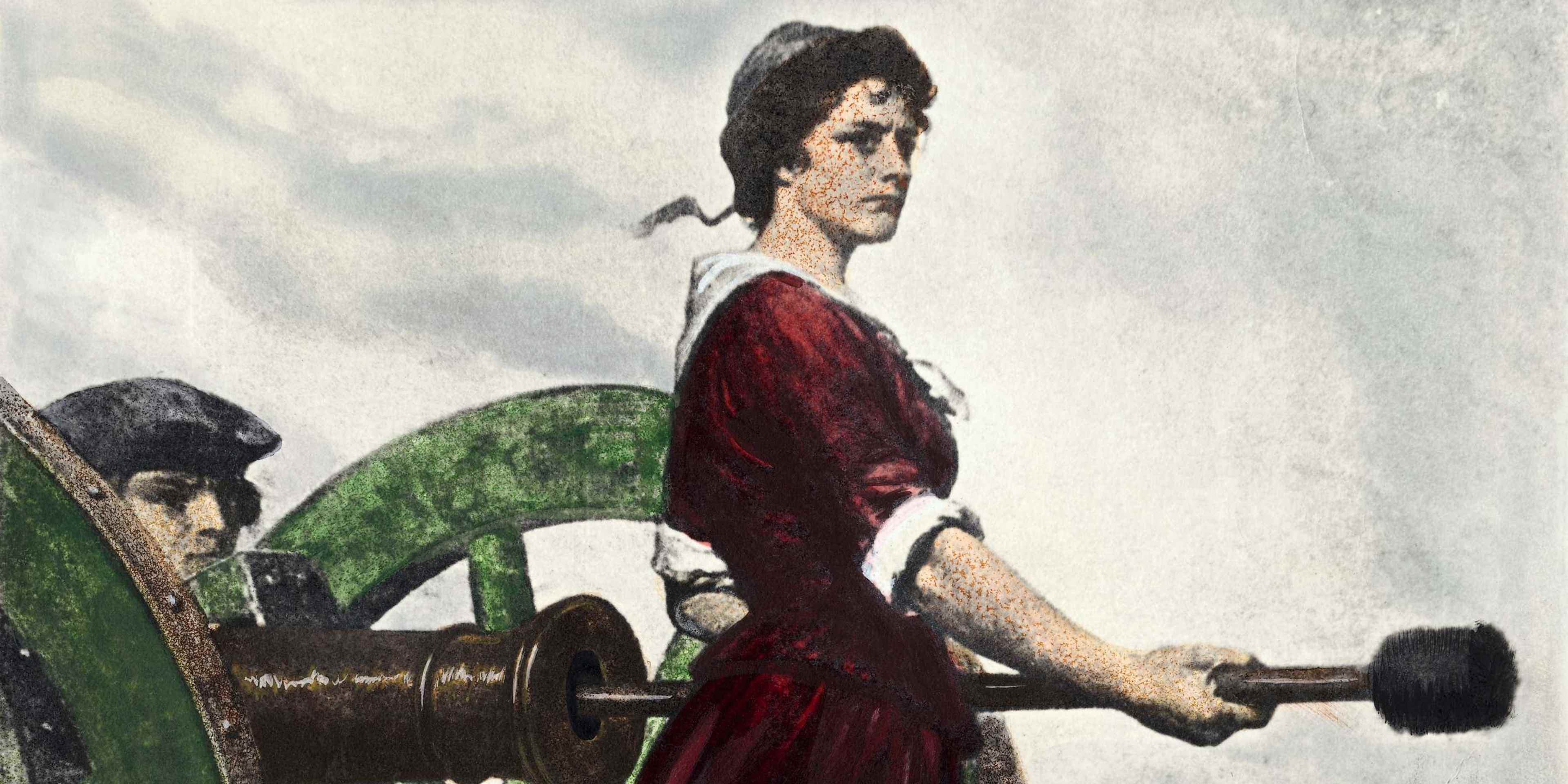
On November 16, 1776, as British forces launched a massive assault on Fort Washington in Manhattan, Margaret Cochran Corbin fought on the front lines. Serving as a camp follower, she was carrying water to her husband, John, an assistant gunner, when he was instantly killed by enemy fire. Without hesitation, Margaret took over the cannon crew, loading and aiming the weapon with fierce determination under heavy bombardment. She continued to fire until grapeshot ripped through her left shoulder, chest, and jaw, leaving her permanently disabled. In recognition of her unparalleled bravery, the Continental Congress awarded her a military pension in 1779, making her the first American woman to receive such government recognition.
4. Patience Lovell Wright: The Secret Agent Sculptor
Operating from the very heart of the British Empire, Patience Lovell Wright used her artistic genius to gather vital intelligence. As America’s first professional sculptor, Wright relocated to London in 1772, where her lifelike wax figures made her a sensation among British aristocrats, politicians, and royal courtiers. During the war, she used her museum as a front for espionage, collecting valuable military secrets from her high-society visitors. Wright cleverly concealed this intelligence inside the hollow interiors of wax busts, which she shipped to her sister in Philadelphia. Her covert operations directly aided the Continental Army, demonstrating that the battlefield of the Revolution extended far beyond traditional combat zones.
5. Sybil Ludington: The Midnight Rider of New York
While Paul Revere’s ride is immortalized in American folklore, 16-year-old Sybil Ludington completed a journey twice as long under far more treacherous conditions. On the rainy night of April 26, 1777, a messenger arrived at her father’s New York farmhouse with news that British forces were burning the Continental Army depot in Danbury, Connecticut. With her father, Colonel Henry Ludington, needing to stay behind to organize incoming troops, Sybil volunteered to ride. She galloped 40 miles through pitch-black woods and driving rain, using a stick to fend off highwaymen and rallying 400 militiamen to repel the British at the Battle of Ridgefield. Her remarkable ride remains a testament to the youth and vigor that fueled the rebellion.
6. Mercy Otis Warren: The Conscience of the Revolution
In an era when women were actively discouraged from participating in public political debate, Mercy Otis Warren wielded her pen as a formidable weapon. Born into an influential Massachusetts family, Warren wrote sharp political satires, poems, and plays that exposed the corruption of British colonial officials. Hosting intellectual salons and meetings of the Sons of Liberty in her home, she earned the moniker “The Conscience of the Revolution.” In 1805, she published History of the Rise, Progress and Termination of the American Revolution, a comprehensive three-volume historical analysis that stands as one of the very first nonfiction books written by an American woman.
7. Lydia Barrington Darragh: The Quaker Midwife Spy
Living in British-occupied Philadelphia in late 1777, Quaker midwife Lydia Barrington Darragh maintained a public stance of pacifism while secretly working as an intelligence agent. When British officers commandeered her parlor for private staff meetings, Lydia secretly listened through the walls. She wrote down their military plans, coded the messages, and hid them inside the cloth buttons of her 14-year-old son’s coat to be delivered to her eldest son, a lieutenant in the Continental Army. On December 2, 1777, she overheard plans for a surprise attack on Washington’s forces at Whitemarsh. Slipping past British checkpoints under the guise of buying flour, she successfully delivered the warning, allowing Washington to prepare his defenses and thwart the British ambush.
8. Esther de Berdt Reed: The Financial Engine of Liberty
Realizing that the Continental Army was dangerously underfunded and undersupplied, London-born Esther de Berdt Reed mobilized the patriotic women of Pennsylvania. In 1780, she published the broadside “Sentiments of an American Woman,” arguing that women possessed the same patriotic duty as men. Alongside Sarah Franklin Bache, she founded the Ladies Association of Philadelphia, which raised over $300,000 in today’s currency by going door-to-door. Defying the social norms of the era, which dictated that genteel women should not speak to male strangers in public, Reed’s association directly funded the purchase of cloth. She then organized teams of volunteers to sew over 2,000 shirts for Washington’s freezing soldiers.
9. Mary Ludwig Hays: The Legendary “Molly Pitcher”
The legend of “Molly Pitcher” has captivated Americans for centuries, symbolizing the resilient camp followers who supported the troops. Most historians believe the legend was inspired by Mary Ludwig Hays, who followed her husband, an artillery gunner, into the Battle of Monmouth on a brutally hot day in June 1778. Mary carried water to cool the overheated cannon barrels and quench the thirst of exhausted soldiers. When her husband collapsed from the heat, Mary stepped up to the cannon, loaded the ammunition, and kept the gun firing under relentless British bombardment. Her bravery became a enduring symbol of the direct, physical role women played on the battlefields of freedom.
Turning Points and Long-Term Legacy
The strategic contributions of these heroic women of the American Revolution fundamentally altered the sociopolitical fabric of the new nation. By taking over family farms, managing businesses, raising funds, and acting as spies, they demonstrated a level of civic capability that could not be ignored after the war ended. This realization gave rise to the concept of “Republican Motherhood”—the belief that women were vital to the survival of the young republic because they were responsible for raising virtuous, educated citizens. This shift in ideology laid the early groundwork for the 19th-century Seneca Falls Convention and the ultimate struggle for women’s suffrage.
Understanding how ordinary people, regardless of gender, contributed to the war effort sheds light on how everyday colonists lived and struggled, as detailed in our analysis of 13 facts about the 13 colonies. Their stories challenge the traditional, centralized narrative of history and prove that the American Revolution was a collective effort carried out by individuals from all walks of life.
People Also Ask
Did women actually fight in the American Revolutionary War?
Yes, several women fought directly in combat. The most famous example is Deborah Sampson, who disguised herself as a man to enlist, and Margaret Cochran Corbin, who operated a cannon at the Battle of Fort Washington after her husband was killed.
Who was the female Paul Revere?
Sybil Ludington is widely known as the female Paul Revere. At just 16 years old, she rode 40 miles through a stormy night in April 1777 to alert colonial militia forces of an imminent British attack on Danbury, Connecticut.
What was the Ladies Association of Philadelphia?
Founded in 1780 by Esther de Berdt Reed, the Ladies Association of Philadelphia was the largest domestic fundraising organization of the Revolutionary War. They raised over $300,000 in modern equivalent currency to purchase supplies and sew thousands of shirts for Washington’s army.
Conclusion
The heroic women of the American Revolution proved that patriotism is not defined by gender. Through their courage on the battlefield, their cleverness in espionage, and their tireless organizational skills at home, they helped secure the independence of a new nation. By remembering their stories, we honor a complete and inclusive history of the American struggle for liberty, ensuring that the legacy of these revolutionary mothers continues to inspire future generations.


