The Salem Witch Trials of 1692 stand as one of the most harrowing chapters in early American colonial history, leaving an indelible scar on the collective psyche of the nation. What began as a localized outbreak of medical anomalies and religious paranoia in a small Massachusetts settlement rapidly metastasized into a systemic failure of justice. The resulting tragedy, which claimed the lives of twenty innocent men and women, did not merely expose the fragility of colonial governance—it also served as a profound catalyst for legal reform. Indeed, the intersection of the Salem Witch Trials and the American legal system became a critical turning point that ultimately helped shape our modern concepts of due process, evidentiary standards, and individual civil liberties. This historical catastrophe acts as a stark, cautionary mirror, reflecting the devastating consequences that arise when fear, theological zealotry, and unsubstantiated gossip override the rational administration of the law. By exploring how these trials collapsed, we gain a deeper appreciation for the legal safeguards that protect our society today.
The Historical and Sociopolitical Context of 1692
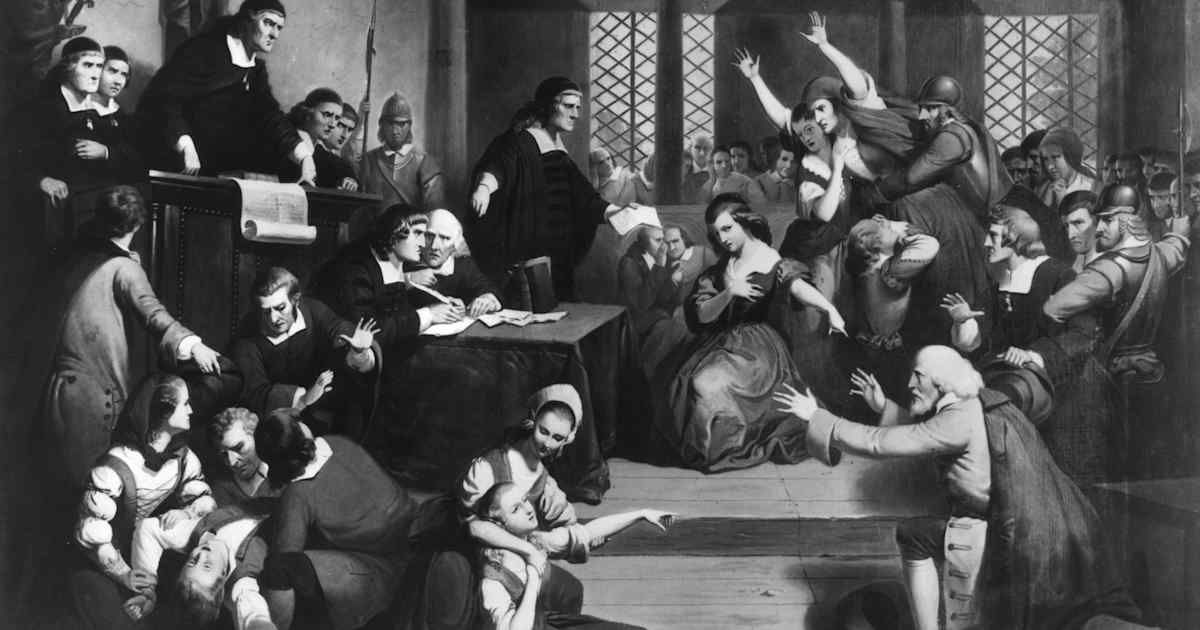
To understand how Salem spiraled into madness, one must examine the socio-political climate of late 17th-century New England. The Massachusetts Bay Colony was a Puritan stronghold, characterized by strict religious orthodoxy and a worldview that saw the devil’s hand in every misfortune. By 1692, the colony was under immense stress. It had recently lost its original royal charter, leaving residents in a state of political limbo regarding land titles and governance. Furthermore, the colony was reeling from the psychological and economic aftermath of King Philip’s War and ongoing frontier conflicts with Native American tribes. This constant threat of violence, combined with a harsh winter and fractional disputes between Salem Village and the wealthier Salem Town, created a powder keg of collective anxiety. It is worth noting that this panic was not entirely without precedent; decades earlier, New England had experienced the first American witch hunt, which set a fragile and dangerous baseline for how communities responded to inexplicable crises. Under such suffocating atmospheric pressure, the spark of accusation quickly erupted into an uncontrollable inferno.
The Key Events Timeline: How Salem Descended into Hysteria
The timeline of the Salem crisis reveals a rapid escalation from private domestic concern to public legal disaster. The tragedy unfolded through several critical phases:
- January 1692: Betty Parris, the nine-year-old daughter of Salem Village minister Samuel Parris, and her eleven-year-old cousin Abigail Williams begin exhibiting bizarre behaviors, including violent convulsions, screaming, and contorting their bodies into unnatural positions. Local doctor William Griggs, unable to find a medical explanation, suggests supernatural bewitchment.
- February 1692: Under intense pressure from adult community members, the afflicted girls name their alleged tormentors. The first three accused are Tituba, an enslaved Caribbean woman in the Parris household; Sarah Good, a homeless beggar; and Sarah Osborne, an impoverished elderly woman.
- March 1692: Public examinations begin. Tituba confesses to practicing witchcraft, claiming there are other witches in the community, which fuels widespread panic and triggers a flood of new accusations.
- May 1692: Sir William Phips, the newly appointed Governor of Massachusetts Bay Province, arrives from England with a new royal charter. Faced with overcrowded jails, Phips establishes a specialized court to clear the backlog of cases.
- June 10, 1692: Bridget Bishop becomes the first person convicted and executed, hanged on Gallows Hill.
- September 1692: The madness reaches its peak. In a single month, multiple trials take place, culminating in the execution of fifteen women and men, including the horrific pressing death of Giles Corey.
- October 1692: Public backlash grows, influenced by prominent ministers who warn against the court’s methods. Governor Phips officially bans the use of spectral evidence and dissolves the specialized court.
- May 1693: Governor Phips issues a general pardon, releasing the remaining prisoners and bringing a formal end to the legal executions.
Important Figures of the Salem Trials
A history of this magnitude is best understood through the individuals who drove, suffered under, or halted the hysteria.
- Governor William Phips: Arriving in the midst of the crisis, Phips was tasked with restoring order. His decision to establish the Court of Oyer and Terminer provided the institutional machinery for the executions, though his subsequent dissolution of the court ultimately saved dozens of lives.
- Chief Magistrate William Stoughton: Serving as the chief judge, Stoughton was an unyielding figure who relentlessly permitted the use of highly controversial evidence. Unlike other officials, Stoughton never publicly repented for his role in the trials, remaining convinced of his actions.
- The Accusers: While the community was gripped by fear, a group of young girls became the main accusers of Salem, pointing fingers at marginalized figures and respected church members alike, amplifying the community’s terror.
- Increase and Cotton Mather: These father-and-son Puritan ministers held immense intellectual influence. Cotton Mather initially defended the court’s actions but urged caution, while Increase Mather eventually wrote the decisive treatise Cases of Conscience Concerning Evil Spirits, arguing that it was far better for guilty parties to escape than for one innocent person to be condemned.
The Crucial Legal Protections Missing in Salem
When analyzing the Salem Witch Trials and the American legal system, the most striking feature of the trials is the complete absence of basic human rights that form the bedrock of modern jurisprudence. The Court of Oyer and Terminer operated under a set of assumptions and procedures that guaranteed a miscarriage of justice.
The Presumption of Guilt
Today, the presumption of innocence—the concept that a defendant is innocent until proven guilty—is an inviolable right in the American courtroom. In Salem, however, the burden of proof was effectively reversed. Once accused, defendants were assumed to be guilty, and the entire proceeding was designed to extract a confession or secure a conviction. Because the legal framework lacked codified protections like those later established in landmark Supreme Court cases such as Coffin v. United States (1895), the accused stood virtually defenseless against a court predisposed to see them as agents of the devil.
The Absence of the Hearsay Rule
In modern courts, the hearsay rule strictly limits the introduction of out-of-court statements to ensure that only reliable, first-hand evidence is used. In 1692, the hearsay rule was still in its infancy in English common law. Consequently, the Salem court enthusiastically admitted town gossip, decades-old grudges, neighborhood rumors, and wild speculations. This allowed personal grievances to be laundered through the legal process, turning petty social conflicts into capital offenses.
No Right to Counsel or Cross-Examination
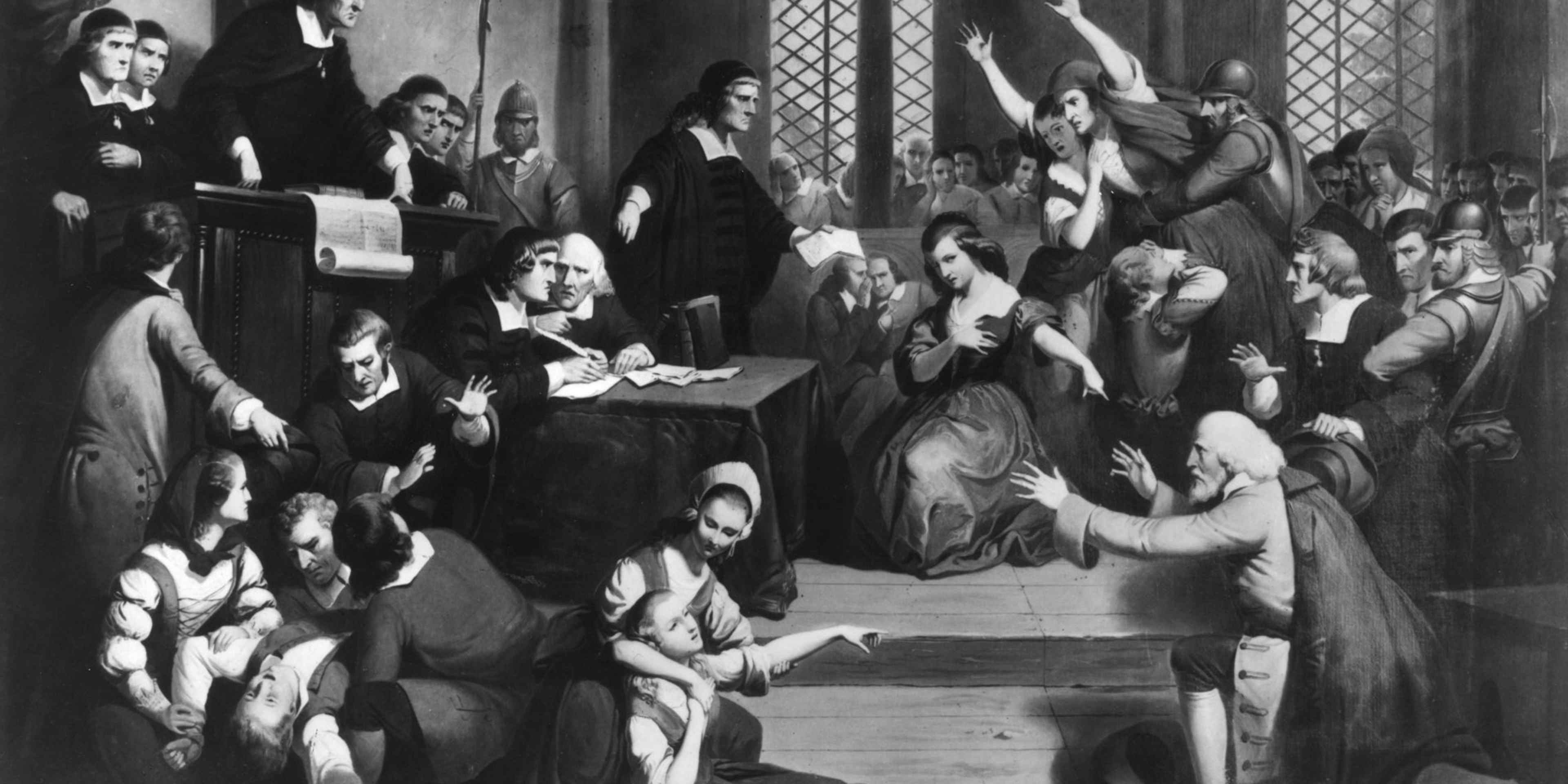
The accused in Salem were completely denied the right to professional legal counsel. There were no defense attorneys present to raise objections, present counter-arguments, or cross-examine the witness pool. Because the girls’ dramatic courtroom fits and accusatory testimonies went unchallenged by legal professionals, the judges and jury accepted their theatrical behavior as absolute, indisputable proof of demonic possession.
The Fatal Fallacy of Spectral Evidence
Perhaps the most damaging legal instrument used by the Court of Oyer and Terminer was spectral evidence. This form of evidence allowed witnesses to testify that the “spectre” or spirit of the accused had visited them in dreams or visions to pinch, choke, or torment them. Even if the accused person was physically miles away, working in a field or sleeping in their own bed, the court ruled that the devil could not employ a person’s shape without their explicit consent. This made spectral accusations virtually impossible to disprove, as there was no physical alibi that could counter a supernatural claim.
The Turning Point and the Restoration of Reason
The collapse of the Salem witch trials did not happen because people suddenly stopped believing in the existence of witches. Rather, the turning point occurred because the public and elite leadership lost faith in the court’s ability to distinguish the innocent from the guilty. As the summer of 1692 progressed, the accusations expanded beyond marginalized societal figures to target highly respected, pious members of the community, and even the wife of Governor Phips herself.
This overreach forced a reassessment of the legal methods being employed. In October 1692, Increase Mather published his influential work, Cases of Conscience Concerning Evil Spirits, which forcefully argued against the reliability of spectral evidence. “It were better,” Mather famously declared, “that ten suspected witches should escape, than that one innocent person should be condemned.” Recognizing that the judicial system had become an engine of mass murder, Governor Phips dissolved the Court of Oyer and Terminer, transitioning the remaining cases to the Superior Court of Judicature, which strictly prohibited spectral evidence and resulted in swift acquittals.
Long-Term Legacy: How Salem Reformed American Jurisprudence
The systemic failure of the Salem Witch Trials sent shockwaves through the American colonies and reverberated across the Atlantic. In the decades that followed, judges, jurors, and accusers issued public apologies, and the Massachusetts General Court eventually passed bills to restore the names of the condemned and pay restitution to their descendants.
More importantly, Salem became a powerful, negative blueprint for what a justice system must never become. When the Framers of the United States Constitution met nearly a century later, the memory of Salem’s legal horrors informed their push for robust civil liberties. The structural deficiencies of Salem directly inspired key components of the Bill of Rights:
- The Sixth Amendment: Guarantees the right to a speedy and public trial by an impartial jury, the right to cross-examine witnesses (the Confrontation Clause), and the absolute right to the assistance of defense counsel.
- The Fifth and Fourteenth Amendments: Protect the guarantee of “due process of law,” ensuring that no citizen can be deprived of life, liberty, or property without orderly, rational, and standardized legal proceedings.
- The Federal Rules of Evidence: Formulated to prevent the admission of unreliable evidence, ensuring that the gossip and spectral projections that condemned Salem’s citizens could never again be introduced in a court of law.
Lesser-Known Facts About the Salem Tragedy
While the basic narrative of Salem is widely known, several historical details remain misunderstood:
- No Witches Were Burned: Contrary to popular myth, no one convicted of witchcraft in Salem was burned at the stake. English law, which governed the Massachusetts colony, treated witchcraft as a felony punishable by hanging. Burning was reserved for cases of heresy or petty treason, which were handled differently.
- Animal Executions: The hysteria was so pervasive that even animals were swept up in the panic. At least two dogs were executed after being accused of working as “familiars” for local witches or exhibiting signs of demonic influence.
- The Execution of Giles Corey: The eighty-one-year-old Corey refused to enter a plea of guilty or not guilty to avoid having his property confiscated by the state. To force a plea, officials subjected him to *peine forte et dure*—pressing him under heavy stones. Over two days, Corey remained silent, famously uttering only “More weight” before he was crushed to death. His property was successfully passed down to his heirs.
For those eager to delve deeper into the personal narratives of this dark epoch, exploring historical books that take you inside the Salem witch trials offers unparalleled perspectives on the court transcripts, diaries, and social dynamics of the era.
Why Salem Still Matters Today
The Salem Witch Trials remain highly relevant in modern discourse as the ultimate metaphor for political persecution, mass hysteria, and the erosion of civil liberties. During the mid-20th century Cold War, the trials were famously utilized by playwright Arthur Miller in The Crucible to criticize the anti-communist “Red Scare” led by Senator Joseph McCarthy.
Today, in an era dominated by rapid digital communication, social media, and polarized public discourse, the lessons of Salem are more urgent than ever. Modern “trials by media” and digital cancel culture often mirror the dynamics of 1692, where public accusations can destroy reputations overnight without the benefit of a fair hearing, objective evidence, or the presumption of innocence. Salem stands as a permanent reminder that justice must always be guided by reason, evidence, and rigorous legal procedures, rather than public clamor or collective fear.
People Also Ask
How did the Salem Witch Trials change the American legal system?
The Salem Witch Trials exposed the catastrophic dangers of relying on hearsay, unscientific evidence, and the presumption of guilt. The tragedy accelerated the transition toward rational jurisprudence, influenced the establishment of the hearsay rule, and inspired the constitutional protections enshrined in the Bill of Rights, such as the right to legal counsel, due process, and the right to cross-examine witnesses.
What was spectral evidence in the Salem Witch Trials?
Spectral evidence was a legal concept where a witness claimed that the spirit or “spectre” of an accused person appeared to them in a dream or vision to torment them. The Court of Oyer and Terminer accepted this as valid proof of witchcraft, reasoning that the devil could not use a person’s shape without their consent, making it nearly impossible for defendants to present an alibi.
Who stopped the Salem Witch Trials?
Governor William Phips put an end to the trials in October 1692. After public outrage grew and prominent figures like the minister Increase Mather criticized the reliance on spectral evidence, Phips dissolved the Court of Oyer and Terminer. He subsequently prohibited the use of spectral evidence in future trials and issued a general pardon in May 1693 to release all remaining prisoners.
Conclusion
Ultimately, the Salem Witch Trials represent a profound failure of the law that paradoxically helped build the foundations of modern American justice. By showing what happens when a society abandons objective truth and due process in favor of fear and superstition, the victims of Salem paid the ultimate price to teach future generations an invaluable lesson. The legal legacy of 1692 reminds us that the safeguards of our legal system—such as the presumption of innocence and strict evidentiary rules—are not mere technicalities, but vital protections that keep the dark forces of human nature and collective hysteria at bay.


