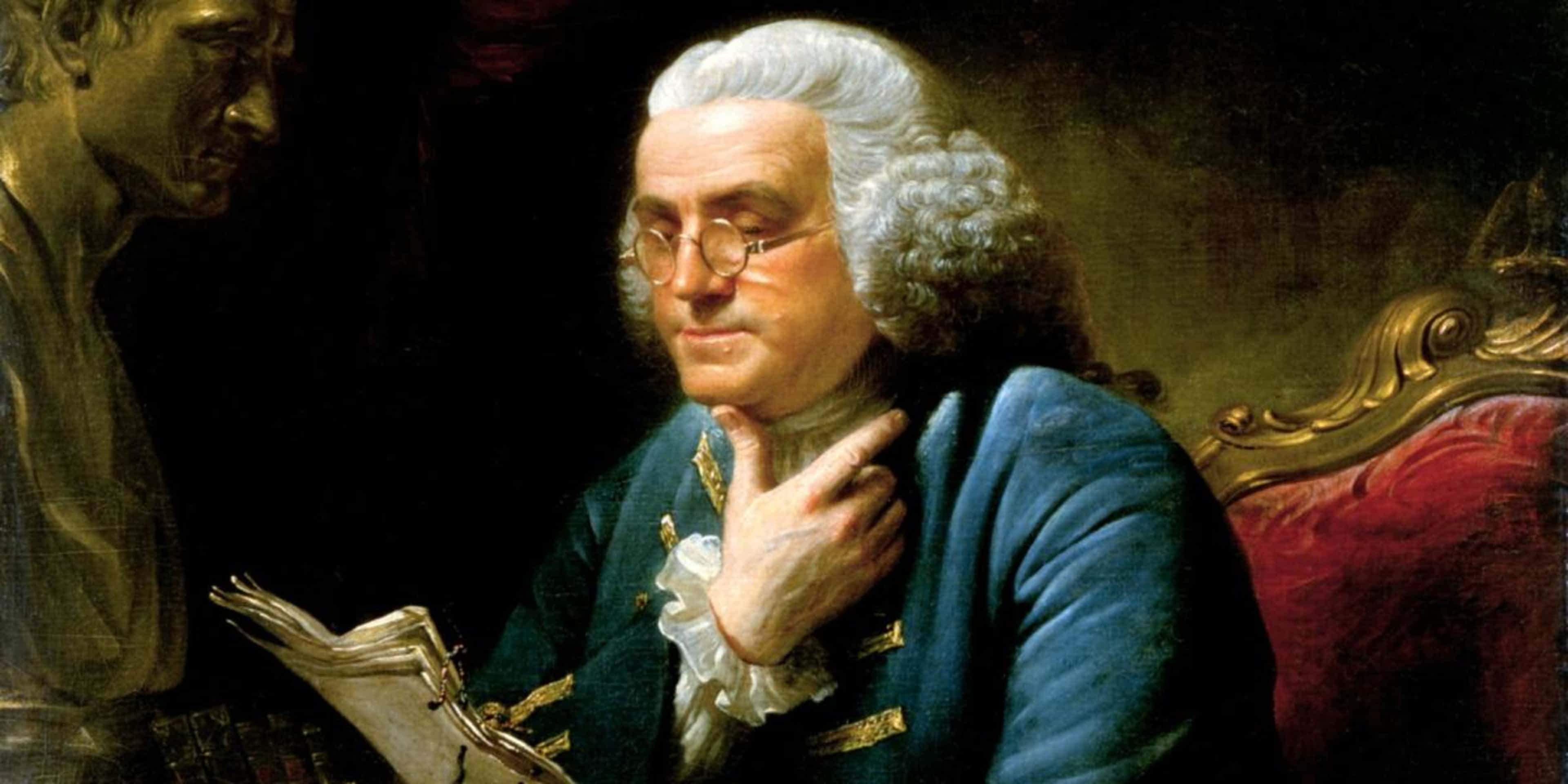
Benjamin Franklin remains one of the most enigmatic, multifaceted, and deeply influential figures in the history of the United States. Far more than just a face on the hundred-dollar bill, Franklin was a true polymath whose pursuits spanned from the scientific laboratory to the halls of international diplomacy. Born into humble circumstances, he leveraged his intellect, wit, and relentless curiosity to reshape not only colonial society but also the very destiny of a nascent nation. As a writer, publisher, scientist, inventor, statesman, and diplomat, Franklin left an indelible mark on every facet of early American life. His contributions to the founding of the republic, his pioneering work with electricity, and his dedication to civic improvement defined the spirit of a new continent. Understanding his life offers a window into the profound intellectual and cultural transformations that occurred as the British colonies moved from subjugation to sovereignty.
Historical Background: The Crucible of a Self-Made Polymath
Benjamin Franklin was born on January 17, 1706, in colonial Boston, Massachusetts. He was the fifteenth of seventeen children born to Josiah Franklin, a hardworking tallow chandler and soap maker who had emigrated from England, and his second wife, Abiah Folger. Despite his obvious intellectual spark, Franklin’s formal schooling was cut short at the age of ten due to financial constraints. Instead, he was integrated into the family business, cutting candlewick and boiling soap, a life he quickly grew to detest. His father eventually apprenticed him at age twelve to his older brother, James Franklin, a local printer. This move proved to be a critical turning point. Exposed to the world of typesetting and printing, Franklin found a gateway to literature, science, and public discourse, laying the foundation for his future endeavors.
In his brother’s print shop, the teenage Franklin absorbed everything he could read, from classic theology to the secular rationalism of the European Enlightenment. He soon desired to write, but knowing his brother would never publish a teenager’s essays, he adopted the pen name Silence Dogood. Writing as a fictional middle-aged widow, Franklin slipped fourteen satirical, humorous, and socially critical essays under the door of his brother’s newspaper, the New England Courant. When James discovered the true author, tension erupted between the brothers, leading Benjamin to make a daring, illegal escape from his apprenticeship in 1723. He fled first to New York, and then to Philadelphia, arriving with only a few coins in his pocket but carrying an unmatched work ethic and intellect that would soon conquer the city.
Key Events and Milestones: A Chronological Journey
The life of Benjamin Franklin is a grand timeline of personal reinvention, scientific breakthrough, and national revolution. Below is a detailed chronological breakdown of his most critical milestones:
- 1706: Born in Boston, Massachusetts, into a modest family of candle and soap makers.
- 1718: Apprenticed to his older brother James in the printing trade.
- 1723: Runs away to Philadelphia, where he establishes himself as a skilled printer.
- 1724-1726: Travels to London, working in prominent print shops and gaining international perspective.
- 1729: Purchases the Pennsylvania Gazette, transforming it into a premier source of news and driving America’s early print culture.
- 1731: Launches the Library Company of Philadelphia, the first successful public lending library in North America.
- 1732: Publishes the inaugural edition of Poor Richard’s Almanack, which becomes a commercial sensation.
- 1748: Retires from active printing business to dedicate his life to scientific experimentation and public service.
- 1751: Co-founds the Academy of Philadelphia, contributing significantly to education in early America.
- 1752: Performs his famous kite experiment, demonstrating the electrical nature of lightning.
- 1754: Proposes the Albany Plan of Union, suggesting a unified council for the 13 colonies.
- 1776: Drafts and signs the Declaration of Independence.
- 1778: Secures the Treaty of Alliance with France, securing critical military support for the Revolutionary War.
- 1783: Signs the Treaty of Paris, formally ending the war with Great Britain.
- 1787: Serves as the oldest delegate at the Constitutional Convention, facilitating key compromises.
- 1790: Passes away in Philadelphia at age 84, followed by a funeral attended by over 20,000 citizens.
Important Figures in Franklin’s Life
While Franklin was a singular force, his life was deeply intertwined with other notable figures of the colonial and revolutionary eras, whose relationships highlighted his complex character:
- Deborah Read Franklin: Franklin’s common-law wife. Having met him when he first arrived in Philadelphia, Deborah was a steadfast partner who managed their business affairs, household, and finances while Franklin was away on long-term diplomatic missions in Europe. Despite their decades apart and her fear of crossing the ocean, she remained his anchor until her death in 1774.
- William Franklin: Benjamin’s illegitimate son, whom he raised and educated. William eventually became the last Royal Governor of New Jersey. The outbreak of the American Revolution fractured their relationship permanently; William remained fiercely loyal to the Crown, while Benjamin became a leading revolutionary. Their ideological division mirrored the tragic splits felt by thousands of families across the colonies.
- Thomas Jefferson: A fellow member of the committee tasked with drafting the Declaration of Independence. Jefferson drafted the initial document, but Franklin served as a brilliant editor, famously suggesting the change of “We hold these truths to be sacred and undeniable” to the more secular and powerful “We hold these truths to be self-evident.”
- Comte de Vergennes: The French foreign minister during the Revolutionary War. Franklin’s sophisticated diplomatic maneuvering with Vergennes secured the vital French alliance, illustrating Franklin’s immense charm and political leverage on the world stage.
Causes and Context: The Enlightenment and Colonial Awakening
The era in which Benjamin Franklin lived was defined by the Age of Enlightenment, an intellectual movement that swept through Europe and cross-pollinated the American colonies. This movement championed reason, empirical scientific observation, individual liberty, and a skepticism of traditional religious and monarchical authority. Franklin was the perfect embodiment of this intellectual awakening. Unlike the Puritan elders of his youth, who viewed natural events like lightning or disease as direct expressions of divine wrath, Franklin sought natural causes and practical human solutions.
At the same time, the geopolitical landscape of North America was changing rapidly. The colonies were growing in wealth, population, and self-reliance, yet they remained fragmented. Franklin recognized that without unity, the colonies would remain vulnerable to European powers and internal strife. His push for colonial cooperation, scientific innovation, and civic organization arose from this specific context of colonial growth and intellectual liberation.
Major Turning Points in Franklin’s Career
Three pivotal moments altered the course of Benjamin Franklin’s life, transforming him from a provincial printer into a global icon of liberty:
1. The Retirement and Scientific Breakthroughs (1748)
By 1748, Franklin had built such a prosperous printing empire across the colonies that he was able to retire from active business at the young age of 42. This financial freedom allowed him to pivot entirely toward scientific experimentation. His work with electricity, culminating in his famous 1752 kite-and-key experiment, made him an international scientific celebrity. He proved that lightning was an electrical force, invented the lightning rod, and coined terms like battery, conductor, and charge. This scientific prestige gave him unparalleled intellectual authority when he later represented the colonies in Europe.
2. The Testimony Against the Stamp Act (1766)
While living in London as a representative of the Pennsylvania Assembly, Franklin witnessed the growing rift between Great Britain and her colonies, particularly over the Stamp Act of 1765. In 1766, Franklin stood before the British House of Commons, delivering a masterclass in diplomacy and cross-examination. His eloquent, firm defense of colonial rights and detailed explanation of how the tax was economically ruinous contributed directly to the repeal of the act. This event transitioned Franklin from a loyal British colonial into an active advocate for American sovereignty.
3. The Alliance with France (1778)
Sent to Paris by the Continental Congress in late 1776, Franklin faced the monumental task of securing an alliance with absolute monarchist France to aid a republican revolution. Knowing the French romanticized the American wilderness, Franklin purposefully played into their expectations, wearing a simple fur cap instead of a powdered wig. His strategic humility, sharp wit, and scientific fame captivated French high society. In 1778, he negotiated the Treaty of Alliance, securing French troops, naval support, and massive financial aid that ultimately made the American victory at Yorktown possible.
Long-Term Impact on America
Franklin’s legacy is woven into the very fabric of American civic life, democracy, and science. His long-term impacts include:
- The Architectural Blueprint of Civic Duty: Franklin pioneered the concept of civic volunteerism. He helped establish volunteer fire departments, public hospitals, paved roads, streetlights, and the United States Postal Service. He proved that a healthy democracy requires citizens to actively participate in improving their local communities.
- Scientific and Technological Foundations: Beyond electricity, Franklin’s inventions—such as the bifocal lens, the energy-efficient Franklin stove, and the glass armonica—demonstrated his belief that science should always serve a practical, humanitarian purpose. He famously refused to patent any of his inventions, stating that as we enjoy the inventions of others, we should be glad of an opportunity to serve others by any invention of ours.
- The Only Signer of the Four Founding Documents: Franklin holds the unique distinction of being the only person to sign all four key documents that established the United States: the Declaration of Independence (1776), the Treaty of Alliance with France (1778), the Treaty of Paris (1783), and the United States Constitution (1787). His presence ensured continuity, compromise, and international credibility for the new nation.
Lesser-Known Facts About Benjamin Franklin
- The Inducted Swimmer: Franklin was a passionate, highly skilled swimmer. As a young man in London, he performed impressive aquatic feats on the River Thames. He even invented early swim fins made of wooden pallets for his hands and feet. In 1968, he was posthumously inducted into the International Swimming Hall of Fame.
- The Glass Armonica Sensation: Intrigued by the sound of water-tuned glasses, Franklin invented a musical instrument called the glass armonica in 1761. It consisted of spinning glass bowls nested on an iron spindle, played by touching the wet rims with one’s fingers. The instrument became a massive hit in Europe, with composers like Mozart and Beethoven writing pieces specifically for it.
- The Tragic Family Rift: Despite his reputation as a great unifier, Franklin never forgave his son William for remaining loyal to the British Crown. Even after the war ended, Franklin largely excluded William from his will, leaving him only some virtually worthless land in Canada, noting that William’s political choices had tried to deprive him of his life and fortune.
Why Benjamin Franklin Still Matters Today
Benjamin Franklin remains highly relevant in the 21st century because he is the ultimate archetype of the American Dream—a self-made man who rose from poverty to global renown through hard work, education, and ingenuity. His philosophy of practical compromise is a desperately needed model in modern political discourse. At the Constitutional Convention, Franklin famously urged his fellow delegates to doubt a little of their own infallibility and work together for the greater good. His pragmatic approach to solving public problems, his celebration of scientific inquiry, and his commitment to community-led progress continue to serve as a guiding light for democratic societies worldwide.
People Also Ask
What did Benjamin Franklin invent?
Benjamin Franklin was a prolific inventor. His most famous inventions include the lightning rod (which protected buildings from devastating fires), bifocal eyeglasses (combining distance and reading lenses), the Franklin stove (a metal-lined fireplace that produced more heat with less wood), and the glass armonica (a musical instrument). He also invented early swim fins and an odometer to measure carriage distances.
Why was Benjamin Franklin never President of the United States?
Benjamin Franklin was never president because of his advanced age and declining health by the time the office was established. When George Washington was inaugurated as the first U.S. President in 1789, Franklin was already 83 years old and suffering from severe gout and bladder stones. He passed away just one year later, in April 1790.
How many founding documents did Benjamin Franklin sign?
Benjamin Franklin is the only Founding Father to have signed all four of the essential documents that founded the United States: the Declaration of Independence (1776), the Treaty of Alliance with France (1778), the Treaty of Paris (1783), and the United States Constitution (1787).
Conclusion
Benjamin Franklin was the quintessential self-made man, a visionary whose accomplishments bridged science, literature, politics, and diplomacy. His insatiable curiosity and commitment to public service transformed Philadelphia, united the colonies, secured essential foreign support during the Revolution, and helped draft the governing laws of the United States. Today, his life stands as a powerful testament to the impact that a single, dedicated citizen can have on the trajectory of an entire nation. By studying Franklin, we learn that true patriotism lies not in rigid dogmatism, but in empirical inquiry, civic participation, and the relentless pursuit of the common good.


