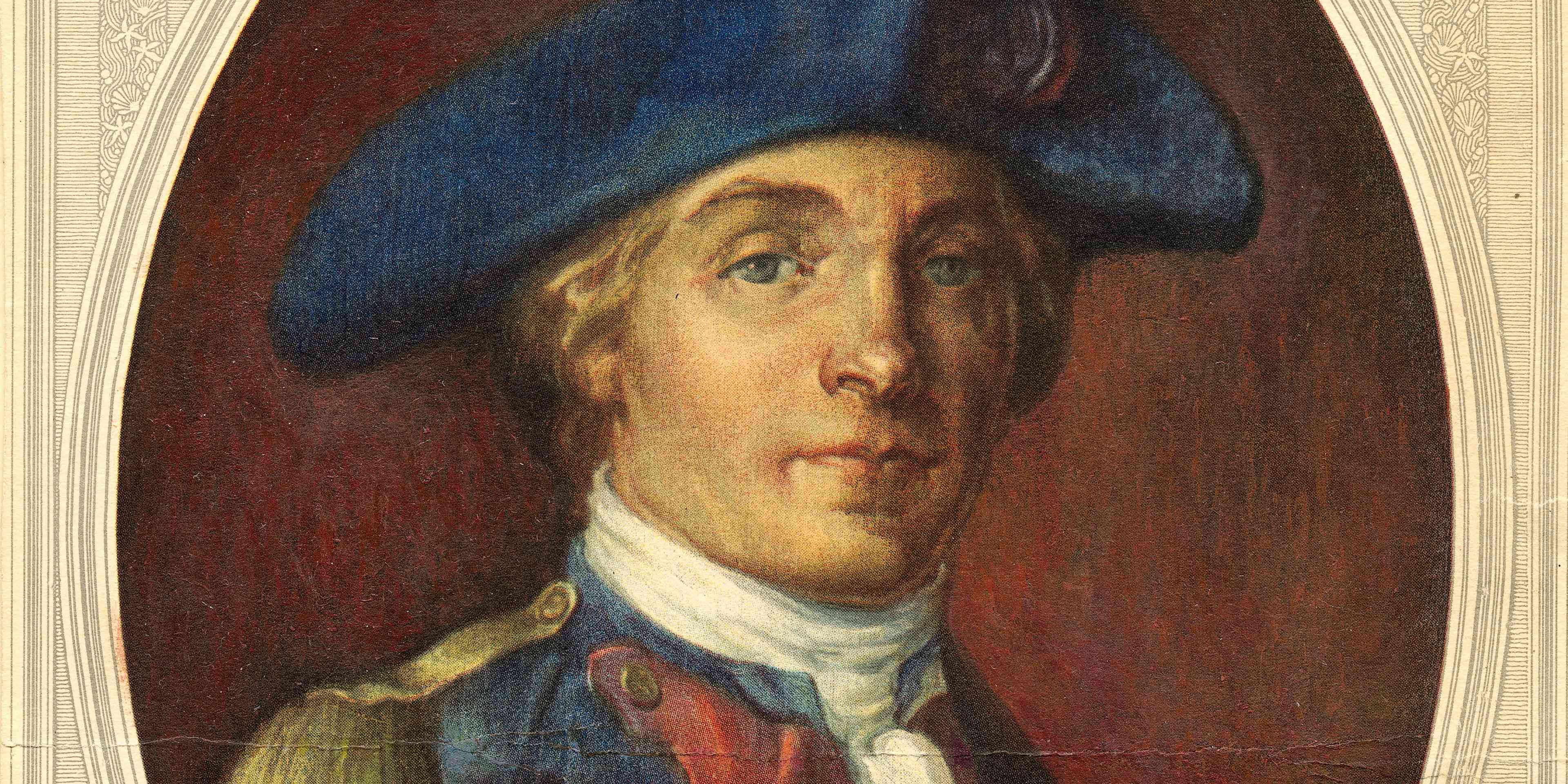
John Paul Jones, born John Paul in Scotland in 1747, rose from humble beginnings to become one of the most celebrated and audacious naval commanders in human history. Often hailed as the ‘Father of the American Navy,’ Jones exemplified unmatched courage, strategic brilliance, and relentless resilience during the American Revolutionary War. His legendary battle against the British frigate HMS Serapis in 1779 and his defiant battle cry, ‘I have not yet begun to fight!’ forever secured his place in the pantheon of early American heroes. Beyond his combat exploits, his life was a cinematic saga of exile, assumed identities, foreign alliances, and a tragic, forgotten death in Paris, only to be resurrected a century later as an enduring icon of American military heritage. This article explores his fascinating biography, key naval victories, and the lasting legacy he left on the United States Navy.
Historical Background: From Scottish Gardener’s Son to Fugitive Sailor
Before he was a legendary naval commander, John Paul Jones was simply John Paul. Born on July 6, 1747, in a modest cottage in Arbigland, Scotland, his father, John Paul Sr., was a gardener. Surrounded by the sea, the young John Paul found his calling early, embarking on a maritime career at the tender age of 13 as an apprentice aboard the British merchant ship Friendship. This early exposure to the high seas taught him the intricate nuances of navigation, seamanship, and naval warfare.
As his career progressed, John Paul sailed on various merchant and slave-trade vessels. However, the sheer cruelty and inhumanity of the transatlantic slave trade deeply repulsed him, prompting him to abandon those voyages and return to standard cargo shipping. By 1768, he had proved his exceptional capability, earning the rank of master and commander of the brig John. However, his fiery temper and strict discipline frequently led to conflict with his crews.
In 1773, while commanding the merchant vessel Betsy in Tobago, John Paul faced a critical turning point. He was forced to defend himself during a mutiny, striking and killing a mutinous crew member with his sword. Fearing he would not receive a fair trial under local authorities, he fled to the American colonies. To conceal his identity and evade British justice, he added the surname ‘Jones’ to his birth name, transforming into the historical figure we know today as John Paul Jones.
The Call of the Revolution: Joining the Continental Navy
Upon his arrival in America, Jones found a continent on the brink of revolution. The political tension in the 13 colonies was reaching a boiling point, as colonists protested British taxation and authoritarian rule. Seeing an opportunity to align his resentment toward British authority with the American cause, Jones offered his services to the newly established Continental Navy in 1775. His seafaring experience made him an invaluable asset to a fledgling nation with almost no naval infrastructure.
Jones was initially commissioned as a first lieutenant on the flagship Alfred. He quickly distinguished himself through his daring and initiative. Given command of the USS Providence in 1776, Jones conducted highly successful raids off the coast of Nova Scotia, capturing sixteen British ships and disrupting enemy supply lines. His tactical success earned him a promotion to captain and command of the newly constructed sloop of war, the Ranger, in 1777.
Determined to take the fight directly to the British homeland, Jones sailed the Ranger across the Atlantic to France. In February 1778, the French Admiral La Motte Piquet officially saluted the Ranger, marking the historic first time that a foreign power recognized the American flag. This was a massive diplomatic victory, bolstering the colonies’ quest for international legitimacy, a theme heavily echoed in other 13 colonies history facts. Jones then launched daring raids on British ports, including a famous assault on Whitehaven, England, which shocked the British public and proved that their home waters were no longer safe.
The Battle of Flamborough Head: ‘I Have Not Yet Begun to Fight!’
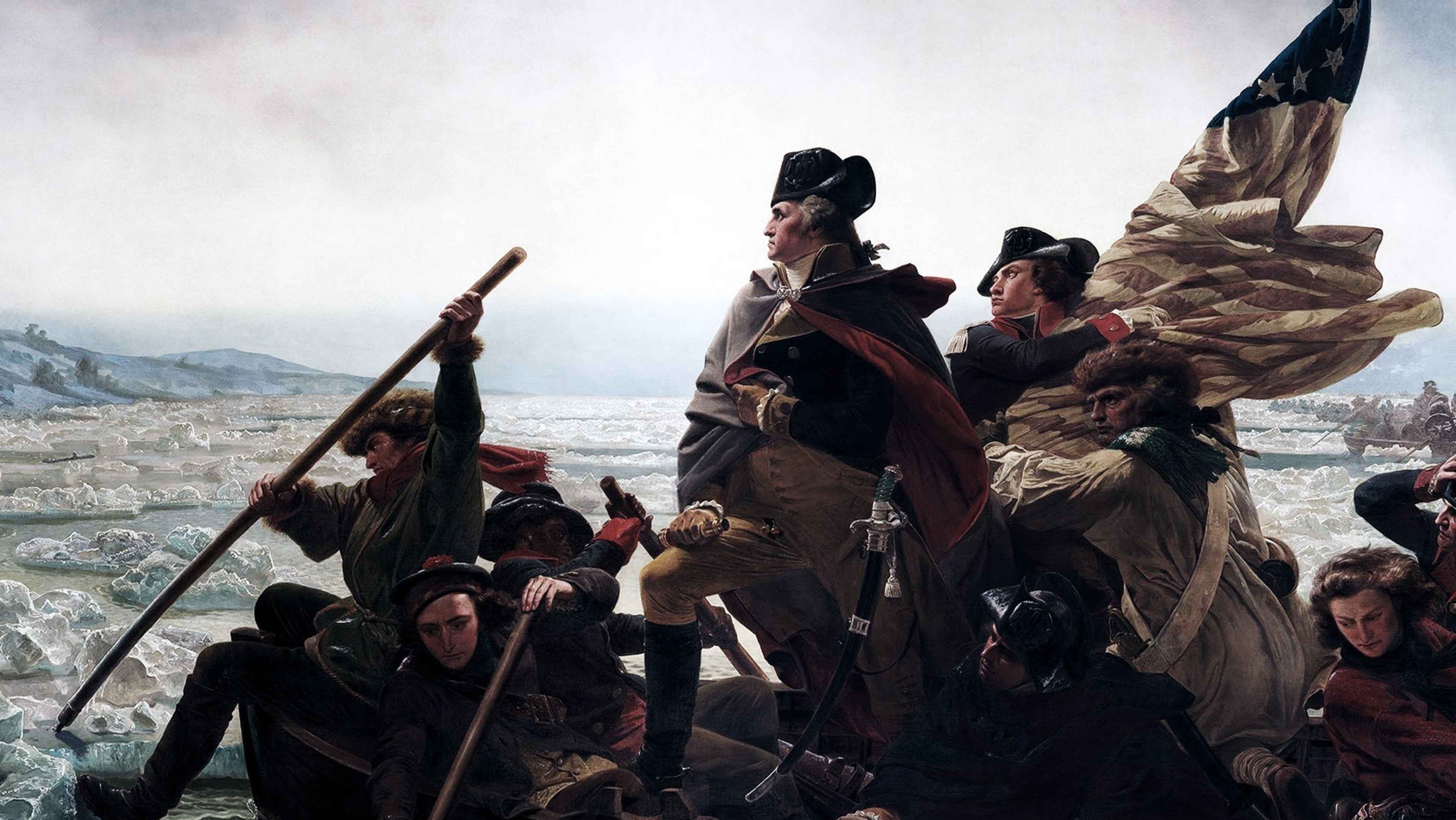
The defining moment of John Paul Jones’s career occurred on the evening of September 23, 1779, during the Battle of Flamborough Head. Commanding the Bonhomme Richard—a converted French merchant ship named in honor of Benjamin Franklin’s Poor Richard’s Almanack—Jones led a small squadron off the coast of Yorkshire. There, he encountered a large British merchant convoy escorted by the formidable 50-gun frigate HMS Serapis and the smaller Countess of Scarborough.
The duel between the Bonhomme Richard and the HMS Serapis was one of the most ferocious and bloody single-ship actions of the Revolutionary War. From the opening salvos, the heavily armed Serapis tore into Jones’s wooden vessel, causing devastating casualties and flooding. Several of the Bonhomme Richard‘s heavy cannons burst on their first firing, rendering them useless. Realizing his ship was doomed in a long-range gun duel, Jones made a desperate and brilliant tactical move: he steered directly into the Serapis, physically lashing the two warships together to neutralize the British ship’s superior maneuverability and gun power.
As the two ships lay locked in a deadly embrace, firing point-blank into each other, the British captain, Richard Pearson, noticed the catastrophic state of the American vessel and called out, asking if Jones was ready to surrender. It was at this desperate moment that Jones famously roared back: ‘I have not yet begun to fight!’
For hours, the savage combat continued in the dark. The turning point came when an American crewman climbed into the rigging of the Bonhomme Richard and tossed a grenade down the open hatch of the Serapis. The grenade ignited loose gunpowder cartridges on the main deck, causing a massive explosion that decimated the British crew. Shattered and facing imminent destruction, Captain Pearson finally surrendered. Though the Bonhomme Richard sank two days later, Jones triumphantly sailed the captured Serapis to safety, cementing his status as a legendary naval hero.
Chronological Timeline of Key Milestones
- July 6, 1747: Born John Paul in Arbigland, Scotland.
- 1760: Begins his naval apprenticeship at age 13.
- 1773: Kills a mutinous crewman in Tobago and flees to America, adopting the name Jones.
- 1775: Joins the newly formed Continental Navy as a lieutenant.
- 1777: Takes command of the Ranger and sails to Europe.
- 1778: Receives the first foreign salute to the American flag in France.
- September 23, 1779: Defeats the HMS Serapis in the Battle of Flamborough Head.
- 1788: Serves in the Russian Imperial Navy under Empress Catherine the Great.
- July 18, 1792: Dies in Paris, France, at the age of 45.
- 1905: His preserved remains are discovered in Paris and returned to the United States.
- January 26, 1913: Reinterred in a grand marble sarcophagus at the U.S. Naval Academy Chapel.
Post-War Life, Russian Adventure, and the Forgotten Grave
Following the conclusion of the Revolutionary War, the cash-strapped Continental Congress disbanded the Navy, leaving Jones without a command. Seeking further adventure and military glory, Jones accepted an offer from Empress Catherine the Great of Russia in 1788 to serve as a Rear Admiral in the Russian Imperial Navy. Fighting in the Black Sea during the Russo-Turkish War, Jones won several key victories, but his success sparked intense jealousy among Russian aristocratic officers, who conspired to ruin his reputation with false accusations. Disillusioned, Jones resigned his commission and returned to Western Europe.
Jones spent his final years in Paris, where his health rapidly declined due to kidney failure and cardiovascular issues. On July 18, 1792, he was found dead in his apartment at the age of 45. He was buried in the Saint-Louis Cemetery for foreign Protestants, a site that was later sold, paved over, and eventually forgotten as Paris grew over the next century.
In 1899, General Horace Porter, the American Ambassador to France, launched a massive search to locate the hero’s remains. After six years of historical research and excavation, Jones’s lead coffin was found beneath a Parisian street in 1905. Remarkably, because the coffin had been filled with alcohol, his body was exceptionally well-preserved. In 1906, President Theodore Roosevelt ordered a fleet of warships to escort Jones’s remains back to America, where he was ultimately laid to rest in a magnificent marble and bronze sarcophagus beneath the chapel of the United States Naval Academy in Annapolis, Maryland.
Lesser-Known Facts About John Paul Jones
- He Was a Fugitive from British Justice: Jones only added the name ‘Jones’ to escape hanging in Tobago after killing a mutinous sailor in self-defense, effectively making him an outlaw who redefined himself through the American cause.
- He Fought Under a Russian Alias: While serving Catherine the Great, Jones was given the Russian name Pavel Dzhones, operating as a Rear Admiral in the Black Sea.
- His Body Was Mummified in Alcohol: To ensure his remains could eventually be returned to America, the French Protestant cemetery patrons filled his lead coffin with spirits, preserving his physical features so perfectly that pathologists in 1905 easily matched his face to historic commemorative medals.
Why His Legacy Matters Today
John Paul Jones’s legacy is foundational to the modern identity of the United States Navy. His refusal to surrender in the face of overwhelming odds established a culture of aggressive determination and tactical excellence that defines American naval doctrine to this day. His resting place at the U.S. Naval Academy serves as a shrine and a constant source of inspiration for future generations of naval officers. Modern warships, such as the guided-missile destroyer USS John Paul Jones (DDG-53), continue to carry his name into global waters, ensuring that his spirit of defiance and courage remains alive in the 21st century.
People Also Ask (FAQ)
Why did John Paul Jones change his name?
He added ‘Jones’ to his birth name, John Paul, to hide his identity from British authorities after killing a mutinous crew member in self-defense on the island of Tobago in 1773.
What was John Paul Jones’s famous quote?
During the Battle of Flamborough Head, when asked if he was ready to surrender his sinking ship, Jones famously declared, ‘I have not yet begun to fight!’
Where is John Paul Jones buried?
His remains are entombed in a grand, bronze-and-marble crypt beneath the chapel of the United States Naval Academy in Annapolis, Maryland.
Conclusion
The story of John Paul Jones is one of the most compelling narratives of the American Revolution. From a humble Scottish upbringing to international naval fame, his life embodied the restless spirit of a young nation fighting for its survival and independence. By standing firm against the world’s greatest naval power, Jones proved that courage and tactical audacity could overcome any obstacle. His legacy remains a beacon of leadership, duty, and relentless perseverance for sailors and history enthusiasts worldwide.


