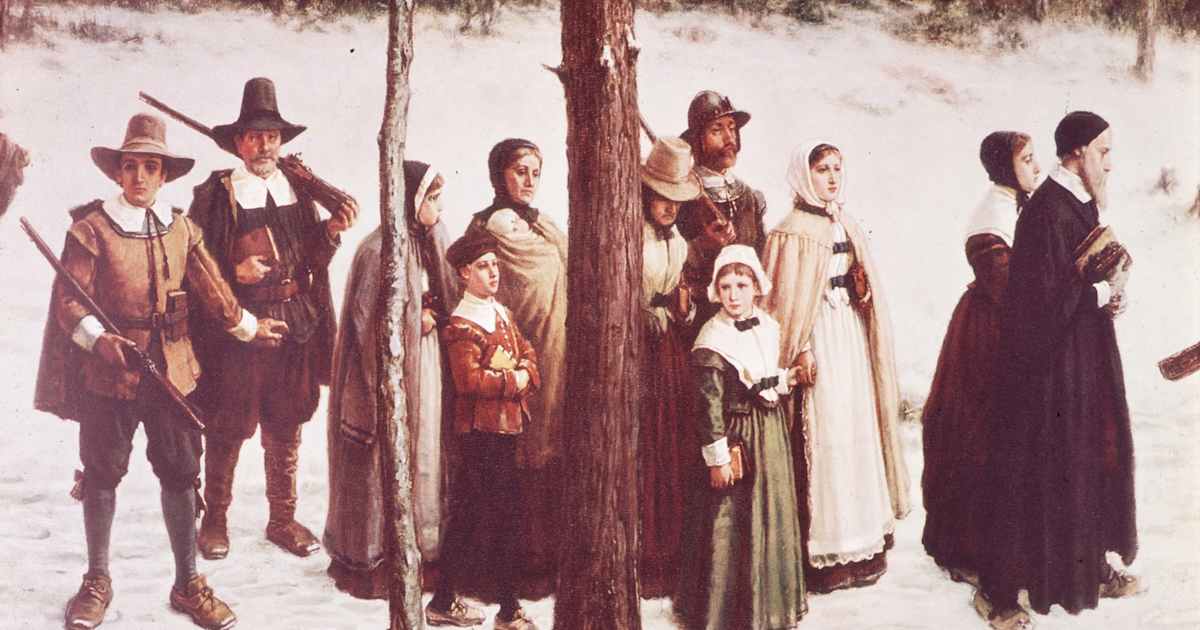
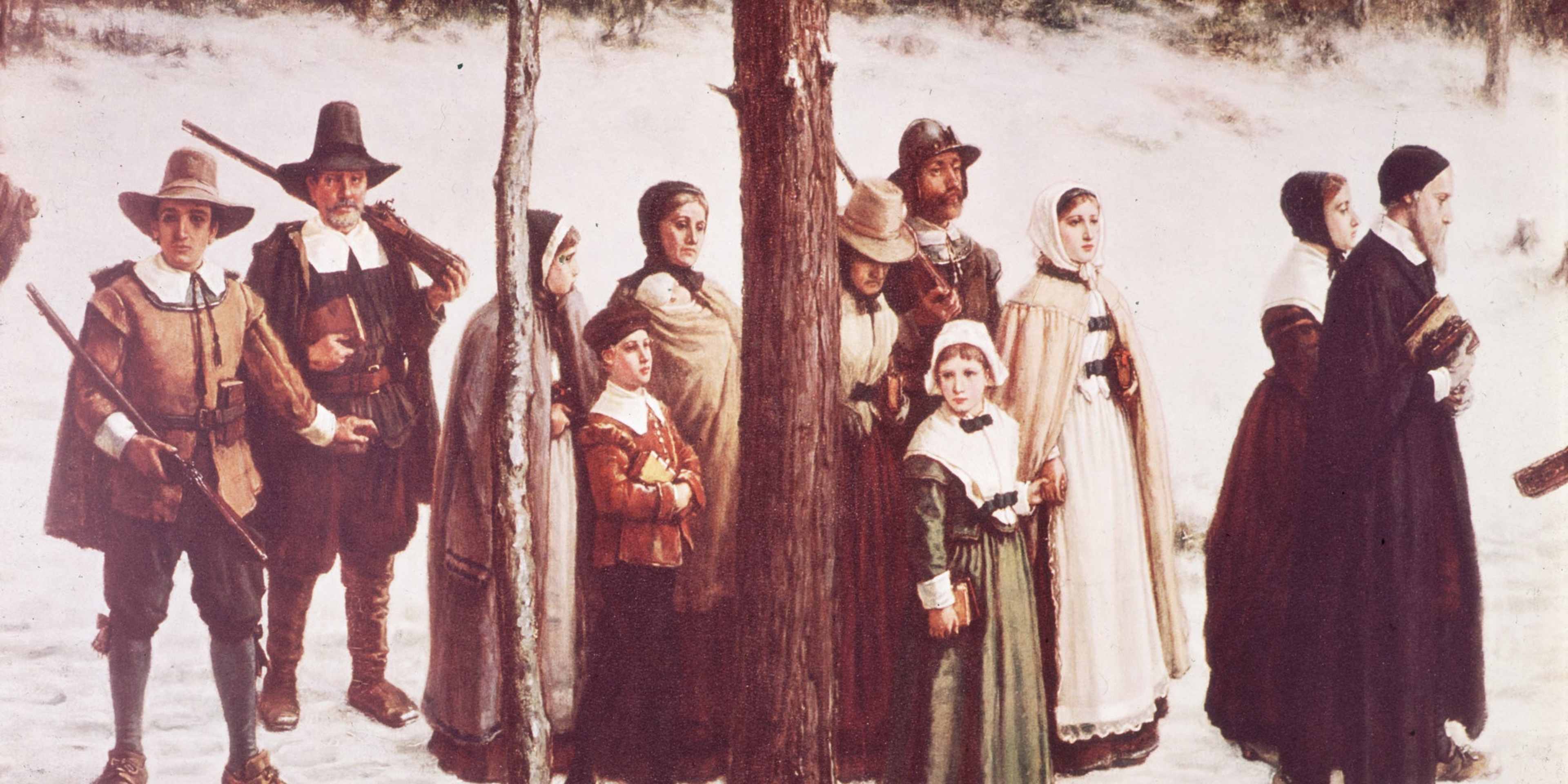
When visualizing the early settlement of New England, most Americans picture a unified group of solemn, dark-clad pioneers landing on Plymouth Rock. We imagine severe-looking figures in tall black hats, sporting polished silver buckles on their shoes, sharing a peaceful Thanksgiving meal with Native American neighbors. However, this popular imagery conflates two distinct groups of English religious reformers: the Pilgrims and the Puritans. While both groups deeply rejected the ceremonial practices of the Church of England, they harbored profoundly different theological beliefs, socioeconomic backgrounds, and visions for their settlements in the New World. Understanding the core differences between these two foundational groups is not just an exercise in historical trivia; it is crucial to understanding the complex, often contradictory roots of early American history, culture, and governance.
The Historical Background: A Divided English Reformation
To understand the split between the Puritans and the Pilgrims, we must step back to the Protestant Reformation of the 16th century. Initiated in 1517 when Martin Luther challenged the Catholic Church, the Reformation transformed the religious landscape of Europe. In England, the transformation was uniquely political. In 1534, King Henry VIII broke from Rome not out of theological conviction, but because the Pope refused to annul his marriage to Catherine of Aragon. Henry established the Church of England (the Anglican Church), appointing himself as its supreme head. Although the English church was no longer under papal authority, it retained much of Catholicism’s hierarchical structure, vestments, and liturgical practices. This compromise deeply dissatisfied many English Protestants. They argued that the Church of England remained “too popish” and needed to be purged of its Catholic remnants. This broad, reform-minded movement became known as Puritanism. However, within this movement, a major ideological fracture emerged: should they reform the church from within, or break away entirely?
The Pilgrims: Radical Separatists on the Margin
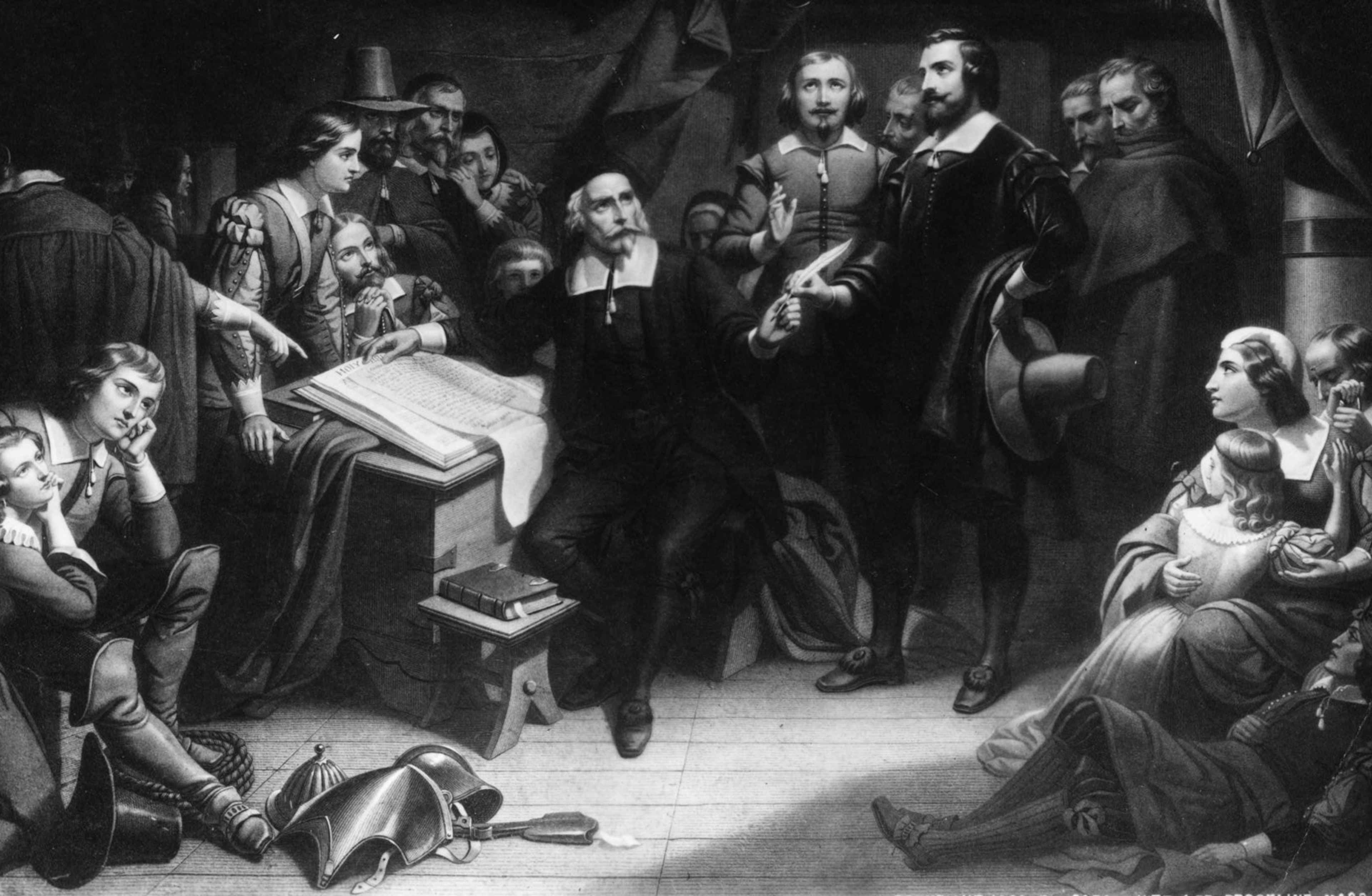
The Pilgrims represented the radical wing of the Puritan movement, historically referred to as “Separatists.” Believing the Church of England was thoroughly corrupt and beyond saving, they asserted that true Christians must separate themselves from the national church to form independent congregations. In Jacobean England, refusing to attend the state church was considered treason. Consequently, the Separatists faced severe persecution, fines, and imprisonment. To escape this hostile environment, a congregation of Separatists from Nottinghamshire fled to the Netherlands in 1608, settling in Leiden. Although they enjoyed religious freedom there, they struggled economically and worried that their children were losing their English language and culture. This anxiety sparked the decision to cross the Atlantic. To fully comprehend their motivations, historians often look at why did the Pilgrims come to America, highlighting their desire to preserve their English identity while building a pure religious community. In 1620, they secured financial backing and boarded the Mayflower. This treacherous crossing culminated in the Mayflower voyage and the drafting of the Mayflower Compact, which established a self-governing colony at Plymouth.
The Puritans: Wealthy Reformers and the “City upon a Hill”
In contrast, the mainstream Puritans—often called “non-separating Puritans”—believed the Church of England was still a true church, albeit one in desperate need of reform. Instead of breaking away, they sought to purify the church from within by eliminating unbiblical practices. They favored simple, scriptural worship and local church autonomy, a concept known as the “congregational way.” When political and religious pressures intensified under King Charles I in the late 1620s, the Puritans also turned their sights to New England. However, unlike the impoverished Pilgrims, the Puritans were highly educated, wealthy, and politically connected. In 1630, led by lawyer John Winthrop, they launched a massive, well-funded expedition of 17 ships carrying over 1,000 settlers to establish the Massachusetts Bay Colony. Winthrop envisioned this colony not as a quiet refuge, but as a shining “City upon a Hill”—a model Christian society that would inspire England and the rest of the world to reform. This massive influx of settlers initiated the Great Migration, which rapidly dwarfed the humble Plymouth Colony.
Key Differences at a Glance
To clarify the distinctions, we can look at several key areas:
- Relationship to the Church of England: Pilgrims demanded complete separation; Puritans sought internal reform.
- Socioeconomic Status: Pilgrims were largely working-class farmers and artisans with limited resources; Puritans were wealthy gentry, merchants, and university-educated professionals.
- Scale of Migration: The Pilgrims arrived on a single ship with 102 passengers; the Puritans arrived in waves of thousands, quickly establishing a dominant, highly organized commonwealth.
- Evangelical Vision: The Pilgrims sought isolation to practice their faith in peace; the Puritans sought to build an influential, highly visible theological empire.
Important Figures and Their Legacies
Several key figures shaped these historical chapters:
- William Bradford (1590–1657): The long-serving governor of Plymouth Colony. His detailed manuscript, Of Plymouth Plantation, is the definitive primary source on the Pilgrim experience, detailing their struggles, their interactions with the Wampanoag, and their deep faith.
- John Winthrop (1588–1649): The first governor of the Massachusetts Bay Colony. His famous sermon, A Model of Christian Charity, introduced the “City upon a hill” metaphor, which has heavily influenced American political rhetoric for centuries.
- Squanto (Tisquantum): A Patuxet Wampanoag man who served as an invaluable guide, interpreter, and agricultural advisor to the struggling Pilgrims, helping them survive their devastating first year in New England.
Major Turning Points and Historical Timeline
- 1534: King Henry VIII passes the Act of Supremacy, establishing the Church of England.
- 1608: Separatists flee English persecution and settle in Leiden, Netherlands.
- 1620: The Pilgrims land at Plymouth, signing the Mayflower Compact.
- 1630: The Puritan Great Migration begins with the arrival of John Winthrop’s fleet.
- 1691: The small, economically stagnant Plymouth Colony is officially absorbed into the larger, more powerful Massachusetts Bay Colony, ending its independent existence.
Long-Term Impact on America
The legacies of both the Puritans and the Pilgrims heavily shaped the political and cultural foundations of the United States. The Mayflower Compact introduced early concepts of democratic, consensual governance, while the Puritan emphasis on education led to the establishment of America’s first public schools and universities, including Harvard in 1636. Additionally, the Puritan work ethic and their belief in a divinely ordained national mission laid the groundwork for the concept of American Exceptionalism. However, their insistence on religious conformity also sparked intense internal conflicts, leading to the banishment of dissenters and contributing to the complex history of the religious diversity of early American colonies.
Lesser-Known Facts
- They Didn’t Wear Buckles: The iconic image of Pilgrims wearing black clothes and silver buckles is a late 19th-century Victorian invention. In reality, black dye was extremely expensive. The Pilgrims actually wore bright, colorful clothing dyed with natural pigments, including blues, greens, and oranges.
- The Word “Pilgrim” is Modern: William Bradford and his contemporaries did not call themselves “Pilgrims.” They referred to themselves as the “first-comers” or “forefathers.” The capitalized term “Pilgrim” only gained popularity around 1800 during commemorative celebrations in Plymouth.
- The Puritans Were Not Pro-Religious Freedom: While the Puritans fled persecution in England, they did not believe in religious tolerance for others. Dissenters who questioned Puritan orthodoxy, such as Anne Hutchinson and Roger Williams, were promptly banished from the colony.
Why It Still Matters Today
The tension between the Pilgrim desire for quiet, communal isolation and the Puritan drive to construct an influential, global model of righteousness remains a central theme in modern American foreign policy and cultural identity. Whether debating the role of religion in public life or discussing American Exceptionalism on the world stage, the ideological descendants of Winthrop and Bradford continue to shape the nation’s ongoing self-examination.
People Also Ask
What is the main difference between Puritans and Pilgrims?
The main difference is their relationship to the Church of England. Pilgrims were “Separatists” who wanted to break away from the church entirely, while Puritans wanted to remain within the church and reform (“purify”) its practices from the inside.
Were the Pilgrims and Puritans the same group?
No, they were distinct groups. The Pilgrims arrived earlier (1620) on the Mayflower, were poorer, and settled in Plymouth. The Puritans arrived later (1630) in much larger numbers, were wealthier, and established the Massachusetts Bay Colony.
Did the Puritans wear black hats and buckles?
No. This imagery was popularized in the 19th century. Pilgrims wore colorful clothes, and buckles were not in fashion or affordable during their early settlement years.
Conclusion
Though often conflated in American folklore, the Pilgrims and the Puritans possessed distinct characters and missions. The Pilgrims, driven by a humble search for peaceful isolation, and the Puritans, fueled by an ambitious vision of establishing a shining “City upon a hill,” together forged the complex blueprint of American society. By understanding their differences, we gain a far deeper appreciation for the nuanced religious, political, and cultural currents that continue to flow through the United States today.


