Known affectionately—and sometimes exasperatedly—as the “Bad Old Man” by General Robert E. Lee, Jubal Anderson Early was one of the most polarizing figures of the American Civil War. A brilliant yet notoriously abrasive military commander, Early fought in nearly every major eastern campaign of the conflict, rose to the rank of lieutenant general, and led a daring raid that brought Confederate forces to the very gates of Washington, D.C. [1] Yet, his most enduring legacy was not forged on the battlefields of Virginia or Maryland, but rather in the post-war battle of ink and memory [1]. As a primary architect of the “Lost Cause” ideology, Early spent his final decades aggressively rewriting the history of the war, casting the Confederacy’s struggle in a heroic, romanticized light and minimizing the central role of slavery [1]. Understanding Jubal Early is essential to understanding not only the military history of the Civil War but also how its memory was constructed, contested, and preserved for generations of Americans.
Historical Background: The Rise of a Tempered Virginian
Born in Franklin County, Virginia, on November 3, 1816, Jubal Anderson Early was raised in a world shaped by the Southern plantation economy [1]. His father was an influential local farmer and politician, and Early grew up surrounded by the realities of chattel slavery, an institution he would defend throughout his life [1]. In 1833, Early secured an appointment to the United States Military Academy at West Point [1]. While he was academically capable, graduating 18th in a class of 50 in 1837, his time at the academy was largely defined by his contentious, short-tempered personality [1].
This irascible nature led to a famous physical altercation with future Confederate General Lewis Armistead. During a heated argument, Armistead famously broke a plate over Early’s head, an incident that prompted Armistead’s resignation from West Point [1]. After graduation, Early was commissioned into the 3rd U.S. Artillery and served briefly in the Second Seminole War in Florida [1]. However, finding military life in peacetime unappealing, he resigned his commission in 1838 to pursue a career in law [1].
As a lawyer, Early excelled. He was elected to the Virginia House of Delegates in 1841 and was appointed a commonwealth’s attorney in 1843 [1]. Aside from a brief stint as a volunteer officer during the Mexican-American War, he focused on his legal practice and local politics [1]. Intriguingly, while Early remained a lifelong bachelor, he maintained a long-term, public relationship with a Virginia woman named Julia McNealey [1]. The couple had four children together, though they never married, and Julia eventually wed another man in 1871 [1].
When the secession crisis erupted in 1860 and 1861, Early’s political stance surprised many. Although he was a staunch defender of slavery, he was also a passionate Unionist who strongly opposed secession [1]. As a delegate to the Virginia Secession Convention of 1861, he argued vehemently against leaving the Union, even criticizing the Confederate bombardment of Fort Sumter [1]. However, when Virginia ultimately voted to secede, Early chose to align his loyalties with his home state, casting aside his Unionist convictions to defend the Confederacy [1].
Key Events and Military Timeline
Jubal Early’s military career during the Civil War was marked by rapid promotion, intense combat, and a reputation for aggressive tactical maneuvers. Below is a chronological breakdown of his wartime service:
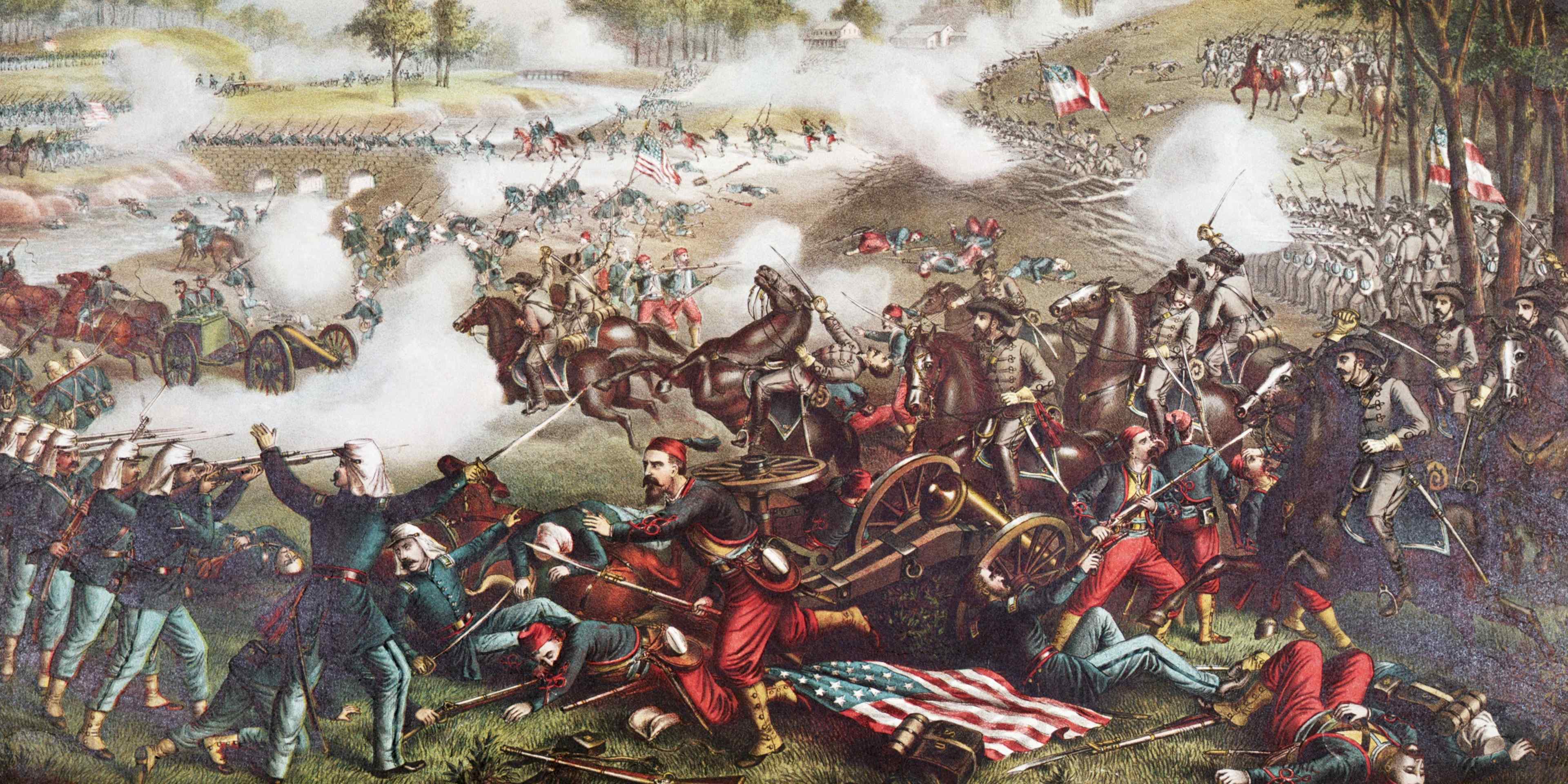
- 1861: First Bull Run (Manassas) – Entering the war as a colonel, Early commanded a Virginia brigade. At the First Battle of Bull Run, his timely arrival on the field helped turn the tide of the battle, routing Union forces and securing a crucial Confederate victory [1]. He was promoted to brigadier general shortly after [1].
- 1862: Peninsula Campaign to Fredericksburg – Early was severely wounded at the Battle of Williamsburg in May [1]. After recovering, he was assigned to General Thomas “Stonewall” Jackson’s Second Corps. He served with distinction at Cedar Mountain, the Second Battle of Bull Run, and Antietam [1]. At Fredericksburg in December, his division launched a vital counterattack that repulsed Union troops under George Meade [1].
- 1863: Chancellorsville and Gettysburg – Promoted to major general, Early held the Confederate line at Fredericksburg during the Battle of Chancellorsville [1]. During the subsequent Gettysburg Campaign, his division invaded Pennsylvania, famously occupying the towns of Gettysburg and York and demanding hefty cash ransoms [1]. His troops fought on the first and second days of the Battle of Gettysburg and guarded the army’s retreat [1].
- 1864: Valley Campaign and Raid on Washington – Promoted to lieutenant general, Early was given command of the Army of the Valley [1]. He drove Union forces out of the Shenandoah, crossed into Maryland, won the Battle of Monocacy, and advanced to the outskirts of Washington, D.C [1]. In retaliatory actions later that summer, his forces burned the town of Chambersburg, Pennsylvania [1].
- 1865: Defeat and Dismissal – Outnumbered and outmaneuvered by Union General Philip Sheridan, Early suffered devastating defeats at Winchester, Fisher’s Hill, Cedar Creek, and finally Waynesboro in March 1865 [1]. With his army virtually destroyed, Robert E. Lee relieved Early of his command to preserve public confidence [1].
Important Figures in Early’s Orbit
To fully grasp the scope of Early’s career, it is necessary to examine his relationships with the prominent figures who defined the era:
- Robert E. Lee: The commander of the Army of Northern Virginia had a complex relationship with Early [1]. Lee recognized Early’s tactical brilliance and aggressive spirit, but was highly amused and sometimes exasperated by his terrible temper and profane language, calling him his “Bad Old Man” [1]. Despite Early’s late-war failures, Lee retained a deep respect for him [1].
- Philip Sheridan: The relentless Union general was Early’s chief nemesis. Sheridan’s aggressive campaign in late 1864 systematically crushed Early’s Army of the Valley, laid waste to the Shenandoah’s agricultural wealth, and permanently closed the Confederacy’s northern invasion route [1].
- Lewis Armistead: A fellow Confederate general whose pre-war clash with Early at West Point illustrated the volatile nature of Early’s personality [1]. While Armistead went on to gain fame and meet his end during Pickett’s Charge at Gettysburg, his early exit from West Point was directly linked to Early’s abrasive behavior [1].
Causes and Context: The Struggle for the Shenandoah Valley
By the summer of 1864, the Confederacy was in a desperate position. General Ulysses S. Grant had pinned Lee’s army down in the trenches of Petersburg, Virginia. To break the deadlock and divert Union resources, Lee turned to a strategic theater that had previously yielded dramatic successes: the Shenandoah Valley. Lee placed Early in command of the Valley District, hoping to replicate the legendary exploits of Stonewall Jackson.
The Shenandoah Valley campaigns were of paramount geopolitical and logistical importance. The valley served as the “Breadbasket of the Confederacy,” providing essential grain, livestock, and supplies to Lee’s starving army. Furthermore, its unique geography acted as a natural, protected highway that led directly into the heart of the North. By launching an offensive there, Early could threaten Washington, D.C., forcing Grant to dispatch troops away from the Petersburg front, thereby relieving pressure on Richmond.
Major Turning Points: From the Gates of Washington to Cedar Creek
Early’s 1864 campaign began with spectacular success but ended in catastrophic ruin, marking a series of critical turning points for the Confederacy:
The Raid on Washington (July 1864)
After clearing the Shenandoah Valley of Union forces, Early marched his 14,000-man army north, crossing the Potomac River into Maryland [1]. On July 9, 1864, he defeated a makeshift Union force at the Battle of Monocacy [1]. Though a Confederate victory, this battle delayed Early by a crucial day, allowing Union reinforcements to rush to the capital. When Early arrived at the fortifications of Fort Stevens on the outskirts of Washington on July 11, he realized the city was too heavily defended to capture [1]. President Abraham Lincoln famously stood on the ramparts of Fort Stevens to observe the fighting, coming under direct enemy fire. Realizing the futility of an assault, Early withdrew back into Virginia [1].
The Burning of Chambersburg (July 1864)
Following his retreat, Early sent cavalry under General John McCausland to Chambersburg, Pennsylvania [1]. Early demanded a ransom of $500,000 in currency or $100,000 in gold. When the townspeople refused to comply, Early’s forces set fire to the town, destroying more than 500 buildings and leaving thousands homeless [1]. This act of retaliation galvanized Northern public opinion and hardened the Union resolve to wage total war against the South.
The Battle of Cedar Creek (October 1864)
The ultimate turning point of the Valley Campaign occurred on October 19, 1864 [1]. Launching a brilliant, pre-dawn surprise attack, Early’s forces completely routed the Union army under Philip Sheridan, who was away at a conference in Winchester [1]. However, thinking the battle was won, Early’s hungry and exhausted soldiers paused to loot the Union camps [1]. Meanwhile, Sheridan made his famous ride back to the front, rallied his retreating troops, and launched a massive afternoon counterattack [1]. The Union counteroffensive completely shattered Early’s lines, turning a stunning Confederate victory into a decisive defeat from which the Army of the Valley would never recover [1].
Long-Term Impact on America: Architect of the “Lost Cause”
While Jubal Early’s military contributions were substantial, his long-term impact on American history lies in his post-war role as the chief propagandist of the “Lost Cause” movement [1]. After the war, Early refused to take an oath of allegiance to the United States [1]. He fled to Mexico, traveled to Cuba, and settled temporarily in Canada, where he wrote his memoirs defending his military decisions [1].
Upon receiving a presidential pardon in 1869, Early returned to Virginia and began practicing law in Lynchburg [1]. He quickly dedicated his immense energy and sharp legal mind to shaping how the war would be remembered [1]. He became the president of the Southern Historical Society and used this platform to construct a powerful, revisionist narrative of the Civil War [1]. This “Lost Cause” mythology promoted several key tenets:
- Minimizing Slavery: The movement argued that the war was fought over constitutional principles and “states’ rights” rather than the preservation and expansion of chattel slavery [1].
- The Deification of Robert E. Lee: Early elevated Lee to a flawless, saintly figure, arguing that his military genius was only defeated by the overwhelming, industrial brute force of the North, rather than superior Union strategy [1].
- The Scapegoating of James Longstreet: Because General James Longstreet joined the Republican Party after the war and dared to criticize some of Lee’s tactical decisions at Gettysburg, Early launched a relentless, decades-long campaign to ruin Longstreet’s reputation, blaming him entirely for the Confederate defeat at Gettysburg [1].
Early’s writings and lectures became a driving cultural force. During the highly contentious Reconstruction era, this romanticized mythology helped white Southerners rationalize their defeat, resist federal civil rights reforms, and lay the cultural foundations for the rise of Jim Crow segregation [1]. The historical distortions pioneered by Early dominated Southern textbooks and public monuments for over a century.
Lesser-Known Facts About Jubal Early
1. The West Point Plate Fight
Early’s legendary bad temper was evident early in his life [1]. His verbal insults during an argument at West Point provoked classmate Lewis Armistead to break a heavy mess hall plate over Early’s head [1]. The incident resulted in Armistead’s resignation from the academy, though both men eventually crossed paths again as Confederate officers [1].
2. The Louisiana Lottery Endorsement
Despite his public image as a high-minded defender of Southern honor, Early was not above capitalizing on his fame. In the late 1870s, he and fellow former Confederate General P.G.T. Beauregard were hired to oversee the drawings of the highly lucrative, and notoriously corrupt, Louisiana State Lottery Company [1]. The position paid handsomely, providing Early with the financial security needed to fund his historical writing and political campaigns [1].
3. The Bachelor with a Hidden Family
Though Early championed the rigid social traditions of the antebellum South, his personal life was highly unconventional. He never married but carried on a decades-long, openly acknowledged relationship with Julia McNealey [1]. Together, they had four children, defying the strict social mores of the 19th-century Southern aristocracy [1].
Why It Still Matters Today
The legacy of Jubal Early is not a dead chapter of the 19th century; it remains at the center of modern American cultural and political discourse. The “Lost Cause” narrative that Early helped manufacture continues to influence contemporary debates surrounding Confederate monuments, the names of military bases, and how history is taught in American classrooms [1]. By examining Early’s deliberate efforts to reshape historical memory, modern society can better understand the power of historical propaganda and the ongoing struggle to reconcile with the true causes and consequences of the American Civil War [1].
People Also Ask
Why was Jubal Early called the “Bad Old Man”?
General Robert E. Lee affectionately referred to Early as his “Bad Old Man” due to his famously abrasive personality, sharp tongue, and frequent use of profanity, combined with his hunched posture caused by severe arthritis [1].
Did Jubal Early actually attack Washington, D.C.?
While Early reached the outskirts of Washington, D.C., and engaged Union forces at Fort Stevens in July 1864, he did not launch a full-scale assault on the city, realizing that heavy Union reinforcements had arrived to secure the capital’s defenses [1].
What is the “Lost Cause” movement?
The “Lost Cause” is a revisionist historical ideology that emerged after the Civil War [1]. It sought to romanticize the Confederacy, frame the war as a defense of states’ rights rather than slavery, and elevate Confederate military leaders like Robert E. Lee to heroic status [1].
Conclusion
Jubal Early remains one of the most consequential and controversial figures of the Civil War era [1]. While his tactical aggressiveness and daring maneuvers in the Shenandoah Valley proved his competence as a military commander, his post-war crusade to alter historical truth left a far deeper mark on the American landscape [1]. By pioneering the “Lost Cause” myth, Early succeeded in shaping the cultural memory of the South for more than a century, demonstrating that the battles fought with the pen can sometimes have a more lasting impact than those fought with the sword [1].


